Billboards and outdoor advertising in Aragon: campaigns in Zaragoza and Huesca

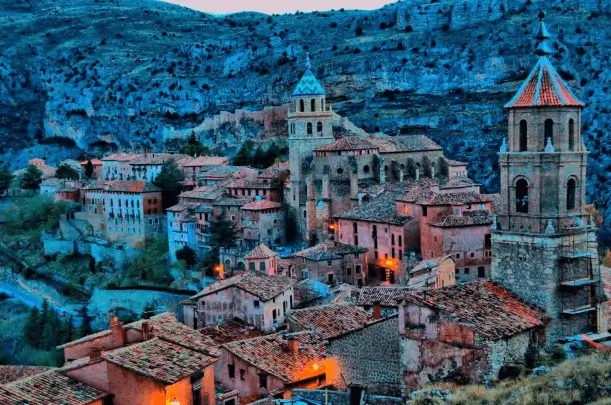
Prices in Aragon · per face per week
- 8x3 m billboardsfrom €82
- Bus sheltersfrom €128
- MUPIs (6-sheet)from €148
Prices exclude VAT · printing and posting from €35 per face
Outdoor advertising sites in Aragon
Across Aragon we have more than 370 outdoor advertising sites, with an established presence in all three provincial capitals and along the Ebro corridor. Spain's National Statistics Institute (INE) put the region at 1,368,954 inhabitants on 1 July 2025, and close to 70% of them live on the Zaragoza-Huesca axis, served by the A-23 Mudéjar motorway and the A-2. That backbone, together with the N-232 towards Logroño and the N-II towards Lleida, makes any exit or roundabout on the way into a town a high-frequency location for billboards and monopole billboards (single-column structures). The region also carries real industrial weight: the Stellantis plant in Figueruelas, the nearly 300 companies in the CAAR automotive cluster and the future Stellantis-CATL battery gigafactory mean the motor industry accounts for around 6% of regional GDP and a third of industrial employment.
The way our sites are spread out mirrors the region's geography. Zaragoza holds most of the inventory, with a broad range of formats: billboards on the N-232 and N-II approach roads, bus shelters on avenues such as Cesáreo Alierta, Avenida Cataluña, Camino de las Torres and Pablo Ruiz Picasso, and digital screens at the large Puerto Venecia and Gran Casa shopping centres, plus a campus screen network at Plaza San Francisco. Huesca stands out for its network of MUPI street panels (six-sheet size), practically the only one in the province, and for billboards on Martínez Velasco and Doctor Artero. Teruel is covered by bus shelters spread across the Fuenfresca and Los Planos neighbourhoods and the Nicanor Villalta area, while the Cinca-Litera corridor (Binéfar, Barbastro, Monzón) and the Jacetania (Jaca, Sabiñánigo) add roadside billboards with visibility over interregional traffic. Marco Visual manages the inventory end to end: from planning and booking to production and posting.
Aragon's seasons open well-defined commercial windows. Zaragoza's Fiestas del Pilar (10-18 October in 2026), the city's patron saint festivities, are officially listed as of International Tourist Interest: they multiply visitor numbers and drive spending on hospitality, retail and leisure for ten days. The fiestas of San Lorenzo in Huesca (9-15 August) and the Vaquilla del Ángel in Teruel concentrate local ad spend in August and July respectively. In February, the Bodas de Isabel de Segura (a medieval re-enactment, recognised in December 2025 as a Festival of International Tourist Interest) bring visitors to Teruel over the third weekend of the month. Snow tourism at Formigal, Cerler and Candanchú brings traffic to the N-330 and A-23 between December and March, and the FIMA (agricultural machinery) and SMOPYC (construction machinery) trade fairs in Zaragoza create very clear B2B peaks for campaigns aimed at farming and industrial professionals.
In our campaign planner you can check the price of MUPIs and every other advertising site, real photos, the exact location, Google Street View, descriptions and nearby points of interest, dimensions, print format… Best of all, you can filter the sites and pick the ones you want, then plan and book the outdoor advertising campaign
Pages in Spanish
Looking for another area?
Explore the different outdoor advertising formats in Aragon
Marco Visual is an online platform for managing and booking campaigns on outdoor advertising sites. Our website gives you all the information you need to plan and book an outdoor campaign. Get to know each site and its features: price, real photos, format, minimum booking period and other terms.
Outdoor sites are ideal for promoting events, with room on the ad for the venue, who is taking part and every other detail that matters. They are also widely used for branding, so that people start seeing a brand away from the screen and remember it better. Other common uses are launching offers (Black Friday, the sales, Christmas…) and opening new shops.
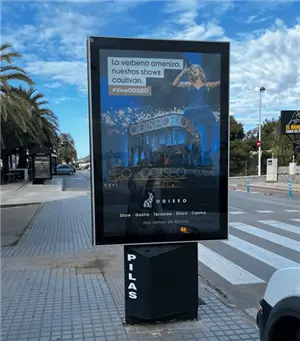
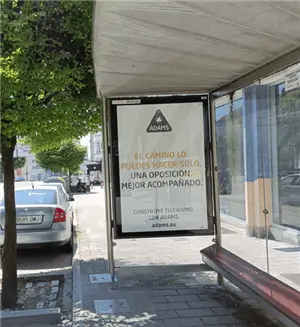
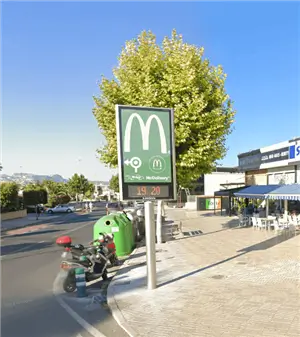
Here are some of our campaigns on different outdoor advertising sites:
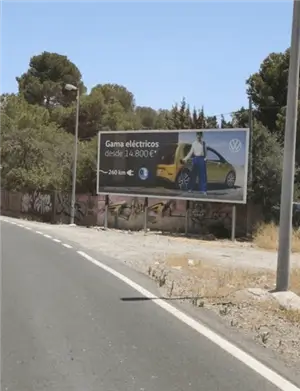
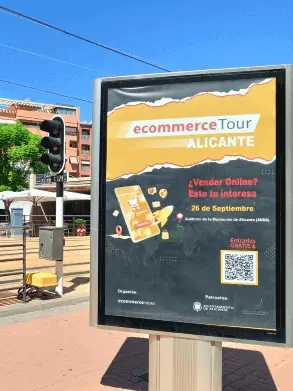
The benefits of outdoor advertising in Aragon
Aragon suits outdoor advertising particularly well because the region pairs a strong metropolitan core, Zaragoza, with a large territory crossed by very stable interregional traffic corridors. Any brand that wants to reach consumers with an average or above-average income profile finds favourable ground here: according to Spain's National Statistics Institute (INE), average disposable household income in Aragon is above the national average, with a large share of skilled industrial jobs in the motor industry, agri-food and logistics. Shoppers in Zaragoza drive a great deal between the big ring roads (Z-30, Z-40) and the out-of-town shopping areas, which gives billboards and monopole billboards a central role in awareness and brand recognition. In Huesca and Teruel, by contrast, bus shelters and MUPIs dominate, because pedestrians and cars share the same streets over short distances and daily routes run along a handful of main avenues.
Seasonality in Aragon means campaigns can be planned around clear commercial windows. Snow tourism concentrates ad spend from hospitality, equipment-hire and restaurant businesses between December and March around Jaca, Sabiñánigo and the roads up into the Pyrenees. The Feria de Zaragoza trade fair season (FIMA, SMOPYC, SMAGUA, FIGAN) brings B2B professional traffic in February, April and November, when billboards on the approach roads and large-format sites around the exhibition centre multiply impacts against a precisely targeted professional audience. The Fiestas del Pilar in October and San Lorenzo in August are the big local windows for retail, leisure and restaurants. The Bodas de Isabel in February create a tourist peak in Teruel that particularly benefits shops and hospitality in the historic centre.
In Aragon, the sectors where outdoor delivers the best return are car dealerships and motor services (supported by the strength of the CAAR automotive cluster), grocery and home-furnishing retail, dental clinics and private medical centres, vocational training and private universities, energy and solar panels, and estate agents along the Zaragoza-Huesca corridor. Digital formats at Puerto Venecia and Gran Casa offer time-of-day targeting and message rotation, useful for weekend promotions and launches. Bus shelters in established neighbourhoods such as Las Delicias, San José or the Actur build daily frequency on the same audience, which makes them a natural choice for local advertisers. And billboards on the N-232, A-2 and N-II reach interregional logistics traffic, a key segment for industry and B2B.
In your marketing and communications strategy, outdoor advertising sites are essential for reaching your audience. They are an excellent way to catch the eye of people out and about in town, thanks to well-chosen locations and high visibility.
- Eye-catching visual advertising with 24/7 visibility in high-traffic areas.
- Strategic locations on the city’s main streets and avenues.
- Wide coverage: a presence in Spain’s main cities and regions.
- High visibility in carefully chosen spots for the greatest impact.
- Geographic targeting: choose the areas and neighbourhoods where your target audience is.
- Greater brand awareness and trust.
- Flexibility for short and long campaigns.
- A non-intrusive medium that helps the message stick when combined with social media campaigns.
The area and town links below go to pages in Spanish.
Outdoor advertising in Zaragoza
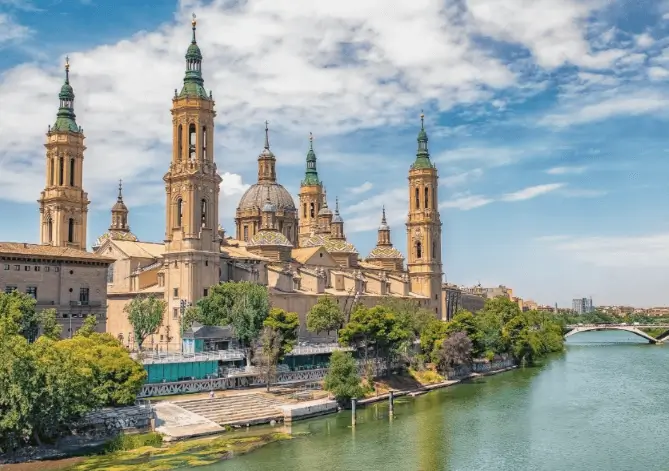
- Population: 699,007 inhabitants, according to INE 2025 data (Spain's fourth-largest municipality)
- Gender split: roughly 52% women and 48% men
- Average age: around 44, in line with the Aragonese average
- Purchasing power: above average, with an economy based on the motor industry (Stellantis), logistics (PLAZA), agri-food and services
- Economic activity rate: around 60%, with a strong presence in industry, logistics, professional services and public administration
- Relevance for advertising: the anchor city of the Ebro corridor and a logistics hub linking Madrid, Barcelona, Bilbao and Valencia, with more than a million potential impacts on its two ring roads
Zaragoza ranks fourth among Spanish municipalities by population according to Spain's National Statistics Institute (INE), with 699,007 inhabitants at 1 January 2025, and it now has more residents than Seville in the official figures. It is home to the bulk of Aragon's economic activity: the Stellantis plant in Figueruelas, the companies in the CAAR cluster, PLAZA (the largest logistics park in Europe), the AWS data centre and the University of Zaragoza campus, with nearly 12,000 students in engineering and technology. The city is organised into established districts such as Delicias (over 100,000 residents), El Rabal, San José and Actur-Rey Fernando, with two major ring roads (Z-30 and Z-40) and approach roads on the A-2, A-23, N-232 and AP-68 that pass high-traffic points such as the El Olivar industrial estate, the Puerto Venecia area and the area around Gran Casa.
Our Zaragoza inventory includes billboards, bus shelters, MUPIs and digital screens. The billboards are concentrated on the main approach roads: the N-232 (Carretera de Logroño) towards the El Olivar industrial estate and the Asador Los Cántaros restaurant, the N-II (Carretera de Madrid) around km 313 and the Utebo exit, and Ronda de la Hispanidad and Avenida de Ranillas towards the Hipercor hypermarket. Bus shelters cover urban corridors such as Avenida Cesáreo Alierta, Avenida Cataluña, Camino de las Torres, Pablo Ruiz Picasso (Puente del Tercer Milenio), Paseo Colón, Avenida Navarra (opposite the Augusta shopping centre) and Avenida América. Digital screens run at Puerto Venecia and Gran Casa and on the University of Zaragoza network (Plaza San Francisco, Río Ebro, veterinary faculty). The MUPIs are in the city centre: Plaza de España, Plaza Paraíso, Independencia and Plaza de Santa Engracia.
Bus shelters in Zaragoza
Bus shelters do particularly well in Zaragoza thanks to the combination of footfall and road traffic on long, busy avenues, where waiting for the bus means long dwell times. They are the preferred format for neighbourhood retail, dental clinics, gyms, training centres and local services that need frequency on the same audience.
The network's main locations include Avenida Cesáreo Alierta by the Pabellón Príncipe Felipe arena and Paseo Constitución, Camino de las Torres where it crosses Avenida Cataluña, Pablo Ruiz Picasso next to the Puente del Tercer Milenio opposite the Correos post office, Avenida Cataluña opposite Prensados, Avenida Navarra opposite the Augusta shopping centre, Paseo Colón near San Juan de Dios hospital, Avenida San José at Compromiso de Caspe, Calle Tenor Fleta, Paseo Ruiseñores, Calle Sobrarbe next to the Puente de Piedra, Avenida Marqués de la Cadena towards Valle Broto, and Ronda del Rabal towards the Torre del Agua.
Billboards in Zaragoza
On the approach roads into Zaragoza and around its industrial belt, billboards are the dominant format. They are especially effective for large-format campaigns aimed at interregional traffic, brand launches, car dealerships, hypermarkets and logistics operators that want visibility on the N-232, N-II and AP-68.
Our main billboard sites are on Carretera de Logroño (N-232) level with the El Olivar industrial estate and the Cachirulo restaurant, on the N-II (Carretera de Madrid) around km 313 and km 316 next to Vía Ibérica, on Ronda de la Hispanidad opposite Pablo Bruna heading towards Avenida Cataluña, on Avenida Ranillas towards Hipercor, on the Tercer Cinturón (the third ring road) level with Quinta Julieta and Camino Miraflores, on Avenida Diagonal next to the second bridge, at the Utebo industrial estate on the N-232 and at the exit from the Logroño motorway towards Casetas. There are also sites on Calle Luis Legaz Lacambra towards Hipercor and on Avenida Pirineos at the junction with Carlos Marx.
MUPIs in Zaragoza
MUPIs cover Zaragoza's historic centre and main shopping streets, where footfall is high all day and especially at lunchtime and in the evening. They are the best option for campaigns aimed at city-centre shops, hospitality, arts and culture, and events in Plaza del Pilar, Plaza España and along the Independencia-Coso axis.
Available locations include Plaza de España next to the Coso, Plaza Paraíso at the junction with Paseo Pamplona, Calle Independencia on the corner of Plaza de Santa Engracia, Calle María Zambrano in the Actur neighbourhood, Avenida América on the corner of Calle Sancho Ramírez in Paseo Cuéllar, and Calle San Juan de la Peña where it meets Avenida Cataluña.
Digital screens in Zaragoza
Digital screens bring rotating creatives, time-of-day targeting and a dynamic format suited to weekend promotions, launches and campaigns with several versions. In Zaragoza the network is concentrated in the large shopping centres and on the university campus.
The leading locations are the Puerto Venecia shopping centre on the avenue of the same name, the Gran Casa shopping centre on Calle Gertrudis Gómez de Avellaneda and the on-campus network of the University of Zaragoza, with screens in the faculties of medicine, law, physics, chemistry, health sciences, education, veterinary science, industrial engineering and economics, plus the Escuela Politécnica Superior (engineering school) and the university sports service. There are also screens on Calle Mártires, Calle Temple, Calle del Arzobispo Apaolaza, Calle Andrés Jiménez Soler and Calle Margarita Nelken.
Outdoor advertising in Huesca
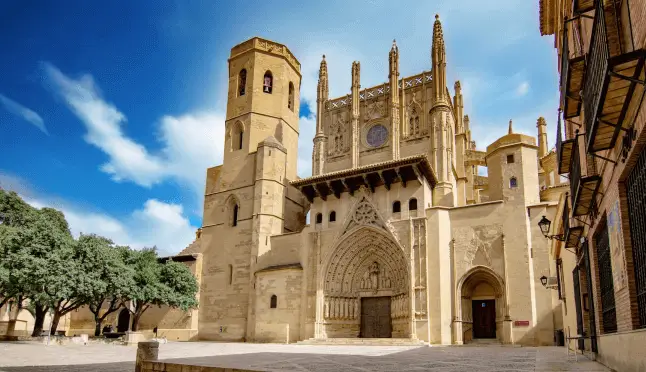
- Population: 55,454 inhabitants, according to INE 2025 data
- Gender split: roughly 52% women and 48% men
- Average age: around 45, with 22% of people aged over 65 across the province
- Purchasing power: average, with an economy based on public administration, retail, agri-food, the Walqa technology park and services
- Economic activity rate: around 58%, with a presence in services, agribusiness, construction and public administration
- Relevance for advertising: the commercial hub of the Aragonese Pyrenees and gateway to snow tourism, with an extensive MUPI network and peaks in visitor numbers during San Lorenzo
Aragon's second city, Huesca had 55,454 inhabitants at 1 January 2025 according to Spain's National Statistics Institute (INE); it is the capital of the Hoya de Huesca comarca (district) and home to a university campus with faculties of business and public management, health and sports sciences, and humanities and education, as well as the Escuela Politécnica Superior (engineering school). The city is the commercial hub of the Aragonese Pyrenees and an unavoidable junction for traffic on the A-23 towards Jaca and the N-240 towards Lleida and Pamplona. The Walqa technology park, the Feria de Huesca trade fair and the Coso Real shopping centre concentrate economic activity, while the San Lorenzo neighbourhood, with more than 14,000 residents, is the most populous and the nerve centre of the city's main fiestas in August, which are officially listed as of Tourist Interest.
What sets Huesca apart is a MUPI network that is practically the only one of its kind in the province. The sites cover arterial avenues such as Avenida Martínez Velasco (where it meets Calle Alcubierre and Ingeniero Pano, and at the Hospital San Jorge roundabout), Avenida Monegros (the Danzantes roundabout, the junction with Calle Alcañiz and next to the school towards Sariñena), Doctor Artero (next to San Juan Bosco and the entrance to the Eroski shopping centre), Ramón y Cajal (in Plaza Santo Domingo, next to the LIDL petrol station and opposite the IFA supermarket), Ronda Estación, Calle Teruel, Calle Fraga (next to Avenida Pirineos), Avenida San Jorge, Avenida Aragón opposite the Pío XII school, Plaza Navarra and Travesía Ballesteros opposite the Ibercaja bank. The billboards are on the A-23 approaches along Avenida Martínez Velasco, next to the Guardia Civil building and El Alcoraz football stadium, and at the Isuela roundabout on the way into the city. Huesca also has two street thermometers with advertising panels, in Plaza Navarra opposite Concepción Arenal and at the junction of Calle Cabestany and Calle León Abadías.
MUPIs in Huesca
MUPIs are Huesca's signature format, thanks to the human scale of its avenues and a mix of strolling, shopping and student footfall. They work very well for local retail, specialist shops, hospitality, clinics and local services, and for advertisers who want to reach the typical resident over periods of two to four weeks.
Standout locations in the network include the Salesianos roundabout next to Plaza Carmelitas towards Las Miguelas, Doctor Artero on the corner of San Juan Bosco towards Coso Real, Avenida Monegros at the Danzantes roundabout, Santo Cristo de los Milagros at Menéndez Pidal towards the multiplex cinema, Juan XXIII at San Jorge by the sports centre, San Jorge at the junction with Ingeniero Pano towards the Pabellón sports hall, Martínez Velasco at Alcubierre, Calle Cavia, Calle Zaragoza opposite Calle Tarbes towards Plaza Navarra, Ronda Estación, Ramón y Cajal next to División 52, and Ronda Industria-División 52 at the roundabout on the way in.
Bus shelters in Huesca
Bus shelters serve Huesca's most heavily used city bus routes and extend the reach of the MUPI network. They suit advertisers who need long dwell time at the stop, as well as consumer goods brands, telecoms, training providers or financial institutions.
Shelter locations include Calle San Jorge next to the Manhattan towards Menéndez Pidal, Ramón y Cajal in Plaza Santo Domingo towards Barbastro, Calle Fraga next to Avenida Pirineos towards Doctor Artero, Martínez Velasco next to the park towards Zaragoza, Ramón y Cajal at the junction opposite the old prison site, Calle Valencia opposite Federico Mayo, Avenida Aragón next to the Pío XII school, Fraga at the funeral home towards Santo Cristo de los Milagros, the Coso Real shopping centre, Plaza Navarra opposite Granja Anita, Mateo Estaún next to the Pedro Rubio school, Calle Teruel next to the Hermanitas de los Pobres care home towards the Estación Intermodal (bus and rail station), and Avenida Martínez de Velasco next to Hiper Simply.
Billboards in Huesca
Billboards in Huesca cluster on the A-23, N-330 and N-240 approach roads and along the shopping corridors to the east and south of the city. They are the right format for car dealerships, large-format retail, energy, construction and brand campaigns aimed at interprovincial traffic.
Among the main locations are Avenida Doctor Artero next to the MOPU building and at the roundabout into the Eroski shopping centre, Avenida Martínez Velasco at the first roundabout beside the petrol station and the Guardia Civil building, Avenida Martínez Velasco at the exit towards El Alcoraz football stadium next to the Repsol service station, the Coso Real shopping centre, Avenida Monegros at Calle Alcañiz, Ronda de Isuela at the roundabout, Danzantes de Huesca opposite Obispo Pintado, and Avenida de Martínez Velasco on the N-330 next to San Jorge hospital towards the Palacio de Congresos conference centre.
Outdoor advertising in Teruel
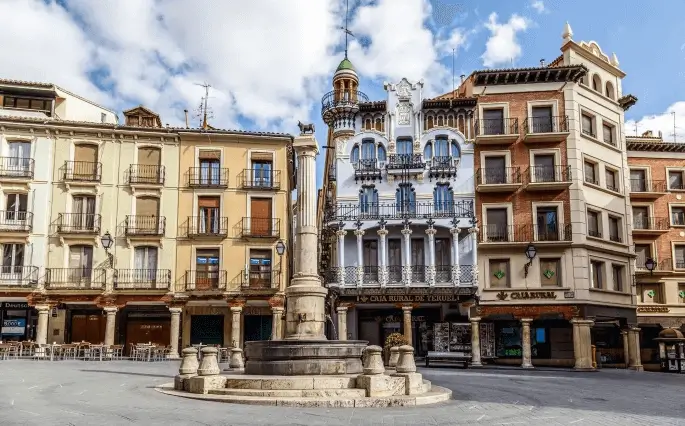
- Population: 36,655 inhabitants, according to INE 2025 data (the least populated provincial capital in Spain)
- Gender split: roughly 51% women and 49% men
- Average age: around 44 in the municipality
- Purchasing power: average, with an economy based on public administration, services, cultural tourism and agribusiness
- Economic activity rate: around 55%, with a large share of civil servants, services, hospitality and local retail
- Relevance for advertising: a heritage city with two well-defined tourist peaks (Bodas de Isabel and Vaquilla del Ángel) and a very compact urban core that concentrates reach
Teruel is Spain's least populated provincial capital, with 36,655 inhabitants in the 2025 count by Spain's National Statistics Institute (INE); it is also the only one to combine that size with Mudéjar architecture listed by UNESCO as a world heritage site. The city sits where the Alfambra and Guadalaviar rivers meet and has a very compact historic core around the Óvalo, Plaza del Torico, the cathedral and the mausoleum of the Amantes (Teruel's legendary lovers), while Dinópolis, a dinosaur theme park, is one of the area's big family attractions. The local economy rests on public administration, services, tourism and agribusiness in the Bajo Aragón (lower Aragon), with very clear tourist peaks in February for the Bodas de Isabel de Segura (a Festival of International Tourist Interest since December 2025) and in July for the Vaquilla del Ángel.
Teruel's inventory is concentrated in bus shelters covering the residential neighbourhoods and key urban routes: Parque de la Fuenfresca, Parque de Los Enebros, the Los Planos sports hall, Calle Nicanor Villalta, Ramón J. Sender, Luis Milla, Ángel Custodio and the area around La Esperanza church. There are also sites in the Castralvo area and on the way in along Carretera de Alcañiz towards Calle Viñas de San Cristóbal, plus a MUPI at Carretera de Alcañiz, 43. This is the right format for local retail, city-centre hospitality and local services, with a clear peak in demand in February and a smaller one around the Vaquilla long weekend.
Bus shelters in Teruel
In Teruel, bus shelters are the dominant format, covering the residential neighbourhoods and the daily routes of local people. Because the city is so compact, even a small network reaches a very high share of the local population, which makes shelters an excellent choice for retail, hospitality, clinics and local services.
Shelter sites include Carretera de Castralvo, 32, Calle Ramón J. Sender, 3, the shelter next to La Esperanza church, Calle Nicanor Villalta, 2, the Luis Milla shelter, Parque de la Fuenfresca, Calle Ángel Custodio, Parque de Los Enebros, the Los Planos sports hall, the Fuenfresca school and Moratilla, as well as the area near Piensos Sol.
MUPIs and billboards in Teruel
Alongside the bus shelters, Teruel has a MUPI at Carretera de Alcañiz, 43, on one of the approaches to the town centre, and a billboard on Carretera de Alcañiz next to Calle Viñas de San Cristóbal, number 188. These advertising sites are well suited to advertisers who want to strengthen brand presence on the N-330 and N-420 approaches, and especially useful in the weeks leading up to the Bodas de Isabel and the Vaquilla del Ángel.
Outdoor advertising in Jaca
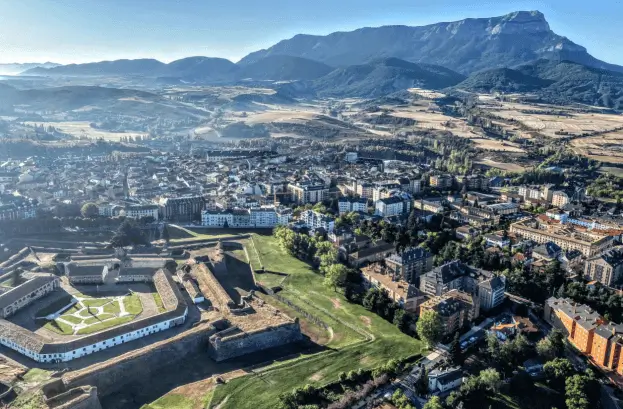
- Population: approximately 13,000 inhabitants, according to INE
- Gender split: roughly 51% women and 49% men
- Average age: around 44
- Purchasing power: above average, with an economy based on mountain tourism, retail, hospitality and services
- Economic activity rate: around 60%, with a large share in hospitality, retail, sports services and construction
- Relevance for advertising: the commercial hub of the Pyrenees and gateway to the ski resorts, with significant tourist traffic all year round and peaks in the snow season
Jaca is the capital of the Jacetania comarca (district) and the main town in the Aragonese Pyrenees, with around 13,000 inhabitants and an economy geared towards mountain tourism, winter sports (Astún and Candanchú) and passing trade on the N-330 and N-240. The town combines a notable historic centre around the eleventh-century romanesque cathedral and the Ciudadela fortress with a modern shopping area on Calle Industria, home to superstores such as Eroski, Forum Sport, JYSK, Carrefour and Décimas. The high season runs from December to March (driven by the snow) and picks up again in July and August with nature tourism, festivals such as the Festival Folklórico de los Pirineos (a folk festival) and hiking around the Camino de Santiago (Way of St James).
In Jaca, the inventory is concentrated in the car park of the Eroski shopping centre on Calle Industria, a point that visitors driving in from Zaragoza, Pamplona and Huesca have to pass, as do residents doing a big shop at any time of the week. These billboards suit seasonal retail (ski shops, equipment hire, mountain hospitality, outdoor activities), car dealerships and brand campaigns aimed at interregional tourist traffic. It pays to book December, January and February well in advance, when local demand rises with the ski season.
Billboards in Jaca
In Jaca, the available format is billboards, grouped in the car park of the Eroski shopping centre on Calle Industria, on the main road into the town's shopping area. They work particularly well for seasonal retail, ski equipment hire, hospitality, car dealerships and tourism campaigns in winter.
Highlights include several sites in the Eroski shopping centre car park on Calle Industria, with visibility over the flow of cars entering and leaving the centre all day long, especially heavy at weekends in the peak ski season and over the long weekends in December, January and February and at Holy Week (Semana Santa).
Outdoor advertising in Binéfar
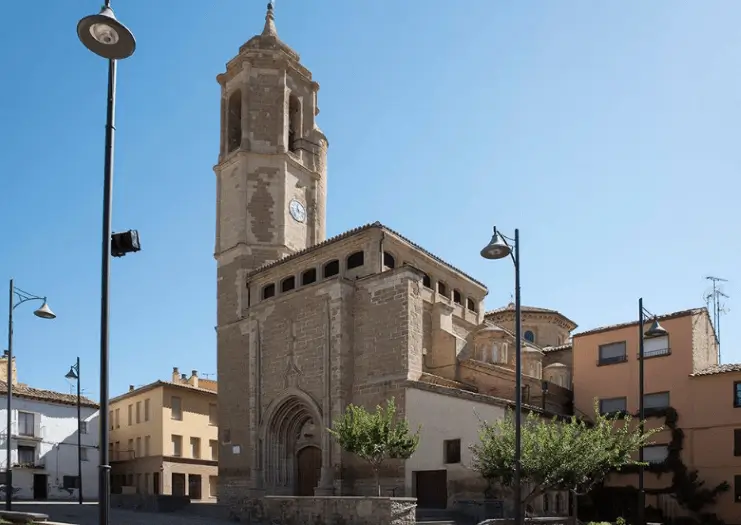
- Population: approximately 9,500 inhabitants, according to INE
- Gender split: roughly 49% women and 51% men
- Average age: around 43
- Purchasing power: average, with an economy based on meat processing, livestock farming, agriculture and logistics
- Economic activity rate: around 60%, with a strong presence in the meat industry, transport, agriculture and retail
- Relevance for advertising: the main town of the La Litera comarca and a junction between the N-II, the N-240 and Carretera de Tamarite, with steady traffic of professionals and heavy goods vehicles
Binéfar is one of the main towns in La Litera, in the east of the province of Huesca, with around 9,500 inhabitants and an economy in which agribusiness (especially meat processing and pig farming) and logistics linked to the Cinca-Ebro corridor carry a great deal of weight. It is the main town of its comarca (district) and the service centre for a large rural population, with a very clear commercial axis between the N-II towards Lleida, the N-240 towards Huesca and Carretera de Tamarite to the south. Binéfar's fairground hosts the Feria del Caballo (horse fair) and other important farming events, and its industrial estate is home to large meat-industry companies.
Binéfar's inventory consists of billboards on approach roads and main roads, strategically placed to capture interregional traffic. The main sites are on Carretera de Tamarite at km 23.15, before the fairground; on Carretera de Lleida at Calle Almacellas, numbers 123 and 127; on Carretera de Huesca (N-240) at km 129.7, next to the petrol station; on Avenida Zaragoza next to cadastral block 8, plot 56; and on the N-II at km 437, at several points by the exit and on the central reservation. They suit advertisers in agri-food, farm machinery, logistics, transport and local retail.
Billboards in Binéfar
Billboards are the only format available in Binéfar, and they are particularly well suited to advertisers in agri-food, farm machinery, the motor trade, transport and local retail, thanks to the mix of local and passing interregional traffic.
Notable sites include Carretera de Tamarite at km 23.15 before the fairground, Carretera de Lleida at Calle Almacellas, numbers 123 and 127, Carretera de Huesca (N-240) at km 129.7 next to the petrol station, Avenida Zaragoza (no street number) at cadastral block 8, plot 56, and the N-II at km 437, with several sites around the town's main exit.
How booking outdoor advertising with Marco Visual works
Tell us what you’re looking for
If you’d rather choose yourself, our campaign planner (in Spanish) lets you pick the weeks and then browse the map or the list of sites, with filters by type of site, city, postcode or distance to a shop or point of interest. Bear in mind the booking cycles: many sites are sold by the week, but most 8x3 m billboards are booked in two-week periods or for 26 weeks, so they’re greyed out if you pick a single week. Click ‘Siguiente’ (Next) and you’ll see a campaign summary with the total price, printing and posting included: we take care of everything. You just enter your contact details and create the campaign.
Either way, you get a unique link to your campaign page, which you can share with your team: the sites you picked, the weeks, the price and the guides for preparing your artwork. You can check it whenever you like.
We confirm availability so you can book online
When everything is cleared, you can enter your billing details on that same page, pay by bank transfer and upload your artwork. Once you’ve paid, upload the transfer receipt so we can confirm the booking sooner.
Remember to send your artwork, following the guides, before the deadline shown on the proposal (usually 7 days before the start). We’ll email you at every step: artwork received and approved, payment received, sites confirmed.
Printing, posting and launch
These photos are usually ready 24 to 48 hours after the start; we’ll email you when they are.
When the campaign ends, you’ll see a notice on the campaign page and receive a satisfaction survey, with the option of leaving us a Google review. It helps us do better.
Frequently asked questions about outdoor advertising in Aragon
How much does an outdoor advertising campaign in Aragon cost?
As a guide, an outdoor advertising campaign in Aragon costs between €600 and €900 per MUPI on a Huesca network. Prices vary by format, by duration and by area. Digital screens at Puerto Venecia and Gran Casa are booked by the week or by daypart. Ask us for a proposal built around your objective and budget. Billboards in Aragon have a guide price of €82 to €96 per face per week (or €164 to €192 per two-week period), excluding VAT; printing the poster costs extra and is quoted separately, and most sites are booked for 6-month periods (26 weeks).
Which formats work best for a local business in Zaragoza?
For retail and local services in Zaragoza, we recommend bus shelters on avenues with a mix of pedestrian and road traffic, such as Cesáreo Alierta, Avenida Cataluña, San José or Camino de las Torres, which deliver daily frequency on the same audience. If the aim is brand awareness and broad reach, billboards on the N-232 and N-II approach roads are the best option. Digital screens at Puerto Venecia and Gran Casa work well for promotions and launches.
How many advertising sites does Marco Visual have in Aragon?
Our inventory in Aragon runs to more than 370 advertising sites, with a strong presence in Zaragoza, Huesca, Teruel and the Ebro corridor. The figure changes over the year, as we take on new locations and let others go when concessions expire. For a specific area, ask us what is available and we will send you the current list.
What is the minimum campaign length?
For MUPIs, bus shelters and static billboards, the standard minimum is a fortnight (two weeks), which is the usual booking unit in outdoor advertising. Digital screens can be booked by the week, and in some networks even by the day, with rotating creatives. For awareness campaigns we recommend at least four weeks. In Aragon, most billboard positions are sold in 6-month periods (26 weeks).
Which parts of Aragon have the most footfall and road traffic?
Road traffic is heaviest on the approaches to Zaragoza via the N-232, N-II, A-23 and AP-68, as well as on the Z-30 and Z-40 ring roads. For footfall, the highest density is in central Zaragoza (Independencia, Plaza España, Plaza del Pilar, Coso) and at the large Puerto Venecia and Gran Casa shopping centres. In Huesca, the busiest locations are Ramón y Cajal, Doctor Artero and Martínez Velasco.
Do you have digital sites or only static ones?
We have both. On the digital side, there are screens at the Puerto Venecia and Gran Casa shopping centres in Zaragoza and an on-campus network at the University of Zaragoza, with screens in faculties such as medicine, law, veterinary science, engineering and economics. Static sites (billboards, MUPIs and bus shelters) cover the rest of Aragon, with the heaviest concentration in Zaragoza, Huesca and Teruel.
What happens after I ask for a proposal?
We gather the details of your campaign (objective, area, dates and budget) and send back a proposal showing confirmed availability, site photos and a fixed price. Once you approve it, we handle the booking, the printing deadlines and the posting. You'll receive proof-of-posting photos and a final report documenting the campaign.
Can you help with the creative design?
Yes. Give us the content (logo, main message, offer and brand colours) and we'll prepare a design suited to the site's format and to the technical requirements of each type (legibility from a distance on billboards, visual hierarchy on MUPIs and bus shelters, animation on digital screens). We also adapt existing creatives to new sizes at no extra cost, within reason.
Is outdoor advertising worth it compared with a digital-only strategy?
For a business with local roots in Aragon, yes. Outdoor covers what digital doesn't cover well: footfall to the point of sale, awareness among regular drivers and brand reinforcement in areas people pass through every day. The norm is to use both, with digital driving immediate conversions and outdoor building frequency and brand recognition over the medium term.
What are the best times of year to advertise in Aragon?
There are three clear windows. The run-up to the Fiestas del Pilar (10-18 October in 2026) and the festival days themselves are Zaragoza's commercial peak for retail, hospitality and leisure. San Lorenzo in Huesca (9-15 August) and the Vaquilla del Ángel in Teruel concentrate local ad spend in summer. The snow season (December to March) drives activity along the Pyrenees corridor and in Jaca. Zaragoza's trade fairs (FIMA, SMOPYC) are the main dates for B2B campaigns in February and April.
Give your brand more visibility with outdoor advertising
See our advertising sites for yourself, with their prices, locations and photos, and use the campaign planner
Still have questions, or would you like us to advise you and send you a proposal? Get in touch and we’ll send you a personalised quote for your outdoor advertising campaign.


What our clients say in Aragon
Verified Google reviews from businesses that have already worked with Marco Visual.

Hemos quedado satisfechos con la campaña de publicidad que contratamos con Marco Visual para el Conservatorio Superior de Danza de Alicante (CSDA) durante las Hogueras. La campaña contó con cuatro mupis diferentes, cada uno dedicado a un estilo de danza, una iniciativa para dar visibilidad a nuestro conservatorio y acercar la riqueza y diversidad de la danza a la ciudadanía. Destacamos la profesionalidad, la atención recibida y la buena gestión de todo el proceso. Porque la danza también merece ocupar las calles y formar parte de la ciudad. ¡Gracias a Marco Visual por ayudarnos a llevar nuestro arte más allá de las aulas!
Original review in SpanishSee on Google 1 / 4

Hemos trabajamos con Marco Visual para la campaña de apertura de nuestra nueva clínica en Molina de Segura, y la experiencia ha sido positiva. Negociamos directamente con ellos, sin intermediarios: el trato es cercano y las respuestas, rápidas. Necesitábamos resolver ubicaciones, formatos y plazos con poco margen de tiempo, y flexibilidad para adaptar la propuesta a lo que necesitábamos. Recomendado
Original review in SpanishSee on Google

Ha sido nuestra primera experiencia en implementar un MUPI, pensábamos que sería algo engorroso en cuanto al proceso y verdaderamente nos hemos confundido. La atención de Alejandro desde el primer momento ha sido rápida, precisa en las indicaciones y nos ha facilitado todo. Ademas agregar que el sistema que tienen implementado online para el seguimiento ha sido muy práctico, sabes el status de la campaña en todo momento, repetiremos!
Original review in SpanishSee on Google

Nuestra experiencia ha sido muy positiva. Queremos destacar especialmente la profesionalidad, rapidez y atención recibida durante todo el proceso. El equipo ha demostrado en todo momento una excelente disposición y un trato cercano y profesional. Mención especial para Alejandro M., por su amabilidad, eficacia y atención constante. Ha sido un placer contar con su ayuda y profesionalidad. Sin duda, recomendamos sus servicios y agradecemos el trato recibido.
Original review in SpanishSee on Google

Hemos quedado muy satisfechos con la campaña de publicidad exterior realizada con Marco Visual. Desde el primer momento, el trato ha sido cercano y profesional, facilitando todo el proceso y resolviendo nuestras dudas con rapidez. La gestión de la campaña ha sido ágil y eficiente, y el seguimiento durante toda la ejecución nos ha transmitido confianza. La instalación y el mantenimiento de los soportes se han realizado correctamente, cumpliendo con lo acordado. Agradecemos especialmente la atención recibida y la buena comunicación del equipo. Ha sido una experiencia muy positiva y no dudaríamos en contar con Marco Visual para futuras campañas.
Original review in SpanishSee on Google 1 / 2

La campaña que hemos hecho de publicidad exterior ha sido un éxito. La comunicación con Alejandro ha sido lo mejor, muy profesional y atento en todo momento con todos los detalles de la campaña. Repetiremos sin duda en unos meses.
Original review in Spanish See on Google
Explore other advertising formats at Marco Visual


