We wrap the rear, the sides or the whole bus, and your ad travels round the city for at least 4 weeks. A rigid bus with large side panels costs from €1,150 for 4 weeks plus €950 for the vinyl, excluding VAT; a full wrap comes to around €5,500 with the vinyl included. You choose the city, the type of bus (a 12 m rigid or an 18 m articulated) and the format, and you can ask us for a route or an area as a guide.
Advertising on city buses: formats, prices and cities

12 or 18 m long

from €1,150 + vinyl

4-week blocks
12 or 18 m long
from €1,150 + vinyl
4-week blocks
12 or 18 m long
from €1,150 + vinyl
4-week blocks
What is bus advertising?
Bus advertising is out-of-home advertising on public transport: your ad is printed on vinyl and applied to the bodywork of a city bus, on the rear, along the sides or all over. The bus goes out every day on its service and the ad goes with it, seen by people waiting at bus stops and by drivers behind, in every neighbourhood on its way. It’s booked in 4-week blocks, with the bus hire and the vinyl production charged separately.
If what you’re after is an ad at the stop rather than on the vehicle, that’s bus shelter advertising: fixed, booked by the week and on the street you choose.
What a wrapped bus looks like
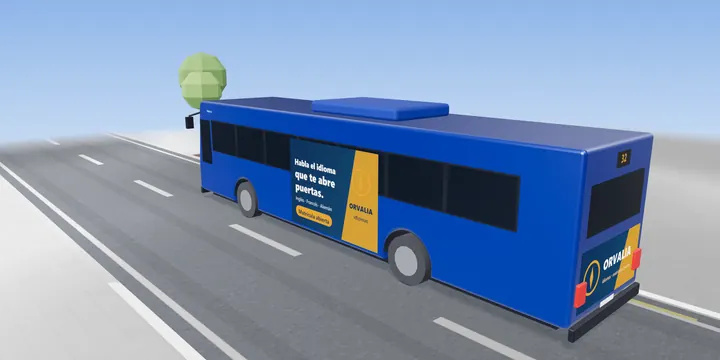
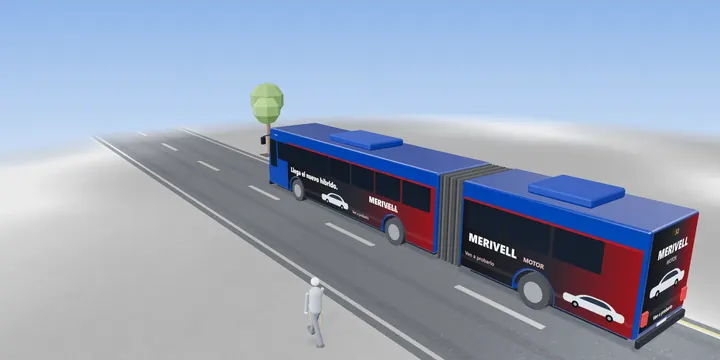
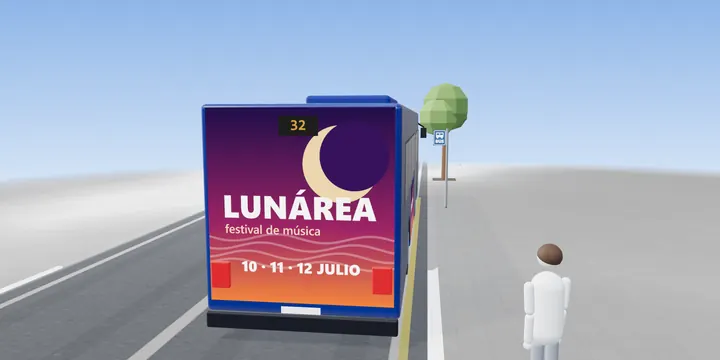
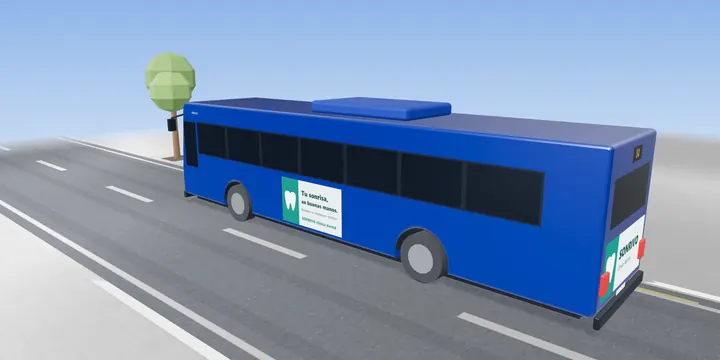
3D mock-ups of how each format looks on an advertising bus, with made-up sample ads (in Spanish).
When is bus advertising the right choice?
When your customers live all over the city rather than on one street. A city bus passes every day through residential areas, industrial estates and main roads into town, all of them places where there are hardly any MUPIs or billboards. That’s why the usual buyers are car dealerships, language schools and training centres at enrolment time, clinics, chains opening a new shop, and people organising fairs and concerts.
It also works well alongside a fixed campaign: the bus moves around the whole city while the bus shelters or MUPIs stay on the street where your business is.
Bus advertising formats: what each one covers
A bus has three surfaces for advertising: the rear and the two sides (on an articulated bus, the sides of both sections). Formats differ in how much of each they cover and in whether or not they go up over the windows; the whole job is also known as bus wrapping. The more vinyl, the more it’s seen and the more it costs. The sizes we give are approximate: every bus model has different measurements, and we send you the final template once the vehicle has been assigned.
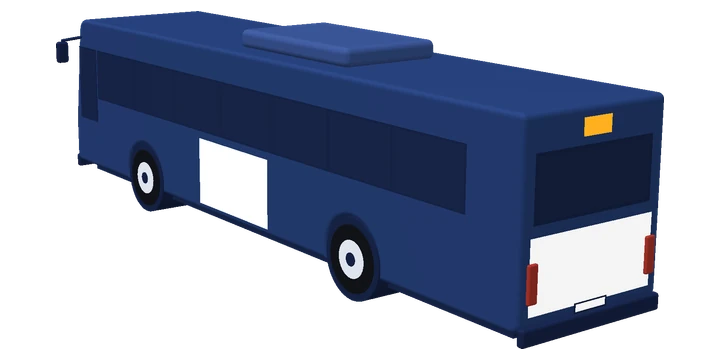
Standard (3 faces)
The entry-level format. A panel of about 2 × 1.1 m on each side, below the windows, and a small rear panel of about 2.2 × 1 m. It’s the ordinary ‘3-face livery’ you see in any city, and the one that uses the least vinyl. It suits short messages, say a name and a phone number, and trying the medium without spending much. Available on rigid and articulated buses.
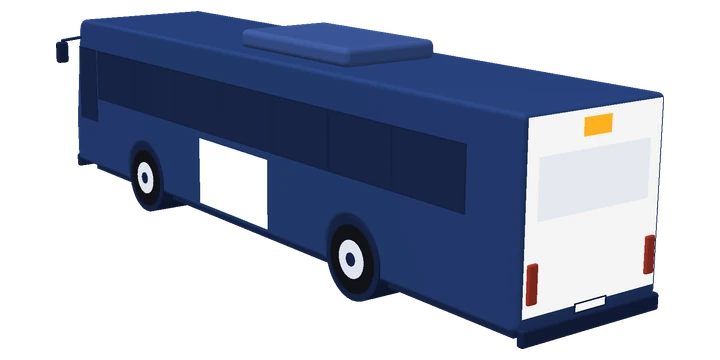
Full rear
The whole back of the bus, about 2.4 × 2.5 m, plus the two standard side panels. Whoever is driving behind has it right in front of them every time the bus stops, three or four metres away, with plenty of time to read it. If your customers drive (garages, insurance, car dealerships), start with bus rear advertising. On rigid and articulated buses.
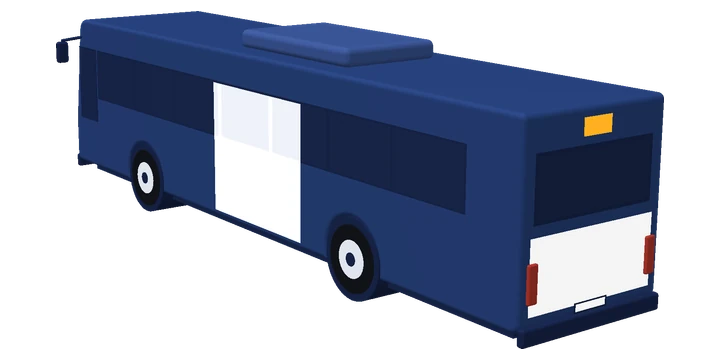
Large side
Two large panels that go up over the windows in perforated window vinyl (one-way vision film), plus the small rear panel. On a rigid bus, the left-hand side (the one without doors, as Spain drives on the right) measures about 3 × 2.05 m, and the right-hand side, between the doors, about 1.45 × 2.05 m. An articulated bus gets side panels on both sections: 3 × 2.05 and 1.40 × 2.05 m on the front one, 1.45 × 2.05 and 1.30 × 2.05 m on the rear. Many agencies call it ‘sides plus’. It’s the format behind the ‘from’ price on this page: a lot of surface for a price a small business can manage.
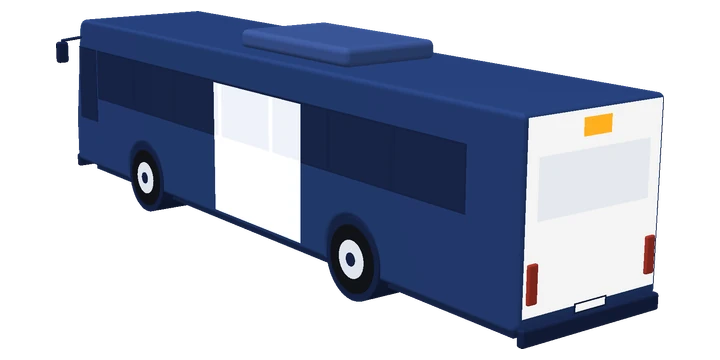
Large side plus
The two large side panels of the previous format plus the full rear; on other rate cards you’ll find it as ‘full rear plus sides plus’. It covers all three surfaces at full size without reaching the cost of a full wrap. People choose it when they want the ad large on both sides and a second message, also large, on the back. On rigid and articulated buses.
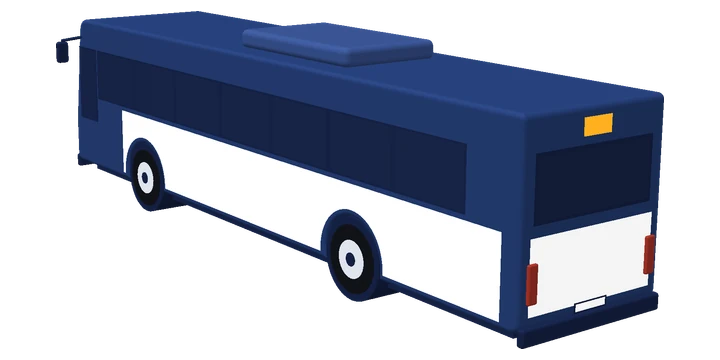
Tandem and half rear (rigid buses only)
The tandem is a strip of about 9.8 × 1.15 m running the full length of the side below the windows, wheel to wheel, with a small rear (tandem) or a full rear (tandem plus). It suits landscape-format messages: a strapline, an address, a list of services. The half rear covers about 2.3 × 1.5 m of the back, roughly two thirds, and is paired with standard or large side panels. These formats only exist on rigid buses.
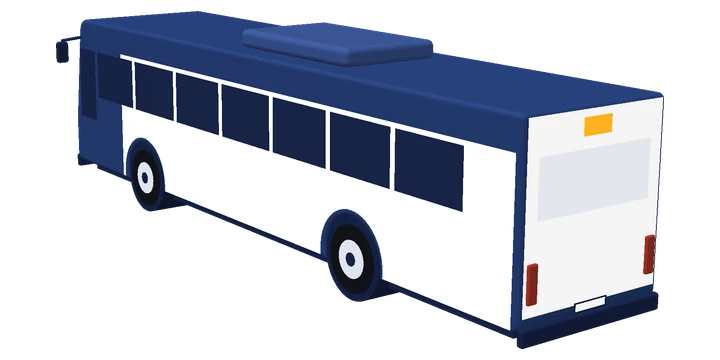
Full wrap
The whole body in vinyl: both sides in full and the full rear. On a rigid bus each side is about 10 × 2.2 m; on an articulated one, 9.5 m for the front section and 5.3 m for the rear. The windows stay clear. This is the ‘full wrap’, what people call wrapping the bus: the entire vehicle becomes your ad. Expect around €5,500 for 4 weeks, vinyl included.
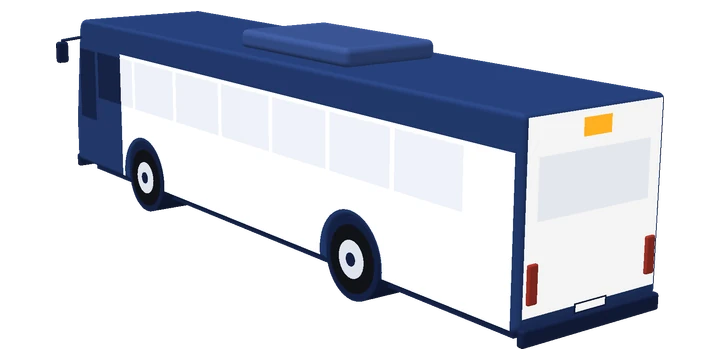
Super wrap
Like the full wrap, but with the windows covered too, in perforated vinyl: the design runs from end to end without a break, and passengers still see the street through the tiny holes in the vinyl. It’s the format with the most surface in the range, and the most expensive. On rigid and articulated buses.
The remaining rigid-bus formats, and the articulated (18 m) range
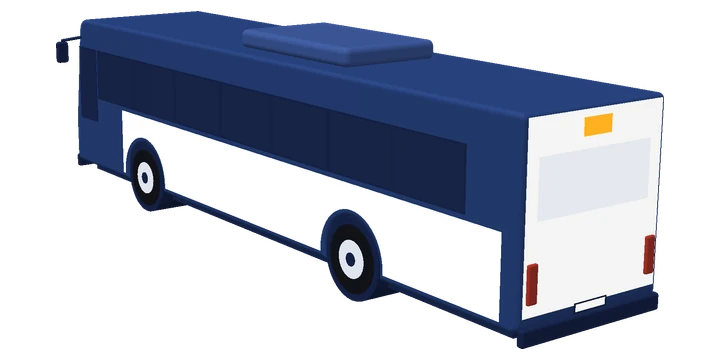
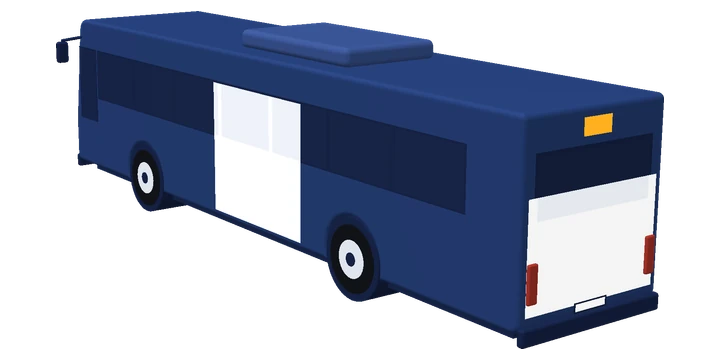
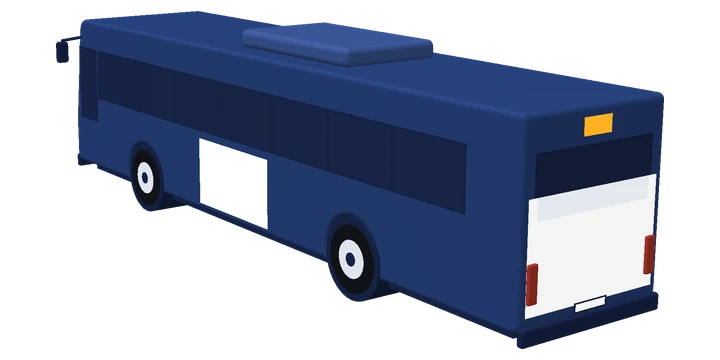
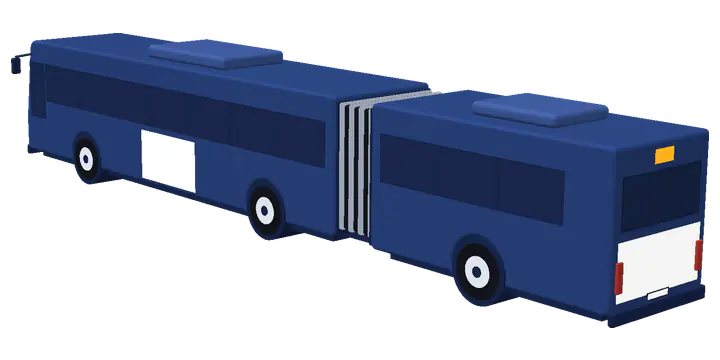
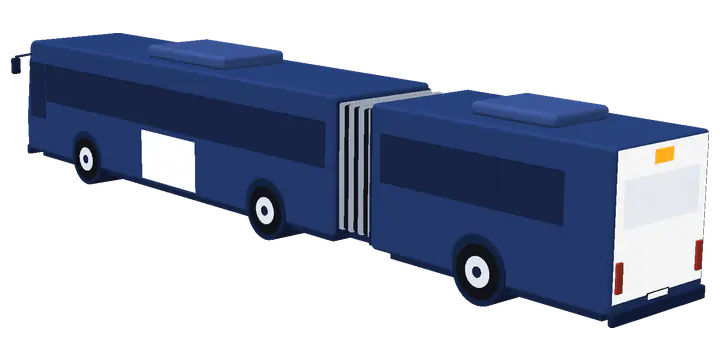
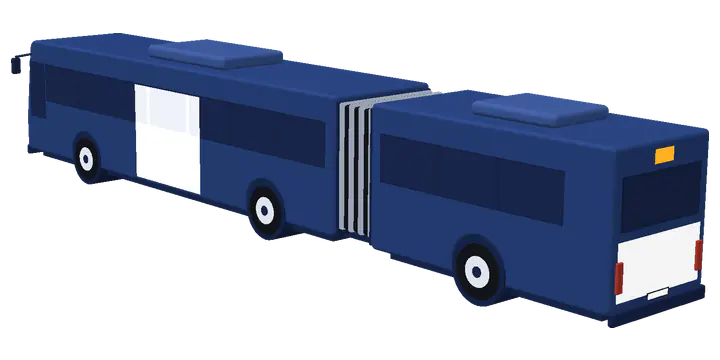
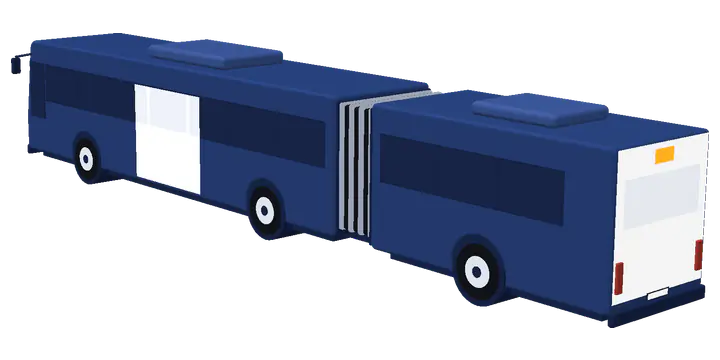
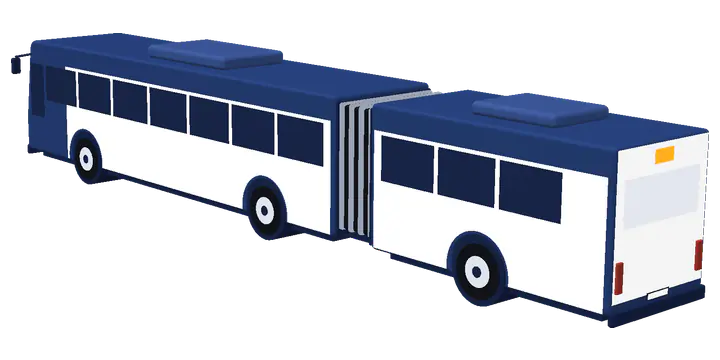
| Format | What it covers | Over the windows? | Approximate sizes | Rigid / Articulated |
|---|---|---|---|---|
| Standard | Small rear + 2 side panels below the windows | No | Sides ≈ 2 × 1.1 m · rear ≈ 2.2 × 1 m | Yes / Yes |
| Full rear | Whole rear + 2 standard sides | No | Rear ≈ 2.4 × 2.5 m | Yes / Yes |
| Large side (‘sides plus’) | 2 large sides + small rear | Yes (perforated vinyl) | Left 3 × 2.05 m · right 1.45 × 2.05 m (rigid) | Yes / Yes |
| Large side plus | 2 large sides + full rear | Yes (perforated vinyl) | Sides as for large side · rear ≈ 2.4 × 2.5 m | Yes / Yes |
| Tandem / Tandem plus | Strip along each side + small or full rear | No | Strip ≈ 9.8 × 1.15 m per side | Yes / No |
| Half rear + sides / + large side | Two thirds of the rear + standard or large sides | Depends on the sides | Rear ≈ 2.3 × 1.5 m | Yes / No |
| Full wrap | Whole body, windows clear | No | ≈ 10 × 2.2 m per side (rigid) | Yes / Yes |
| Super wrap | Whole body, windows included | Yes (perforated vinyl) | ≈ 10 × 2.2 m per side (rigid) | Yes / Yes |
The size that counts is always that of the bus you’re given: before printing, we send you its template with the exact dimensions and the areas to work around (doors, seams, wheel arches).
Rigid or articulated bus: which to choose
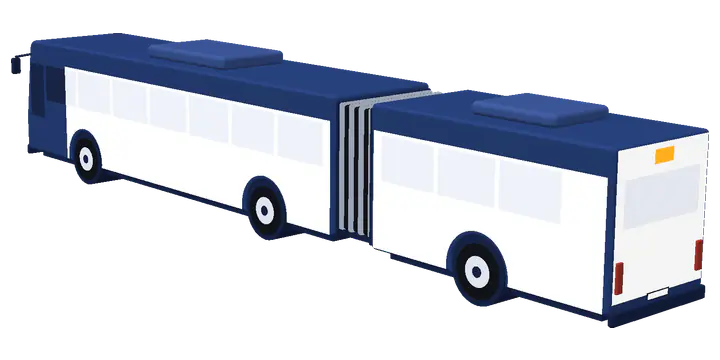
A rigid bus is about 12 metres long and has three surfaces: the rear and one side panel on each side. An articulated bus (a ‘bendy bus’) is about 18, comes in two sections joined by a concertina joint and has five: the rear and two side panels per side. A rigid bus takes up to 3 different pieces of artwork and an articulated one up to 5, one per surface, so the articulated bus fits more messages, or the same one twice along each side.
Rigid buses run most routes and take the most formats: tandem and half rear only exist on rigid buses. Articulated buses run the busiest routes, the ones linking the centre with university campuses, hospitals and stations, and they tend to be fuller. They cost more, because the bus is bigger and carries vinyl on both sections. Large side panels on a rigid bus are €1,150 hire and €950 vinyl for 4 weeks; on an articulated one, €1,950 and €1,800.
For a first bus on a tight budget, a rigid one usually does. Go articulated for the busiest routes or two messages per side.
Guide prices for bus advertising
The price has two parts. Bus hire (the advertising space on the bus, not the vehicle itself), booked in 4-week blocks, and vinyl production (printing and fitting), paid once for every 12 consecutive weeks. At 8 or 12 weeks you don’t pay it again; at 16 or 24, it’s two wraps. These are Marco Visual’s reference prices, excluding VAT, per bus:
| Format | Rigid (12 m, 3 surfaces) | Articulated (18 m, 5 surfaces) |
|---|---|---|
| Standard | On request · below large side | |
| Full rear | On request · close to large side | |
| Large side | €1,150 hire + €950 vinyl = €2,100 for the first block | €1,950 hire + €1,800 vinyl = €3,750 for the first block |
| Large side plus | On request · between large side and full wrap | |
| Tandem, tandem plus and half rear | On request · depends on the combination | Not available on articulated buses |
| Full wrap | Around €5,500 for 4 weeks, vinyl included | On request · more than on a rigid bus (more surface) |
| Super wrap | On request · above full wrap | |
Guide prices reviewed in October 2026. They vary with the city, the exact vinyl area of the bus assigned and the number of weeks. Your proposal gives you the final price.
Formats marked ‘on request’ are quoted according to the city and the bus’s surface area; the table shows where each one sits compared with the large side, which is in the middle of the range.
What the price includes, and what it doesn’t
Included: bus hire for the 4-week block, printing on vinyl approved for bus bodywork (perforated over the windows) and fitting at the depot by specialist vehicle-wrap fitters.
Not included: VAT and the design of the ad. You supply the artwork, or we design it for you, quoted separately.
Removal: when the campaign ends, the vinyl comes off at the depot. We handle it and, if there’s a charge, it’s shown separately in your proposal.
How much the weekly cost falls if you run for longer
The vinyl is paid for once every 12 consecutive weeks. So up to week 12, each extra 4-week block only adds the hire; from week 13 the bus is wrapped again. With the large side figures, for consecutive weeks:
| Length | Rigid · large side | Articulated · large side |
|---|---|---|
| 4 weeks | €2,100 (€525 a week) | €3,750 (€937.50 a week) |
| 8 weeks | €3,250 (about €406 a week) | €5,700 (€712.50 a week) |
| 12 weeks | €4,400 (about €367 a week) | €7,650 (€637.50 a week) |
| 16 weeks | €6,500 (about €406 a week) | €11,400 (€712.50 a week) |
| 24 weeks | €8,800 (about €367 a week) | €15,300 (€637.50 a week) |
If the budget allows, 8 or 12 weeks work out much cheaper per week than 4. And if your business is seasonal (enrolment, the sales, summer), time the block to match.
Can I choose where my bus goes?
You can ask for a route or an area, and we try to stick to it. What we can’t do is promise it 100%, and we’d rather tell you now than later.
City buses aren’t tied to one route for ever. Your bus will run the route or area you ask for between 80 and 90% of the time. The rest of the time it moves to other routes: a workshop service, a breakdown, an extra rush-hour run, a shift change.
In practice, your ad keeps circulating around the same city. If you need one particular street (your shop door, the roundabout outside your dealership), that’s what a bus shelter or a fixed MUPI is for, and you can combine either with the bus.
When you ask for a quote, tell us which area you’re after: the campus, the hospital, the centre, the ring roads. We’ll tell you what’s available in your city.
Cities where you can advertise on buses
We put together city bus advertising proposals in provincial capitals and medium-sized cities. Here are some of them. For Alicante, Vitoria-Gasteiz, Rivas-Vaciamadrid and Alcorcón, the link takes you to the city’s bus advertising page, with sample routes and prices; for the rest, to the city page. There you’ll find all its advertising sites, so you can combine the bus with MUPIs, bus shelters and billboards in the same area.
Pages in Spanish
- Madrid
- Barcelona
- Valencia
- Seville
- Málaga
- Murcia
- Alicante
- Zaragoza
- Bilbao
- Vitoria-Gasteiz
- Las Palmas de Gran Canaria
- Valladolid
- Córdoba
- Granada
- San Sebastián
- Pamplona
- Santander
- Logroño
- Oviedo
- Gijón
- Avilés
- A Coruña
- Vigo
- Santiago de Compostela
- León
- Salamanca
- Burgos
- Albacete
- Guadalajara
- Badajoz
- Huelva
- Cádiz
- Almería
- Jaén
- Marbella
- Elche
- Castellón
- Benidorm
- San Vicente del Raspeig
- Cartagena
- Tarragona
- Lleida
- Girona
- Sabadell
- Terrassa
- Badalona
- L'Hospitalet de Llobregat
- Getafe
- Alcalá de Henares
- Rivas-Vaciamadrid
- Alcorcón
- See all cities
If your city isn’t on the list, write to us anyway with the city and your dates. Palma, Santa Cruz de Tenerife, Toledo, Cáceres and Jerez don’t have their own pages on the site, but we can still put a proposal together.
Each city name links to that city’s page, in Spanish.
Buses in Madrid
Above ground, Madrid’s city buses run the length of the Castellana and along Alcalá and Gran Vía. They reach the La Paz, Gregorio Marañón and 12 de Octubre hospitals and Ciudad Universitaria, as well as districts such as Vallecas, Carabanchel, Hortaleza and Usera. In a single day one bus covers areas that would cost you dozens of MUPI faces. If your business is in a particular district, ask for that area as a guide and back it up with bus shelters on your streets.
Buses in Rivas-Vaciamadrid
In Rivas-Vaciamadrid the bus is an inter-urban service: it takes residents from the neighbourhoods into central Madrid every day, and the Henares corridor routes cross the north of the municipality. We’ve already wrapped buses here for the town’s fiestas, with the whole rear and the sides. Sample routes, what they pass and the price for 4 weeks are on bus advertising in Rivas-Vaciamadrid
Buses in Barcelona
In Barcelona the bus runs along the Diagonal, Gran Via, the Paral·lel and the Meridiana, goes past Sants, the Sagrada Família and Plaça de Catalunya, and climbs up to the Zona Universitària. It’s seen by people who live in Gràcia and by those heading down to work in 22@. If the ad is in Catalan and Spanish, keep the large left-hand side for the longer text.
Buses in Valencia
Xàtiva and Colón, plus the town hall square, on one side; the Blasco Ibáñez and Tarongers campuses, La Fe, the Ciudad de las Artes and the Malvarrosa on the other. Valencia’s city buses link the two several times a day. Watch out for the Fallas: in March the centre is closed to traffic and many routes are diverted, so if your campaign falls then, ask for an area outside the centre.
Buses in Seville
In Seville the bus is everyday transport: Nervión and Santa Justa, Triana and Los Remedios, the Macarena, Sevilla Este and the Cartuja. Rear panels earn their keep on the ring roads and the avenida de Andalucía, where traffic crawls and the car behind has time to read. If you’re advertising in spring, book early: between Semana Santa (Holy Week) and the April Feria, buses are booked months ahead.
Buses in Málaga
In Málaga many routes pass along the Alameda Principal, so your bus crosses the centre often. From there it heads out to Teatinos and the Clínico hospital, the Parque Tecnológico or the carretera de Cádiz and Huelin. A word of warning if your audience is on the Costa del Sol: Málaga’s city buses stay within the city, so for Torremolinos or Fuengirola it’s best to ask us.
Buses in Murcia
In Murcia the bus links the Gran Vía and the plaza Circular with the Espinardo campus, La Arrixaca hospital, Nueva Condomina and the villages of the huerta (the market-garden belt), where there are hardly any MUPIs. People drive a lot here, and on the ring road or the avenida Juan Carlos I the back of the bus is easy to read. To be sure of the centre, add bus shelters on the Gran Vía.
Buses in Alicante
In Alicante the city bus goes where the tram doesn’t: the northern and western neighbourhoods, the industrial estates and the road out to Elche. In summer, visitors join the residents: a second audience for leisure, hospitality or property businesses. Routes, areas and prices are on bus advertising in Alicante
Buses in Zaragoza
In Zaragoza the tram runs along a single axis, from Valdespartera to Parque Goya; the bus reaches the neighbourhoods the tram doesn’t touch, such as Las Fuentes, Delicias (and its station), San José and Torrero. Zaragoza is compact, and the same bus goes round the same main roads several times a day: repetition does the work. If the centre is what you want, ask for Independencia and the Gran Vía.
Buses in Bilbao
Gran Vía and Abando, Indautxu, Deusto, San Mamés, the Casco Viejo and, uphill, Rekalde: that’s where Bilbao’s city buses run, and in the upper neighbourhoods they’re how people get about every day. If your audience is in Barakaldo, Getxo or Basauri, tell us and we’ll look into it.
Buses in Vitoria-Gasteiz
In Vitoria-Gasteiz we work with rigid and articulated buses in the large side format: they’re the two price examples on this page. It’s a flat city of wide avenues with lots of people on bikes and on foot, so the side panel is seen close up and at leisure. Sample routes, the areas they pass through and the price for 4 weeks are on bus advertising in Vitoria-Gasteiz
Buses in Valladolid
Valladolid’s city buses go along the paseo de Zorrilla, past the plaza Mayor and Campo Grande, the Miguel Delibes campus, Parquesol, Delicias and on to the station. For the motor trade on the main roads out of town, or for the Feria de Valladolid, one large side bus is plenty.
Buses in Las Palmas de Gran Canaria
In Las Palmas de Gran Canaria the city buses run along the avenida Marítima, Mesa y López, Triana and Vegueta, Las Canteras, Siete Palmas and the Tafira campus. Long and narrow between the sea and the hills, the city has few main roads and heavy traffic on them: on the Marítima, the back of the bus is seen again and again.
Buses in Córdoba
Tendillas, Gran Capitán and la Victoria are a short bus ride from Rabanales, the Reina Sofía hospital, the AVE high-speed station, Ciudad Jardín or the Sector Sur. In May, with the Patios, the Cata wine fair and the Feria, there are as many visitors in the streets as residents: a campaign from April to May reaches both with the same bus.
Buses in Granada
In Granada the bus climbs where the metro doesn’t go: the Albaicín, the Realejo, the Cartuja campus. With such a large student population, it’s seen every day by students on their way to lectures. For language schools and training centres, student halls and leisure, September and October are the months.
Why advertise on a bus (and when it isn’t for you)
- Bigger than a MUPI. A 3 × 2.05 m large side panel has almost three times the area of a 1.20 × 1.75 m MUPI street panel (roughly the size of a UK 6-sheet), and it sits at eye level for pedestrians and drivers.
- The rear in a traffic jam. At the lights or in a queue, the car behind has the ad three or four metres away and nothing else to look at.
- The whole city from a single advertising site. The bus goes through residential areas, industrial estates and access roads where there are no MUPIs or billboards. With a fixed campaign you’d need a lot of faces to cover those areas.
- Repetition. The same residents pass the same bus several times a week, coming and going, for four weeks at least.
- Your area, as a guide. You can ask for a route or an area (the campus, the centre) and the bus will spend most of its time there.
- You pay for the vinyl once every 12 weeks. Up to week 12, running for longer only adds hire: on a 12-week run, large side panels on a rigid bus work out at about €367 a week.
When it isn’t for you. If your message needs a lot of text (a bus is read in three seconds), or if you must be on one exact street without fail (that’s what bus shelters and MUPIs are for). Nor if your campaign is shorter than 4 weeks, or if you want to change the creative every week: the vinyl goes on at the start and isn’t changed mid-block.
How to book bus advertising, step by step
- Choose the city, bus type and format. Rigid or articulated, and one of the formats above. Tell us the area or route you’re interested in, too, and your dates.
- Set the weeks. At least 4, in blocks of 4 (4, 8, 12…).
- We send you the proposal and the template. With the final price (hire plus vinyl) and, as soon as the bus is assigned, its scale template showing the dimensions and the areas to work around.
- Design and approval. You send us the final artwork (or we prepare it). We check it and pass it to the bus company for sign-off, which is compulsory before printing.
- Printing and fitting. It’s printed on approved vinyl and fitted at the depot.
- On the road. We let you know when your bus goes out. At the end of the block it returns to the depot and the vinyl is removed.
The earlier you book, the better, especially around key dates: buses on the central routes are the first to go. And leave some time between final artwork and start date, because it has to be approved before it’s printed and fitted; the exact dates of your campaign are in the proposal.
How to design a bus ad
People see a bus in passing, from the pavement or from the car behind. So the artwork has to make sense at a glance:
- One message, three seconds. Name, one line and a way to get in touch (website or phone). If something needs explaining, it isn’t for a bus.
- Big lettering. On a side panel, keep the smallest letters at least 10 cm high; on the rear, the car behind is only a few metres away, so it takes a little more text, but not much.
- High contrast and flat colours. Dark background with light lettering, or the other way round. Gradients and highly detailed photos get lost at 20 metres.
- Nothing important over doors, seams or wheel arches. The vinyl gets cut there. The bus template marks those areas; design on it, not before you have it.
- Watch the windows. Formats that go over them use perforated vinyl: it copes with colour and large shapes, but not with fine text or small logos. Better to put the text on the bodywork and the colour on the glass.
- Safety margin. Leave about 4 cm clear on every edge of each panel; the fitters need it.
- The file. Vector PDF at 1:1 or 1:10 scale (in that case, at 300 dpi), text converted to outlines and colours in CMYK. If you’re unsure how to prepare it, we explain it step by step here: how to get a design ready for the printer
(in Spanish) . - Think about both sides. The left-hand side (no doors) is bigger than the right: don’t force the same artwork to fit both; make two versions.
Three typical campaigns, the way we’d plan them
A language school in a university city
A rigid bus with large side panels for 8 weeks, from early September to late October, with the campus as the guide area. On the side, ‘Enrolment now open’ and the website; on the rear the name and a phone number for anyone driving behind. Guide cost: €3,250 excluding VAT, about €406 a week.
A car dealership with a launch campaign
An articulated bus with a full wrap for 12 weeks, with the ring roads and the main roads out of town as the guide area: that’s where you get the most cars behind the bus. One model, large, along both sides, and the launch price on the rear. It’s paired with two billboards on the approach roads so the message is repeated coming in and going out.
A summer festival
A full rear for the 4 weeks beforehand, with the festival poster and the date, plus bus shelters near the venue and in the centre, reminding anyone who hasn’t bought a ticket yet of the date.
Combine the bus with other advertising sites in your city
If you also want to be on a particular street, add fixed sites:
- Bus shelters on your streets and next to your premises, from €92 per face per week.
- MUPIs in pedestrian areas of the centre, from €92 per face per week.
- Billboards on the approach roads and ring roads, from €78 per billboard per week.
You can see and book every fixed site in the campaign planner
Get a quote for your bus
Tell us your city, your dates, the format that suits you and the area you’re interested in, and we’ll put together a proposal with hire and vinyl shown separately.
If fixed sites are part of the plan too, the campaign planner
Bus advertising: frequently asked questions
How much does it cost to advertise on a bus?
From €1,150 hire for 4 weeks plus €950 for the vinyl, excluding VAT, on a rigid bus with large side panels. An articulated bus in the same format costs €1,950 plus €1,800 for the vinyl, and a full wrap about €5,500 including vinyl. Hire is paid per 4-week block and the vinyl once every 12 consecutive weeks, so at 8 or 12 weeks the weekly cost drops considerably. The exact price depends on the city, on the format and on the surface of the bus assigned; we confirm it in your proposal.
How much does it cost to wrap a whole bus?
Around €5,500 excluding VAT for 4 weeks on a rigid bus, with the vinyl already included. It covers both sides in full and the rear, and leaves the windows clear; the super wrap, which covers them too with perforated vinyl, costs more. On an articulated bus, with a good deal more surface, the price goes up and is quoted for the specific vehicle. If you extend the campaign to 8 or 12 weeks, you don’t pay for the vinyl again; from week 13 it’s charged again. The price of each extra block is in your proposal.
What does the price include? Are design, production and fitting extra?
There are two items: bus hire, in 4-week blocks, and the vinyl, paid once every 12 consecutive weeks, which covers printing on approved material and fitting at the depot. VAT and design are not included: you prepare the artwork, or we quote for it separately.
What’s the minimum booking?
Four weeks, and from there in blocks of 4 (8, 12, 16…). We don’t run shorter campaigns: with the cost of printing, fitting and removing the vinyl, the sums wouldn’t add up. If your campaign is two or three weeks long, bus shelters or MUPIs suit you better, as they’re booked week by week.
Can I choose the route or area the bus covers?
Yes, as a guide route or area: we try to stick to it, but not 100%. Your bus will run that route between 80 and 90% of the time; the rest of the time it moves to others because of workshop services, breakdowns, extra rush-hour runs or shift changes. For one exact street, add bus shelters or fixed MUPIs.
What’s the difference between a rigid and an articulated bus?
The rigid bus, about 12 metres long, has three advertising surfaces (rear and one side panel per side). The articulated bus, about 18 and in two sections, has five (rear and two side panels per side). Articulated buses tend to run the busiest routes and take up to 5 pieces of artwork, against 3 on a rigid one. The trade-off is a higher price: for large side panels, €1,950 hire against €1,150, and €1,800 vinyl against €950. Tandem and half rear are only available on rigid buses.
What formats are there, and which works best?
From smallest to largest: standard (3 faces below the windows), full rear, large side, large side plus, tandem and half rear (rigid only), full wrap and super wrap. For most small businesses, the large side: plenty of surface without the price getting out of hand. If your audience drives, the full rear; and for a launch you want seen in its entirety, the full wrap.
Can you put advertising over the windows? Can passengers see out?
Yes: formats that go over the windows (large side, large side plus and super wrap) use approved perforated window vinyl. From outside you see the ad; from inside, passengers still see the street. In the design, keep fine text on the bodywork and leave colour and big shapes for the glass, because perforated vinyl loses detail.
How far ahead should I book, and when do I send the artwork?
As a guide, one or two months ahead, and with more notice if your campaign falls at back-to-school time, Christmas, Easter or local fiestas. The artwork, the sooner the better: we need to check it and get the bus company’s approval before it’s printed and fitted, and your proposal gives you the dates. Design on the bus template, which we send you as soon as the bus has been assigned.
What happens if the bus breaks down or is swapped?
We let you know and sort it out with you. A bus can spend a few days in the workshop for a service or a breakdown; if it’s only off the road briefly, the campaign simply carries on. If it drags on, we agree with you what to do, case by case.
Do I need a permit? Is there anything I can’t advertise?
You don’t need to apply for any permit: we handle the booking and the artwork approval. The bus company checks the design before printing. Usually ruled out: alcohol, tobacco, gambling, politics or offensive messages, as well as anything that mimics the bus’s own signs, lights or lettering.
How many buses do I need?
It depends on how big the city is. In a medium-sized city, one bus with a clear message already gets noticed; in a big city it’s worth running several and asking for different areas. To measure results, use a phone number, a code or a web address that doesn’t appear in the rest of your advertising, and compare with the previous weeks.
For businesses outside Spain
We work with you in writing, in English: send us an email or a WhatsApp message and you’ll get your reply in English. Phoning is fine too, on +34 628 062 892, though that conversation will be in Spanish.
All the buses run in Spanish cities, like the MUPIs, bus shelters and 8x3 m billboards we sell. You send us your artwork as a PDF, laid out on the template we provide once the bus has been assigned. We get the bus company’s approval and handle printing and fitting. If you can, book one or two months ahead.
What our clients say
Real businesses that have already booked our outdoor advertising sites.
Based on 55 reviews
See all on Google 
Hemos quedado satisfechos con la campaña de publicidad que contratamos con Marco Visual para el Conservatorio Superior de Danza de Alicante (CSDA) durante las Hogueras. La campaña contó con cuatro mupis diferentes, cada uno dedicado a un estilo de danza, una iniciativa para dar visibilidad a nuestro conservatorio y acercar la riqueza y diversidad de la danza a la ciudadanía. Destacamos la profesionalidad, la atención recibida y la buena gestión de todo el proceso. Porque la danza también merece ocupar las calles y formar parte de la ciudad. ¡Gracias a Marco Visual por ayudarnos a llevar nuestro arte más allá de las aulas!
Original review in SpanishSee on Google 1 / 4

Hemos trabajamos con Marco Visual para la campaña de apertura de nuestra nueva clínica en Molina de Segura, y la experiencia ha sido positiva. Negociamos directamente con ellos, sin intermediarios: el trato es cercano y las respuestas, rápidas. Necesitábamos resolver ubicaciones, formatos y plazos con poco margen de tiempo, y flexibilidad para adaptar la propuesta a lo que necesitábamos. Recomendado
Original review in SpanishSee on Google

Ha sido nuestra primera experiencia en implementar un MUPI, pensábamos que sería algo engorroso en cuanto al proceso y verdaderamente nos hemos confundido. La atención de Alejandro desde el primer momento ha sido rápida, precisa en las indicaciones y nos ha facilitado todo. Ademas agregar que el sistema que tienen implementado online para el seguimiento ha sido muy práctico, sabes el status de la campaña en todo momento, repetiremos!
Original review in SpanishSee on Google

Nuestra experiencia ha sido muy positiva. Queremos destacar especialmente la profesionalidad, rapidez y atención recibida durante todo el proceso. El equipo ha demostrado en todo momento una excelente disposición y un trato cercano y profesional. Mención especial para Alejandro M., por su amabilidad, eficacia y atención constante. Ha sido un placer contar con su ayuda y profesionalidad. Sin duda, recomendamos sus servicios y agradecemos el trato recibido.
Original review in SpanishSee on Google

Hemos quedado muy satisfechos con la campaña de publicidad exterior realizada con Marco Visual. Desde el primer momento, el trato ha sido cercano y profesional, facilitando todo el proceso y resolviendo nuestras dudas con rapidez. La gestión de la campaña ha sido ágil y eficiente, y el seguimiento durante toda la ejecución nos ha transmitido confianza. La instalación y el mantenimiento de los soportes se han realizado correctamente, cumpliendo con lo acordado. Agradecemos especialmente la atención recibida y la buena comunicación del equipo. Ha sido una experiencia muy positiva y no dudaríamos en contar con Marco Visual para futuras campañas.
Original review in SpanishSee on Google 1 / 2

La campaña que hemos hecho de publicidad exterior ha sido un éxito. La comunicación con Alejandro ha sido lo mejor, muy profesional y atento en todo momento con todos los detalles de la campaña. Repetiremos sin duda en unos meses.
Original review in Spanish See on Google
Explore other advertising formats at Marco Visual

Bus shelters
Built into bus stops, they mainly reach pedestrians and public transport users.

MUPIs
Street furniture panels on the city’s busiest streets and avenues.

Kiosks
Panels on kiosks along busy streets and wide avenues with heavy traffic.

Billboards
Large 8x3 m billboards in high-traffic areas, big enough to catch the eye of anyone passing by.

Monopole billboards
Towering roadside monopole billboards that drivers can see from several kilometres away.

Street clocks
A panel on top of a pole with a clock and thermometer, raised up so more people see it.

Jet panels
Backlit landscape panels in metro and tram stations, seen up close by people waiting.

Digital MUPIs
Digital screens around the city, with moving ads that stand out from every other format.