Outdoor advertising campaigns in Cantabria: over 330 sites across the region

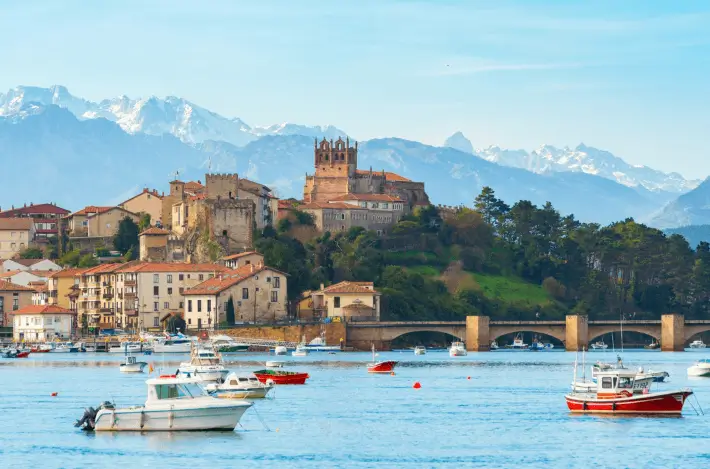
Prices in Cantabria · per face per week
- MUPIs (6-sheet)from €126
- Bus sheltersfrom €126
- Street clocksfrom €126
Prices exclude VAT · printing and posting from €35 per face
Outdoor advertising sites in Cantabria
In Cantabria we offer more than 330 outdoor advertising sites spread across Santander, El Astillero and the towns of Guarnizo and Maliaño, which together form the Arco de la Bahía, the built-up belt around the bay. The region has 593,623 inhabitants according to the annual census of Spain's National Statistics Institute (INE) as at 1 January 2025, a population concentrated on the coastal strip between the capital and Torrelavega and served by the A-67, A-8 and S-10, the three routes that carry daily traffic between the Santander metropolitan area and the surrounding industrial estates. Santander is home to nearly 30 per cent of the region's population and acts as the economic, healthcare and university hub for the whole of Cantabria, which multiplies passing traffic at the bus shelters and MUPI street panels on its main avenues. The temperate oceanic climate, with mild summers and an average annual temperature of around 14°C, lets outdoor campaigns run all year round without the dips in impact that other markets suffer from extreme heat or long spells of snow.
Marco Visual's network covers the whole Santander metropolitan area and the main corridors around the bay. Inventory is densest at the bus shelters serving Santander's city bus routes and the intercity lines, on avenues such as Cardenal Herrera Oria, Paseo General Dávila, Avenida de los Castros, Calle Castilla and Avenida de Cantabria, as well as at the tourist areas of El Sardinero (Avenida Reina Victoria, Avenida Castañeda, Plaza de Italia). In El Astillero, sites are concentrated on Calle La Industria, Avenida de Chiclana, Calle 18 de Julio and the approaches to the Guarnizo industrial estate, where traffic is split between residents and industrial service vehicles. Street thermometers, a distinctive format in Cantabria because they are read at a glance and blend into the seafront street furniture, deliver impacts in pedestrian areas of the centre and on Paseo de Pereda. With individual sites in Maliaño and on the approaches to the Trascueto industrial estate as well, we can build complete packages for advertisers who need to go beyond the capital and connect with workers across the Arco de la Bahía while still reaching pedestrians in central Santander.
Cantabria's commercial calendar has several clear windows in which outdoor advertising becomes more effective. Santander's Semana Grande, held around 25 July in honour of St James, packs eleven days of festivities, concerts in Plaza Porticada, fairs and peñas (local festival clubs) that send footfall soaring in the city centre and El Sardinero. The Baños de Ola, held in early July and officially listed as a festival of Regional Tourist Interest, re-create nineteenth-century seaside summers and draw visitors to the Jardines de Piquío and the Primera Playa beach. The Día Infantil de Cantabria, a children's day held on the first Sunday in June at La Magdalena, opens the season with a family audience closely tied to local shopping. La Semanuca, in the last week of August, keeps the festive mood going. On top of that, cruise tourism, conferences at the Palacio de la Magdalena, the summer courses of the UIMP (a Spanish public university) and the programme of university events keep visitors coming throughout the summer and over long weekends, giving local and national advertisers a full agenda for outdoor campaigns with a defined impact window and measurable response.
In our campaign planner you can check the price of MUPIs and every other advertising site, real photos, the exact location, Google Street View, descriptions and nearby points of interest, dimensions, print format… Best of all, you can filter the sites and pick the ones you want, then plan and book the outdoor advertising campaign
Pages in Spanish
Looking for another area?
Explore the different outdoor advertising formats in Cantabria
Marco Visual is an online platform for managing and booking campaigns on outdoor advertising sites. Our website gives you all the information you need to plan and book an outdoor campaign. Get to know each site and its features: price, real photos, format, minimum booking period and other terms.
Outdoor sites are ideal for promoting events, with room on the ad for the venue, who is taking part and every other detail that matters. They are also widely used for branding, so that people start seeing a brand away from the screen and remember it better. Other common uses are launching offers (Black Friday, the sales, Christmas…) and opening new shops.
Here are some of our campaigns on different outdoor advertising sites:
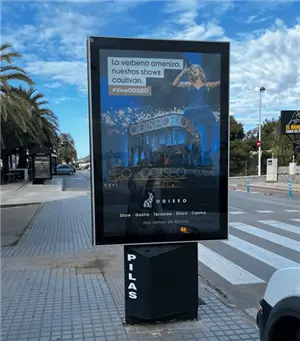
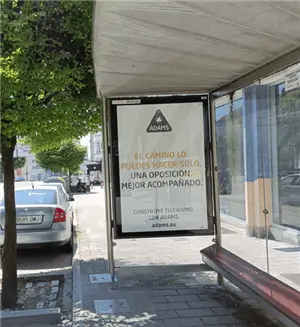
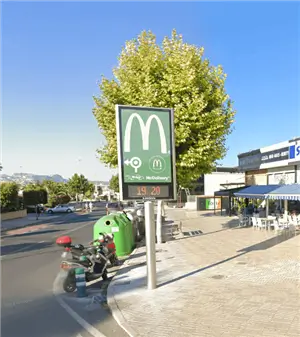
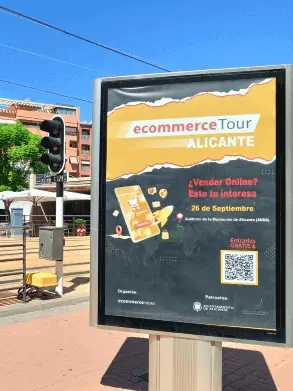
The benefits of outdoor advertising in Cantabria
Cantabria has a consumer profile of its own within northern Spain, and that shapes outdoor advertising strategy. It has the fourth-oldest population of any autonomous community in Spain, with an average age of 46.4 years and 24.5 per cent of residents over 64, according to the latest figures from Spain's National Statistics Institute (INE), released in early 2026. This means deep-rooted shopping habits, loyalty to local shops and strong reach for traditional channels: the local paper, the regional radio station and outdoor advertising itself still carry more weight than in regions where digital has swept the board. Average gross income per taxpayer in Santander is above €30,000 a year, which puts the capital among the northern cities with the highest purchasing power and opens the door to brand campaigns, not just low-ticket promotions. Cantabria's unemployment rate, 7.2 per cent in the third quarter of 2024, is the second lowest in Spain, a sign of job stability that feeds steady, repeat spending.
Tourist seasonality is the second factor that makes outdoor advertising worthwhile in Cantabria. Between July and September, domestic visitors heading for El Sardinero, Liébana, the Picos de Europa and the western coastline double or triple the capital's potential audience. Hotel overnight stays rose by between 10 and 20 per cent in several months of 2024 according to ICANE, Cantabria's statistics institute, and the first figures for 2025 show the trend holding. For sectors such as hospitality, speciality food retail, nightlife, holiday lets and guided experiences, a well-placed bus shelter on Reina Victoria or Avenida de los Castros multiplies visibility at the exact moment visitors make up their minds. Outside the high season, outdoor advertising works very well for car dealerships, dental practices, orthopaedic and mobility shops, education franchises and financial services, the dominant profiles among local SMEs, which rely on packages of MUPIs and street thermometers because they build awareness in specific neighbourhoods without driving up the cost per impact. Industry accounts for 21.6 per cent of the region's gross value added according to ICANE, five points above the Spanish average, and that opens up specific opportunities for technical services, logistics and engineering firms looking to strengthen brand recall around El Astillero, Maliaño and Camargo.
Within the wider media mix, outdoor advertising genuinely complements digital and radio spend. Radio stations Cadena SER Cantabria and COPE Santander, along with the newspapers El Diario Montañés and Alerta, have loyal audiences but heavy advertising clutter, which hurts recall. Outdoor adds visual frequency without demanding undivided attention: a motorist who drives along Cardenal Herrera Oria five times a week sees the same bus shelter five times, and that builds brand memory at a cost per impact that is hard to match. For local campaigns on a tight budget, a mix of MUPIs on the city centre–El Sardinero axis plus a couple of street thermometers on Paseo de Pereda reaches over 60 per cent cover in under fifteen days, according to standard urban outdoor planning benchmarks. This is the argument that works best with advertisers who are already testing social media and need to back up their message in the physical world. Then there is how long the impact lasts: a well-executed bus shelter creative stays visible 24 hours a day for 14 or 30 days, while a digital ad vanishes as soon as the user scrolls. Combining the two channels returns more per euro invested than either one on its own, especially in markets like Cantabria, where loyalty to local shops is still high.
In your marketing and communications strategy, outdoor advertising sites are essential for reaching your audience. They are an excellent way to catch the eye of people out and about in town, thanks to well-chosen locations and high visibility.
- Eye-catching visual advertising with 24/7 visibility in high-traffic areas.
- Strategic locations on the city’s main streets and avenues.
- Wide coverage: a presence in Spain’s main cities and regions.
- High visibility in carefully chosen spots for the greatest impact.
- Geographic targeting: choose the areas and neighbourhoods where your target audience is.
- Greater brand awareness and trust.
- Flexibility for short and long campaigns.
- A non-intrusive medium that helps the message stick when combined with social media campaigns.
The area and town links below go to pages in Spanish.
Outdoor advertising in Santander
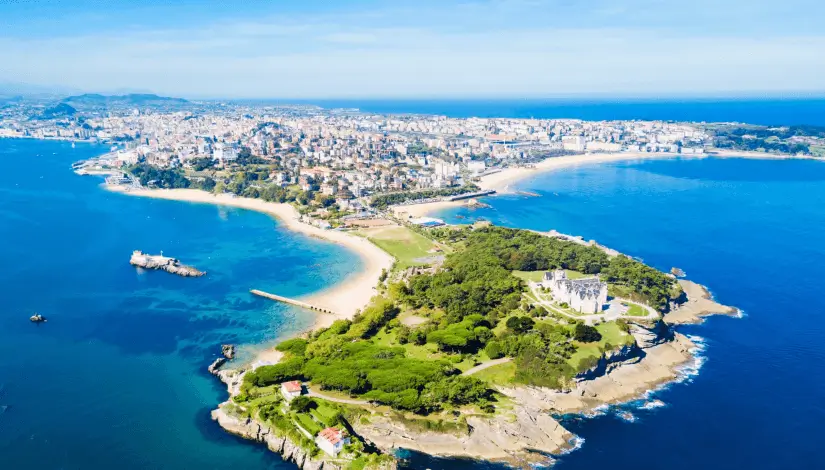
- Population: 175,082 inhabitants, according to INE 2025 data
- Gender split: roughly 53% women and 47% men
- Average age: around 47 years, with a slight ageing trend
- Purchasing power: above average, with an economy based on financial services, public healthcare, higher education, retail and coastal tourism
- Economic activity rate: close to 55%, with a strong presence in banking and insurance, healthcare, hospitality and the regional civil service
- Relevance for advertising: a regional capital with a strong summer tourist trade and a university hub that brings regular peaks in footfall all year round
Santander is the centre of gravity for outdoor advertising in Cantabria. The Cantabrian capital reached 175,082 inhabitants on 1 January 2025 and has grown steadily for three years in a row, driven by services and healthcare, and by the weight of the Marqués de Valdecilla University Hospital, the University of Cantabria and the headquarters of Banco Santander. The city is organised into eight shopping districts recognised by the City Council (Centro, Puertochico, Alameda-Valdecilla, Alisal-Cazoña-Albericia, Sardinero, Monte-Cueto-Valdenoja, Los Castros-Paseo de Altamira and Castilla-Hermida), each with its own customer profile. The port, Santander's Seve Ballesteros airport ten minutes from the centre and the ferry link with the UK all add to passing traffic in areas such as Paseo de Pereda and the Barrio Pesquero fishing district, where traffic levels justify investing in MUPIs and street thermometers.
Marco Visual has close to 320 active outdoor advertising sites in Santander, with bus shelters clearly in the majority (around 260) and a spread of MUPIs and street thermometers along the main thoroughfares. Paseo General Dávila has one of the highest densities, along with Avenida de los Castros, Calle Castilla, Avenida de Cantabria and Calle Cardenal Herrera Oria. In El Sardinero, Avenida Reina Victoria and Avenida Castañeda, along with Plaza de Italia, offer high visibility during the tourist season. To the west, Calle Marqués de la Hermida and Calle Jerónimo Sainz de la Maza cover Castilla-Hermida and the approach to the fishing port industrial estate. The Bahía de Santander shopping centre in Peñacastillo, Valle Real in Maliaño (strictly speaking in the municipality of Camargo) and the roads around Cuatro Caminos complete the highest-traffic locations for campaigns focused on retail and restaurants.
Bus shelters in Santander
Bus shelters are the dominant outdoor format in Santander, serving the city's municipal bus network and the intercity routes to Camargo, Astillero and Torrelavega. Their value lies in the double impact: passengers waiting for the bus take in the message at close range, with average dwell times of four to seven minutes, while drivers passing by notice it at reduced speed in urban areas. They work well for campaigns by local services, neighbourhood shops, clinics and retail promotions running for a fortnight or a month.
The main locations are spread along Paseo General Dávila, Avenida de los Castros, Calle Castilla, Avenida de Cantabria, Calle Cardenal Herrera Oria, Paseo Reina Victoria and Avenida Castañeda in El Sardinero, plus Calle Marqués de la Hermida, Calle Jerónimo Sainz de la Maza next to the FEVE narrow-gauge railway station, Avenida Marqués de Valdecilla by the hospital, Avenida del Deporte towards the Campos de Sport stadium and Calle Calvo Sotelo in the centre. The network is completed by bus shelters on Avenida Pontejos, Calle Jesús de Monasterio and Calle San Fernando, streets with a strong mix of shops and local restaurants.
MUPIs in Santander
MUPIs deliver a different kind of outdoor impact from bus shelters: they are designed for people on foot and for drivers moving slowly through the centre and the streets around it. In Santander they work well on streets with mixed traffic and plenty of shops, restaurants and professional services. They are the preferred format for brand launches, visually strong creative campaigns and activity that needs repetition on a few very busy streets rather than broad coverage. Typical bookings start at a fortnight.
Santander's main MUPI locations are Calle Castelar and Paseo de Pereda on the port waterfront, Plaza de Italia and Avenida Reina Victoria in El Sardinero, Avenida de los Castros and Avenida de Cantabria around the university campus, Calle Jesús de Monasterio in the Puertochico-Centro area, Calle Calvo Sotelo, Calle José M. Cosío in the Cazoña neighbourhood, Paseo Pérez Galdós, Calle Los Ciruelos and Avenida Marqués de Valdecilla, near the hospital. The areas around Cuatro Caminos and Calle San Fernando complete coverage of the centre-Valdecilla corridor.
Street thermometers in Santander
Street thermometers are a distinctive outdoor format in Cantabria because they blend into the seafront street furniture. They combine a public service (showing the air temperature) with a constant visual presence in areas where people stroll. Performance is high in pedestrian squares, on seafront promenades and in relaxed tourist areas, where people on foot glance at the thermometer several times during the same walk. This is a format that builds brand familiarity through repetition without wear-out, and it suits local advertisers who want a continuous presence.
The street thermometers available in Santander are concentrated in the centre and El Sardinero. There are sites on Paseo de Pereda and Plaza Pombo, around Calle Castelar and the auditorium, on Avenida Reina Victoria by the Jardines de Piquío and on Plaza de Italia opposite the Gran Casino. Other sites include the area around Plaza del Ayuntamiento and Calle Cádiz in Isabel Segunda, as well as locations where the avenues end in El Sardinero's shopping areas. They work well for advertisers in hospitality, seaside leisure, mid-range clothing retail and professional services based in the capital.
Outdoor advertising in Torrelavega
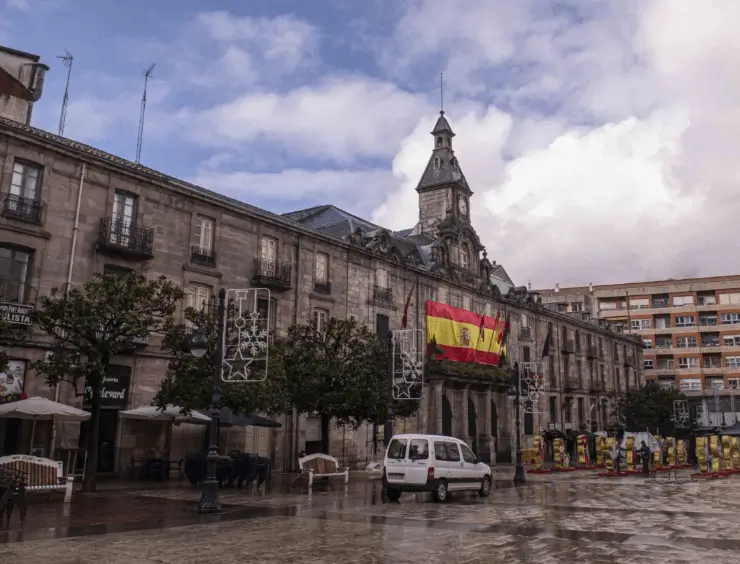
- Population: 51,795 inhabitants, according to INE 2025 data
- Gender split: roughly 52% women and 48% men
- Average age: around 48 years, with a somewhat older population
- Purchasing power: average, with an economy based on industry, retail and services for the surrounding comarca
- Economic activity rate: around 60%, with a strong presence in industry, wholesale trade and logistics
- Relevance for advertising: the Besaya area's shopping hub, drawing spending from the whole comarca, which extends the reach of each advertising site beyond its registered population
Torrelavega is Cantabria's second city and the region's main focus of advertising investment after Santander. The municipality has around 51,800 inhabitants, according to 2025 data published by Spain's National Statistics Institute (INE), and it is the capital of the Besaya comarca (district), in the valley where the Saja and Besaya rivers meet, some 24 kilometres from the regional capital. Its profile is industrial and commercial: it is home to the Mercado Nacional de Ganados (the national livestock market), industrial estates such as Barros and Tanos-La Llama, and a town centre that acts as the shopping hub for the whole of western Cantabria. Both the A-67 (the Cantabria-Meseta motorway) and the Besaya branch of the Camino del Norte (the northern route of the Camino de Santiago) pass through Torrelavega, turning its avenues and approach roads into high-traffic points every day.
In Torrelavega, Marco Visual has a network of bus shelters and MUPIs spread across its shopping and residential streets. The standout locations are on Avenida de Bilbao, Avenida del Cantábrico, Avenida de España, Avenida del Besaya and the shopping area around José María de Pereda, plus Paseo Julio Hauzeur, Calle Julián Ceballos and Avenida Fernando Arce. These sites carry mixed traffic of residents and shoppers from the Besaya municipalities, who come to Torrelavega as the comarca's shopping hub. Outdoor advertising performs well here for retail, car dealerships, clinics, tuition centres, hospitality and local shops looking for visibility in a town that acts as a magnet for spending across its whole comarca.
Bus shelters in Torrelavega
Torrelavega's bus shelters cover the local and intercity bus routes linking the centre with its neighbourhoods and with the Besaya municipalities. Their audience combines town residents and shoppers from the comarca who travel into the shopping district. It is a very effective outdoor format for local shops, clinics, tuition centres, car dealerships and neighbourhood services that need a constant presence on the daily journeys of pedestrians and drivers.
The main locations are spread along Avenida de Bilbao, Avenida del Cantábrico, Avenida de España, Avenida del Besaya, Avenida Fernando Arce, Paseo Julio Hauzeur and Calle Julián Ceballos, with additional sites in Tanos and the Sierrapando neighbourhood. The layout is designed to follow both commuter journeys to the industrial estates and shopping activity in the centre.
MUPIs in Torrelavega
MUPIs in Torrelavega deliver street-level impact in the busiest pedestrian areas of the shopping district. They work especially well for launches, seasonal promotions and campaigns for retail, restaurants and services looking for immediate visibility among people walking along the main shopping streets.
Standout locations include the area around José María de Pereda, Calle Julián Ceballos, Avenida de España and the Paseo Julio Hauzeur axis, where much of the town's retail and hospitality is concentrated. This coverage is aimed at shoppers walking around central Torrelavega.
Outdoor advertising in El Astillero
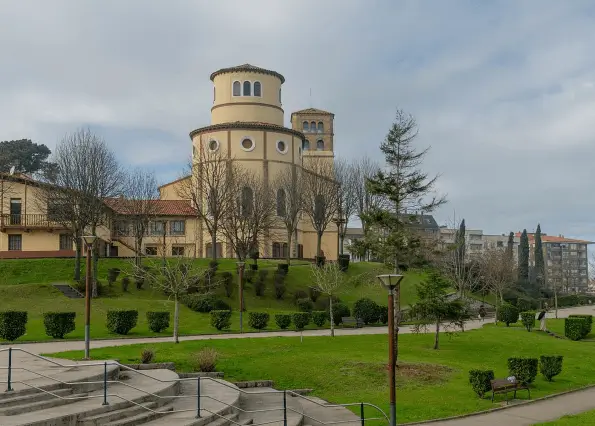
- Population: 18,467 inhabitants, according to INE 2024 data
- Gender split: roughly 51% women and 49% men
- Average age: around 45 years, slightly younger than the regional average
- Purchasing power: average, with an economy based on shipbuilding, metalworking, the Guarnizo industrial estates and services for the metropolitan area
- Economic activity rate: around 56%, with a strong presence in manufacturing, shipbuilding, transport and technical services
- Relevance for advertising: a municipality with sustained population growth, a working-class profile and coverage of traffic flows along the Astillero-Santander corridor
El Astillero is the second hub for outdoor advertising investment in Cantabria, thanks to its industrial character and its place within the Santander metropolitan area. The municipality had 18,467 inhabitants on the 2024 municipal register and led population growth in the region that year at 1.36 per cent, according to Spain's National Statistics Institute (INE), reflecting its growing appeal as a residential alternative to the capital. Its economy is still tied to shipbuilding (Astilleros de Santander), metalworking (Ferroatlántica in Boo) and the Guarnizo and Trascueto industrial estates, home to logistics, automotive, aluminium and industrial supply firms. Lying 7.5 kilometres from Santander, with two FEVE narrow-gauge railway stations in the municipality (Astillero and La Cantábrica) and Seve Ballesteros airport close by, the town sees heavy daily traffic on its main roads.
In El Astillero, Marco Visual has bus shelters and MUPIs on the main approach roads and in residential areas. The key locations are on Calle La Industria, Avenida de Chiclana towards the entrance to the FEVE station car park, Calle Sáinz y Trevilla, Calle Prosperidad in Maliaño and towards the industrial estate, Calle 18 de Julio, Calle Vista Alegre near Guarnizo, and Plaza Vista Bahía. These sites carry mixed residential and industrial traffic and a working audience at shift start and finish times, complemented by local shopping traffic. Outdoor advertising works especially well here for car dealerships, hardware shops, neighbourhood retailers, accountancy and admin firms and fast-food franchises seeking visibility along the Astillero-Camargo-Santander corridor.
Bus shelters in El Astillero
Bus shelters in El Astillero cover the intercity routes linking the municipality with Santander, Camargo and Maliaño, and the local routes connecting Astillero, Guarnizo and Boo. Their target audience combines residents commuting daily to the capital with workers from the industrial estates. It is a very useful outdoor format for advertisers whose customers live nearby: local shops, garages, hardware shops, clinics and professional services that want a constant presence in residents' day-to-day lives.
The main locations are on Calle La Industria at number 27 and opposite number 100 on the boundary with Santander, Calle Las Industrias next to the Correos post office, Calle Prosperidad in Maliaño near number 18 and the roundabout at the entrance to the industrial estate, the road to San Camilo, Calle Sáinz y Trevilla opposite number 46 and Calle Vista Alegre in Guarnizo. Los Mozos park in Guarnizo adds one more bus shelter with a residential profile. The distribution is designed to cover both commuter flows and neighbourhood shopping.
MUPIs in El Astillero
MUPIs in El Astillero deliver impact in central areas and on residential approach roads, with a mostly local audience that passes the same points several times a week. The municipality has a compact layout of just over 6.8 square kilometres, which makes high coverage achievable with relatively few outdoor advertising sites. They are the most suitable format for mid-ticket advertisers (education, dental care, vocational training, car and light-vehicle dealers) who need constant reminders rather than a single fleeting impact.
The main locations are spread across Avenida de Chiclana at the entrance to the FEVE station car park and level with Calle Lepanto next to the Tijero nursery, Calle San José in central Astillero, Calle 18 de Julio near number 17, Calle Prosperidad opposite the supermarket in the centre of Astillero, Calle La Industria on the corner of Calle Navarra and in residential estates, and Calle Vista Alegre in Guarnizo. It is a network designed to reach residents on their everyday trips to the shops and public services in the municipality.
How booking outdoor advertising with Marco Visual works
Tell us what you’re looking for
If you’d rather choose yourself, our campaign planner (in Spanish) lets you pick the weeks and then browse the map or the list of sites, with filters by type of site, city, postcode or distance to a shop or point of interest. Bear in mind the booking cycles: many sites are sold by the week, but most 8x3 m billboards are booked in two-week periods or for 26 weeks, so they’re greyed out if you pick a single week. Click ‘Siguiente’ (Next) and you’ll see a campaign summary with the total price, printing and posting included: we take care of everything. You just enter your contact details and create the campaign.
Either way, you get a unique link to your campaign page, which you can share with your team: the sites you picked, the weeks, the price and the guides for preparing your artwork. You can check it whenever you like.
We confirm availability so you can book online
When everything is cleared, you can enter your billing details on that same page, pay by bank transfer and upload your artwork. Once you’ve paid, upload the transfer receipt so we can confirm the booking sooner.
Remember to send your artwork, following the guides, before the deadline shown on the proposal (usually 7 days before the start). We’ll email you at every step: artwork received and approved, payment received, sites confirmed.
Printing, posting and launch
These photos are usually ready 24 to 48 hours after the start; we’ll email you when they are.
When the campaign ends, you’ll see a notice on the campaign page and receive a satisfaction survey, with the option of leaving us a Google review. It helps us do better.
Frequently asked questions about outdoor advertising in Cantabria
How much does an outdoor advertising campaign cost in Cantabria?
As a rough guide, a local outdoor campaign in Cantabria starts at a few hundred euros per face per two-week period for a small package of MUPIs or bus shelters in Santander, and can reach several thousand euros a month for larger packages combining the capital, Torrelavega and El Astillero. The price depends on the format, the length of the campaign and the coverage. Ask us for a proposal with your area and dates and we will send you a fixed quote in under 24 hours. For billboards in Cantabria, the benchmark price is €78 to €92 per face per week (that is, €156 to €184 per two-week period), excluding VAT and the cost of printing the poster, which is quoted separately; some sites are sold by the two-week period (2 weeks, 14 days) and others can only be booked for 6 months (26 weeks).
Which formats work best for a local business in Santander?
For a neighbourhood shop or service, bus shelters are the most efficient option because they combine impact on drivers and pedestrians with long dwell times for people waiting for the bus. If you are after brand awareness and repetition along one specific corridor, MUPIs in the centre and El Sardinero perform better. For hospitality and seafront retail, the street thermometers on Paseo de Pereda and by the Jardines de Piquío add a constant, high-frequency presence.
How many advertising sites does Marco Visual have in Cantabria?
We have more than 330 active advertising sites in the region, split between bus shelters, MUPIs and street thermometers. Most of them are in Santander, with an established presence in El Astillero and in Guarnizo and Maliaño, the towns that make up the Arco de la Bahía. The figure is updated regularly as sites are added and withdrawn; ask us directly for current availability in your area and on your dates.
What is the minimum campaign length?
A two-week period is the standard unit for MUPIs, bus shelters and street thermometers, and it is usually the shortest booking available. Anything shorter delivers too little impact to build brand recall. For awareness campaigns we recommend a month; for tactical activity (an opening, a one-off offer, an event), a two-week period is usually enough. On billboards, some sites can only be booked for 6-month periods (26 weeks).
Which parts of Santander get the most foot and road traffic?
For road traffic, the busiest routes are Paseo General Dávila, Avenida de los Castros, Calle Castilla, Avenida de Cantabria, Cardenal Herrera Oria and Avenida Marqués de Valdecilla. For foot traffic, the top locations are Paseo de Pereda, Calle Castelar, the Calle Burgos-Jesús de Monasterio axis in the centre and the whole of the El Sardinero seafront (Reina Victoria, Plaza de Italia, Jardines de Piquío). During Semana Grande and the Baños de Ola, pedestrian flows in these areas multiply.
Do you have digital advertising sites in Cantabria?
Marco Visual's current inventory in Cantabria is made up of bus shelters, MUPIs and street thermometers, all of them static. For digital sites (DOOH) elsewhere in Spain, see our inventory by region. We are expanding the network, and new digital options may become available in the future.
What happens after I ask for a proposal?
After an initial contact in which you tell us your area, dates, format and approximate budget, we send you a proposal with current availability, photos of the advertising sites and a fixed price. Once it is confirmed, you receive the exact posting schedule, the artwork specifications for your creative and the deadlines for delivering the final artwork. Posting starts on the first day of the booked period, and you get a proof-of-posting photo report.
Can you help with the creative design?
Yes. If you don't have a designer, we can produce the creative or adapt your existing artwork to the exact dimensions of each format. Our team knows what works visually on MUPIs, bus shelters and street thermometers, and applies the technical criteria (legibility at a distance, contrast, hierarchy) that work best on each of them.
Is outdoor advertising worth it compared with going digital-only?
In Cantabria, where the average age is over 46 and traditional channels still have high reach, outdoor delivers mass coverage at a low cost per impact and builds brand memory that is hard to achieve with social media alone. The most efficient approach is to combine the two: digital for immediate conversion and outdoor for awareness and recall. The same budget split between both performs better than either one on its own.
When is the best time of year to advertise in Cantabria?
Cantabria has three windows that deliver the best return: summer (July and August), for the influx of tourists to El Sardinero and the coast, peaking during Semana Grande and the Baños de Ola; September, with the return to school, the start of the university year and the reopening of shops after the summer; and the festive and January sales period, especially from 15 December to 15 January. Outside those peaks, outdoor performs well all year round thanks to stable local spending.
Give your brand more visibility with outdoor advertising
See our advertising sites for yourself, with their prices, locations and photos, and use the campaign planner
Still have questions, or would you like us to advise you and send you a proposal? Get in touch and we’ll send you a personalised quote for your outdoor advertising campaign.


What our clients say in Cantabria
Verified Google reviews from businesses that have already worked with Marco Visual.

Hemos quedado satisfechos con la campaña de publicidad que contratamos con Marco Visual para el Conservatorio Superior de Danza de Alicante (CSDA) durante las Hogueras. La campaña contó con cuatro mupis diferentes, cada uno dedicado a un estilo de danza, una iniciativa para dar visibilidad a nuestro conservatorio y acercar la riqueza y diversidad de la danza a la ciudadanía. Destacamos la profesionalidad, la atención recibida y la buena gestión de todo el proceso. Porque la danza también merece ocupar las calles y formar parte de la ciudad. ¡Gracias a Marco Visual por ayudarnos a llevar nuestro arte más allá de las aulas!
Original review in SpanishSee on Google 1 / 4

Hemos trabajamos con Marco Visual para la campaña de apertura de nuestra nueva clínica en Molina de Segura, y la experiencia ha sido positiva. Negociamos directamente con ellos, sin intermediarios: el trato es cercano y las respuestas, rápidas. Necesitábamos resolver ubicaciones, formatos y plazos con poco margen de tiempo, y flexibilidad para adaptar la propuesta a lo que necesitábamos. Recomendado
Original review in SpanishSee on Google

Ha sido nuestra primera experiencia en implementar un MUPI, pensábamos que sería algo engorroso en cuanto al proceso y verdaderamente nos hemos confundido. La atención de Alejandro desde el primer momento ha sido rápida, precisa en las indicaciones y nos ha facilitado todo. Ademas agregar que el sistema que tienen implementado online para el seguimiento ha sido muy práctico, sabes el status de la campaña en todo momento, repetiremos!
Original review in SpanishSee on Google

Nuestra experiencia ha sido muy positiva. Queremos destacar especialmente la profesionalidad, rapidez y atención recibida durante todo el proceso. El equipo ha demostrado en todo momento una excelente disposición y un trato cercano y profesional. Mención especial para Alejandro M., por su amabilidad, eficacia y atención constante. Ha sido un placer contar con su ayuda y profesionalidad. Sin duda, recomendamos sus servicios y agradecemos el trato recibido.
Original review in SpanishSee on Google

Hemos quedado muy satisfechos con la campaña de publicidad exterior realizada con Marco Visual. Desde el primer momento, el trato ha sido cercano y profesional, facilitando todo el proceso y resolviendo nuestras dudas con rapidez. La gestión de la campaña ha sido ágil y eficiente, y el seguimiento durante toda la ejecución nos ha transmitido confianza. La instalación y el mantenimiento de los soportes se han realizado correctamente, cumpliendo con lo acordado. Agradecemos especialmente la atención recibida y la buena comunicación del equipo. Ha sido una experiencia muy positiva y no dudaríamos en contar con Marco Visual para futuras campañas.
Original review in SpanishSee on Google 1 / 2

La campaña que hemos hecho de publicidad exterior ha sido un éxito. La comunicación con Alejandro ha sido lo mejor, muy profesional y atento en todo momento con todos los detalles de la campaña. Repetiremos sin duda en unos meses.
Original review in Spanish See on Google
Explore other advertising formats at Marco Visual


