Outdoor advertising in Castilla-La Mancha: MUPIs, billboards and street thermometers

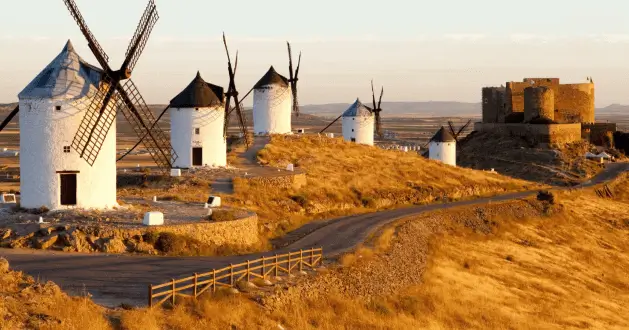
Prices in Castilla-La Mancha · per face per week
- 8x3 m billboardsfrom €76
- 6-sheet MUPIsfrom €108
- Bus sheltersfrom €108
Prices exclude VAT · printing and posting from €35 per face
Outdoor advertising sites in Castilla-La Mancha
Across Castilla-La Mancha, close to 600 of our outdoor advertising sites are split between three main hubs: Albacete, Guadalajara and Cuenca. The region had 2,104,433 inhabitants at 1 January 2025 according to the annual census from Spain's National Statistics Institute (INE), and is built around four major routes that cross it from end to end: the A-2 north-east through the Corredor del Henares industrial corridor, the A-3 to Valencia, the A-4 to Andalusia and the A-31 towards Spain's Levante (the eastern coast) across the Albacete plain. That road network, one of the densest in Spain in kilometres of high-capacity road, turns the approaches to the provincial capitals and the industrial estates into points that all interregional traffic has to pass through, with flows that combine daily local journeys and long-distance heavy-goods routes.
Coverage is concentrated where it makes commercial sense. In Albacete we have close to 350 locations, split between billboards on the approaches via the N-430, the A-31 and the Campollano industrial estate, MUPI street panels in the city centre and around the Imaginalia and Los Llanos shopping centres, bus shelters on the city bus routes and a handful of street thermometers at landmark junctions in the centre. Guadalajara adds another 165 sites, mostly bus shelters and MUPIs on the arterial roads of the Cardenal González de Mendoza axis, Avenida del Ejército, Avenida de Castilla and the Alamín neighbourhood, plus monopole billboards in Alovera beside the A-2. Cuenca completes the map with billboards on the A-40, the ring roads and the approaches to the Los Palancares industrial estate, and MUPIs on Avenida Mediterráneo, Avenida Reyes Católicos and Hermanos Becerril, and around the Virgen de la Luz hospital. Marco Visual books, posts and manages all these sites, with tailor-made proposals.
The regional calendar also sets clear planning windows. The Feria de Albacete (Albacete Fair), held every year from 7 to 17 September in honour of the Virgen de los Llanos, has officially been a Festival of International Tourist Interest since 2008 and considerably multiplies footfall in the city for ten days. Holy Week (Semana Santa) in Cuenca, also of International Tourist Interest, draws visitors to a historic centre listed as a UNESCO world heritage site in 1996, and includes the Semana de Música Religiosa (a sacred music festival), which has an international listing too. Summer in the Corredor del Henares industrial corridor, the autumn grape-harvest campaigns across La Mancha and the patron saint festivities in the main town of each comarca (district) are the other windows worth concentrating advertising spend on.
In our campaign planner you can check the price of MUPIs and every other advertising site, real photos, the exact location, Google Street View, descriptions and nearby points of interest, dimensions, print format… Best of all, you can filter the sites and pick the ones you want, then plan and book the outdoor advertising campaign
Some links open pages in Spanish
Looking for another area?
Explore the different outdoor advertising formats in Castilla-La Mancha
Marco Visual is an online platform for managing and booking campaigns on outdoor advertising sites. Our website gives you all the information you need to plan and book an outdoor campaign. Get to know each site and its features: price, real photos, format, minimum booking period and other terms.
Outdoor sites are ideal for promoting events, with room on the ad for the venue, who is taking part and every other detail that matters. They are also widely used for branding, so that people start seeing a brand away from the screen and remember it better. Other common uses are launching offers (Black Friday, the sales, Christmas…) and opening new shops.
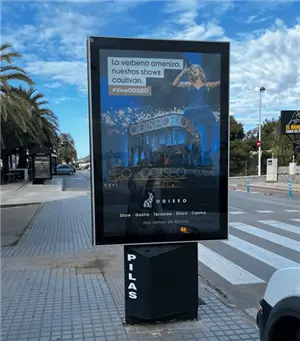
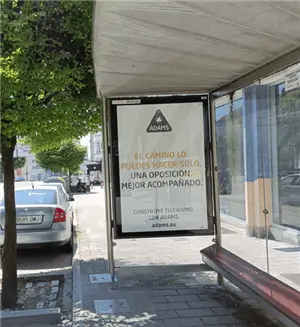
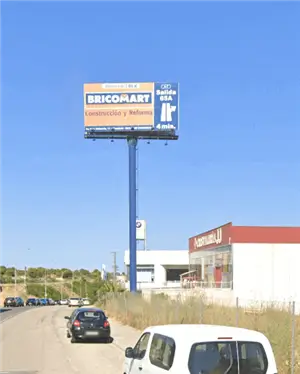
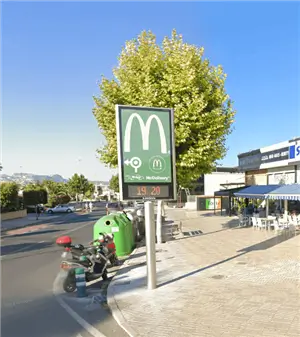
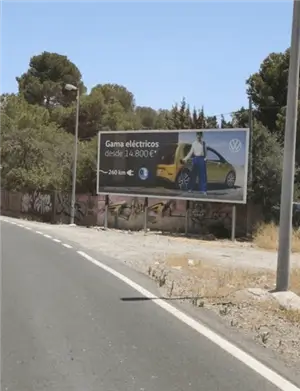
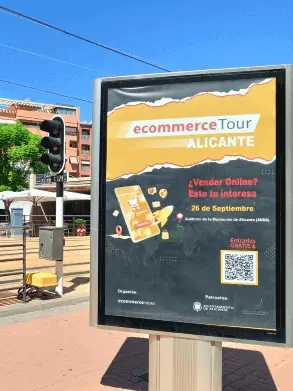
Here are some of our campaigns on different outdoor advertising sites:
The benefits of outdoor advertising in Castilla-La Mancha
Castilla-La Mancha is a region people travel through, not just to, and that changes the advertising maths compared with a purely urban region. Four of the six motorways linking Madrid with the main mainland ports cross its territory, and every provincial capital has a direct motorway and AVE high-speed train connection to the Spanish capital. Regional GDP exceeds €53,900 million and industry accounts for more than 20% of that figure, with a strong presence of agri-food, chemicals, pharmaceuticals, aerospace and logistics. For an advertiser, that translates into a very specific audience mix: residents with below-average or average purchasing power in the provincial capitals, higher-earning commuters who travel to Madrid, and a considerable volume of business and freight traffic through the industrial estates (Henares, Campollano, Romica, Los Palancares). Outdoor sites reach all three profiles at once, with no need to segment.
Advertising clutter across much of the region is clearly lower than on the Mediterranean coast or in the Madrid metropolitan area, which improves share of voice per euro spent. In the region's provincial capitals, a billboard on a main approach road or a MUPI on a pedestrian axis that people pass several times a day catches the eye without having to compete with dozens of other sites at every junction. Which formats work best depends on the objective: for mass awareness on the motorway, billboards and monopoles on the approaches to Albacete via the N-430 and the A-31 towards Alicante, or on the A-2 as it passes Alovera; for a constant presence on everyday routes, MUPIs and bus shelters on Guadalajara's main urban roads and in Cuenca's new town; for tactical, quick-response promotions, bus shelters next to hospitals, stations, shopping centres (Imaginalia and Los Llanos in Albacete, Carrefour Villarrobledo, El Mirador in Cuenca) and university campuses.
The sectors that get the most out of this region are grocery and household-goods retail, car dealerships and the automotive aftermarket, dental and eye clinics, financial services and insurers, formal education, hospitality and tourism (the city of Cuenca and the Sierra de Cuenca, La Manchuela, the wine routes) and estate agents. Seasonality helps with planning: the Feria de Albacete is the big window in September, Holy Week in Cuenca and its Festival de Música Religiosa concentrate spending in March or April depending on the liturgical calendar, and the Corredor del Henares keeps industrial and commercial traffic steady all year round, with a logistics peak around Black Friday and the festive season.
In your marketing and communications strategy, outdoor advertising sites are essential for reaching your audience. They are an excellent way to catch the eye of people out and about in town, thanks to well-chosen locations and high visibility.
- Eye-catching visual advertising with 24/7 visibility in high-traffic areas.
- Strategic locations on the city’s main streets and avenues.
- Wide coverage: a presence in Spain’s main cities and regions.
- High visibility in carefully chosen spots for the greatest impact.
- Geographic targeting: choose the areas and neighbourhoods where your target audience is.
- Greater brand awareness and trust.
- Flexibility for short and long campaigns.
- A non-intrusive medium that helps the message stick when combined with social media campaigns.
Some of the links in the areas below open pages in Spanish.
Outdoor advertising in Albacete
- Population: 175,400 inhabitants in the city according to INE 2025 data, and a metropolitan area of around 218,000 residents including La Roda, Tarazona, Madrigueras and Chinchilla
- Gender split: approximately 50.2% women and 49.8% men
- Average age: around 43 years, with a younger profile in the university neighbourhoods and the newer areas to the north
- Purchasing power: average, with an economy based on services, knife-making and manufacturing industry, agri-food, the aerospace sector and retail
- Economic activity rate: around 62%, with a strong presence in industry (Campollano and Romica together have more than 20,000 direct employees), services, defence and irrigated farming
- Relevance for advertising: Albacete is the retail and services hub for much of south-eastern La Mancha and the inland Levante, and the Feria alone is enough to multiply reach in September
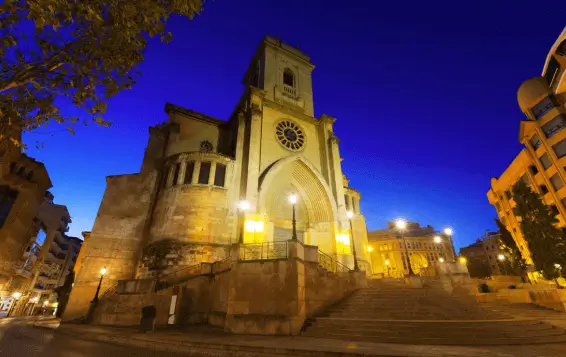
Albacete is the largest city in Castilla-La Mancha, with 175,400 inhabitants according to the 2025 figures of Spain's National Statistics Institute (INE); after Madrid, it is also the most populous capital on the southern Meseta (Spain's central plateau). Its economy combines services, heavy and medium industry on the Campollano industrial estate (more than five million square metres, the largest in the region) and the Romica estate, a historic knife-making trade and a sizeable aerospace sector around the Los Llanos air base, Ala 14 (an air force fighter wing) and the Maestranza Aérea (an aircraft maintenance depot). The Feria de Albacete, declared a Festival of International Tourist Interest in 2008, transforms the city every September with a monumental fairground of more than 180,000 square metres and attendance figures four times the population over ten days.
Albacete accounts for close to 350 of our sites: large-format billboards on the approaches via Carretera de Madrid, the ring road, the A-31 near Campollano and around Imaginalia, Eroski and the Expovicaman fairground; MUPIs on Avenida de España, Paseo de la Cuba, Calle La Roda, Avenida de Ramón y Cajal, Avenida de los Toreros, Calle Vasco Núñez de Balboa and Carretera de Las Peñas; bus shelters in Plaza Gabriel Lodares and on Avenida Estación, Calle Federico García Lorca next to the bus station, Calle Arquitecto Vandelvira, Calle del Rosario and Carretera de Murcia; and street thermometers at junctions such as Avenida de España with Calle Hellín, Paseo de la Cuba with Calle Cronista Mateo y Soto, and Calle Teodoro Camino with Calle del Tinte.
Billboards in Albacete
Billboards dominate in Albacete, because the city works as a road hub connecting the Levante with Andalusia and the Meseta. The sites are chosen for impacts on the motorways and the outer ring roads, with audiences that mix residents, hauliers, people passing through and workers from the industrial estates.
Highlights include the N-430 approach from the Parador (state-run hotel), Avenida de la Ilustración by the Imaginalia shopping centre, Avenida Emilia Pardo Bazán next to Norauto and Mediamarkt, the exit towards Avenida de la Mancha opposite Alcampo, Avenida Gregorio Arcos on the Campollano industrial estate (next to the Repsol petrol station and Decathlon), Paseo de la Cuba on the corner of Avenida Ramón y Cajal, Carretera de Madrid opposite the Expovicaman and IFAB trade fair grounds, the José Abascal roundabout next to Eroski, the Pozo Majano roundabout at the entrance to Campollano, Carretera de Valencia opposite the Honda dealership and Carretera de Murcia on the main approach into the city.
MUPIs in Albacete
Across Albacete, MUPIs work as an urban coverage format with heavy footfall, especially on the shopping streets in the centre and the wide avenues linking the city centre with the newer neighbourhoods. They are the right format for brand awareness campaigns, openings, retail and local services.
Our main MUPI locations are spread across Avenida de España at Calle La Historia, Avenida Isabel la Católica on the corner of Calle Zapateros, Calle La Roda at number 49, Paseo de la Cuba level with the Instituto Don Bosco secondary school and the Parque Lineal, Calle del Carmen opposite number 51 at Avenida Ramón y Cajal, Avenida del Arquitecto Julio Carrilero at Calle Gracia, Carretera de las Peñas opposite Calle Santa Gema, Avenida de los Toreros at Calle Concordia, Avenida del Cronista Mateos y Sotos at Calle Alicante, Avenida Primero de Mayo at Calle Doctor Galiacho, Calle Federico García Lorca at Calle Tomás Edison, Avenida Arquitecto Julio Carrilero at Calle Manuel Falla and the Pórtico de la Mancha roundabout on Avenida de España.
Bus shelters in Albacete
Bus shelters in Albacete hold people's attention while they wait at stops on the city bus routes serving the centre and the neighbourhoods. They work particularly well for tactical promotions, retail, hospitality and campaigns with a call to action, because dwell time at each impact runs to several minutes.
Top-performing stops include Avenida de España next to the Instituto Municipal de Deportes (the municipal sports institute), Plaza Gabriel Lodares, Plaza del Ayuntamiento, Avenida Estación, Calle Arquitecto Vandelvira, Calle La Roda, Avenida Ramón y Cajal, Calle Federico García Lorca opposite the bus station, Calle José Carbajal, Paseo de la Cuba, Calle Benavente, Avenida Primero de Mayo, Calle Arquitecto Julio Carrillero, Carretera de Murcia in the Falcó neighbourhood, the Imaginalia shopping centre, Carretera de Jaén opposite number 70 and Calle Vereda de Jaén at Plaza Ramón Roldán.
Street thermometers in Albacete
Thermometers are a less common format, visible from several directions at the main junctions in the centre. They can be read from the car or on foot and keep a brand constantly present where everyone has to pass.
Thermometer locations include Paseo de la Cuba just before Calle Cronista Mateo y Soto, Avenida de España at Calle Batalla del Salado, Calle La Roda at Calle Virgen del Pilar, Calle Hermanos Falcó at Calle Almansa, Avenida Isabel la Católica at Avenida Ramón y Cajal, Avenida de los Toreros at Avenida Arquitecto Julio Carrilero, Avenida de España at Calle Hellín, Calle Alcalde Conangla at Calle Vasco Núñez de Balboa and Calle Teodoro Camino at Calle del Tinte.
Outdoor advertising in Guadalajara
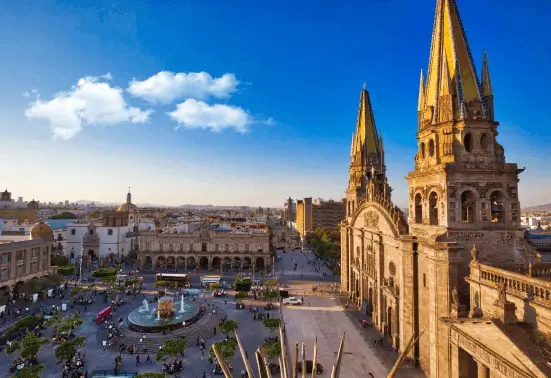
- Population: 92,834 inhabitants in the city according to INE 2025 data and 285,839 across the province, with 55.9% concentrated in the Corredor del Henares
- Gender split: approximately 51.7% women and 48.3% men in the city
- Average age: around 41 years, one of the youngest capitals in Castilla-La Mancha owing to inward migration along the Henares
- Purchasing power: above average, driven by the proximity to Madrid, the weight of skilled industrial employment and a commuter population earning Madrid metropolitan-area salaries
- Economic activity rate: around 64%, with a strong presence in logistics, chemicals, pharmaceuticals, food distribution and professional services
- Relevance for advertising: the combination of everyday traffic on Avenida del Ejército and Bulevar Alto Tajo with through traffic on the A-2 delivers daily frequency among both residents and travellers on the Madrid-Zaragoza-Barcelona axis
Guadalajara is an unusual provincial capital for Castilla-La Mancha, as in practice it belongs to Madrid's sphere of influence. It has 92,834 inhabitants according to the 2025 figures of Spain's National Statistics Institute (INE), and is seeing sustained population growth (more than 6% in five years) driven by the momentum of the Corredor del Henares, one of the most active industrial and logistics areas in the country. Companies such as Amazon at the Ciudad del Transporte logistics hub, DHL in Marchamalo, Inditex and XPO in Cabanillas del Campo and Mahou-San Miguel in Alovera explain why the province has added more than 10,000 industrial jobs in five years. Links to Madrid via the A-2, the R-2, commuter rail (Cercanías) and the AVE high-speed train shape a mixed audience: local residents, commuters and industrial workers with above-average incomes.
In Guadalajara our network leans heavily towards street furniture, with close to 165 sites. Bus shelters dominate on Avenida del Ejército (the N-II axis), Bulevar Alto Tajo, Avenida Salinera, Calle Cardenal González de Mendoza, Calle Julián Besteiro next to the football ground, Calle Zaragoza, Calle Sigüenza, Avenida del Atance and the approaches to the Hospital Universitario. MUPIs cover the area around Avenida del Ejército at Plaza Guardia Civil, Calle Francisco Aritio in the industrial area, Parque de la Isabela, Plaza de Bejanque, Avenida Barcelona, Calle Toledo, Plaza Badajoz and the new developments in Alamín and Aguas Vivas. Billboards within the city itself are marginal; Alovera carries the large-format load, with several monopoles and billboards at the 47 km marker of the A-2, right at the entrance to and exit from the El Ródano industrial estate and next to the Galp service station.
Bus shelters in Guadalajara
Bus shelters suit Guadalajara's profile best: a city with intense everyday movement between the neighbourhoods, the industrial estates and the station, where city buses and walking routes along the main avenues generate repeated waiting times. They work for promotions, retail, training, financial services and event communications.
Notable stops include Avenida del Ejército on the stretches where it runs as the N-II and next to Caprabo, Calle Cardenal González de Mendoza at Calle Sigüenza, Avenida de los Donantes de Sangre at the main entrance to the Hospital Universitario de Guadalajara, Calle de la Salinera at Avenida del Alcorco, Calle Julián Besteiro opposite the football ground, Calle Zaragoza at Avenida de Francia, Calle Dos de Mayo at the bus station, Avenida de Castilla, Bulevar del Alto Tajo, Avenida del Atance at Avenida de Burgos, Calle Camilo José Cela at Calle Salvador Embid and Calle Concepción Arenal at Avenida Salinera.
MUPIs in Guadalajara
MUPIs cover the pedestrian routes and busiest junctions in the centre and the new neighbourhoods. They suit coverage campaigns, retail, leisure and local services, especially when the aim is to spread presence between the old town and the growing residential areas.
Positions are spread across Calle Cardenal González de Mendoza at Avenida del Ejército, Avenida del Doctor Pedro Sanz Vázquez at Avenida de Madrid, Calle Felipe Solano Antelo, Calle Hermanos Fernández Galiano at Calle Pedro Sanz Vázquez, Parque de la Isabela, Avenida Barcelona at Avenida de Burgos, Calle Belena at Calle Alcorlo, Calle Camilo José Cela heading towards Calle Julián Besteiro, Calle Sigüenza at Avenida de Castilla, Avenida del Vado, Plaza de Bejanque, Plaza Badajoz between Calle Cáceres and Calle San Juan, Calle Francisco Aritio in the centre and Bulevar Entrepeñas level with Calle Bado.
Billboards in Guadalajara
Billboards within Guadalajara's city centre are few and far between. Large-format sites in the area are concentrated on the A-2 approaches near Alovera, where Marco Visual has several positions between the 47 and 48 km markers, visible in both directions to Madrid-Zaragoza traffic.
Sites include billboards on Avenida de Aragón level with number 49, heading towards Glorieta de Hispanoamérica, and on Calle Batalla de Villaviciosa, as well as positions on the A-2 next to the Alovera industrial estate, at the entrance to the Cabanillas industrial estate and on Avenida del Río Henares next to the El Ródano industrial estate and the Galp service station. This mix covers both the city's local audience and the interregional and freight traffic along the corridor.
Outdoor advertising in Cuenca
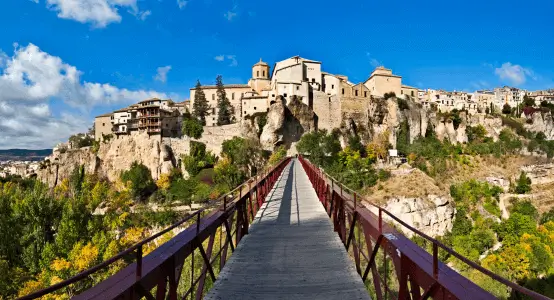
- Population: 53,600 inhabitants according to INE 2025 data, with a trend towards moderate growth after several years of decline
- Gender split: approximately 50.5% women and 49.5% men
- Average age: around 44 years, slightly older than the region's other capitals
- Purchasing power: average, with a significant weight of public administration, local retail, services and an expanding tourism and hospitality sector
- Economic activity rate: around 58%, spread across services, healthcare, education, hospitality and cultural tourism
- Relevance for advertising: Cuenca combines steady local demand with tourist peaks at Holy Week, the May long weekends, San Mateo in September and the summer season, which opens clear windows for campaigns aimed at domestic visitors
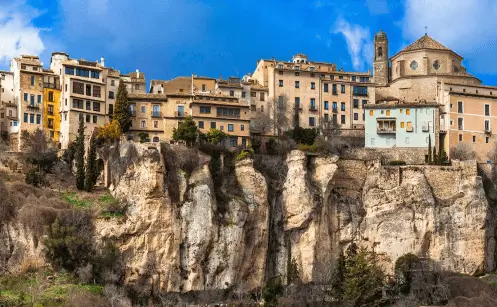
Cuenca is a mid-sized city of 53,600 inhabitants, according to the 2025 data of Spain's National Statistics Institute (INE), where tourism carries a weight out of all proportion to its size. Its historic centre, with the Casas Colgadas (hanging houses) perched over the Huécar gorge, became a UNESCO world heritage site in 1996, and both Holy Week and the Semana de Música Religiosa that accompanies it are listed as festivals of International Tourist Interest. The economy combines public administration, retail and an increasingly professionalised tourism sector, extending into hotels, restaurants and services. The new town, laid out around Avenida Mediterráneo and Avenida Reyes Católicos, with Hermanos Becerril and Calle Princesa Zaida, concentrates most of the day-to-day activity and road traffic.
Our Cuenca network is limited to billboards and MUPIs, with close to 55 sites, enough for full coverage of the main urban axis and the approach roads. The billboards are spread between the approach via Carretera de Valencia, Ronda Oeste with its roundabouts towards Avenida Juan Carlos I and Carretera del Alcázar, Avenida San Julián next to the helipad and the Hospital Virgen de la Luz roundabout, Avenida Mediterráneo around the El Mirador shopping centre, the A-40 motorway at the 309.4 km marker and the entrance to the Los Palancares industrial estate. The MUPIs cover the pedestrian routes around the hospital, Avenida Mediterráneo next to McDonald's, Hermanos Becerril next to the church of San Fernando and at the junction with Calle Sándalo, Paseo del Huécar opposite the auditorium, Plaza de la Hispanidad opposite San Esteban, Princesa Zaida opposite the Torremangana hotel and the Alcampo-Lidl roundabout. We have no bus shelters or monopoles in the city itself.
Billboards in Cuenca
In Cuenca, billboards target traffic coming into and leaving the city and drivers on the new town's ring road, where the shopping centres, the hospital and the industrial estate are concentrated. They work both for national advertisers making the most of motorway visibility and for local retailers covering Cuenca and its comarca (district).
Our billboard positions include Carretera de Valencia at the entrance to Cuenca on the right-hand side, Calle Radio Nacional España next to the football ground, Avenida San Julián level with the bridge and next to the helipad, Ronda Oeste at the roundabout towards Avenida Juan Carlos I, Avenida Mediterráneo at the roundabout by the park and at the entrance to the El Mirador shopping centre, Avenida de los Alfares heading towards the centre, Avenida Juan Carlos I level with Bricoking, Alameda del Júcar next to the school, Ronda Oeste at Clara Campoamor, on the roundabout with Carretera del Alcázar, Carretera de Valencia opposite the Los Palancares industrial estate and the A-40 motorway at the 309.4 km marker, level with Carretera de Madrid 9.
MUPIs in Cuenca
In Cuenca the MUPIs cover the pedestrian routes of the new town, the hospital areas and the places that draw most people every day. This is the format to choose for local campaigns, retail, private healthcare, services and municipal or cultural communications.
The main positions are Avenida Mediterráneo next to McDonald's and the El Mirador shopping centre, Hermanos Becerril next to the church of San Fernando and at the junction with Calle Sándalo, Avenida de los Alfares at the entrance to the Hospital Virgen de la Luz and opposite it, Fray Luis de León at Plaza de España, Ramón y Cajal on the corner of Calle San Francisco, Paseo del Huécar opposite the auditorium, Plaza de la Hispanidad opposite San Esteban, Princesa Zaida opposite the Torremangana hotel, Avenida Reyes Católicos opposite the Luis Ocaña sports facilities, Plaza de los Ríos, Calle Hinojo opposite Mercadona, Avenida Castilla-La Mancha opposite the park, Mariano Catalina on the way down to the railway station, Avenida Juan Carlos I opposite the Villa Luz residential complex and the Alcampo-Lidl roundabout.
How booking outdoor advertising with Marco Visual works
Tell us what you’re looking for
If you’d rather choose yourself, our campaign planner (in Spanish) lets you pick the weeks and then browse the map or the list of sites, with filters by type of site, city, postcode or distance to a shop or point of interest. Bear in mind the booking cycles: many sites are sold by the week, but most 8x3 m billboards are booked in two-week periods or for 26 weeks, so they’re greyed out if you pick a single week. Click ‘Siguiente’ (Next) and you’ll see a campaign summary with the total price, printing and posting included: we take care of everything. You just enter your contact details and create the campaign.
Either way, you get a unique link to your campaign page, which you can share with your team: the sites you picked, the weeks, the price and the guides for preparing your artwork. You can check it whenever you like.
We confirm availability so you can book online
When everything is cleared, you can enter your billing details on that same page, pay by bank transfer and upload your artwork. Once you’ve paid, upload the transfer receipt so we can confirm the booking sooner.
Remember to send your artwork, following the guides, before the deadline shown on the proposal (usually 7 days before the start). We’ll email you at every step: artwork received and approved, payment received, sites confirmed.
Printing, posting and launch
These photos are usually ready 24 to 48 hours after the start; we’ll email you when they are.
When the campaign ends, you’ll see a notice on the campaign page and receive a satisfaction survey, with the option of leaving us a Google review. It helps us do better.
Frequently asked questions about outdoor advertising in Castilla-La Mancha
What does an outdoor advertising campaign cost in Castilla-La Mancha?
It depends on format, city and duration. As a guide, a two-week period on a MUPI in Albacete or Guadalajara can start at around €216-240 per face, a bus shelter on a main road at between €216 and €240 per two-week period, and a large-format billboard on a motorway usually ranges from €304 to €420 a month, depending on location. Asking for a proposal with current availability is the only way to get a firm price, as it also depends on the season. Billboards in Castilla-La Mancha have a reference price of €76 to €105 per face per week (or €152 to €210 per two-week period) excluding VAT, with poster printing quoted separately; some positions are sold in 2-week periods (14 days), while others can only be booked on 6-month contracts (26 weeks).
Which format works best for a local SME in Albacete?
A local business in Albacete (clinic, car dealership, retail, hospitality, training) would usually combine a MUPI on the main axis through the centre or on Carretera de Madrid with a bus shelter in the area where its premises are. If the aim is awareness and pulling in traffic from outside the city, it is worth adding one or two billboards on approach roads such as the N-430, the A-31 near Campollano and Avenida de la Ilustración.
How many advertising sites does Marco Visual have in Castilla-La Mancha?
We have close to 600 active locations, mostly in Albacete, Guadalajara and Cuenca, with further presence in Alovera, Talavera de la Reina, Almansa, Hellín, Villarrobledo and Ciudad Real. The figure moves with the usual market churn, so the most accurate option is to ask for the updated inventory when planning a campaign.
What is the minimum campaign length?
The two-week period (14 calendar days) is the usual booking unit for MUPIs, bus shelters and billboards. Digital sites or special networks may come with weekly or daily rates. Posting and poster changes are planned a couple of weeks ahead, to secure availability and production of the physical material. On billboards, certain positions are sold only in 6-month blocks (26 weeks).
Which parts of Guadalajara and the Corredor del Henares get the most traffic for a campaign?
The busiest axis is Avenida del Ejército (the continuation of the N-II) as it runs through the city, together with Bulevar del Alto Tajo and Avenida Salinera for the newer neighbourhoods. For long-distance road traffic, the sites on the A-2 near Alovera (between the 47 and 48 km markers) catch both Madrid-Zaragoza traffic and the exits to the El Ródano industrial estate and Cabanillas del Campo.
Do you offer digital sites in Castilla-La Mancha?
Our inventory in this region is essentially made up of static sites: billboards, MUPIs, bus shelters, street thermometers and monopoles. If the campaign needs digital rotation or DOOH, it is best to mention it in the brief so that we can look at combining it with nearby markets such as Madrid and Valencia, or with digital networks in shopping centres.
What happens once you ask for a proposal?
The usual sequence is: a brief by email or phone giving the city, dates, budget and objective; a proposal with locations, photos and prices within 24-72 hours; fine-tuning the selection with the client; booking the inventory; poster production (by the advertiser or managed by us); posting; and proof-of-posting photos of the campaign once it is up.
Can you help with the creative design?
Our core service is booking the site and posting the campaign. If your business has no design department or agency, we can recommend basic guidelines for adapting the artwork to the format (proportions, minimum type sizes, colours with good contrast at a distance) and check the artwork before printing to avoid legibility problems. Poster production can be handled separately.
Is outdoor advertising worth it compared with a digital-only campaign?
In Castilla-La Mancha, yes, above all for SMEs with a physical shop, a local service or a province-wide catchment area. Outdoor works as a brand anchor, with high frequency and a competitive cost per thousand impacts, while digital brings targeting and direct response. The usual mix is outdoor for awareness and digital for conversion, especially in cities with little advertising clutter, such as the region's provincial capitals.
Which times of year work best for advertising in the region?
September brings the Feria de Albacete (7-17 September), when the population multiplies and spending on hospitality, retail and leisure runs very high. March or April coincides with Holy Week in Cuenca and its Festival de Música Religiosa, both of International Tourist Interest. The Corredor del Henares keeps industrial traffic steady all year, with a peak around Black Friday and the festive season, and autumn in La Mancha is a clear window for campaigns linked to the wine and agri-food sectors.
Give your brand more visibility with outdoor advertising
See our advertising sites for yourself, with their prices, locations and photos, and use the campaign planner
Still have questions, or would you like us to advise you and send you a proposal? Get in touch and we’ll send you a personalised quote for your outdoor advertising campaign.
What our clients say in Castilla-La Mancha
Verified Google reviews from businesses that have already worked with Marco Visual.

Hemos quedado satisfechos con la campaña de publicidad que contratamos con Marco Visual para el Conservatorio Superior de Danza de Alicante (CSDA) durante las Hogueras. La campaña contó con cuatro mupis diferentes, cada uno dedicado a un estilo de danza, una iniciativa para dar visibilidad a nuestro conservatorio y acercar la riqueza y diversidad de la danza a la ciudadanía. Destacamos la profesionalidad, la atención recibida y la buena gestión de todo el proceso. Porque la danza también merece ocupar las calles y formar parte de la ciudad. ¡Gracias a Marco Visual por ayudarnos a llevar nuestro arte más allá de las aulas!
Original review in SpanishSee on Google 1 / 4

Hemos trabajamos con Marco Visual para la campaña de apertura de nuestra nueva clínica en Molina de Segura, y la experiencia ha sido positiva. Negociamos directamente con ellos, sin intermediarios: el trato es cercano y las respuestas, rápidas. Necesitábamos resolver ubicaciones, formatos y plazos con poco margen de tiempo, y flexibilidad para adaptar la propuesta a lo que necesitábamos. Recomendado
Original review in SpanishSee on Google

Ha sido nuestra primera experiencia en implementar un MUPI, pensábamos que sería algo engorroso en cuanto al proceso y verdaderamente nos hemos confundido. La atención de Alejandro desde el primer momento ha sido rápida, precisa en las indicaciones y nos ha facilitado todo. Ademas agregar que el sistema que tienen implementado online para el seguimiento ha sido muy práctico, sabes el status de la campaña en todo momento, repetiremos!
Original review in SpanishSee on Google

Nuestra experiencia ha sido muy positiva. Queremos destacar especialmente la profesionalidad, rapidez y atención recibida durante todo el proceso. El equipo ha demostrado en todo momento una excelente disposición y un trato cercano y profesional. Mención especial para Alejandro M., por su amabilidad, eficacia y atención constante. Ha sido un placer contar con su ayuda y profesionalidad. Sin duda, recomendamos sus servicios y agradecemos el trato recibido.
Original review in SpanishSee on Google

Hemos quedado muy satisfechos con la campaña de publicidad exterior realizada con Marco Visual. Desde el primer momento, el trato ha sido cercano y profesional, facilitando todo el proceso y resolviendo nuestras dudas con rapidez. La gestión de la campaña ha sido ágil y eficiente, y el seguimiento durante toda la ejecución nos ha transmitido confianza. La instalación y el mantenimiento de los soportes se han realizado correctamente, cumpliendo con lo acordado. Agradecemos especialmente la atención recibida y la buena comunicación del equipo. Ha sido una experiencia muy positiva y no dudaríamos en contar con Marco Visual para futuras campañas.
Original review in SpanishSee on Google 1 / 2

La campaña que hemos hecho de publicidad exterior ha sido un éxito. La comunicación con Alejandro ha sido lo mejor, muy profesional y atento en todo momento con todos los detalles de la campaña. Repetiremos sin duda en unos meses.
Original review in Spanish See on Google
Explore other advertising formats at Marco Visual


