Outdoor advertising in Catalonia: billboards, MUPIs and bus shelters across almost 4,000 sites

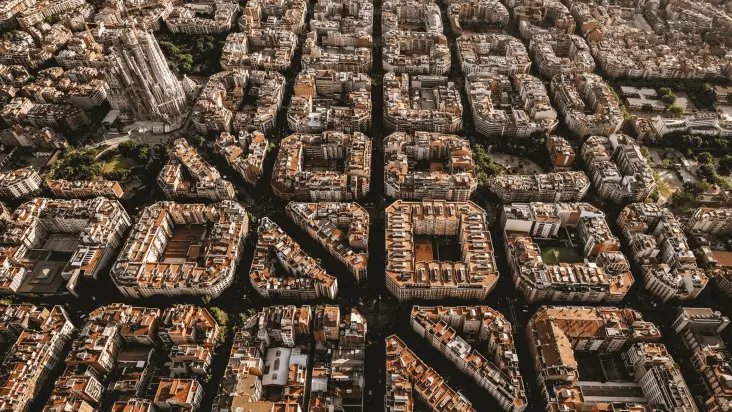
Prices in Catalonia · per face per week
- 8x3 m billboardsfrom €82
- 6-sheet MUPIsfrom €118
- Street clocksfrom €120
Prices exclude VAT · printing and posting from €35 per face
Outdoor advertising sites in Catalonia
Spread across Catalonia we have close to 4,000 outdoor advertising sites, with billboards very clearly in the lead, followed by MUPI street panels (six-sheet size) and bus shelters, plus a digital network that keeps growing. The region has more than 8,210,710 inhabitants according to the provisional figures from IDESCAT, the Catalan statistics institute, for 1 January 2026, and it is structured around the AP-7 coastal corridor, the C-17 towards Vic and Ripoll, the A-2 across the Lleida plain and the Costa Dorada along the N-340. This road network turns urban ring roads, the approaches to industrial estates and the main shopping streets into locations with very high advertising frequency, especially in Barcelona's metropolitan belt and along the tourist corridors of the Costa Brava and the Costa Dorada. The Port of Barcelona, El Prat airport and the Zona Franca free-trade zone reinforce an economy geared towards logistics, industry, tourism and services, which broadens the mix of advertisers who turn to outdoor advertising to build awareness close to their points of sale.
Marco Visual's largest inventory is in the city of Barcelona (bus shelters, MUPIs, billboards, digital screens and building wraps), L'Hospitalet de Llobregat, Terrassa, Lleida and Tarragona. On top of that come Girona, Granollers, Reus and a very dense belt of municipalities in the Baix Llobregat and the Vallès Occidental: Viladecans, Sant Boi, Gavà, Sabadell, Mataró, Mollet del Vallès, Sant Just Desvern, Esplugues, Cornellà and Rubí. Along the coast, Lloret de Mar, Blanes, Salou, Vila-seca, La Pineda and Torredembarra complete the map, all with a visible presence on tourist avenues and seafront promenades, along with the Espai Gironès shopping centre in Salt and the area around PortAventura. This mix of a dense metropolitan belt and a tourist coastline lets you plan campaigns that combine steady year-round urban coverage with high-volume seasonal peaks in the summer months, when the coastal population multiplies and the seafront promenade becomes the main touchpoint.
Catalonia's advertising calendar is shaped by strong commercial windows that vary a great deal from one area to another. Sant Jordi (Catalonia's day of books and roses) in April triggers a surge in spending by publishers and bookshops; La Mercè (Barcelona's annual city festival) in September and the castellers (human-tower teams) in autumn draw city tourism to Barcelona; Barcelona's Saló de l'Automòbil (motor show), the Mobile World Congress in February and the Smart City Expo bring B2B peaks; and the Festa Major de Gràcia (the Gràcia district's street festival), the Patum de Berga (on UNESCO's intangible cultural heritage list) and the Carnavals de Sitges (Sitges Carnival) add local surges. In summer, tourist pressure on the Costa Brava and the Costa Dorada multiplies the potential audience for MUPIs and billboards in towns such as Lloret, Salou and Tossa. These windows concentrate demand on specific dates, so booking the network well in advance makes a real difference to availability and price. The same goes for Barcelona's major conferences, which bring in an international professional audience with high purchasing power on very specific days.
In our campaign planner you can check the price of MUPIs and every other advertising site, real photos, the exact location, Google Street View, descriptions and nearby points of interest, dimensions, print format… Best of all, you can filter the sites and pick the ones you want, then plan and book the outdoor advertising campaign
Some links open pages in Spanish
Looking for another area?
Explore the different outdoor advertising formats in Catalonia
Marco Visual is an online platform for managing and booking campaigns on outdoor advertising sites. Our website gives you all the information you need to plan and book an outdoor campaign. Get to know each site and its features: price, real photos, format, minimum booking period and other terms.
Outdoor sites are ideal for promoting events, with room on the ad for the venue, who is taking part and every other detail that matters. They are also widely used for branding, so that people start seeing a brand away from the screen and remember it better. Other common uses are launching offers (Black Friday, the sales, Christmas…) and opening new shops.
Here are some of our campaigns on different outdoor advertising sites:
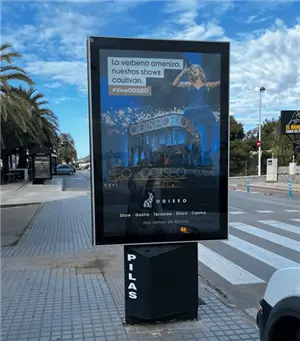
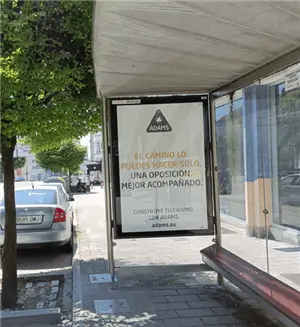
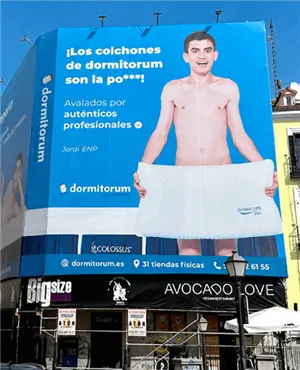
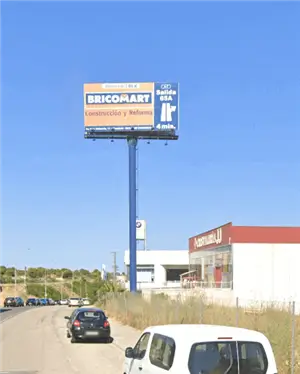
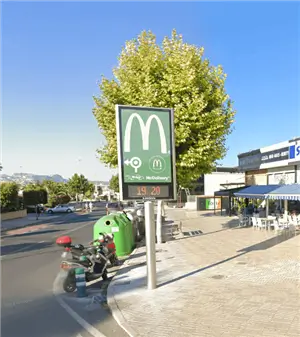
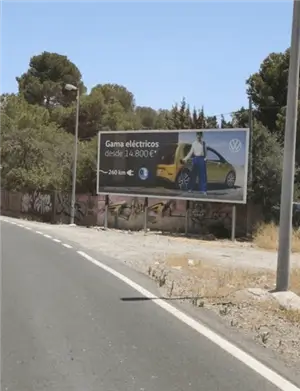
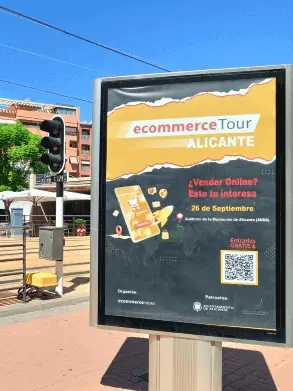
The benefits of outdoor advertising in Catalonia
Catalonia brings together three factors that few regions in Spain combine at the same time: one of the highest metropolitan densities in Europe, a coastal strip whose population multiplies in summer, and a diversified business base where corporate headquarters, the historic industrial districts of the Vallès and a strong logistics sector linked to the Port of Barcelona sit side by side. For advertisers, this translates into very different audiences just a few kilometres apart: metropolitan consumers with above-average purchasing power in Sant Cugat and Sant Just Desvern, a young, working-class profile in the southern belt, tourists with holiday budgets on the Costa Brava and the Costa Dorada, and comarca (district) audiences with deep local roots in Vic, Manresa and Lleida. Outdoor advertising lets you build coverage in layers instead of relying on a single mass impact. In practice, this makes Catalonia a market where the same brand can book very different networks depending on the objective: wide-reach metropolitan awareness in the Barcelonès, attracting tourists on the coast, or local, comarca-level presence in the inland capitals.
Catalan consumers spend a significant part of their time travelling for work, shopping and leisure: the Barcelonès-Vallès-Baix Llobregat belt generates very stable daily flows that turn bus shelters and MUPIs into advertising sites with very high frequency, while billboards on the ring roads and the approaches to the AP-7 reach commuting drivers and hauliers. On the coast the pattern changes: July and August bring a surge in footfall on the seafront promenades, which makes summer a short but very profitable window for hospitality, holiday retail and entertainment in Lloret, Salou, La Pineda and Blanes. Then there is the effect of the Mobile World Congress, ISE (the audiovisual technology show) and other international trade fairs, which fill Barcelona in February and January respectively with a high-spending international B2B audience. That is why many Catalan SMEs combine a few fixed sites all year round in their catchment area with short tactical bursts in the weeks of highest demand, a formula that keeps brand recall steady without blowing the budget.
It works particularly well for retailers with a network of shops (dental clinics, opticians, local supermarkets, hardware shops), automotive brands and car dealerships on the main roads into town, education and vocational training brands near campuses, hospitality and restaurants in tourist areas, and public-sector campaigns. It does more alongside digital campaigns than in place of them: outdoor delivers geo-targeted awareness and brand recall, and digital closes the funnel. In categories where digital is saturated (finance, telecoms, energy), outdoor wins back attention precisely because it cannot be skipped or blocked, and because its urban setting ties it to consumers' everyday lives. For an SME with a local catchment, outdoor gives continuous presence on the customer's daily route, something a one-off click does not guarantee: a bus shelter at a busy stop or a billboard on an approach road acts as a daily reminder throughout the campaign. Measuring its effect is easier than it looks if you combine it with promo codes, dedicated URLs or an uplift in branded searches in the area while the campaign is live.
In your marketing and communications strategy, outdoor advertising sites are essential for reaching your audience. They are an excellent way to catch the eye of people out and about in town, thanks to well-chosen locations and high visibility.
- Eye-catching visual advertising with 24/7 visibility in high-traffic areas.
- Strategic locations on the city’s main streets and avenues.
- Wide coverage: a presence in Spain’s main cities and regions.
- High visibility in carefully chosen spots for the greatest impact.
- Geographic targeting: choose the areas and neighbourhoods where your target audience is.
- Greater brand awareness and trust.
- Flexibility for short and long campaigns.
- A non-intrusive medium that helps the message stick when combined with social media campaigns.
Some of the links in the areas below open pages in Spanish.
Outdoor advertising in Barcelona

- Population: 1,732,066 inhabitants, according to the municipal register as at 1 January 2025
- Gender split: roughly 52% women and 48% men, a majority that becomes more marked from the age of 45
- Average age: around 44.4 years, with 45% of the population locally born and 35% born abroad
- Purchasing power: above average, with an economy based on financial services, tourism, technology (22@), retail and port logistics
- Economic activity rate: high, with more than 1.24 million people registered with the social security system in the city and a strong weighting towards professional and creative services
- Relevance for advertising: combined coverage of metropolitan residents, international tourists and B2B professionals during the year's major trade fairs
As Catalonia's capital, Barcelona is the main economic engine of the western Mediterranean. The city combines top-tier tourism with corporate headquarters, a large university network (UB, UPC, UPF and UAB in its metropolitan area), a tech district (22@) and the most significant port and logistics activity in the country. It hosts the Mobile World Congress in February, ISE in January, the Smart City Expo in November and La Mercè in September, annual windows with international reach. Its radial layout around the two ring roads (Ronda de Dalt and Ronda Litoral) and the exits towards the AP-7, B-23, C-31 and C-58 define the main advertising flows.
Barcelona accounts for 389 of Marco Visual's advertising sites: MUPIs (77), bus shelters (122), billboards (91), digital screens (89) and building wraps (10). The MUPIs and bus shelters are concentrated on Avenida Diagonal, Avenida Sarrià, Avenida Drassanes, Vallcarca, Josep Vicens Foix, Bonaventura Muñoz and Litoral, as well as on UPC campuses and in shopping areas. Billboards dominate Paseo de la Vall d'Hebron, Ronda de Dalt, the far end of Avenida Meridiana, Paseo de Santa Coloma and the area around Plaza Karl Marx. The large-format building wraps cover very busy shopping streets such as Aragon between Paseo de Gràcia and Rambla Catalunya, Vía Augusta by Plaza Molina, Pelai 20 and Balmes 24 at Gran Vía. The digital screens are spread across hospitality and leisure venues in the Eixample, Gràcia and the city centre.
Bus shelters in Barcelona
No format in Barcelona has wider urban coverage across the city's bus network than bus shelters, and they reach residents, students and workers on their daily journeys. They work well for campaigns with a sequential storyline because waiting for the bus gives people time to read, and they act as a neighbourhood anchor in shopping areas such as Sarrià, Sant Gervasi, the Eixample and the seafront.
The main regular locations are Avenida Diagonal at Selva de Mar and Entença, Avenida Drassanes just past Nou de la Rambla, Avenida Vallcarca at Gustavo Bécquer and Baixada de Glòria, Avenida del Litoral next to Vicens i Vives, Avenida Josep Vicens Foix, Avenida Sarrià at Ricardo Zamora, Bonaventura Muñoz next to Meridiana, and Calle Balmes along its Vía Augusta stretch. They cover residential neighbourhoods as well as shopping streets in the Eixample and university areas.
Billboards in Barcelona
High-traffic approach roads and ring roads are home to Barcelona's billboards. They are the logical choice for major brand campaigns, product launches and reaching commuters from the metropolitan belt who drive in and out every day on the big orbital routes.
Prime locations are Paseo de la Vall d'Hebron 72-74 heading towards Ronda de Dalt, Ronda de Dalt where it meets Paseo de la Vall d'Hebron 239 towards Valldaura, Calle Cantabria 85-87 at the Rambla Prim roundabout towards Vía Trajana, Carretera de Sant Cugat next to Paseo Vall d'Hebron, the end of Avenida Meridiana next to the C-17 heading for Montcada i Reixac, Paseo de Santa Coloma 64 opposite a petrol station heading for Meridiana, and Ronda de Dalt at km 13.200 heading for Besòs, next to Plaza de Karl Marx. They also cover the Santander-Paseo de la Verneda corridor.
Digital screens in Barcelona
Hospitality, nightlife, restaurant and retail venues in the Eixample, Gràcia and Sant Martí host Barcelona's digital screens. They are useful for high-frequency campaigns in specific time slots (weekends, after-work) and for sectors such as drinks, telecoms, gaming and events, where repetition reinforces brand recall.
There is a strong presence at Calle Aribau 77, Calle Diputación 174, Calle Pallars 115 and other venues in 22@. Some screens also run on university campuses (UPC, the Economics and Business buildings) and in the shopping area around Calle de los Castillejos 388 and Avenida Doctor Marañón. They allow creative to be scheduled by day and hour, which makes them especially effective for campaigns on a tight timetable, such as film releases and product launches.
MUPIs in Barcelona
MUPIs in Barcelona boost visibility among pedestrians in university areas, shopping districts and residential streets in the Eixample and Sarrià-Sant Gervasi. They are a good fit for sectors such as education, retail, health, cultural events and professional services, thanks to their night-time lighting and close-range viewing.
They are mainly deployed on Calle Jorge Manrique 15-19 (Pedralbes), Calle de los Castillejos 388 (Sagrada Família), Avenida Doctor Marañón 17, several UPC buildings on the Campus Nord, the Faculty of Economics and Business and similar university settings. They work very well combined with bus shelters in the same district to build sustained coverage in specific neighbourhoods.
Building wraps in Barcelona
The large-format building wraps in Barcelona are on the most symbolic streets in the centre, where the facade format turns the ad itself into an urban landmark. They are the preferred format for fashion, luxury, cultural events, film releases and special activations that need very high visual impact for a month.
The most iconic locations are Calle Aragón 268 between Paseo de Gràcia and Rambla Catalunya, Avenida Diagonal 325 at Paseo de Sant Joan, Balmes 24 at Gran Vía, Pelai 20 next to Plaza Catalunya, Vía Augusta 117 at Plaza Molina, Rambla Catalunya 117, the area around Torre Colom-Rambles-Puerto, Calle Comerç 60 in El Born, and Paral·lel at Calabria 3. Each one works as a visual reference point from several different angles.
Outdoor advertising in L'Hospitalet de Llobregat
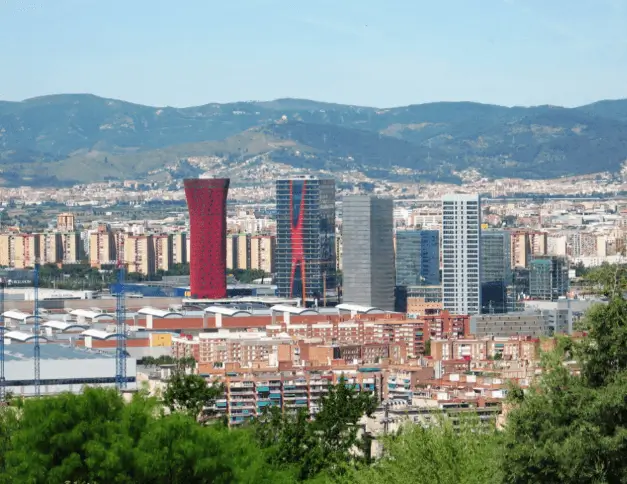
- Population: 289,510 inhabitants according to INE 2025 data, the second most populous municipality in Catalonia
- Gender split: roughly 51% women and 49% men
- Average age: around 42.7 years, with a third of the population born abroad
- Purchasing power: average, with an economy geared towards services, retail, logistics and the Gran Via L'H business district
- Economic activity rate: high, with a strong service sector and trade fair activity linked to Fira Gran Via
- Relevance for advertising: a record population density for Europe that turns every urban artery into a very high-frequency location
By population, L'Hospitalet de Llobregat is Catalonia's second-largest municipality and one of the most densely populated in Europe, with more than 20,000 people per square kilometre. The city forms the southern gateway to the Barcelona metropolitan area, has direct links to El Prat airport and to the Fira de Barcelona trade fair venue on Plaza Europa, and is undergoing an intense transformation in the Gran Via L'H business district, where corporate headquarters sit alongside convention centres and large-capacity hotels.
Marco Visual has 234 sites in L'Hospitalet, mainly bus shelters (99), MUPIs (93) and billboards (36). The network covers Gran Via de L'Hospitalet from Plaza Europa to the approach roads into Barcelona, Rambla Marina, Avenida del Carrilet, Avenida Fabregada, Carretera de Collblanc, Calle Aprestadora and Travessia Industrial. There is a very strong presence in neighbourhoods such as Bellvitge, Pubilla Cases, Santa Eulàlia and La Florida, and around Barça's stadium on Montjuïc, plus the bus shelters along metro line L1 and the bus stops on Avenida Isabel la Católica, Avenida Manuel Azaña and Avenida Torrent Gornal.
Bus shelters in L'Hospitalet de Llobregat
Across L'Hospitalet, bus shelters cover the urban bus network and are the format with the most continuous exposure to residents and workers from the metropolitan belt. Their density is very high because the entire population moves around every day within barely 12 square kilometres, which multiplies the number of impacts per euro spent.
Locations are spread along Gran Via de L'Hospitalet at numbers 10, 36, 117 and 138, Avenida Fabregada 66 at Avenida del Carrilet, Calle Sant Pius X 22 between Enric Prat de la Riba and Avenida Carrilet, Calle Sant Rafael 1 between Isabel la Católica and Teide, Torrent Gornal 3 between Avenida Ponent and Avenida Catalunya, Travessia Industrial 203 between Miquel Romeu and Riera Frares, and Rambla Marina 391. They also cover Calle Ermita de Bellvitge 66.
MUPIs in L'Hospitalet de Llobregat
L'Hospitalet's MUPIs make the most of the footfall around the Gran Via 2 shopping centre, Plaza Europa, metro station exits and the main streets of Sant Josep, Centre and Pubilla Cases. They work well for local retail, clinics, tuition centres and professional services thanks to their night-time lighting and close-range viewing.
The network covers Avenida Fabregada 52 at Avenida del Carrilet, Plaza Europa 25-27 on the inner side next to the regional railway station (south side), Calle Narcís Monturiol 183 at Can Tries, Carretera de Collblanc 22, Calle Isabel la Católica 113 on Plaza Verge del Pilar, several faces on Gran Via de L'Hospitalet, Calle Aprestadora 176 and Plaza d'Amalvígia 2. Coverage combines dense neighbourhoods with access to public transport and the large retail facilities.
Billboards in L'Hospitalet de Llobregat
Billboards in L'Hospitalet cluster on the main approach roads from Esplugues, Cornellà and Barcelona, with a focus on the exits from Ronda de Dalt and the B-23. They are useful for campaigns aimed at commuting drivers and hauliers, and at shopping centre customers.
Main locations include Carretera de Collblanc 178 on the corner of Avenida Josep Molins in both directions (towards Plaza de Sants and towards Esplugues), Carretera del Mig on the corner of Calle Famadas, Rosalia de Castro 31-33 heading towards Carretera del Mig, various points along Avenida de Manuel Azaña, Calle Famadas 48 and Calle Juan Ramón Jiménez at Narcís Monturiol. They cover both the traffic between L'Hospitalet and Barcelona and the exits towards the industrial area.
Digital screens in L'Hospitalet de Llobregat
L'Hospitalet's digital screens round off the coverage, with sites on Avenida del Carrilet 235, Avenida Granvia de L'Hospitalet 144 and the Bellvitge university campuses (dentistry, nursing and medicine). They are a useful complement for sectors that already have MUPIs or bus shelters in the city and need to step up their presence at specific times of day.
The audience for these screens combines neighbourhood residents, students on the Bellvitge campuses and visitors to the large healthcare and retail facilities nearby, which makes them particularly attractive for health, training and everyday consumer campaigns.
Outdoor advertising in Terrassa
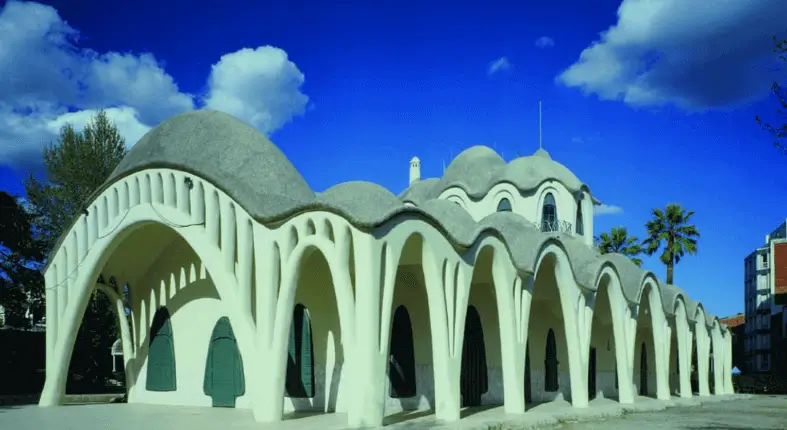
- Population: 232,676 inhabitants according to INE data as at 1 January 2025, Catalonia's third-largest municipality
- Gender split: roughly 50% women and 50% men
- Average age: around 41.9 years, with 21.7% of the population born abroad
- Purchasing power: average, with a mixed economy that combines the historic textile and chemical industries with an expanding service sector
- Economic activity rate: high, with a strong weighting towards industry, retail and university education linked to the UPC
- Relevance for advertising: a city growing steadily at 2% a year, with established neighbourhoods and plenty of comarca traffic from across the Vallès
Terrassa, Catalonia's third-largest city by population, is joint capital of the Vallès Occidental with Sabadell. Its economy retains a significant industrial base (historic textiles, chemicals, automotive and machinery) alongside an ever-growing service sector, its own university (the UPC at Campus Terrassa) and the Can Petit industrial estate. The city is growing by around 2% a year and is approaching the threshold of 250,000 inhabitants in the medium term, which is driving regeneration work in neighbourhoods such as Ca n'Aurell and Sant Pere, and in District 4.
Terrassa accounts for 231 Marco Visual advertising sites, with a very strong weighting towards MUPIs (102), billboards (77) and bus shelters (40). The network covers practically the whole length of Carretera de Castellar and Carretera de Matadepera (the Béjar-Abat Marcet corridor), plus Rambla d'Ègara, Avenida del Vallès, Avenida Jaume I, Ronda de Ponent, Avenida Josep Tarradellas and the approach roads via Avenida 22 de Juliol. There are billboards at major retail locations such as the Eroski car park on Avenida del Vallès 522 and around the Carrefour on Carretera Olesa, as well as at the junctions with the C-58, the BP-1503 and the N-150 towards Manresa.
MUPIs in Terrassa
Terrassa's MUPIs give very dense coverage of Carretera de Matadepera, which runs through the residential neighbourhoods in the north of the city and links the centre with the sports area, the secondary schools and the major public facilities. They suit retail, automotive, education and local campaigns with mid-range budgets.
The MUPI network includes Carretera de Castellar 628, Carretera de Matadepera at Plaza Antoni Escudé, Plaza de la Sardana, Avenida de Béjar at numbers 250 and 267, Avenida Abat Marcet at Carretera de Matadepera, Rambla de Francesc Macià at Plaza de l'Aigua, and Avenida de Béjar 89. Coverage is practically continuous along the 4 kilometres of the Matadepera-Béjar corridor.
Billboards in Terrassa
The approach roads into Terrassa and its main shopping streets are lined with billboards. They are the right format for brand, automotive and consumer goods campaigns, and for advertisers who need impact along the Vallès Occidental industrial corridor, where commuting drivers are the dominant audience.
Principal locations are spread between Avenida del Vallès on the corner of Ramon y Cajal, Paseo Avenida 22 de Juliol at the roundabout with Carretera de Rellinars, Carretera de Olesa on the corner of Calderón de la Barca next to Caprabo heading for Manresa, Ronda de Ponent on the corner of Atenas, Ronda de Ponent at Avenida de l'Abat Marcet next to Josep Tarradellas, Avenida del Vallès 522 opposite the Eroski car park, Glòries Catalanes, Rambla Egara at Avenida 22 de Juliol, and the entrance to Terrassa via Avenida Santa Eulàlia next to the BP petrol station.
Bus shelters in Terrassa
In Terrassa, bus shelters follow the city bus routes and link the main neighbourhoods with the centre and the railway station. They are useful for reaching students, workers in industry and older residents who use public transport regularly.
Stops with a permanent presence include Avenida de Jaume I 350 A, Avenida de l'Abat Marcet at numbers 120, 200 and 354 near the social security office, Avenida de Josep Tarradellas (including number 12), Rambla d'Ègara 372-376 opposite INS Terrassa (a secondary school) and Carretera de Montcada by Vallparadís park. They cover the shopping belt as well as secondary schools and other educational centres.
Digital screens in Terrassa
In Terrassa, the digital screens are concentrated in the Parc Vallès shopping centre, on Avenida Can Jofresa 85, where visitor numbers stay steady all year round and are especially high at weekends. They are attractive for retail, leisure, restaurants and consumer goods campaigns aimed at families.
Visitors to Parc Vallès come from Terrassa and also from Sabadell, Sant Quirze, Rubí and other nearby towns in the Vallès, which extends the screens' effective coverage beyond the municipal boundary. They work well combined with MUPIs on the Matadepera corridor to strengthen presence across the comarca.
Outdoor advertising in Lleida
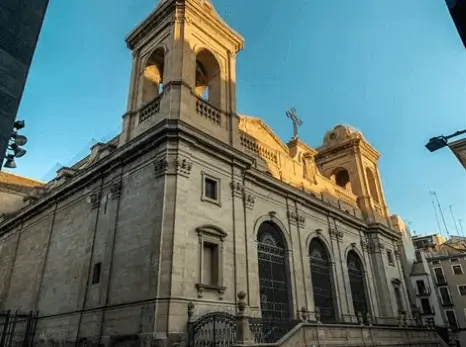
- Population: 146,266 inhabitants according to INE 2025 data, the sixth most populous city in Catalonia
- Gender split: roughly 50% women and 50% men
- Average age: around 42 years, with foreign nationals making up 22% of the population (provincial data)
- Purchasing power: average, with an economy based on agri-food, services, retail and logistics along the A-2 and AP-2
- Economic activity rate: high, with a large service sector and agro-industrial activity linked to Mercolleida
- Relevance for advertising: the leading comarca capital for a retail catchment area of close to half a million people
With the sixth-largest population of any city in Catalonia, Lleida is also the only large provincial capital in the Catalan interior. Its economy revolves around agri-food (Mercolleida, the agricultural commodities exchange, is a national benchmark for pork and fruit), logistics linked to the AP-2 and A-2, the Universitat de Lleida and local retail serving a catchment area of almost 500,000 people. Festivals such as Animac (animation) and the Festes de Maig (the city's May festivities), together with the Seu Vella (the old cathedral) and its standing as a listed heritage monument, shape the city's calendar.
Marco Visual manages 224 sites in Lleida, dominated by MUPIs (143), followed by billboards (62) and bus shelters (19). The MUPIs cover practically the whole centre and the main streets: Calle Salmerón, Calle Rovira Roure (the hospital corridor), Avenida Prat de la Riba, Avenida Alcalde Porqueres, Gran Passeig de Ronda, Plaza Europa, Princep de Viana, Plaza Berenguer IV (railway station) and Avenida Madrid. The billboards stand on approach roads and ring roads such as Avenida d'Artesa, Rambla Pardinyes, the N-II towards Tarragona, Camí Municipal de la Mariola and the junctions for Decathlon. The bus shelters cover key stops such as the bus station (Avenida Madrid).
MUPIs in Lleida
Lleida's flagship format, MUPIs cover the centre and the main residential streets at very high density. They work especially well for retail, health, education, leisure and cultural campaigns thanks to their night-time lighting and short reading distance.
Among the top locations are Calle Salmerón opposite number 22, Avenida Prat de la Riba at Avenida Alcalde Porqueres, Rovira Roure 2 (Sanitat area), Fleming at Magí Morera, Plaza Serra de Prades, Paseo de Ronda at Baró d'Eroles, Gran Passeig de Ronda 32 (Amics Lleida), Avenida Alcalde Porqueres opposite number 34, Paseo de Ronda 158, Plaza Europa at Princep de Viana 97, Princep de Viana 97 (P. Europa 1) and the shopping area around Avenida Madrid.
Billboards in Lleida
In Lleida, billboards cluster on the approach roads and the industrial and logistics corridors. They are useful for large-format campaigns aimed at drivers passing through, hauliers crossing the city and people from across the comarca travelling to Mercolleida or the shopping area.
Standout locations are Avenida d'Artesa on the corner of Plaça de Sant Jordi opposite Euromaster, Avenida President Josep Tarradellas opposite LL11 next to the China Centre, Rambla Pardinyes on the corner of Jeroni Pujades heading towards Prat de la Riba, the N-II (Carretera de Tarragona, N-240) next to Cepsa at the Decathlon entrance heading towards Miguel Batllori, Camí Municipal de la Mariola 1, and Avenida d'Artesa next to UE Bordeta on the way into Lleida. They cover the main entry points on the four national roads.
Bus shelters in Lleida
Lleida's busiest public transport points are covered by bus shelters, with sites at the railway station (Rambla de Berenguer IV, with a triple shelter at the taxi rank), the bus station on Avenida Madrid, the health centre at Prat de la Riba 56 on the corner of Salmerón, and areas around hospitals and schools. They suit campaigns aimed at students, workers and people moving around the centre.
Other notable locations are Corregidor Escofet 19 at Jeroni Pujades, Rovira Roure (Avenida Germanies 1), Plaça del Treball 5, Plaza Espanya at Avenida Madrid, Paseo de Ronda 41 (Pius XII) and Paseo de Ronda 77 (Joc de la Bola). Combined with the MUPI network, they complete coverage of the centre and the most densely populated neighbourhoods.
Outdoor advertising in Tarragona
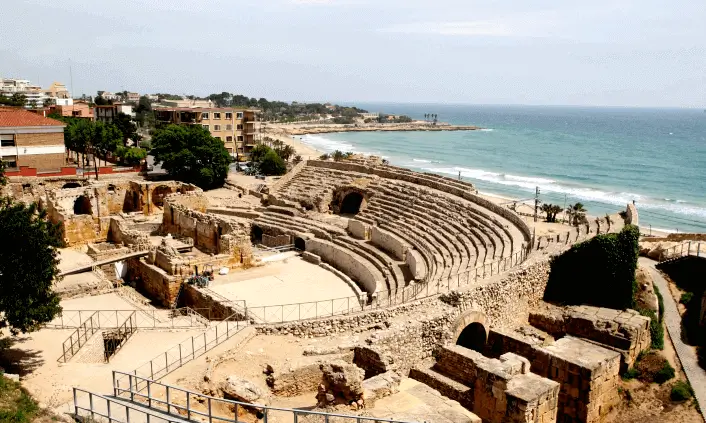
- Population: 141,151 inhabitants according to INE data as at 1 January 2024, Catalonia's seventh-largest city
- Gender split: roughly 51% women and 49% men
- Average age: around 43 years, with a sizeable young population linked to the URV university
- Purchasing power: average, with an economy based on the commercial port, the Camp de Tarragona petrochemical industry, tourism and the university
- Economic activity rate: high, with a strong contribution from industry, port logistics and university services
- Relevance for advertising: a provincial capital with a strong tourist pull thanks to its UNESCO heritage and the Costa Dorada
Catalonia's seventh-largest city, Tarragona is also a major logistics hub on the Costa Dorada. The city combines its Roman legacy (Tarraco is a UNESCO World Heritage site), a commercial port that is among the busiest in the Mediterranean, the La Canonja-Vila-seca petrochemical complex and the Universitat Rovira i Virgili. Its calendar includes Tarraco Viva (a history festival) in May; Santa Tecla, the city's patron saint festival in September, officially listed as of International Tourist Interest, with its castellers (human towers); and Holy Week (Setmana Santa).
Marco Visual has 217 sites in Tarragona, with a particularly strong billboard presence (100), followed by MUPIs (71) and bus shelters (46). The billboards dominate the approach roads along the N-340 towards Valencia and Vila-seca and the junctions with the AP-7, A-7 and T-11, as well as the C-31B (Autovía de Salou). The MUPIs cover the full length of Rambla Nova, Vidal i Barraquer 17 opposite Parc Central, Plaça Prim, Marquès de Montoliu and Vía Augusta, as well as the Balcó del Mediterrani. The bus shelters are spread across the neighbourhoods of Camp Clar, Sant Pere i Sant Pau, Bonavista and Torreforta, and the sports area.
Billboards in Tarragona
Billboards cover the approaches to Tarragona along the major national and regional roads, as well as the area around the La Canonja industrial estate and the links with the port area. They are the best choice for campaigns aimed at commuting drivers on the Mediterranean corridor, tourists on their way to Salou and PortAventura, and hauliers in the industrial zone.
The standout locations are on the N-340 (Carretera de Valencia) at km 1156 on the La Canonja industrial estate, the C-31B (Autovía de Salou) at the 9,400 m mark opposite Makro heading for Salou, Carretera Miquel Servet 2 in the lorry park opposite Mercadona, the exit from Tarragona on the N-340 towards Vila-seca next to BASF, the entrance to Tarragona on the N-240 from Valls next to Repsol, Camí de les Gavarres heading for Carrefour, and the approach roads via the N-340a in Bonavista.
MUPIs in Tarragona
Tarragona concentrates its MUPIs on Rambla Nova, the city's central pedestrian and shopping street, and on its side streets. They work very well for retail, restaurants, hotels, live entertainment and heritage attractions because they reach a mixed audience of residents and tourists walking around the centre.
The sites cover Rambla Nova at numbers 62, 96 (between Colón and Canyelles), 77 and 97 (at Calle d'Ixart), Vidal i Barraquer 17 opposite Parc Central, Plaça Prim on the Unió-Gasòmetre traffic island, Vía Augusta opposite numbers 43 and 71, Marquès de Montoliu at Avenida Catalunya and at Sant Antoni Maria Claret, Vía Augusta 2 next to the petrol station, and the Balcó del Mediterrani on Plaça Unesco. Their density gives practically continuous coverage of the central corridor.
Bus shelters in Tarragona
Tarragona has bus shelters across the network linking the centre with neighbourhoods such as Bonavista, Camp Clar, La Floresta, Sant Pere i Sant Pau and Torreforta. They suit campaigns aimed at local audiences and the wider district (comarca), especially in sectors such as education, health, neighbourhood retail and public services.
Some recurring locations are the T-11 at Plaça de la Constitució (Carrer 22, Bonavista), Sant Bartomeu (Bloc Sant Simó), Equador, Imperial Tàrraco at Marquès de Montoliu, Plaça Corts Catalanes, Sant Benilde, the Mercat (market), the Els Àngels school on Rambla de Ponent 10, Camp Clar and La Floresta (Bloc Llorer-Bloc Castanyer). This gives coverage of the city's main neighbourhoods.
Outdoor advertising in Girona
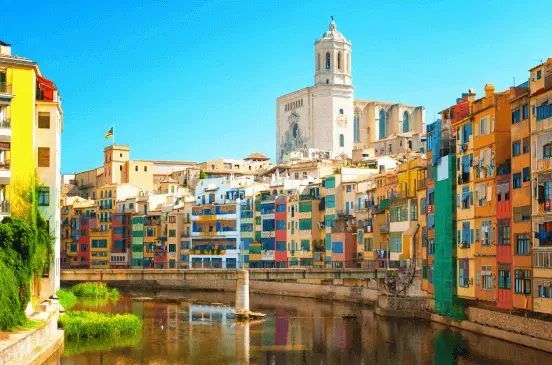
- Population: 108,666 inhabitants according to INE 2025 data, capital of the Girona comarcas
- Gender split: roughly 51% women and 49% men
- Average age: around 41 years, with a large university population at the UdG (Universitat de Girona)
- Purchasing power: above average, influenced by tourism, university activity and professional services
- Economic activity rate: high, driven by services, tourism, retail, healthcare and public administration
- Relevance for advertising: excellent for campaigns combining local, comarca and Costa Brava tourist audiences
Girona is a historic university city where a medieval centre that draws large numbers of tourists sits alongside residential neighbourhoods and modern shopping areas. Promenades such as the Devesa, the area along the Onyar river, the railway station area and the approach roads via Carretera de Barcelona carry much of the daily traffic, both from residents and from visitors coming from the Costa Brava and the interior. The Universitat de Girona brings a sizeable young population, and events such as Temps de Flors (a flower festival) in May and the jazz festival send tourist numbers soaring at certain points in the year.
Outdoor advertising campaigns in Girona take advantage of the city's radial layout and of major roads such as Carretera de Barcelona, Santa Eugènia, Jaume I, Ramon Folch and Rambla Xavier Cugat, which mix shops, services, schools and healthcare facilities. Advertising sites on the roundabouts at the entrances to the city, on industrial estates and on the approaches from the AP-7 and N-II are especially appealing for brands looking for coverage across the wider district and a presence on the routes used by traffic from the Gironès, the Pla de l'Estany and the Selva.
Bus shelters in Girona
Girona's bus shelters follow the main city bus routes and link the old town with neighbourhoods such as Santa Eugènia, Montilivi, Taialà and Domeny. They are very well suited to campaigns aimed at students, healthcare staff and administrative workers, as well as to neighbourhood retail.
Among the regular locations, the most prominent are Carretera de Barcelona and the shopping area around it, Calle Santa Eugènia and its market, the Migdia corridor, Avenida Lluís Pericot, the areas near Pont Major on Paseo Sant Joan Bosco, Rambla Xavier Cugat opposite the C-25, Avenida Sant Narcís 76, Calle Creu de Palau 46, General Mendoza and Carretera de Sant Gregori 89.
MUPIs in Girona
In Girona, MUPIs boost visibility on the streets with the heaviest footfall and on the approaches to major facilities. They stand in squares, at roundabouts and at important junctions, and suit retail, restaurants, healthcare and cultural and sporting events.
Representative locations include Calle Figuerola 3, Emili Grahit 43, Carretera de Barcelona opposite number 37 and on Plaça Marquina, Jaume I at Álvarez de Castro, Carme at Vista Alegre, Güell 140, Carretera de Santa Eugènia at Sant Narcís, Avenida de Sant Francesc at Fontanillas, Santa Eugènia 102-104 and Passeig d'Olot at Mare de Déu de la Salut. MUPIs are often found next to shopping centres, trade fair venues, sports facilities and the Fira de Girona exhibition centre.
Billboards in Girona
In Girona, billboards cluster on the key approach roads into the city, on industrial estates and at road junctions connecting with the AP-7, the N-II and the C-65. These large-format sites reach drivers travelling between Barcelona and France and people from across the comarca heading for the shopping area.
Many billboards are located at points such as Carretera de Barcelona and the area around the El Corte Inglés department store (Marquès Caldes de Montbuy 44), the approaches via Taialà and Sant Gregori, the industrial estates near the AP-7 exit (Industria), the entrance to Girona on the C-65 south at several points along the road, Paseo Sant Joan Bosco 19 and the roundabout on Avenida Josep Tarradellas i Joan. They cover both international and comarca traffic.
Outdoor advertising in Granollers
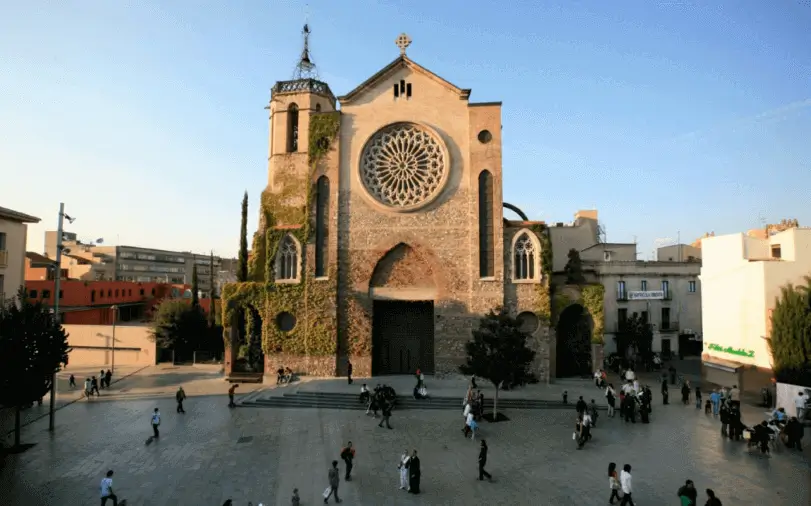
- Population: 65,123 inhabitants according to the census as at 1 January 2025, capital of the Vallès Oriental
- Gender split: roughly 50% women and 50% men
- Average age: around 41 years, with foreign nationals making up 15.7% of the population
- Purchasing power: average, with a mixed economy of industry, comarca-wide retail and services
- Economic activity rate: high, with a strong contribution from Vallès industry, high-street retail and healthcare services
- Relevance for advertising: comarca capital of the Vallès Oriental, with a retail pull across 38 municipalities and more than 425,000 inhabitants
Capital of the Vallès Oriental, Granollers is the leading shopping town for a comarca (district) of more than 425,000 inhabitants. Its economy combines diversified industry (Roca, Fives and Nestlé in the area), services and strong high-street retail, with a historic weekly market and shopping centres such as Ramassar and El Nord. The town sits at the hub of the C-17 corridor towards Vic and the AP-7 corridor towards Girona, and sees peaks of intense activity around events such as the Festa Major del Blanc i Blau (the main town festival) or Fraikin BM Granollers handball matches at the Palau d'Esports.
Marco Visual manages 107 sites in Granollers, mainly MUPIs (74), followed by billboards (26) and bus shelters (7). The MUPIs are concentrated on Ronda Sud opposite Carrefour, at the roundabout with Lluís Companys (two faces, one towards the C-17 and one towards the C-60), on Esteve Terrades at Santiago Rusinyol, on Carretera del Masnou where it comes in from the AP-7 (km 14) and at the entrance via Avinguda Puigcerdà. The billboards dominate approach roads such as the N-152 entrance via the C-17 at km 17.75 (by the cement works), Avenida Sant Julià at the N-152, the entrance from Sabadell at km 15 and the junctions with the N-152z towards Coll de la Manyà. The El Nord shopping centre, home to an OCine cinema, a bowling alley, Burger King, McDonald's, KFC and a Caprabo supermarket, accounts for much of the district's family spending.
MUPIs in Granollers
In Granollers, MUPIs give intensive coverage of Ronda Sud, Carretera del Masnou and the approaches to the big shopping centres in the north and south of the town. They work especially well for retail, leisure and restaurants thanks to their proximity to Carrefour, El Nord and the sports facilities.
The network takes in the exit from Granollers on Carretera del Masnou at km 14 heading for the AP-7, Esteve Terrades at Santiago Rusinyol heading towards the ring road, Ronda Sud opposite Carrefour on the central reservation heading towards the C-60, the roundabout where Ronda Sud meets Lluís Companys, with faces towards the C-17 and the C-60, Avenida Puigcerdà, and Avenida Francesc Macià at Ronda Sur. Coverage is practically continuous along the southern belt of the town.
Billboards in Granollers
The town's billboards stand on the main approach roads and at the junctions with the C-17, the AP-7 and the N-152. They work best for campaigns aimed at commuting drivers and hauliers on the Vallès Oriental industrial corridor, as well as at audiences from across the town's catchment area.
Notable locations include Avenida Puigcerdà heading towards Parets del Vallès, Carretera de Girona, Carretera de Sabadell at km 15, the entrance to Granollers on the N-152, Avenida Sant Julià heading into Granollers, the C-17 at km 17.75 opposite the cement works, the N-152z at km 26.4 at the entrance to Coll de la Manyà, Avenida Sant Julià on the service road alongside the N-152z, and Avenida Enric Prat de la Riba 2-4.
Bus shelters in Granollers
Granollers has fewer bus shelters, but they occupy well-placed stops such as the entrance to the town on Carretera del Masnou 445, Plaça de l'Estació de Rodalies Granollers Centre at Serrat i Bonastre, Avenida del Parc 9 opposite the law courts and other stops around the central shopping area.
These locations are especially useful for campaigns aimed at people who travel in and out by commuter rail or use public services in the town centre, such as banking, healthcare, education or professional services. Combined with the MUPIs on the southern belt, they complete coverage of the town's daily traffic flows.
Outdoor advertising in Reus
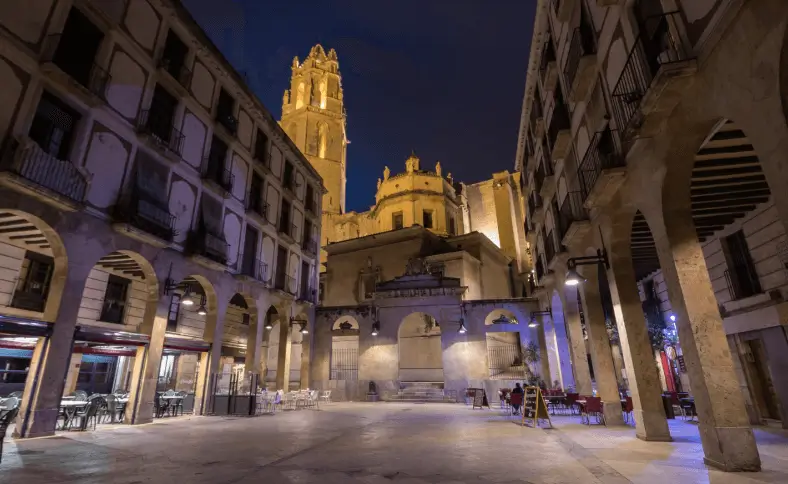
- Population: 111,601 inhabitants according to INE 2025 data, the tenth most populous city in Catalonia
- Gender split: roughly 51% women and 49% men
- Average age: around 42 years, with steady growth linked to migration
- Purchasing power: average, with an economy based on retail, healthcare services, diversified industry and the airport
- Economic activity rate: high, driven by high-street retail, healthcare and the trade fairs at Fira de Reus
- Relevance for advertising: the second retail hub of the Camp de Tarragona and the main centre for a wide catchment area across the district
Catalonia's tenth-largest city, Reus is the capital of the Baix Camp. It has a deep-rooted retail tradition (the second shopping hub in the province of Tarragona, after the capital), and its economy combines diversified industry, agri-food, healthcare (Hospital Universitari Sant Joan and the IISPV health research institute) and an airport with links to European destinations. Reus is the birthplace of Antoni Gaudí, which underpins much of its cultural tourism, together with its industrial Modernista (Catalan art nouveau) architecture and the Festa Major de Sant Pere (the city's main festival) in June.
Marco Visual has 101 advertising sites in Reus, split mainly between MUPIs (41), bus shelters (31) and billboards (29). MUPIs and bus shelters dominate the city's shopping district: Avenida Maria Fortuny along the stretches by Carrefour and the Hotel Ciutat de Reus, Paseo de la Mata-Sunyer-Avinguda Segle XX, Plaza Canal at Jaume I, Avenida Bernat Calbó, Avenida Onze de Setembre, Plaza Hércules, Plaza Pompeu Fabra and Avenida Pere El Cerimoniós. The billboards are on approach roads such as Avenida Tarragona, Avenida Salou, Avenida Riudoms, Avenida Sant Bernat Calbó 51 at Avenida Cambrils and the roundabout on Carretera Riera de Miró towards Maria Fortuny.
MUPIs in Reus
Reus has MUPIs on the main shopping and service streets in the centre and along the main pedestrian routes towards Hospital Sant Joan and the Tomb de Ravals. They suit retail, health, automotive, education and cultural campaigns, as they are illuminated at night and seen at close range.
Top locations include Plaza Hércules towards Plaza Canal, Avenida Doctor Vilaseca, Avenida Onze de Setembre at Mas Miarnau towards Paseo de la Mata, Avenida Maria Fortuny opposite Reus Ploms towards Carretera Bellisens, Avenida Bernat Calbó, Paseo de la Mata at Avenida Segle XX towards Plaza Joan Rebull, Plaza Canal at Jaume I towards the Tomb de Ravals, Avenida Països Catalans at the Sardana roundabout towards Misericòrdia, Carretera de Salou at Comandant Sugranyes and the Països Catalans roundabout.
Bus shelters in Reus
The city's bus shelters are at stops with heavy passenger traffic, on routes linking the centre with the industrial estates, Hospital Sant Joan and the residential neighbourhoods. They are useful for campaigns aimed at district-wide audiences, healthcare workers and shoppers.
Notable locations include Riera d'Aragó at Camí de Tarragona towards Plaza Villarroel, Plaza Oques at Paseo Sunyer towards Plaza Joan Rebull, Paseo de la Mata next to the railway station at Avenida Segle XX, Avenida Maria Fortuny next to Carrefour towards Plaza Pompeu Fabra, Avenida Maria Fortuny opposite the Hotel Ciutat de Reus, Vía Bellisens next to the funeral home towards the Palmeres roundabout, Avenida General Moragues 107 next to a pharmacy, Plaza Sagrada Família and Avenida Pere El Cerimoniós.
Billboards in Reus
Reus has billboards on the approach roads and roundabouts linking the city with Tarragona, Salou, Cambrils and Riudoms. They are useful for large-scale brand, automotive and retail campaigns aimed both at residents and at tourists passing through on the Costa Dorada.
Main locations include Avenida Sant Bernat Calbó 51 next to Avenida Cambrils, Carretera Riera de Miró at the roundabout towards Maria Fortuny, Avenida Jaume I 127, Carretera de Riudoms at the roundabout with Paseo dels Plàtans 2-4, Avenida Riudoms 28, Avenida Salou 120 on the corner, Avenida Salou 160 and 162, Avenida Salou at Joan Salvat Papasseit 1, Avenida Tarragona at the industrial estate roundabout towards Fortuny, and Avenida Tarragona at numbers 16-20 and 46.
Outdoor advertising in Viladecans
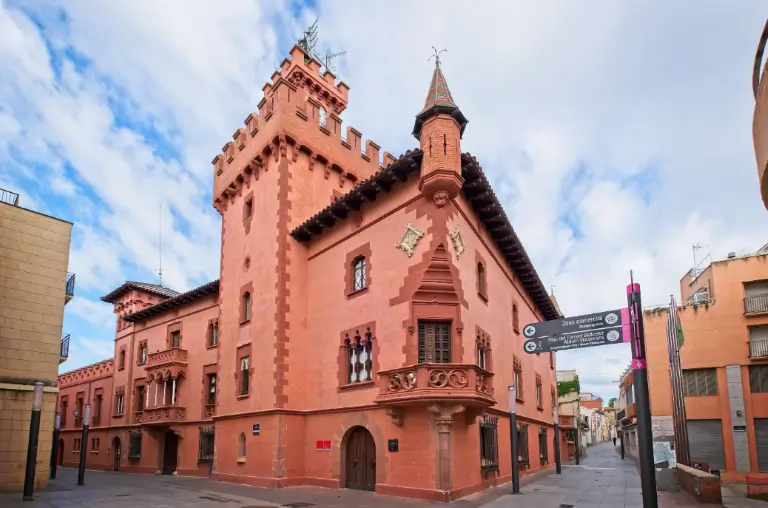
- Population: 67,587 inhabitants according to INE 2025 data
- Gender split: roughly 50.6% women and 49.4% men
- Average age: around 42 years, with 14% under 15 and 16.2% over 65
- Purchasing power: average, with an economy based on industry, airport-related logistics and metropolitan retail
- Economic activity rate: high, with 69.7% of the population aged 15 to 64 and a strong industrial corridor in the southern Baix Llobregat
- Relevance for advertising: a metropolitan town close to the airport, with heavy daily flows towards Barcelona and the C-32
Viladecans is one of the most thriving municipalities in the southern Baix Llobregat, right on the Barcelona-El Prat airport corridor and with direct links via the C-32 and C-31. Its economy combines a very strong industrial belt (Centro de Negocios Viladecans, industrial estates near the airport), a sizeable retail park (Bricomart, Barnasud) and steady residential growth in the neighbourhoods south of Avenida Generalitat. It lies within the Barcelona metropolitan area and has daily links to the capital by Rodalies commuter trains and by bus.
Marco Visual manages 98 sites in Viladecans, with a balanced mix of MUPIs (53), bus shelters (27) and billboards (18). The network covers Avenida Francesc Macià, Avenida Can Palmer, Avenida Miramar, Calle Doctor Reig, Calle Jaume Balmes and Calle Catalunya, as well as Paseo de la Marina. The billboards stand on approach roads such as Avenida Generalitat, the hospital roundabout at Josep Tarradellas, Avenida Mar at Camí Caseta d'en Nicasí, Avenida Gavà at Avenida Josep Tarradellas heading towards Carrefour and the roundabout with the C-32 heading towards Castelldefels. Coverage also reaches the neighbourhood of La Montaña, with Calle Tecnologia and Calle Hipàcia.
MUPIs in Viladecans
Across Viladecans, MUPIs line the big avenues in the centre and the residential neighbourhoods to the south, with a presence around the Centre Cultural and the main public facilities. They work well for neighbourhood retail, automotive, education and professional services because they reach metropolitan residents at close range.
This network includes Prat de la Riba 1 (Barcelona side) before Josep Tarradellas, Avenida Miramar 2 towards Tarragona, Avenida Francesc Macià 7 towards the sea, Carretera de Sant Climent 32 (inland side), Carretera de Sant Climent 87 (seaward side) at Avenida Roureda, Avenida Francesc Macià (inland side), Calle Narcís Monturiol 8 (seaward side) at Lluís Companys, Avenida Can Palmer 135 (seaward side) and Calle Doctor Reig 68 (seaward side) at Salvador Barone.
Bus shelters in Viladecans
The bus shelters serve stops along the main residential and industrial corridors, linking neighbourhoods such as Albarrosa, La Montaña and the centre with the industrial estates around the airport. They are useful for campaigns aimed at workers and shoppers.
The locations cover Calle Catalunya (inland side) at Calle Tecnologia, Paseo de la Marina (seaward side) at Parellades, Paseo de la Marina (inland side) at Plaza de la Mediterrània, Carretera de Sant Climent 45 (seaward side) at Avenida del Molí, Calle Orquídies 13 at Avenida Central d'Albarrosa, Avenida Can Palmer (seaward side) at Avenida Mil·lenari, Avenida Miramar 11 at Avenida Antoni Gaudí, Calle Canonge Doctor Auguet 113 at Calle Nou and Plaza de la Estación next to the railway station.
Billboards in Viladecans
The billboards are grouped on the main approach roads into Viladecans and the junctions with the C-32 and the C-31, and the roads linking the industrial estates. They are useful for campaigns aimed at commuting drivers and at people using the airport and the big retail parks.
The most important locations are Josep Tarradellas at the Galp petrol station roundabout, Avenida Gavà at the hospital roundabout next to Avenida Josep Tarradellas, Calle Agricultura 2-4 on the corner of Avenida Generalitat, Calle de la Tècnica at Plaça Regàs towards the store, Avenida Generalitat 14 at Rambla Modolell, Carretera de Sant Climent 30, Avenida Generalitat 67, Avenida Mar at Camí Caseta d'en Nicasí, Avenida Gavà on the corner of Josep Tarradellas heading towards Carrefour, and Avenida Generalitat 46 heading towards Avenida Francesc Macià and the Sant Boi shopping centre.
Outdoor advertising in Lloret de Mar
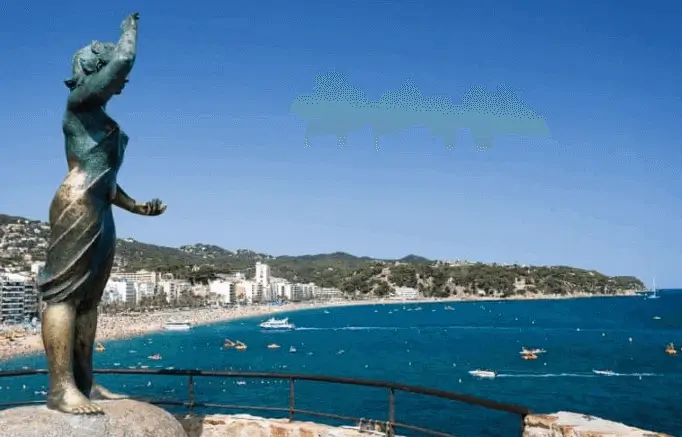
- Population: 42,600 inhabitants according to INE data as at 1 January 2024, the third-largest municipality in the Girona comarcas
- Gender split: roughly 50% women and 50% men
- Average age: around 39 years, with a young profile and 18.2% under 18
- Purchasing power: below average to average, with an economy heavily dependent on Costa Brava tourism and seasonal trade
- Economic activity rate: high, with 66.6% of the population aged 18 to 65 and a large share in hospitality and tourist retail
- Relevance for advertising: a tourist destination whose resident population multiplies in summer and which draws international visitors
Lloret de Mar is the third-largest municipality in the Girona comarcas and one of the big tourist destinations on the Costa Brava. Its registered population multiplies several times over in summer thanks to international tourism, especially from France, the UK and central Europe. Hotels, the night-time economy and water parks such as Water World and Gnomo Park account for much of the seasonal trade, together with a very busy town-centre shopping area around Avenida Just Marlès and Avenida América.
Marco Visual has 81 sites in Lloret de Mar, dominated by MUPIs (56), billboards (18) and bus shelters (7). The network is concentrated on the main tourist and shopping streets: Avenida Just Marlès, Avenida América, Avenida Vila de Blanes, Avenida del Riereal and Avenida Vidreres, as well as Carretera de Tossa. The billboards cover approach roads such as Carretera de Vidreres, Carretera de Tossa, Avenida de Blanes 153, Avenida Vila de Blanes 120 at Avenida América next to the hotel, heading towards the Gran Casino, and Carretera de Santa Coloma (C-152) towards Vic. The bus shelters are next to facilities such as the Hotel Fenals Garden and the Caprabo supermarket, and on Avenida de Fanals.
MUPIs in Lloret de Mar
Along Lloret de Mar's shopping and tourist avenues, the MUPI network is extremely dense. It works especially well for hotels, nightlife, water parks, holiday lets, restaurants and events during the summer high season.
Locations cluster on Avenida Just Marlès at numbers 23, 36, 53 and 56, Avenida América opposite number 52, Avenida Vila de Blanes at Avenida Vidreres (exit) and at Avenida América (Hotel Fenals), Avenida del Riereal at Avenida Vila de Blanes (traffic island), Avenida Just Marlès at Paseo Manel Bernat and at Plaça Pere Torrent, and Avenida Vila de Blanes at the Hotel Fenals Garden. They cover practically the whole tourist corridor from Fenals to the centre.
Billboards in Lloret de Mar
Lloret de Mar's billboards are on the approach roads into town and on the tourist routes. They are useful for campaigns aimed at tourists on their way to Lloret from Barcelona, Girona or France, as well as at residents and hospitality workers.
Standout locations here are Avenida de Blanes 153 on the way out towards Blanes, Avenida Vila de Blanes 120 at the roundabout with Avenida América next to the hotel, heading towards the Gran Casino, Carretera de Santa Coloma (C-152) next to Carretera del Corb opposite the petrol station heading towards Vic, Carretera de Vidreres in the Puig Ventós neighbourhood (inbound and outbound), Avenida Vidreres 82, Carretera de Tossa 103 at the Costamar apartments, Carretera de Tossa at Poeta Carner and the roundabout on Avenida Blanes.
Bus shelters in Lloret de Mar
Bus shelters are less numerous in Lloret de Mar but occupy stops on the busiest tourist and shopping streets. They are useful for campaigns aimed at locals out of season and at visitors who get around by bus in summer.
Locations include Avenida Vidreres 177, Avenida de Fanals opposite number 17 at Avenida Santa Clotilde, Avenida de Blanes 232 (Sil Mobel), Avenida Vila de Blanes at Avenida América (Caprabo), Platja de Fanals opposite the Restaurante Planiol and Avenida Amèrica 9. They cover both everyday traffic and the summer peak.
Outdoor advertising in Sant Boi de Llobregat
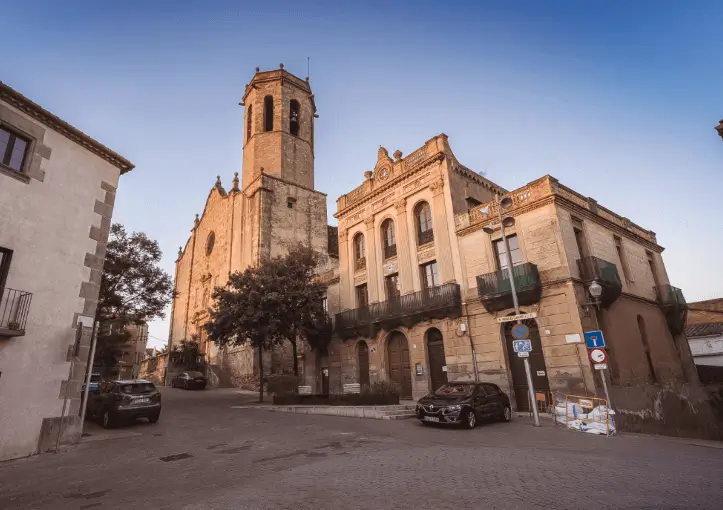
- Population: 85,610 inhabitants according to INE 2025 data, the second-largest municipality in the Baix Llobregat
- Gender split: roughly 50% women and 50% men
- Average age: around 43 years, with a significant population of foreign origin
- Purchasing power: average, with an economy based on five industrial estates, delta farming and metropolitan services
- Economic activity rate: high, driven by industry, logistics and local services
- Relevance for advertising: a pivotal municipality in the southern belt, with direct links to the C-32, B-23, BV-2002 and AP-7
Sant Boi de Llobregat ranks second among the towns of the Baix Llobregat by population and is a major hub of Barcelona's southern belt. It combines five industrial estates, farming in the Llobregat delta (with protected designations of origin for Sant Boi artichokes and El Prat chickens), a very strong retail park and direct links to the C-32, the B-23, the BV-2002 and the AP-7. It is the birthplace of historical figures such as Rafael Casanova and is home to a military airfield.
Marco Visual manages 77 sites in Sant Boi, almost all of them billboards (75), reflecting the municipality's industrial character and dense road network. The billboards dominate Carretera Santa Creu de Calafell, Avenida Riera del Fonollar, the BV-2002, Carretera del Prat towards the C-32, the entrance via the BV-2002 from Sant Vicenç dels Horts before the Cope, and the link to the Alcampo shopping centre at the roundabout with Carretera del Prat. These are ideal locations for large brand campaigns aimed at commuters in the southern belt, hauliers crossing the municipality and metropolitan retail shoppers.
Billboards in Sant Boi de Llobregat
Billboards line the main roads through Sant Boi and the entrances from Cornellà, Sant Vicenç dels Horts, Castelldefels and El Prat. They are the most cost-effective option for campaigns aimed at commuting drivers and hauliers, given that traffic on the C-32 and the BV-2002 is extremely heavy during working hours.
Leading locations include Carretera Santa Creu de Calafell 81 on the corner of Josep Castells heading towards El Prat de Llobregat, Avenida de la Riera del Fonollar and its surroundings with the petrol station and car dealerships, the BV-2002 at km 5.800 heading towards Santa Coloma de Cervelló, Carretera Santa Creu Calafell 83 next to the Ford dealership heading towards Viladecans and Gavà, Carretera del Prat next to the Alcampo roundabout, the entrance to Sant Boi via the BV-2002 from Sant Vicenç dels Horts before the Cope, and the exit towards the Castelldefels dual carriageway.
Outdoor advertising in Gavà
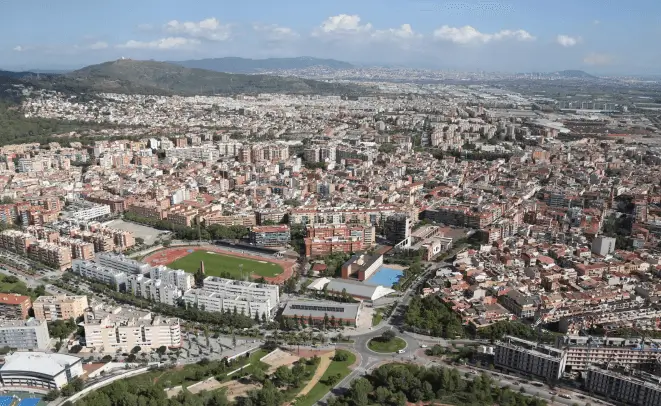
- Population: 48,243 inhabitants according to the municipal register as at 1 January 2025, an all-time high
- Gender split: roughly 51% women and 49% men
- Average age: around 43 years, shaped by the coastal neighbourhood of Gavà Mar and the working-class neighbourhoods in the centre
- Purchasing power: average, with a mixed economy of metalworking, metropolitan retail and coastal residential areas
- Economic activity rate: high, driven by long-established industry, delta logistics and comarca-wide retail
- Relevance for advertising: a large municipality with a central pedestrian street, the Barnasud retail park and direct access from the C-32 and A-16
Covering almost 31 square kilometres from the beaches of the Llobregat delta to the Garraf massif, Gavà is one of the largest municipalities in the Baix Llobregat. It combines established neighbourhoods such as Gavà Mar, Ausiàs March, Can Tries and la Sentiu, a town centre with a very lively pedestrianised Rambla, and an industrial belt that includes the historic Roca Radiadors and other metalworking firms. The prehistoric mines of Gavà-Can Tintorer give it a distinctive heritage profile.
Marco Visual has 72 sites in Gavà, overwhelmingly billboards (66), complemented by MUPIs (5). The billboards stand on the main approach roads: Avenida Bertran i Güell (the main route in from the C-32), Avenida Juan Carlos I opposite Barnasud and heading towards the C-32, the A-16 motorway at Isaac Peral, Carretera de Begues, Avenida Generalitat (C-245) at Avenida Riera de Sant Llorenç and Avenida Riera de Sant Llorenç towards Ildefons Cerdà. The MUPIs cover points such as Avenida Riera de Sant Llorenç at Avenida Gavà and at Calle Ildefons Cerdà, as well as the area around Bricomart-Barnasud.
Billboards in Gavà
The main approaches into Gavà and the big corridors to the airport, to Castelldefels and to Barcelona are lined with billboards. They work best for campaigns aimed at commuting drivers in the southern Baix Llobregat and at people using the Barnasud shopping centre and the industrial belt.
Among the top locations are Avenida Bertran i Güell on the stretch at la Màquina and at its junction with Avenida Juan Carlos I 90, Avenida Juan Carlos I opposite Barnasud at the C-32 exit, Avenida Juan Carlos I at Sant Lluís 72, Carretera de Begues, Avenida Juan Carlos I 84 at Carretera de Begues, the A-16 motorway at Isaac Peral number 2, Avenida Generalitat (C-245) at Avenida Riera de Sant Llorenç and Avenida Riera de Sant Llorenç opposite number 37 at Avenida Gavà.
MUPIs in Gavà
Gavà's MUPIs are fewer in number but hold prime positions in the centre and the coastal neighbourhood, with sites on Avenida Riera de Sant Llorenç (at numbers 37 and 134) at Avenida Gavà and at Calle Ildefons Cerdà, and on Avenida Generalitat (C-245) on the corner of Avenida Riera de Sant Llorenç. They are useful for neighbourhood retail, the local motor trade and professional services.
These locations reach residents on foot in central Gavà and people using the municipality's main shopping street. Combined with the billboards on the approach roads, they complete coverage of both commuters and town-centre residents.
Outdoor advertising in Mollet del Vallès
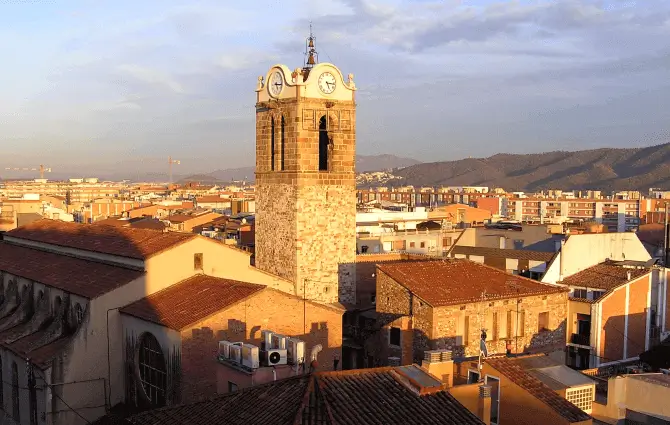
- Population: 53,053 inhabitants according to the municipal register as at 1 January 2025, an all-time high
- Gender split: roughly 50% women and 50% men
- Average age: around 42 years, with foreign nationals making up 13.4% of the population
- Purchasing power: average, with an economy based on industry, high-street retail and metropolitan services
- Economic activity rate: high, with a strong contribution from retail and Vallès industry as well as professional services
- Relevance for advertising: the most densely populated metropolitan municipality in the Vallès Oriental, with very heavy daily flows towards Barcelona and Granollers
Mollet del Vallès, the Vallès Oriental's second-largest municipality by population, is also the most densely populated town in the comarca, with almost 5,000 inhabitants per square kilometre. It channels traffic between Barcelona, Granollers and the Maresme, with the C-17, the C-33 and the AP-7 crossing the area and connecting it with Badalona, Parets and Sabadell. The economy blends long-established industry and services with lively high-street retail around Avenida Llibertat and Avenida Burgos as well as the Rambla.
Marco Visual has 70 sites in Mollet del Vallès, split between MUPIs (37), billboards (23) and bus shelters (10). MUPIs dominate Avenida Burgos at numbers 17 and 61 (opposite the Chinese restaurant) and at the roundabout with Avenida Badalona, and also appear on Avenida Llibertat (market, Parc Guimerà), Jaume I at Berenguer III, the Can Fàbregas roundabout opposite Caprabo, the Caprabo roundabout and Rambla Nova at Bernat Metge. Billboards cover approach roads such as Congost at the roundabout with Calle Octave Lecante (Can Magarola industrial estate), Avenida de les Teixidores at the roundabout with Ronda de Can Fàbregas, Avenida dels Rabassaires next to the C-17 heading towards Badalona, and Avenida de Badalona 22 at Ángel Guimerà, next to the C-33 and AP-7 entrance towards Barcelona.
MUPIs in Mollet del Vallès
Across Mollet del Vallès, MUPIs line the main shopping streets and the roads into town. They suit neighbourhood retail, automotive and restaurant advertisers, as well as campaigns for people from across the comarca using the main roads through the centre.
The sites cluster on Avenida Burgos (opposite the Opel dealership, at km 17, opposite the Chinese restaurant and at the roundabout with Avenida Badalona), Avenida Badalona at Llibertat and at Parc Guimerà, Avenida Llibertat at the Mercat, Calle Jaume I at Berenguer III, the Can Fàbregas roundabout opposite Caprabo, the Caprabo roundabout, Can Fàbregas at Pompeu Fabra opposite Valentine, and Rambla Nova at Bernat Metge.
Billboards in Mollet del Vallès
Mollet's billboards line the main approach roads and the junctions with the C-17, the AP-7 and the C-33. They are useful for large-format campaigns aimed at commuting drivers in the Vallès Oriental and at hauliers crossing the comarca.
Among the principal locations are Congost at the roundabout with Calle Octave Lecante on the Can Magarola industrial estate, Avenida de les Teixidores at the roundabout with Ronda de Can Fàbregas, Avenida dels Rabassaires next to the C-17 heading towards Badalona, Avenida de Badalona 22 on the corner of Ángel Guimerà next to the entrance to the C-33 and AP-7 towards Barcelona, Avenida Burgos 96, Avenida Badalona opposite Ángel Guimerà, the C-17 bypass at Tenis El Calderí towards Barcelona, and the entrance to Santa Perpètua next to Lidl.
Bus shelters in Mollet del Vallès
Mollet del Vallès has bus shelters at the busiest city bus stops and on the main shopping routes. They are useful for campaigns aimed at public transport users, whether workers, shoppers or people from across the comarca.
Representative locations include Avenida Burgos 76 (Bar Cuñados), Avenida Burgos 9 and 9 bis (opposite Bar La Garnatxa), Avenida Burgos 10 bis (Can Mulà), Avenida Llibertat at the Casa de la Vila (town hall), Gaudí 3 and 50, Joaquim Mir at Lluís Millet and Calle Pruneras, plus other points in the shopping district. Combined with the MUPIs on the Burgos-Llibertat corridor, they complete coverage of the town centre.
Outdoor advertising in Sabadell
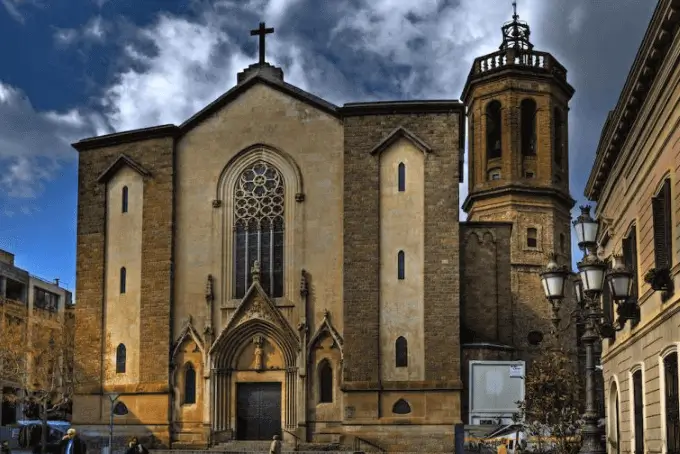
- Population: 224,589 inhabitants according to INE data as at 1 January 2025, the fifth-largest city in Catalonia
- Gender split: roughly 51% women and 49% men
- Average age: around 43 years, with a foreign population of 14.5%
- Purchasing power: average, with an economy based on banking, diversified industry, high-street retail and the healthcare services of Parc Taulí
- Economic activity rate: high, driven by financial services, industry and healthcare
- Relevance for advertising: joint capital of the Vallès Occidental, with a long-standing financial sector and a very dense road network
Catalonia's fifth-largest city by population, Sabadell shares the role of capital of the Vallès Occidental with Terrassa. Its business base combines long-established banking (Banco Sabadell), diversified industry that grew out of the old textile trade, healthcare (Parc Taulí) and its own university. The city sits at the junction of corridors such as the C-58, the B-30, the AP-7, the B-140 and the N-150 towards the Conca del Bages.
Marco Visual has 68 sites in Sabadell, mostly billboards (55), with a smaller presence of MUPIs (6), digital screens (4) and bus shelters (3). The billboards stand on the main approach roads: Avenida Arraona at Uruguay (entrance to Sabadell), Calle Berenguer el Gran at Lluís Dalmau towards Plaça Còrdova, Avenida del Cantàbric at the roundabout, the entrance to Badia coming from Sabadell, the exit from Sabadell via Avenida Cantàbric towards Badia, Ronda Jean Monet at Parc Can Gambús, the entrance to Sabadell from the B-40 towards Plaça Espanya, and the approach to Sabadell on the B-140 from Santa Perpètua at km 1.1. The digital screens are spread across university and office buildings.
Billboards in Sabadell
The main roads into Sabadell and the junctions with the C-58, the B-40, the B-140 and the N-150 carry the city's billboards. They are the most effective option for campaigns aimed at commuting drivers in the Vallès Occidental and at hauliers, given that the entrances to the city carry very heavy traffic during working hours.
Main locations include Avenida Arraona at Calle Uruguay (entrance to Sabadell), Calle Berenguer el Gran on the corner of Lluís Dalmau heading towards Plaça Còrdova, Calle Narcís Monturiol at Agustí Pi i Sunyer next to the Waka Club Disco, Avenida del Cantàbric at the roundabout, the entrance to Badia from Sabadell at the petrol station roundabout, the exit from Sabadell via Avenida Cantàbric heading towards Badia, Ronda Jean Monet at Parc Can Gambús, the entrance to Sabadell from the B-40 towards Plaça Espanya, and the approach to Sabadell on the B-140 from Santa Perpètua at km 1.1.
Outdoor advertising in Mataró
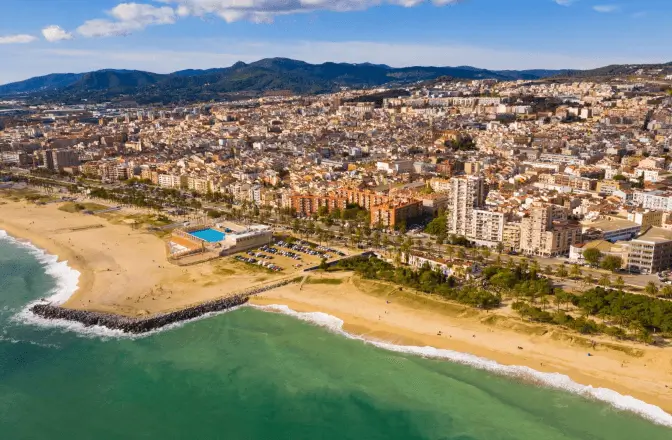
- Population: about 130,000 inhabitants according to INE 2024 data, capital of the Maresme and the eighth-largest city in Catalonia
- Gender split: roughly 50% women and 50% men
- Average age: around 42 years
- Purchasing power: average, with an economy based on high-street retail, the port and healthcare services, plus the Maresme's textile heritage
- Economic activity rate: high, driven by services, retail and healthcare around Hospital de Mataró
- Relevance for advertising: comarca capital of the Maresme, with heavy coastal traffic along the C-32 and the N-II
The capital of the Maresme, Mataró is Catalonia's eighth-largest city by population. It brings together a busy fishing port and marina, the textile heritage that gave rise to mainland Spain's first railway (Barcelona-Mataró, 1848), strong high-street retail on Calle Riera and the approaches to the C-32 and the N-II as its main arteries. The Mataró Park shopping centre and the Tecnocampus (a university and business park) draw young people and professionals to the north of the city.
Marco Visual manages 60 advertising sites in Mataró, mostly billboards (47), plus a sizeable block of digital screens (11) in the Mataró Park shopping centre. Billboards dominate the approaches via the C-32 and the N-II, with a presence on Avenida Puig i Cadafalch 215 at Ronda President Tarradellas, Avenida President Companys at Sant Cugat, Avenida Europa at Plaça França, the C-32 at Riera de Cirera next to CF Ca l'Abril, Plaça La Verema at Carretera de Mata, the N-II at km 644.5, on Avenida Cabrera next to the sewage treatment plant (in both directions), Camí Ral de la Mercè at Ronda Cervantes, and Ronda Països Catalans at the Riera Figuera Major roundabout.
Billboards in Mataró
Billboards line the main roads into Mataró from Barcelona and Girona, especially the C-32 and the N-II. They are the logical choice for campaigns aimed at commuting drivers in the Maresme and tourists passing through to the Costa Brava.
Leading locations include Avenida Puig i Cadafalch 215 on the corner of Ronda President Tarradellas, Avenida President Companys on the corner of Sant Cugat, Avenida Europa at Plaça França, the C-32 at Riera de Cirera next to CF Ca l'Abril, Plaça La Verema at Carretera de Mata, the N-II at km 644.5 on Avenida Cabrera by the sewage treatment plant (heading towards Girona and towards Barcelona), Camí Ral de la Mercè at Ronda Cervantes, Plaça Alfredo d'Opisso Cardona at Ronda Cervantes, Ronda Creu de Pedra at Camí Valldeig, and Ronda Països Catalans at the Riera Figuera Major roundabout.
Digital screens in Mataró
Mataró's digital screens are grouped in the Mataró Park shopping centre, at Estrasburgo 5, where footfall is steady all year round and especially heavy at weekends. They are useful for retail, leisure, restaurants and consumer goods campaigns aimed at families in the Maresme.
Other digital sites are in shopping and business areas of the centre, such as Puig i Pidemunt 12 and premises on Serra More. Combined with the billboards on the C-32 and N-II approach roads, the digital screens complete a mix of road-traffic coverage and point-of-sale reach.
Outdoor advertising in Vila-seca
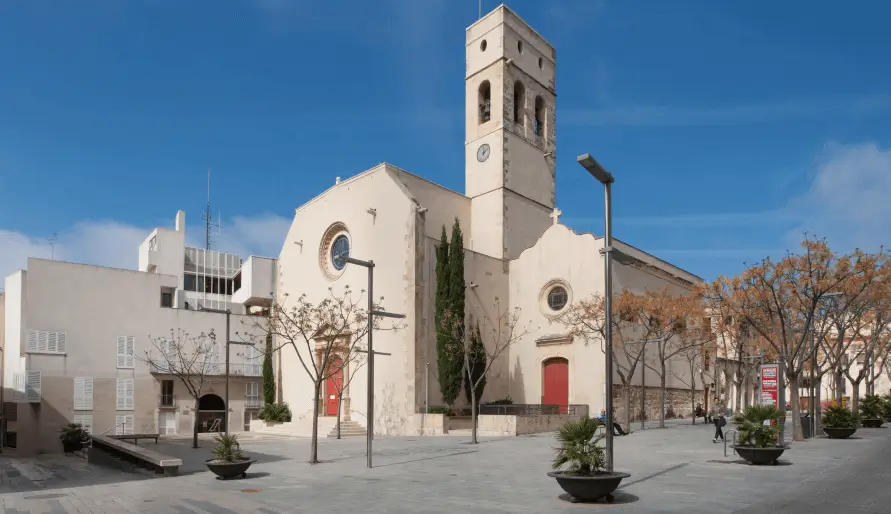
- Population: 23,917 inhabitants according to INE 2025 data, a municipality in the Tarragonès
- Gender split: roughly 50% women and 50% men
- Average age: around 41 years, with a family profile and a sizeable share living in the coastal neighbourhood of La Pineda
- Purchasing power: average, with an economy based on tourism (PortAventura), the Camp de Tarragona chemical industry and services
- Economic activity rate: high, thanks to tourism and hospitality as well as the petrochemical industry
- Relevance for advertising: home to PortAventura World, with international tourist appeal and a direct link to the AP-7
Vila-seca is a municipality in the Tarragonès with a mixed profile: it combines a historic town centre, the coastal neighbourhood of La Pineda and the economic weight of PortAventura World, one of Europe's major theme parks. The economy revolves around tourism (Costa Dorada), the chemical industry and direct links to the AP-7 (exit 1153), the N-340, the C-14 and the C-31B. The municipality hosts events such as the Vila-seca Cooltural Fest and the PortAventura park's festive calendar.
Marco Visual has 52 sites in Vila-seca, practically all MUPIs (51) plus one bus shelter. The network covers the approaches to the park and the main avenues at very high density: Raval del Mar at the approaches to the roundabout and AP-7 exit 1153, the entry and exit roundabouts for Vila-seca coming from the AP-7, various points on Calle Ramon Olzina (entry from and exit to the AP-7, towards the centre and towards the AP-7), Avenida Pere Molas at the PortAventura entrance roundabout, and the approaches to the centre. This is the ideal inventory for campaigns aimed at family tourists visiting PortAventura, at Costa Dorada residents and at guests in nearby hotels.
MUPIs in Vila-seca
The approaches to PortAventura World in Vila-seca and the large roundabouts connecting with the AP-7 are covered by MUPIs at very high density. They work especially well for campaigns aimed at international family tourists, nearby hotels, restaurants and services that complement the theme park.
The locations centre on Raval del Mar at the approach to the roundabout and AP-7 exit 1153, Raval del Mar at the roundabout opposite McDonald's at the entrance from the AP-7, the entry and exit roundabouts for Vila-seca coming from the AP-7, various points on Calle Ramon Olzina (entrance from the AP-7, exit to the AP-7, opposite the Bazar, numbers 1 and 2 heading towards and coming from the centre), Avenida Pere Molas at the PortAventura entrance roundabout, and other roundabouts and avenues along the tourist route.
Outdoor advertising in Salou
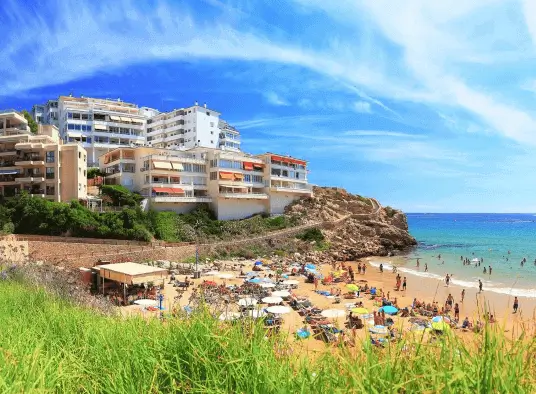
- Population: 31,491 registered inhabitants according to INE 2025 data, with a summer population that can grow fivefold
- Gender split: roughly 50% women and 50% men
- Average age: around 42 years, with a notable share of young people working in tourism
- Purchasing power: average among residents and highly variable among international tourists, with visitors from the UK, France, Russia and Ireland
- Economic activity rate: very high in season, with hospitality, leisure and tourist services playing a decisive part
- Relevance for advertising: an international tourist destination with a diverse audience and extreme peaks in footfall during the summer months
One of the leading tourist destinations on the Costa Dorada, Salou is also the home of the PortAventura World park. Its registered population multiplies several times over in summer, with a very marked international profile (visitors from the UK, France, Russia, Ireland and the Netherlands). Paseo Marítimo Jaume I, Avenida Carles Buigas and Paseo Miramar, together with Plaça Francesc Macià at Vía Roma, channel the municipality's main tourist flows. The Carnavales de Salou (Salou Carnival) is celebrated with parades along the Mediterranean shore and draws big crowds.
Marco Visual has 50 sites in Salou, all of them MUPIs. The network gives very dense coverage of the municipality's tourist seafront: Vía Roma at Plaça Francesc Macià, Paseo 30 d'Octubre at the C-31B heading towards Salou, Paseo Miramar (opposite numbers 12, 24, 32, 44 and 56), Paseo Miramar at Plaça de Venus, Paseo Jaume I (opposite number 1) and other points along the route. This inventory is very well suited to seasonal campaigns: hotels, nightlife, restaurants, holiday lets, resort retail and sporting events.
MUPIs in Salou
Salou's seafront and main tourist streets are lined with MUPIs at very high density. They work especially well for seasonal campaigns with an international audience: nightlife, theme parks, restaurants, holiday lets and complementary tourist services.
The sites are grouped along Vía Roma at Plaça Francesc Macià, Paseo 30 d'Octubre at the C-31B towards Salou, Paseo de Miramar opposite numbers 12, 24, 32, 44 and 56, Paseo de Miramar at Plaça de Venus, Paseo Jaume I opposite number 1 and other points on the tourist route. Coverage is practically continuous along the seafront promenade and the main avenues, which multiplies impacts during the high-season months.
Outdoor advertising in Vic
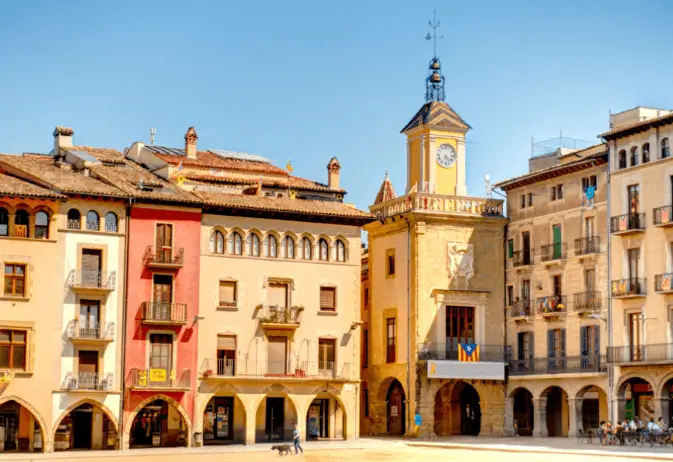
- Population: 49,530 inhabitants according to the census as at 1 January 2024, capital of Osona
- Gender split: roughly 50% women and 50% men
- Average age: around 41 years, with a sizeable young student population and a diverse migrant profile
- Purchasing power: average, with an economy based on the meat industry, comarca-wide retail and the university
- Economic activity rate: high, supported by the agri-food industry, Mercat Setmanal traders and university services
- Relevance for advertising: comarca capital of Osona, with commercial pull across central Catalonia and along the C-17
Vic, capital of Osona, is a leading economic, retail and university centre for central Catalonia. Its Tuesday and Saturday Mercat Setmanal (weekly market) ranks among the country's oldest and best known, its cured meat and sausage industry enjoys an international reputation, and the Universitat de Vic-Universitat Central de Catalunya gives the city a youthful profile. The C-17 puts Vic less than an hour from Barcelona and the N-152a links it with Ripoll and the Cerdanya. The Mercat de Música Viva de Vic (a live-music market and festival) in September and the Festa Major liven up the cultural calendar.
Marco Visual has 47 sites in Vic, split between billboards (26), bus shelters (14), digital screens (6) and one MUPI. Billboards cluster on approach roads such as the N-152a at km 69.600 (opposite Passatge Mas Pugell, where traffic enters and leaves the Mas Galí industrial estate), the N-152a at Perot Rocaguinarda, Carretera de Puigcerdà at Carretera Guixa, and Carretera de Sant Hipòlit 1. Bus shelters cover stops such as Avenida Rafael de Casanova 2, Avenida Països Catalans, Sagrada Família 7 (Universitat de Vic), Avenida Olímpia (sports area), Paseo Generalitat 13, Plaça Santa Clara and Pare Huix at Pius XII. The digital screens are in four buildings on the university campus (Miramarges, Edificio B, Torres dels Frares, Edificio C).
Bus shelters in Vic
Across Vic, bus shelters stand at stops on the busiest city routes and the comarca network, with a presence on the university campus and the main shopping streets. They are useful for campaigns aimed at students, workers from across the comarca and residents getting around the centre and the neighbourhoods.
Top locations include Avenida Rafael de Casanova 2, Avenida Països Catalans, Sagrada Família 7 (Universitat de Vic), Avenida Olímpia by the sports area, Avenida de l'Estadi, Pare Huix at Pius XII, Paseo Generalitat 13, Avenida Martí Genís at Sant Francesc, Plaça Santa Clara and other points around the educational and shopping areas. Coverage combines the university campus with the historic town centre.
Billboards in Vic
Vic's main approach roads and the junctions with the C-17, the N-152a and the industrial estates are lined with billboards. They are useful for campaigns aimed at commuting drivers on the Barcelona-Ripoll corridor and at hauliers crossing the comarca of Osona.
Notable locations include Carretera de Sant Hipòlit at the roundabout with Carretera Manlleu (the entrance to Vic next to car dealerships), the N-152a Carretera de Puigcerdà at km 69.600 opposite Passatge Mas Pugell (entrance to and exit from the Mas Galí industrial estate, heading towards Ripoll and towards Granollers), the N-152a at Perot Rocaguinarda, Carretera de Puigcerdà at Carretera Guixa, Carretera de Sant Hipòlit 1, Carretera Prats Lluçanès at Fusa, Paseo Generalitat 69 at Països Catalans, and the N-152a at km 66.9. They cover the C-17 corridor and the links towards Manlleu and Sant Hipòlit.
Digital screens in Vic
Grouped on the campus of the Universitat de Vic-Universitat Central de Catalunya, Vic's digital screens are in the Miramarges, Edificio B, Torres dels Frares and Edificio C buildings. They are a natural fit for campaigns aimed at university students and the academic community of central Catalonia.
The audience for these screens is young and well educated, with a consumer profile suited to sectors such as student banking, technology, student leisure, further education and training, travel and mobile apps. Combined with the bus shelters on campus, they complete coverage of the university community throughout the academic year.
Outdoor advertising in Salt
- Population: 34,491 inhabitants according to INE 2025 data, the second-largest municipality in the Girona urban area
- Gender split: approximately 49% women and 51% men
- Average age: around 36 years, a young profile, with 41% of the population born abroad
- Purchasing power: below average, with an economy based on services, retail and the busy Espai Gironès shopping centre
- Economic activity rate: high, driven by retail, nearby industrial services and the shopping centre
- Relevance for advertising: a municipality with one of Catalonia's youngest and most diverse populations, home to the Espai Gironès centre
Second in size among the municipalities of the Girona urban area, Salt forms, together with the city of Girona, a functional conurbation of over 140,000 inhabitants. Its demographic profile is among the most diverse in Catalonia, with one of the highest proportions of foreign-born residents in the country. The Espai Gironès shopping centre is one of the great retail landmarks of the Girona comarcas and draws shoppers from across the province, while Avenida Països Catalans and Paseo Marquès de Camps channel movement around the town.
Marco Visual has 44 sites in Salt, split between billboards (27), bus shelters (10) and MUPIs (7). Billboards dominate the approaches via the C-65 (entry and exit towards the AP-7), Paseo Marquès de Camps next to Gas Girona, Camí Carlins at the roundabout opposite Espai Gironès, Avenida La Pau at the hospital roundabout, and Carretera de Bescanó at km 112.8 by the Hostal Restaurante Torremirona. MUPIs cluster in the Espai Gironès shopping centre (ground-floor entrance, level 1, car parks 02, 03 and 07, and car park entrances and exits via Carrer Lingen). Bus shelters cover Avenida Països Catalans opposite number 198, Plaça de la Vila and other urban stops.
Billboards in Salt
Salt has billboards on the C-65 approach roads and the junctions with the AP-7 towards Girona. They are useful for campaigns aimed at commuting drivers in the Gironès and at shoppers from across the comarca visiting the Espai Gironès centre, as well as hauliers crossing the Barcelona-La Jonquera corridor.
Main locations here include the approach to Girona on the C-65 heading towards the AP-7 (right-hand side), Paseo Marquès de Camps heading towards Salt next to Gas Girona, the exit from Girona via the C-65 (toll exit 7, left-hand side, Zona Franca Ocasió), Camí Carlins at the roundabout opposite Espai Gironès, Avenida La Pau at the hospital roundabout (Salt side and Girona side), Carretera de Bescanó at km 112.8 by the Hostal Restaurante Torremirona, the AP-7 approach to Girona Sud-Vallvera-Sitjar, and Avenida President Francesc Macià 32-40 at Països Catalans.
Bus shelters in Salt
In Salt, bus shelters reach passengers at the busiest stops and link the main neighbourhoods with the Espai Gironès shopping centre and the city of Girona. They are useful for campaigns aimed at local audiences and people from across the comarca.
Main locations include Avenida Països Catalans opposite number 198, Plaça de la Vila and various points around the shopping and residential areas. Combined with the MUPIs inside Espai Gironès, they offer mixed coverage of commuters and shopping centre customers.
MUPIs in Salt
Inside the Espai Gironès shopping centre and at its entrances, Salt's MUPIs appear at the ground-floor entrance, on level 1 (outer wall of the centre), in car parks 02, 03 and 07 (Vent and Aigua) and at the car park entrances and exits via Carrer Lingen. They are a strong fit for retail, restaurants, leisure and campaigns aimed at shopping centre customers.
These sites offer an audience with active purchase intent throughout their visit to the centre and are especially effective for sectors such as fashion, electronics, restaurants and complementary services. Lighting at night and close-range viewing maximise brand recall.
Outdoor advertising in Figueres
- Population: 49,689 inhabitants according to INE 2025 data, capital of the Alt Empordà
- Gender split: roughly 51% women and 49% men
- Average age: around 41 years, with a sizeable, diverse migrant population and a young profile
- Purchasing power: average, with an economy built on comarca-wide retail and cultural tourism, plus links with France
- Economic activity rate: high, driven by retail, the hospitality trade around the Teatre-Museu Dalí and cross-border activity
- Relevance for advertising: the gateway for traffic between Catalonia and France, and a cultural hub for north-eastern Catalonia
Capital of the Alt Empordà, Figueres is the gateway to and from France for much of the traffic on the AP-7 and the N-II. The city pairs its cultural heritage (the Teatre-Museu Dalí, Catalonia's second most-visited museum after the Sagrada Família) with an important retail role across a wide comarca catchment. The Castell de Sant Ferran, the shops in the centre and the high-speed rail link with Barcelona and France cement its position as a transport hub for north-eastern Catalonia.
Marco Visual manages 42 sites in Figueres, all of them billboards. The network covers the major approach roads: Ronda Sud 23 at the roundabout with Carretera de Circumval·lació next to the Alt Empordà industrial estate, Carretera de Roses 31 at the roundabout with Avenida Vilallonga, Carrer de la Calçada at Carretera de Roses 31 next to Aldi, Avenida de Salvador Dalí 622 next to Hotel Ronda heading towards Ronda Barcelona, the exit from Figueres via the C-31, Plaça President Josep Tarradellas opposite the petrol station, the exit from Figueres via the N-II towards the AP-7, and the roundabout on Carretera Roses 42 heading towards Decormobel and towards Figueres. These locations suit campaigns aimed at cultural tourists and international hauliers, as well as people from across the comarca.
Billboards in Figueres
The main routes into Figueres via the AP-7, the N-II and the C-31, and the roads towards Roses and Cabanes, are covered by billboards. They are the most cost-effective option for campaigns aimed at international tourists coming and going via La Jonquera, at hauliers and at people across the Alt Empordà comarca.
Top locations include Ronda Sud 23 at the roundabout with Carretera de Circumval·lació next to the Alt Empordà industrial estate, the Carrer de la Calçada roundabout at Carretera de Roses 31 next to Aldi, Carretera de Roses 31 at the roundabout with Avenida Vilallonga, Avenida de Salvador Dalí 622 next to Hotel Ronda heading towards Ronda Barcelona, the exit from Figueres via the C-31, Plaça President Josep Tarradellas opposite the petrol station, the exit from Figueres via the N-II towards the AP-7, the roundabout on Carretera Roses heading towards Roses opposite Decormobel, and Carretera Roses 42 in both directions.
Outdoor advertising in Badalona
- Population: 231,542 inhabitants according to INE 2025 data, the fourth-largest city in Catalonia
- Gender split: fairly balanced overall, with a slight female majority among the over-65s
- Average age: around 43 years, with young neighbourhoods that have a large migrant population
- Purchasing power: average and below average, with an economy tied to industry and Besòs logistics, plus local retail
- Economic activity rate: close to 63% of working age, with a strong contribution from industry and services as well as metropolitan retail
- Relevance for advertising: a dense urban market connected to Barcelona, a natural fit for neighbourhood retail and automotive as well as wide-reaching metropolitan campaigns
Catalonia's fourth-largest city, with 231,542 inhabitants on the 2025 count by Spain's National Statistics Institute (INE), Badalona forms part of the Barcelona metropolitan area, about ten kilometres from the centre, in the Barcelonès comarca next to the mouth of the Besòs. Its industrial past still shapes the city's character: industrial estates such as Can Ribó sit alongside very lively local shops and facilities that draw people from across the metropolitan area, such as the Màgic Badalona shopping centre, next to the station, and the Olímpic arena. The population is dense and young in neighbourhoods such as Llefià, Sant Roc and La Salut, and road traffic is channelled along the B-20 and the approach roads to the C-31, which ties the city into the daily traffic flows of Barcelona's northern belt.
Most sites in Badalona are billboards on the road approaches and in the busiest shopping areas. There is a presence on Avenida del Conflent and Avenida de Pomar, at the entrance to Makro and the exit to the B-20; on Avenida del Caritg next to the Màgic Badalona shopping centre; at the Coll i Pujol roundabout heading towards Bac de Roda; on Plaza Salvador Dalí and Avenida del Cardenal Vidal i Barraquer; and on the Can Ribó industrial estate along Calle Ramon Martí Alsina. The sites also cover corridors such as Calle Juan de Austria, level with Tennis Badalona, and Avenida de la Gran Via de l'Hospitalet, which links up with neighbouring municipalities. These locations are chosen to reach commuting drivers and local shoppers.
Billboards in Badalona
In Badalona, billboards work well because the city relies on the car to connect with Barcelona and with the municipalities of the northern Barcelonès. They are the natural format for car dealerships and superstores, for retail chains and for campaigns seeking metropolitan coverage at a good cost per impact, since they catch commuting drivers on their daily journeys.
The main locations lie along the road approaches and around the shopping areas: Avenida del Conflent and Avenida de Pomar next to Makro and the exit to the B-20, Avenida del Caritg level with the Màgic Badalona shopping centre, the Coll i Pujol roundabout heading towards Bac de Roda, Plaza Salvador Dalí, the Can Ribó industrial estate along Calle Ramon Martí Alsina, and Calle Juan de Austria near Tennis Badalona. This network combines passing traffic with proximity to the shops.
Outdoor advertising in Sant Just Desvern
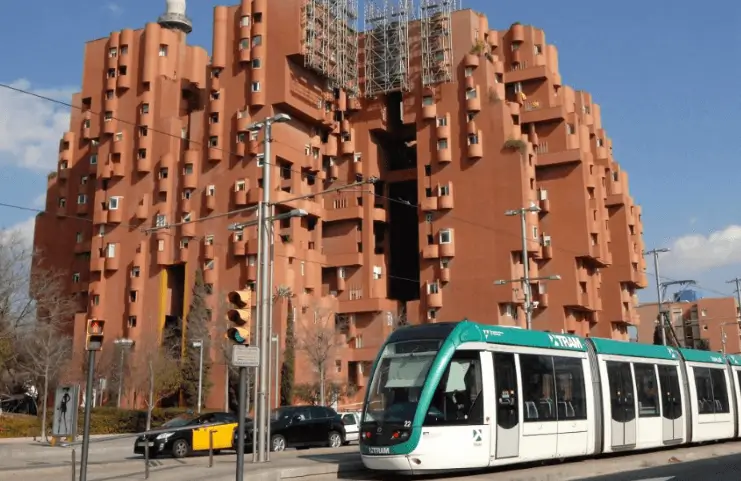
- Population: 21,037 inhabitants according to INE 2025 data, a municipality in the Baix Llobregat
- Gender split: roughly 51% women and 49% men
- Average age: around 41 years, with highly qualified residents
- Purchasing power: above average to high, among the 10 municipalities in Catalonia with the highest per capita income, according to IDESCAT
- Economic activity rate: high, supported by professional services, corporate head offices and resident executives
- Relevance for advertising: a metropolitan municipality with high incomes and many senior executives among its residents, and a gateway to Barcelona via the B-23
Sant Just Desvern has one of the highest per capita incomes of any municipality in Catalonia, according to IDESCAT data, thanks to its highly qualified residents and its direct proximity to Barcelona (10 kilometres from the centre). The municipality is crossed by the N-340 towards Sant Feliu de Llobregat and Esplugues, by the B-23 and by the local road to Molins de Rei. Companies such as Roca, Areas and Walter Pack, along with logistics centres in the Llobregat, have head offices or a presence nearby.
Marco Visual manages 35 sites in Sant Just Desvern, split between MUPIs (23) and billboards (11). The MUPIs are concentrated on Carretera Reial (the historic road running through the municipality) and on the university campus (Matemáticas, Secretaría corridor). The billboards cover approach roads such as Avenida de la Generalitat at the roundabout with Carretera Reial heading towards Avenida de Barcelona, Avenida Barcelona 166 (BV-2002) heading towards Sant Boi de Llobregat, Calle Pere Ponce de León opposite the ITV (vehicle testing) centre, Calle Frederic Mompou at Sant Martí de l'Erm, Carretera Reial 83 at Rambla Modolell, and Carretera Reial at Avenida Pla del Vent.
MUPIs in Sant Just Desvern
MUPIs run the length of Carretera Reial, the backbone of Sant Just Desvern, with a continuous presence at various points along the road. They suit premium retail, high-end automotive and private banking, as well as professional services and education, given the highly qualified profile of residents.
The network is concentrated at the main points along Carretera Reial (Carrer Reial on some stretches), as well as on the university campus (Matemáticas area, Secretaría corridor). This density gives practically continuous coverage of the main road and connects the town centre with the approaches to Esplugues and Sant Feliu.
Billboards in Sant Just Desvern
Sant Just Desvern's billboards sit on approach roads and at the junctions with the B-23 and the BV-2002. They are useful for campaigns aimed at commuting drivers and at executives travelling to and from Barcelona every day, as well as people using the Baix Llobregat's major facilities.
Leading locations include Avenida de la Generalitat at the roundabout with Carretera Reial heading towards Avenida de Barcelona, Avenida Barcelona 166 (BV-2002) heading towards Sant Boi de Llobregat, Calle Pere Ponce de León opposite the ITV centre, Calle Frederic Mompou at Sant Martí de l'Erm, Carretera Reial 83 at Rambla Modolell, and Carretera Reial at Avenida Pla del Vent. They cover both metropolitan traffic and the approaches to nearby industrial estates.
Outdoor advertising in Igualada
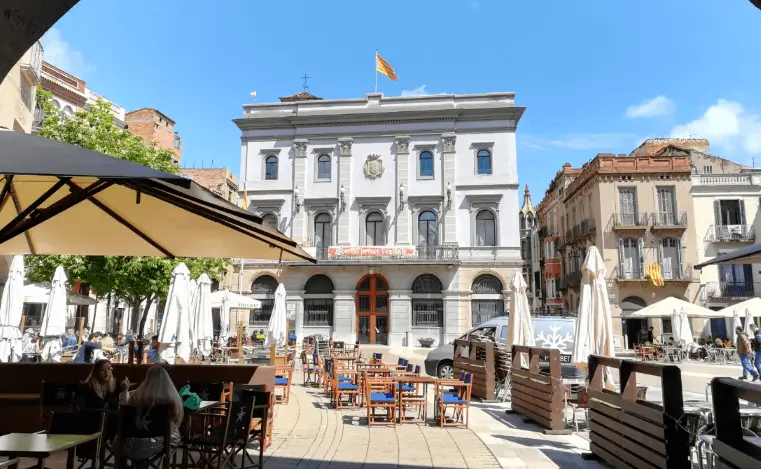
- Population: 42,085 inhabitants according to INE 2025 data, capital of the Anoia
- Gender split: roughly 50% women and 50% men
- Average age: around 42 years, with a foreign population of 8.5%
- Purchasing power: average, with an economy based on the leather and textile industries, paper-making and comarca-wide services
- Economic activity rate: high, driven by long-established industry and the Anoia's comarca-wide retail
- Relevance for advertising: comarca capital of the Anoia, with commercial and industrial pull along the A-2 corridor between Barcelona and Lleida
The capital of the Anoia, Igualada is a historic industrial hub tied to leather, textiles and paper. The town anchors the link between Barcelona and Lleida on the A-2 (km 555, level with Tennis Can Busqué) and combines a pedestrianised town centre around the Rambla and Paseo Verdaguer with busy industrial estates. The European Balloon Festival in July and the Festa Major de Sant Bartomeu (the town's main annual festival) are the high points of the local calendar.
Marco Visual has 31 sites in Igualada, split between billboards (13), MUPIs (10) and bus shelters (8). The MUPIs are concentrated on Paseo Verdaguer (at Plaça de Catalunya and at number 41), Avenida Barcelona at Carretera de Manresa, Avenida de Europa, Avenida del Doctor Pasteur 15 and Avenida Santa Caterina. The bus shelters cover Avenida Barcelona at numbers 19, 41 and 88, Avenida de la Pietat 62-64, Plaça Masuca, Avenida de Caresmar 3 and Avenida Catalunya. Billboards dominate approaches such as the N-II entrance (wall-mounted), Carretera de Valls 10 at Prat de la Riba, Avenida Europa at Països Baixos, Carretera de Vilanova del Camí at Coral de la Llantia, Avenida Montserrat 34 at Paseo Verdaguer, and Avenida Catalunya at Tennis Can Busqué, at km 555 of the N-II.
MUPIs in Igualada
MUPIs run along the centre's main pedestrian route in Igualada as well as Paseo Verdaguer and Avenida Barcelona, linking the shopping district with the main healthcare and education facilities. They suit retail and restaurants, as well as local automotive and professional services, because they reach a mix of residents and people from across the comarca.
Standout locations include Paseo Verdaguer at Plaça de Catalunya and at number 41, Avenida Barcelona at Carretera de Manresa, Avenida de Europa, Avenida del Doctor Pasteur 15 and Avenida Santa Caterina, plus other points along the central pedestrian route.
Bus shelters in Igualada
Igualada's bus shelters serve the city bus stops where people wait longest, and they connect the main neighbourhoods with the centre and the industrial estates. They are useful for campaigns reaching workers and shoppers as well as people from across the comarca.
Recurring locations include Avenida Barcelona at numbers 19, 41 and 88, Avenida de la Pietat 62-64, Plaça Masuca, Avenida de Caresmar 3 and Avenida Catalunya. Combined with the MUPIs on Paseo Verdaguer, they complete coverage of the centre and the approach roads.
Billboards in Igualada
In Igualada, billboards cluster on approach roads and at junctions with the A-2 and the roads towards Vilanova del Camí, Vilafranca and Manresa. They are useful for campaigns aimed at commuting drivers on the Barcelona-Lleida corridor and at hauliers crossing the Anoia.
Leading locations include the entrance to Igualada via the N-II (wall-mounted), Carretera de Valls 10 at Prat de la Riba, Avenida Europa at Països Baixos, Carretera de Vilanova del Camí at Coral de la Llantia, Avenida Montserrat 34 at Paseo Verdaguer, Avenida Catalunya at Tennis Can Busqué at km 555 of the N-II, and Avenida del Mestre Muntaner 15. They cover both traffic on the central corridor and the approaches to the industrial belt.
Outdoor advertising in La Pineda
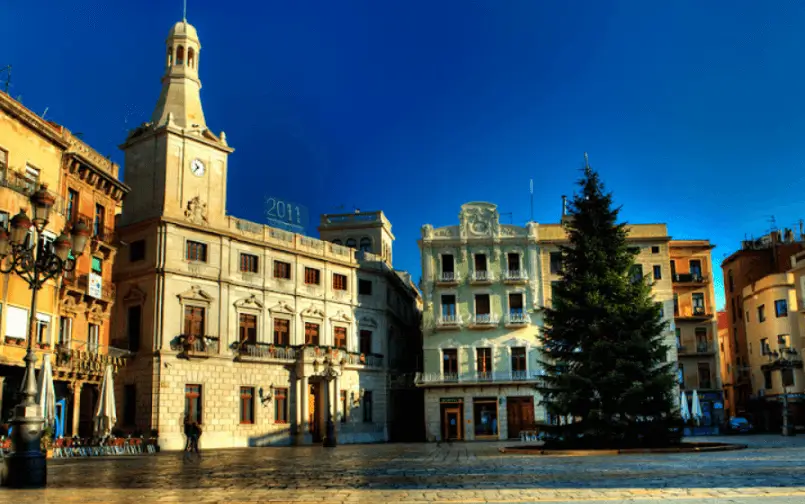
- Population: a tourist area within the municipality of Vila-seca (INE does not publish separate figures)
- Gender split: balanced among residents, with a mixed summer audience of families and young people
- Average age: relatively high among residents and very variable in season because of family tourism
- Purchasing power: average, with a varied tourist profile and many visitors to PortAventura World and Aquopolis
- Economic activity rate: very high in season, with hospitality, water-based leisure and tourist retail the decisive sectors
- Relevance for advertising: a Costa Dorada seafront with audiences from PortAventura and Aquopolis as well as nearby hotels
La Pineda is the coastal neighbourhood of the municipality of Vila-seca and one of the most important tourist areas on the Costa Dorada. Its Paseo Pau Casals seafront is packed with hotels and holiday apartments, restaurants and shops, plus the Aquopolis water park. Its proximity to PortAventura World and its direct link to the AP-7 and the C-31B make it an essential stop for domestic and international family tourists.
Marco Visual has 23 sites in La Pineda, practically all MUPIs (21) plus one bus shelter and one billboard. The network runs the whole length of Paseo Pau Casals: opposite Tagliatella, at number 75 opposite Instytu's, number 93, number 109 opposite Condis, number 118, number 133, Paseo Pau Casals opposite Hotel Estival Park, opposite Aquopolis, opposite Parc del Pinar, at the roundabout on the promenade and opposite the beach. These are prime locations for seasonal campaigns aimed at family tourists on the Costa Dorada, as well as for hospitality, leisure and complementary services.
MUPIs in La Pineda
MUPIs blanket Paseo Pau Casals at extremely high density: it is the neighbourhood's main tourist street, where hotels, restaurants, holiday apartments and shops catering to visitors are concentrated. They are a natural choice for seasonal campaigns aimed at family tourists on the Costa Dorada, for theme parks and restaurants, and for complementary services.
The locations centre on Paseo Pau Casals opposite Tagliatella, opposite Parc del Pinar, at number 75 opposite Instytu's, at 93, at 109 opposite Condis, at 118, at 133, opposite Aquopolis, opposite Hotel Estival Park, at the roundabout on the promenade and opposite the beach. Coverage is practically continuous along the promenade, which multiplies impacts during the high-season months.
Outdoor advertising in Blanes
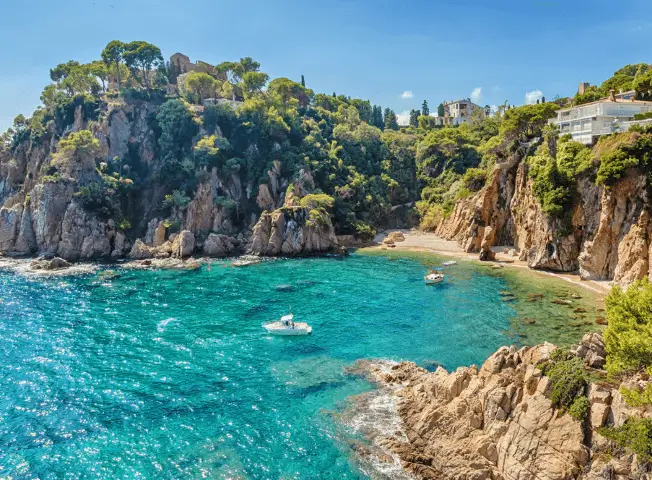
- Population: 42,699 inhabitants according to INE 2025 data, a municipality in the comarca of La Selva
- Gender split: roughly 50% women and 50% men
- Average age: around 43 years, with 16% of the population under 18
- Purchasing power: average, with an economy based on tourism and fishing, along with retail and comarca-wide services
- Economic activity rate: high in season, driven by hospitality and seasonal retail
- Relevance for advertising: the Porta de la Costa Brava, with family tourism and a direct link with Lloret and Tossa de Mar
Blanes is known as the Porta de la Costa Brava (Gateway to the Costa Brava) for its rocky outcrop, Sa Palomera, which marks the symbolic start of the coastline. The town combines tourism and fishing, comarca-wide services and a remarkable natural heritage, including the Marimurtra and Pinya de Rosa botanical gardens. The GI-682, the N-II and the approach roads to the AP-7 carry tourist flows towards Lloret and the inland Costa Brava. The Concurs Internacional de Focs d'Artifici (international fireworks competition) every July is one of the tourist highlights of the year.
Marco Visual manages 22 sites in Blanes, split between MUPIs (11), billboards (8) and bus shelters (3). The MUPIs are concentrated on Paseo Catalunya opposite the comarca library and next to the football ground, Avenida Europa 49, Avenida Europa at Avenida Estación opposite the petrol station, Avenida Europa at Carretera de Mallgrat, Avenida Europa opposite the Viena restaurant, Avenida Europa at McDonald's-Burger King and at Olivi Monllor, and the Mas Borinot entrance roundabout. The billboards cover approach roads such as Avenida de la Estación 70 at the roundabout with Avenida Europa heading towards Blanes railway station, the roundabout at Avenida de Europa 47, Carretera de Lloret Mar GI-682 at km 6.6 (in both directions) and the approaches via Costa Brava 168.
MUPIs in Blanes
MUPIs give high-density coverage of Avenida Europa, the main way into Blanes, and Paseo Catalunya, the spine of the town centre. They work best for campaigns aimed at family tourists and for hospitality and local shops, as well as seasonal services, during the high-season months.
The sites are grouped along Paseo Catalunya opposite the comarca library and next to the football ground, Avenida Europa 49, Avenida Europa at Avenida Estación opposite the petrol station, Avenida Europa at Carretera de Malgrat, Avenida Europa opposite the Viena restaurant, Avenida Europa at McDonald's and Burger King, Avenida Europa at Olvidi Monllor, and the entrance roundabout for Mas Borinot.
Billboards in Blanes
Blanes has billboards on approach roads and at junctions with the GI-682 towards Lloret and the N-II towards Pineda and Malgrat. They are useful for campaigns aimed at tourists on the road and at residents travelling along the municipality's main routes.
Top locations include Avenida de la Estación 70 at the roundabout with Avenida Europa heading towards Blanes railway station, the roundabout at Avenida de Europa 47, Carretera de Lloret Mar GI-682 at km 6.6 towards Barcelona, the GI-682 at km 6.59 towards Pineda, and the approaches to Costa Brava 168 in both directions. They cover both summer tourist flows and everyday traffic.
Bus shelters in Blanes
Blanes has fewer bus shelters, but they cover well-chosen points such as Carretera de Tordera 36, an urban avenue at number 120 and the GI-682 at km 5.5. They are useful for campaigns reaching local people and for visitors using public transport all year round.
Combined with the MUPIs on Avenida Europa and Paseo Catalunya, the bus shelters complete coverage of everyday flows and add frequency for sectors such as local retail and healthcare, as well as professional services.
Outdoor advertising in Banyoles
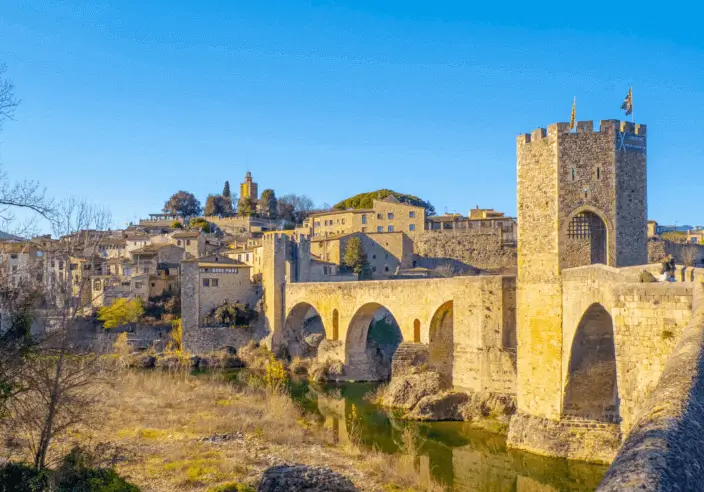
- Population: about 20,500 inhabitants according to IDESCAT sources, capital of the Pla de l'Estany
- Gender split: roughly 50% women and 50% men
- Average age: around 41 years, with a family and tourist profile
- Purchasing power: average, with an economy based on active tourism, comarca-wide retail and services
- Economic activity rate: above average, with a stable profile and little mobility compared with the coast
- Relevance for advertising: comarca capital of the Pla de l'Estany, with a tourist draw linked to the lake and to international rowing and open-water events
The capital of the Pla de l'Estany, Banyoles is built around its namesake lake (estany), host to international sporting events such as the Barcelona '92 Olympic rowing competition and open-water championships. The town combines active tourism (canoeing, kayaking, cycling, hiking), historic heritage (the Sant Esteve monastery), lively high-street retail and connections via the C-66 towards Girona and the C-150z towards the Girona hinterland.
Marco Visual has 16 sites in Banyoles, all of them MUPIs. They are concentrated around the lake, in the town centre and at the municipality's tourist locations: areas close to the Oficina de Turisme de Banyoles, La Carpa de l'Estany, the Camping Alfacs restaurant, the Lloguer de bicis Banyoles (bike hire), the pesqueres (the old fishing houses on the lakeshore) along the lakeside promenade (Pesquera d'en Lero, Pesquera Prat) and the approaches to the centre. Although the volume is smaller than in other municipalities, their tourist and commercial weight makes them especially useful for local and comarca-wide campaigns in the Pla de l'Estany.
MUPIs in Banyoles
Banyoles has MUPIs around the lake and in the town centre, which bring together both tourist flows and everyday shopping traffic. They suit local and comarca-wide campaigns in the Pla de l'Estany aimed at residents and weekend visitors, especially for retail and restaurants, plus active tourism and sporting events.
Locations are concentrated around the Oficina de Turisme de Banyoles, La Carpa de l'Estany, the Camping Alfacs restaurant, the bicycle parking meeting point at La Carpa, the Lloguer de bicis Banyoles and the pesqueres along the lakeside promenade, such as Pesquera d'en Lero and Pesquera Prat. Combined with comarca-wide campaigns, these MUPIs offer frequency and proximity to audiences in the Pla de l'Estany.
How booking outdoor advertising with Marco Visual works
Tell us what you’re looking for
If you’d rather choose yourself, our campaign planner (in Spanish) lets you pick the weeks and then browse the map or the list of sites, with filters by type of site, city, postcode or distance to a shop or point of interest. Bear in mind the booking cycles: many sites are sold by the week, but most 8x3 m billboards are booked in two-week periods or for 26 weeks, so they’re greyed out if you pick a single week. Click ‘Siguiente’ (Next) and you’ll see a campaign summary with the total price, printing and posting included: we take care of everything. You just enter your contact details and create the campaign.
Either way, you get a unique link to your campaign page, which you can share with your team: the sites you picked, the weeks, the price and the guides for preparing your artwork. You can check it whenever you like.
We confirm availability so you can book online
When everything is cleared, you can enter your billing details on that same page, pay by bank transfer and upload your artwork. Once you’ve paid, upload the transfer receipt so we can confirm the booking sooner.
Remember to send your artwork, following the guides, before the deadline shown on the proposal (usually 7 days before the start). We’ll email you at every step: artwork received and approved, payment received, sites confirmed.
Printing, posting and launch
These photos are usually ready 24 to 48 hours after the start; we’ll email you when they are.
When the campaign ends, you’ll see a notice on the campaign page and receive a satisfaction survey, with the option of leaving us a Google review. It helps us do better.
Frequently asked questions about outdoor advertising in Catalonia
How much does an outdoor advertising campaign in Catalonia cost?
Prices vary by format, town and duration. For reference, a fortnight on a MUPI usually costs between €236 and €640 per face in mid-sized towns, and more in Barcelona; bus shelters and digital sites have their own rates depending on the network. We send you a fixed quote based on your list of towns, dates and format. For billboards in Catalonia the guide price is €82 to €240 per face per week, so €164 to €480 per fortnight, excluding VAT and poster printing (quoted separately); most billboards are contracted in 6-month blocks (26 weeks).
Which formats work best for a local business in Barcelona?
Within Barcelona itself, bus shelters and MUPIs cover everyday journeys and pedestrian routes well; billboards on the ring roads, the B-10 and the approaches to the AP-7 work for brand campaigns and openings. For hospitality, leisure and events, networks of digital screens in bars and venues in the centre deliver high frequency for a small investment.
How many advertising sites does Marco Visual have in Catalonia?
Close to 4,000 active sites across the four provinces, concentrated in the Barcelona metropolitan area, the Camp de Tarragona, the Girona comarcas and the city of Lleida. The portfolio combines billboards, MUPIs, bus shelters, digital screens, building wraps, monopole billboards and street thermometers.
What is the minimum campaign length?
The standard unit is 14 calendar days (a fortnight) for MUPIs, bus shelters and static billboards. Digital sites are booked as networks by the week or month, with a set number of seconds on screen. Large-format building wraps are usually booked by the month, because each one has to be fitted individually. For billboards, most sites in Catalonia are contracted for 6-month periods (26 weeks).
Which areas get the most foot and road traffic?
In Barcelona, the ring roads, Avenida Diagonal, Gran Vía and the approaches via the B-23 and C-17 carry very heavy traffic. Elsewhere in Catalonia, the busiest are the AP-7 between Girona and Tarragona, the N-II where it runs through Figueres and Mataró, and the urban ring roads of Lleida, Reus and Sabadell. The Costa Dorada and the Costa Brava add very marked peaks in footfall in summer.
Do you have digital sites or only static ones?
Both. In Catalonia we operate close to 150 digital sites, mainly in Barcelona, Cerdanyola del Vallès, Mataró, Vic and on university campuses. The static side (billboards, MUPIs, bus shelters, building wraps) is far larger in volume and gives almost complete coverage of the region.
What happens after I ask for a proposal?
Give us your brief, areas and dates, and within 24-48 hours we send back a proposal with actual availability, the locations marked on a map and a fixed price. Once it is accepted, we book the faces, send the technical specifications for the artwork and schedule the posting. During the campaign we send you proof-of-posting photos.
Can you help with the creative design?
Yes. Our graphic design team can adapt existing artwork to each format (MUPI, bus shelter, 8x3 m billboard, building wrap) or start from scratch following your brand guidelines. Adapting it properly matters because each format has its own safe area and minimum type size.
Is outdoor advertising worth it compared with going digital-only?
Outdoor covers what digital leaves out: brand awareness, geographical proximity to the point of sale and exposure with no way of blocking the ad. In sectors such as retail, automotive, education and professional services, combining it with digital campaigns improves brand recall and lowers the cost per contact.
When is the best time of year to advertise in Catalonia?
March to June is strong thanks to Sant Jordi, trade fairs and the end of the school year; July and August push traffic up sharply on the coast (Lloret, Salou, Pineda, Blanes); September and October bring a cluster of B2B launches and back-to-school campaigns; and November and December are the retail peak, with Black Friday and the festive season. Each sector has its own best window within this calendar.
Give your brand more visibility with outdoor advertising
See our advertising sites for yourself, with their prices, locations and photos, and use the campaign planner
Still have questions, or would you like us to advise you and send you a proposal? Get in touch and we’ll send you a personalised quote for your outdoor advertising campaign.
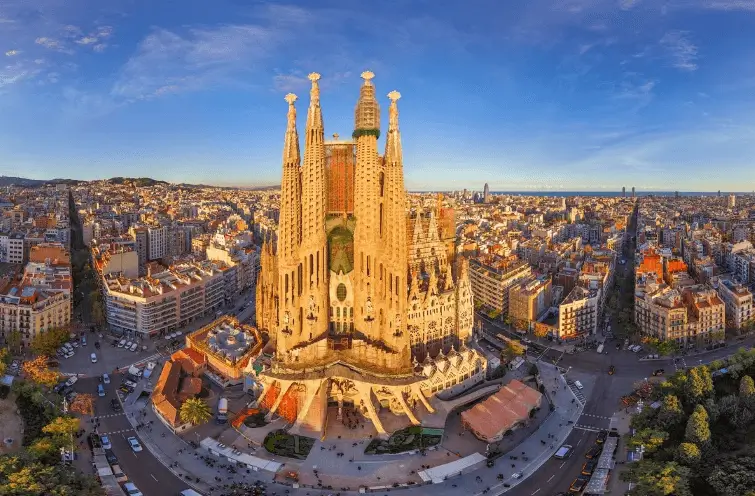
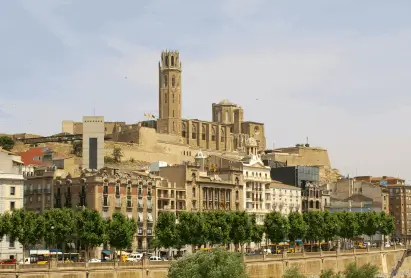
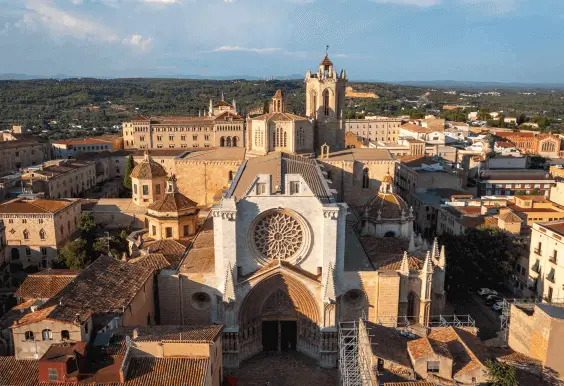

What our clients say in Catalonia
Verified Google reviews from businesses that have already worked with Marco Visual.

Hemos quedado satisfechos con la campaña de publicidad que contratamos con Marco Visual para el Conservatorio Superior de Danza de Alicante (CSDA) durante las Hogueras. La campaña contó con cuatro mupis diferentes, cada uno dedicado a un estilo de danza, una iniciativa para dar visibilidad a nuestro conservatorio y acercar la riqueza y diversidad de la danza a la ciudadanía. Destacamos la profesionalidad, la atención recibida y la buena gestión de todo el proceso. Porque la danza también merece ocupar las calles y formar parte de la ciudad. ¡Gracias a Marco Visual por ayudarnos a llevar nuestro arte más allá de las aulas!
Original review in SpanishSee on Google 1 / 4

Hemos trabajamos con Marco Visual para la campaña de apertura de nuestra nueva clínica en Molina de Segura, y la experiencia ha sido positiva. Negociamos directamente con ellos, sin intermediarios: el trato es cercano y las respuestas, rápidas. Necesitábamos resolver ubicaciones, formatos y plazos con poco margen de tiempo, y flexibilidad para adaptar la propuesta a lo que necesitábamos. Recomendado
Original review in SpanishSee on Google

Ha sido nuestra primera experiencia en implementar un MUPI, pensábamos que sería algo engorroso en cuanto al proceso y verdaderamente nos hemos confundido. La atención de Alejandro desde el primer momento ha sido rápida, precisa en las indicaciones y nos ha facilitado todo. Ademas agregar que el sistema que tienen implementado online para el seguimiento ha sido muy práctico, sabes el status de la campaña en todo momento, repetiremos!
Original review in SpanishSee on Google

Nuestra experiencia ha sido muy positiva. Queremos destacar especialmente la profesionalidad, rapidez y atención recibida durante todo el proceso. El equipo ha demostrado en todo momento una excelente disposición y un trato cercano y profesional. Mención especial para Alejandro M., por su amabilidad, eficacia y atención constante. Ha sido un placer contar con su ayuda y profesionalidad. Sin duda, recomendamos sus servicios y agradecemos el trato recibido.
Original review in SpanishSee on Google

Hemos quedado muy satisfechos con la campaña de publicidad exterior realizada con Marco Visual. Desde el primer momento, el trato ha sido cercano y profesional, facilitando todo el proceso y resolviendo nuestras dudas con rapidez. La gestión de la campaña ha sido ágil y eficiente, y el seguimiento durante toda la ejecución nos ha transmitido confianza. La instalación y el mantenimiento de los soportes se han realizado correctamente, cumpliendo con lo acordado. Agradecemos especialmente la atención recibida y la buena comunicación del equipo. Ha sido una experiencia muy positiva y no dudaríamos en contar con Marco Visual para futuras campañas.
Original review in SpanishSee on Google 1 / 2

La campaña que hemos hecho de publicidad exterior ha sido un éxito. La comunicación con Alejandro ha sido lo mejor, muy profesional y atento en todo momento con todos los detalles de la campaña. Repetiremos sin duda en unos meses.
Original review in Spanish See on Google
Explore other advertising formats at Marco Visual


