Outdoor advertising in the Community of Madrid: over 3,000 locations for your brand


Prices in the Community of Madrid · per face per week
- 8x3 m billboardsfrom €92
- Bus sheltersfrom €120
- Kiosksfrom €120
Prices exclude VAT · printing and posting from €35 per face
Outdoor advertising sites in the Community of Madrid
In the Community of Madrid we offer over 3,000 outdoor advertising sites, spread across bus shelters, large-format billboards, digital screens, MUPI street panels (six-sheet size), building wraps, advertising kiosks, monopole billboards and JET panels in the metro. The region is home to 7,113,886 people as of 1 January 2025, according to the annual population census from Spain's National Statistics Institute (INE). It is organised around six radial motorways (A-1, A-2, A-3, A-4, A-5 and A-6) and the M-30, M-40, M-45 and M-50 ring roads. That road grid, together with Adolfo Suárez Madrid-Barajas airport, means any outdoor campaign can combine very different audiences within a 30-kilometre radius: offices in Azca and Las Tablas, shopping on Gran Vía, leisure in Princesa and Parque Empresarial Las Rozas, and established residential areas throughout the southern and eastern belt.
The capital accounts for around 1,100 locations, with a very strong weighting towards digital sites in indoor retail settings and large-format billboards on the approaches to the M-30 and M-40. The metropolitan belt adds close to 2,000 more sites, with bus shelters taking centre stage in Móstoles, Alcorcón, Leganés, Getafe, Fuenlabrada, Alcalá de Henares, Torrejón de Ardoz, Coslada, Rivas-Vaciamadrid, Pinto, Parla, Valdemoro and Navalcarnero. In higher-income areas such as Pozuelo de Alarcón and the Alcobendas-La Moraleja corridor, the inventory is smaller but very select: billboards at Ciudad de la Imagen, digital sites at Diversia, MUPI panels at universities such as Francisco de Vitoria. Marco Visual covers all of these profiles with a single booking process.
Madrid's calendar has very clear peaks in demand. FITUR (the international tourism fair) and ARCO (the contemporary art fair) open the year at IFEMA, Madrid's trade fair centre, and drive a surge in traffic on the A-2 approaches; Holy Week (Semana Santa), Dos de Mayo (the regional holiday) and San Isidro (the city's main festivities) get the centre moving during May; in July, Madrid Pride (Orgullo) multiplies footfall in Chueca and on Gran Vía; the Semana Cervantina festival in Alcalá de Henares draws attention in October; and the Christmas lights and the Cabalgata de Reyes parade close the cycle in December. The feast of the Virgen de la Almudena, Madrid's official patron saint, falls on 9 November. Advertisers in retail, automotive, education, banking and professional services tend to time their campaigns around these windows.
In our campaign planner you can check the price of MUPIs and every other advertising site, real photos, the exact location, Google Street View, descriptions and nearby points of interest, dimensions, print format… Best of all, you can filter the sites and pick the ones you want, then plan and book the outdoor advertising campaign
Some links open pages in Spanish
Looking for another area?
Explore the different outdoor advertising formats in the Community of Madrid
Marco Visual is an online platform for managing and booking campaigns on outdoor advertising sites. Our website gives you all the information you need to plan and book an outdoor campaign. Get to know each site and its features: price, real photos, format, minimum booking period and other terms.
Outdoor sites are ideal for promoting events, with room on the ad for the venue, who is taking part and every other detail that matters. They are also widely used for branding, so that people start seeing a brand away from the screen and remember it better. Other common uses are launching offers (Black Friday, the sales, Christmas…) and opening new shops.
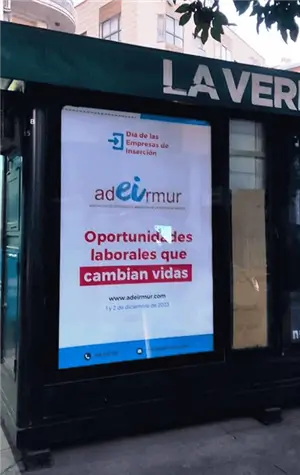
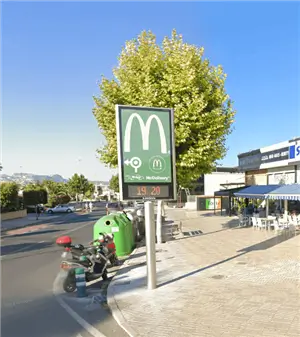
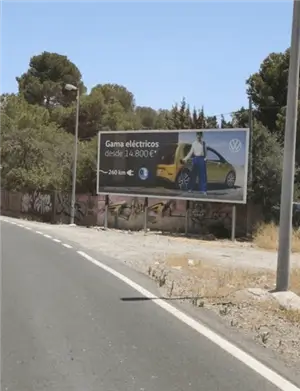
Here are some of our campaigns on different outdoor advertising sites:
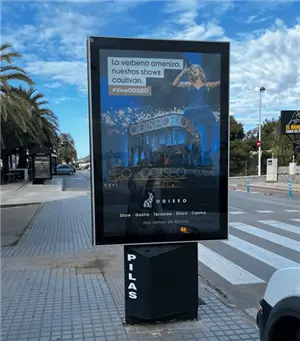
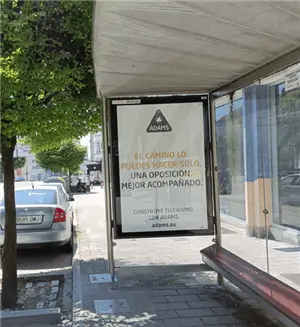
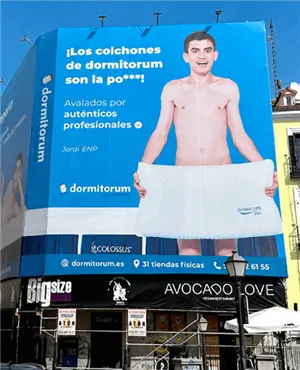
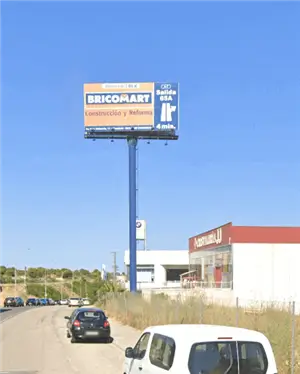

The benefits of outdoor advertising in the Community of Madrid
As an advertising market, Madrid is the deepest in Spain: it is home to one sixth of the national population, has the highest disposable income per household and sees a flow of professionals and tourists that never lets up all year round. The Urban Indicators of Spain's National Statistics Institute (INE) put Pozuelo de Alarcón at the top of the country for average spending on rent and position the region as a European benchmark for its airport, exhibition centre and cultural scene. For an SME, turning that reality into an effective outdoor campaign comes down to choosing the right mix: bus shelters when you want repeated impacts at neighbourhood level, billboards when broad reach on the main road approaches matters, digital sites when the creative needs movement or several versions in rotation, and MUPI panels when the audience is young and on foot, as on university campuses.
Shopping and travel habits vary a great deal from one area to another. People who live in Las Rozas, Majadahonda, Pozuelo or La Moraleja drive along the A-6 and A-1 and shop at centres such as El Encinar, Diversia, Moraleja Green, Heron City and Río-Norte; those in Móstoles, Fuenlabrada, Leganés or Getafe get around by city bus and commuter rail (Cercanías) and shop at Parquesur, Tres Aguas, Plaza Loranca or Centro Comercial Getafe 3; the Henares corridor (Coslada, San Fernando, Torrejón, Alcalá) has a strongly logistics-led profile, with many jobs on industrial estates and traffic spread across long hours. That natural segmentation lets you fine-tune the campaign by sub-area instead of buying Madrid as if it were a single block.
Outdoor advertising works particularly well for sectors such as retail with new store openings, automotive and official dealerships, accredited education and civil-service exam preparation, banking and insurance, private healthcare, second-home estate agents, high-turnover hospitality and events at IFEMA, the WiZink Center and the Movistar Arena. Combining it with digital campaigns tends to bring very good results: outdoor provides the brand effect and visible repetition in the neighbourhood or on the daily commute, and digital captures the searches that follow. For advertisers with a limited budget, spreading the spend across small networks in one or two specific towns can generate more brand recall than a campaign scattered across the whole region.
In your marketing and communications strategy, outdoor advertising sites are essential for reaching your audience. They are an excellent way to catch the eye of people out and about in town, thanks to well-chosen locations and high visibility.
- Eye-catching visual advertising with 24/7 visibility in high-traffic areas.
- Strategic locations on the city’s main streets and avenues.
- Wide coverage: a presence in Spain’s main cities and regions.
- High visibility in carefully chosen spots for the greatest impact.
- Geographic targeting: choose the areas and neighbourhoods where your target audience is.
- Greater brand awareness and trust.
- Flexibility for short and long campaigns.
- A non-intrusive medium that helps the message stick when combined with social media campaigns.
Some of the links in the areas below open pages in Spanish.
Outdoor advertising in Madrid
- Population: 3,506,730 inhabitants, according to INE 2025 data
- Gender split: roughly 53% women and 47% men
- Average age: around 44 years, slightly above the national average
- Purchasing power: above average, with an economy based on financial services, technology, public administration, tourism and retail
- Economic activity rate: high, with a strong presence in banking, insurance, consultancy, IT, healthcare and restaurants
- Relevance for advertising: the deepest and most diversified market in Spain, with strong peaks around FITUR, ARCO, San Isidro, Madrid Pride and the festive season
Madrid has around 1,100 advertising sites in a city of 3,506,730 inhabitants, as counted by Spain's National Statistics Institute (INE) in 2025, and it acts as the country's political, financial and cultural capital. The municipality covers 21 very different districts: the historic centre (Sol, Gran Vía, La Latina, Lavapiés), where tourism and retail carry weight; the financial axis along Paseo de la Castellana (Azca, Cuatro Torres, Las Tablas), where the big offices are concentrated; the high-income residential neighbourhoods of the north (Chamartín, Chamberí, Salamanca); and the southern belt (Vallecas, Villaverde, Carabanchel, Usera), with a very strong sense of community. On top of that come hubs such as Ciudad de la Imagen and Pozuelo, IFEMA in Hortaleza and the area around Adolfo Suárez Madrid-Barajas airport.
The inventory is the most diverse in Spain: large-format billboards on the approaches to the M-30 and M-40 and on the A-1 to A-6 radial motorways; vertical building wraps on blank party walls in the centre and on landmark hotels; digital screens both indoors in commercial venues (cafés, restaurants, shops) and outdoors, above all in central districts and office areas; MUPI panels in private hospitals (Nuevo Belén, San Chinarro, Torrelodones), shopping centres and university campuses; advertising kiosks on Gran Vía, Fuencarral and Sol; JET panels in major metro stations such as Goya, Velázquez, Príncipe de Vergara and Feria de Madrid; and monopole billboards at the big M-21 and M-45 interchanges. That coverage means we can answer any brief, from a national launch built for awareness to a local neighbourhood campaign.
MUPI panels in Madrid
In Madrid, MUPI panels work particularly well inside private hospitals, in university campus lobbies and in pedestrian shopping areas. The combination of lighting and eye-level placement makes them well suited to text-heavy messages: clinic openings, civil-service exam courses, master's programmes, trade fairs and events.
The principal MUPI locations include Hospital Nuevo Belén, Hospital San Chinarro, Hospital Quirónsalud Torrelodones, the area around Avenida de la Democracia, the M-506 at km 9, Avenida Felipe II next to Calle Alcalá and the stretch where Calle Velázquez meets Calle Joaquín Costa, plus several sites on the corridor along Avenida de la Constitución.
Billboards in Madrid
Across Madrid, billboards are concentrated on the busiest road approaches: the A-2 at San Blas-Canillejas, the M-45 in Vicálvaro, the exits from Vallecas and the links towards Hortaleza and La Moraleja. They are the format of choice for campaigns aiming at broad reach and sustained branding over several weeks.
Standout sites include the A-2 at km 12 heading into Madrid in San Blas-Canillejas, the area around Avenida del Mayorazgo in Puente de Vallecas towards the M-45, the approaches to La Moraleja over Puente del Encinar, Carretera de Vicálvaro a Vallecas opposite Lidl, Avenida Monte de Valdelatas at the M-603 slip road and the M-21 junctions with the M-45 near Vicálvaro.
Digital screens in Madrid
In Madrid, digital screens do what no other advertising site can: rotation of several advertisers, full-motion creative, scheduling by time of day and content changes with no production cost. They work very well for retail, restaurants, leisure and time-sensitive events.
The network includes digital sites in the Ciudad de la Imagen area (the Kinépolis cinema complex and the shopping centre), Calle Lazcano in Tetuán, Plaza del Carbón in La Latina, Calle Bárbara de Braganza in Chueca, Bretón de los Herreros in Chamberí, Plaza de Alonso Martínez and various restaurant, hotel and shopping centre locations across the Centro, Salamanca, Chamberí and Chamartín districts.
Building wraps in Madrid
Large-format building wraps are the format with the greatest visual impact in the Madrid market. They go up on blank party walls, commercial façades and premium hotel settings, and are typically used for brand launches, film and television premieres and fashion or luxury campaigns.
The principal locations include Alberto Alcocer 15 near the Hotel Eurobuilding, Alberto Aguilera 68 opposite the El Corte Inglés department store on Princesa, Glorieta de López de Hoyos, Goya 127 next to the WiZink Center, Calle Montera 45 by Gran Vía station, Plaza de la República Dominicana and Plaza de Chueca, plus Avenida Ciudad de Barcelona, Paseo de Extremadura, José Ortega y Gasset, Bravo Murillo and Calle de Alcalá.
Advertising kiosks in Madrid
Advertising kiosks work in the pedestrianised centre: Gran Vía, Fuencarral and the area around Puerta del Sol are routes with a steady flow of people on foot all year round, multiplied during the festive season, San Isidro and Madrid Pride. They suit short, memorable ads.
Locations include Fuencarral 81 in Tribunal, Fuencarral 112 at Glorieta de Bilbao, Gran Vía 27, 31, 39 and 54, Calle Mayor 5 near Puerta del Sol and Calle del Ángel 8 next to Plaza de Santa Ana.
Monopole billboards in Madrid
Monopole billboards are the option for reaching long-distance road traffic. In Madrid they are concentrated at the M-21 and M-45 interchanges, the airport approaches and the links with the A-2 and A-3, where the target audience is professionals, logistics staff, travellers and industrial companies in the Henares corridor.
Available sites include the M-21 at km 2.750 towards the M-45 in San Blas-Canillejas, the M-45 at km 23, visible to traffic heading towards both the A-2 and the A-3, near the former Carbonería de Vicálvaro, and the M-100 at km 3.900 towards Algete on the Alcalá corridor.
Outdoor advertising in Alcorcón
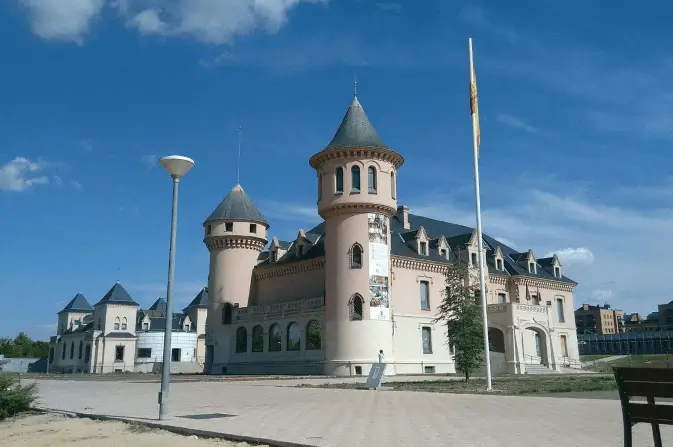
- Population: 175,719 inhabitants, according to INE 2025 data
- Gender split: roughly 51% women and 49% men
- Average age: around 42 years
- Purchasing power: average, with an economy based on services, retail, public healthcare and university education
- Economic activity rate: around 61%, weighted towards retail, restaurants and public-sector and healthcare jobs
- Relevance for advertising: a well-connected town served by the metro and commuter rail, with hubs such as Tres Aguas, IKEA and the URJC that multiply the impact
Alcorcón has 175,719 inhabitants, a 2025 figure from Spain's National Statistics Institute (INE), and ranks among the best-connected towns in the south-west of the region: it combines metro line 12 (MetroSur), commuter rail (Cercanías) and direct links to Madrid via the A-5 and the M-40. Hospital Universitario Fundación Alcorcón serves a large population, and Universidad Rey Juan Carlos (URJC), a public university, has one of its main campuses here. Shopping is concentrated in Centro Comercial Tres Aguas, on Avenida de América, and on the high street of the historic centre near Plaza de los Reyes and Calle Mayor.
The inventory is led by bus shelters on Avenida de la Libertad next to the Palacio, Carretera de Leganés at Avenida de Cantarranas and Avenida de las Industrias, the Polvoranca neighbourhood on Plaza de la Peseta, Avenida Cantarranas 11 opposite the law courts, Avenida de los Robles next to the Casa de Cultura arts centre and Avenida de los Cantos. The billboards are spread between Avenida San Martín de Valdeiglesias at km 2.800 towards Villaviciosa, Carretera de Villaviciosa opposite IKEA and towards Centro Comercial Tres Aguas, and Avenida de Móstoles next to Avenida de las Retamas. There is also a monopole billboard on the A-5 at km 11.600, with access to the M-40.
Bus shelters in Alcorcón
In Alcorcón, bus shelters cover both the established centre and the outlying neighbourhoods, as well as the links with MetroSur line 12. They are the right choice for shops, clinics, restaurants and local services that need repeated impacts at neighbourhood level without stepping up to a network of large billboards.
The principal locations include Avenida de la Libertad 15 next to the Palacio, Carretera de Leganés at its corners with Avenida de Cantarranas and Avenida de las Industrias, Plaza de la Peseta in Polvoranca, Avenida Cantarranas 11 opposite the law courts, Avenida de los Robles next to the Casa de Cultura, Avenida de los Cantos, and the internal links with Calle Carballino and the shopping areas in the centre.
Billboards in Alcorcón
Across Alcorcón, billboards cover the road approaches to the town and to the retail expansion area in the south-west. They are recommended for sustained awareness campaigns in automotive, large-scale retail, DIY and family-focused businesses.
Available sites include Avenida San Martín de Valdeiglesias at km 2.800 towards Villaviciosa, Carretera de Villaviciosa at the roundabout heading for Centro Comercial Tres Aguas and, towards Alcorcón, opposite IKEA, Avenida de Leganés on the corner of a side street, Avenida San Martín de Valdeiglesias next to car dealerships and Avenida de Móstoles next to Avenida de las Retamas, opposite the care home and the Renault dealership.
Bus advertising in Alcorcón
In Alcorcón we put your ad on the buses that come in from Cuatro Vientos along the A-5 and on the one that heads out along the M-406 towards Leganés and Getafe. The six sample routes are on their own page, each with its itinerary and the price for a rigid and an articulated bus, in 4-week blocks.
Outdoor advertising in Fuenlabrada
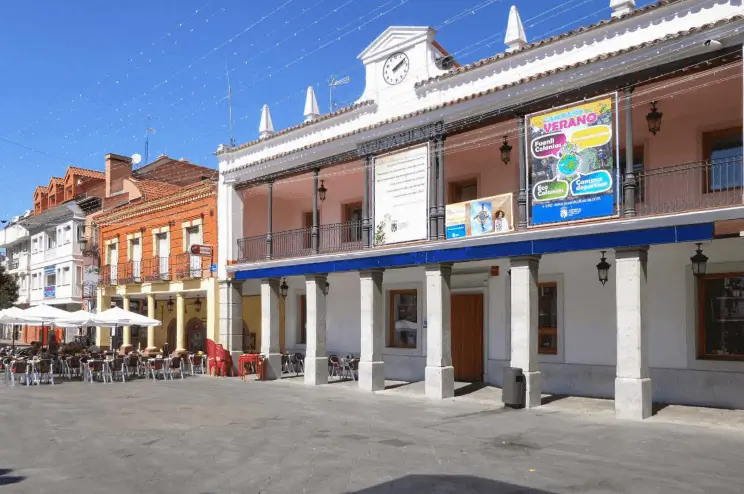
- Population: 190,076 inhabitants, according to INE 2025 data
- Gender split: roughly 51% women and 49% men
- Average age: around 41 years
- Purchasing power: average, with an economy based on wholesale distribution, industry, retail and university services
- Economic activity rate: around 61%, weighted towards logistics, distribution and light manufacturing
- Relevance for advertising: a large town with a family-oriented, working-class profile, well suited to retail, vocational training and financial services
Fuenlabrada has 190,076 inhabitants according to the 2025 figures from Spain's National Statistics Institute (INE), and covers one of the largest municipal areas in the southern metropolitan belt. It combines very dense residential neighbourhoods (Loranca, La Serna, Avanzada, Cerro del Molino) with one of the largest industrial estates in the region, devoted mainly to wholesale distribution and machinery. Universidad Rey Juan Carlos brings student footfall to its Fuenlabrada campus, and Centro Comercial Plaza Loranca 2 keeps shoppers coming at weekends.
The inventory is defined by bus shelters, with a very strong presence on Avenida de España and its Parque Lineal-La Serna, Avenida de Pablo Iglesias, the Loranca neighbourhood and the links with Avenida de la Hispanidad. Billboards are sited on the approaches via the M-407 (km 6.500 towards Humanes and Moraleja), the M-506 (km 17.600 and 19.500, opposite the El Álamo industrial estate and at the entrance to the Aldehuela football ground towards Móstoles), Camino del Molino opposite Calle de la Medicina towards the university and Glorieta Clara Campoamor at the Loranca shopping centre.
Bus shelters in Fuenlabrada
Bus shelters are the most widespread format in Fuenlabrada and are particularly well distributed between residential neighbourhoods and shopping areas. The density of the city bus network and the links with commuter rail mean that any message is assured of daily repetition.
Standout sites include Avenida de España with its La Serna linear park, Avenida Pablo Iglesias, the Loranca neighbourhood with its internal avenues, Avenida de la Hispanidad and the area around the university campus and the URJC, as well as the stops near Plaza Loranca 2 and the Fernando Martín sports hall.
Billboards in Fuenlabrada
In Fuenlabrada, billboards cover the road approaches to the town and the area around the industrial estate. They are the right format for broad awareness campaigns, distribution, automotive and businesses needing to cover residents and industrial-corridor workers at once.
Available sites include Camino del Molino at the roundabout opposite Calle de la Medicina towards the university, the M-407 at km 6.500 towards Humanes and Moraleja, the M-506 at km 17.600 and 19.500 opposite the El Álamo industrial estate, Glorieta Clara Campoamor at Centro Comercial de Loranca and Avenida de la Hispanidad.
Outdoor advertising in Leganés
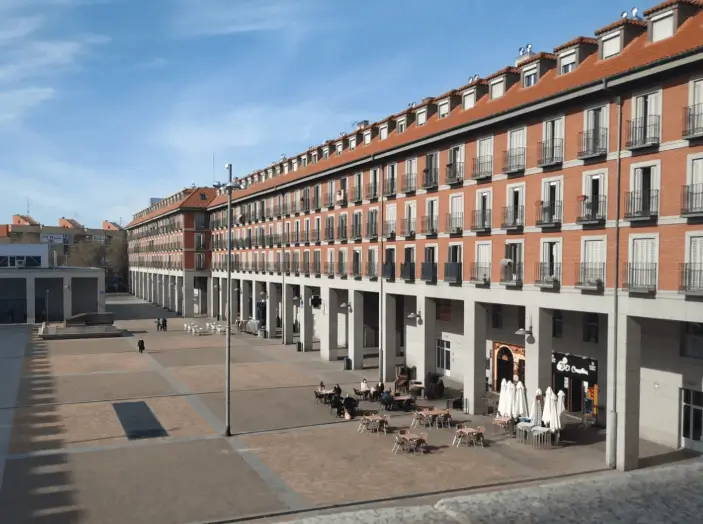
- Population: 195,734 inhabitants, according to INE 2025 data
- Gender split: roughly 51% women and 49% men
- Average age: around 42 years
- Purchasing power: average, with an economy based on services, retail, industry and university education
- Economic activity rate: around 61%, with a solid share of jobs in retail, restaurants and industry
- Relevance for advertising: a large town in the south with constant footfall at Parquesur, a university campus and three active industrial estates
Leganés has 195,734 inhabitants according to the 2025 figures from Spain's National Statistics Institute (INE), ranking fourth in the region. It is a well-established town south of Madrid with a well-planned urban layout, a strong presence of Universidad Carlos III (a public university) on its Leganés campus and of centres such as Parquesur, one of the largest shopping complexes in the south. The Urtinsa, Polvoranca and Prado Overa industrial estates generate a very steady flow of workers throughout the week. Leganés holds its patron saint's festivities in honour of San Nicasio on 14 December and keeps up an active cultural life around Plaza Mayor and Avenida Universidad.
The inventory is led by bus shelters on arterial roads such as Avenida de la Universidad next to the campus, Avenida del Doctor Mendiguchía Carriche, Avenida de Europa, Calle Rey Pastor near Dayco and the M-409 towards Fuenlabrada opposite the IES Tierno Galván secondary school. Billboards are concentrated on the approaches via the M-45 (km 4 towards Carretera de Extremadura), the M-406 (km 4.700 next to Polvorancas park) and Avenida Lengua Española opposite the Parquesur extension. There are also digital sites on Avenida de Gran Bretaña, near km 9 of Carretera de Toledo, and a monopole billboard on the M-425 (Vía Lusitana).
Bus shelters in Leganés
Bus shelters in Leganés combine visibility with dwell time. People wait several minutes for the bus, which gives the creative a reading time very different from that of a billboard. They work best for neighbourhood shops, training, health and financial services aimed at families.
The most effective locations are concentrated on Avenida de la Universidad 23 opposite the Carlos III campus, Avenida del Doctor Mendiguchía Carriche, Avenida de Europa on the corner with Carretera de Villaverde, Calle Rey Pastor next to Dayco, the M-409 towards Fuenlabrada opposite IES Tierno Galván and the M-421 road towards Los Pollos near the Opel dealership.
Billboards in Leganés
In Leganés, billboards occupy the main routes into and out of town and the busiest shopping areas. They are the right choice for brand awareness campaigns aimed at families, automotive, large-scale retail and DIY, especially when the aim is to cover the southern metropolitan area well.
The main sites include the M-45 at km 4 towards Carretera de Extremadura, the M-406 at km 4.700 towards Leganés next to Polvoranca park, Avenida Lengua Española near the Parquesur extension, Avenida Comandante José Manuel Ripollés at its roundabout, and the roundabout on the Alcorcón-Leganés road at the entrance to the Urtinsa industrial estate.
Outdoor advertising in Móstoles
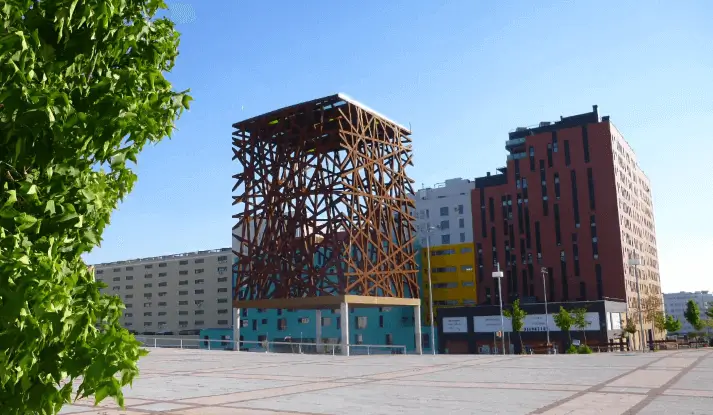
- Population: 214,817 inhabitants, according to INE 2025 data
- Gender split: roughly 51% women and 49% men
- Average age: around 41 years, with a good representation of families and young professionals
- Purchasing power: average, with an economy based on services, retail, small-scale industry and university education
- Economic activity rate: around 60%, weighted towards services, logistics and retail
- Relevance for advertising: the region's second-largest market by population, a natural fit for retail, automotive, training and family-oriented financial services campaigns
Móstoles ranks as the second most populous town in the Community of Madrid, with 214,817 inhabitants in 2025 according to Spain's National Statistics Institute (INE), and the largest in the southern metropolitan belt. Its urban fabric combines very well-established residential neighbourhoods (Parque Coimbra, Parque Cataluña, Pradillo, Ciudad de los Ángeles), an active old town around Paseo de Goya and Avenida Dos de Mayo, and a strong industrial presence on the Prado Regordoño, Puente del Hierro and Arroyomolinos industrial estates. The Universidad Rey Juan Carlos campus in Móstoles adds a young audience and significant daily footfall in the north of the municipality.
The inventory is dominated by bus shelters on the big internal avenues: Avenida de Portugal (with stretches opposite the Guardia Civil barracks, at Paseo de Goya and at the railway station exit), Avenida Dos de Mayo, Avenida de la Constitución, Avenida Alcalde de Móstoles and Paseo de la Estación. Billboards are sited on the approaches via the A-5 (km 20.100, at the Móstoles U-turn), Avenida Simón Hernández opposite Lidl and Burger King heading for the M-506, and the area where Iker Casillas meets Benito Pérez Galdós. Digital sites are concentrated in Centro Comercial Xanadú, next to the N-V at km 23, and along the Dos de Mayo and Alcalde de Móstoles corridors.
Bus shelters in Móstoles
Bus shelters in Móstoles offer continuous exposure while people wait for city and intercity buses, with very high footfall on the main internal roads and links with metro line 12 and commuter rail. They are the most efficient format for neighbourhood shops, clinics, tuition centres and local restaurants.
The principal locations are on Avenida de Portugal (opposite the Guardia Civil barracks, opposite number 26 at the railway station exit and on the corner with Paseo de Goya), Avenida Dos de Mayo, Avenida de la Constitución level with Paseo de la Estación, Avenida Alcalde de Móstoles on the corner with Calle del Pintor Sorolla and the area around Paseo de Goya near Parque Coimbra.
Billboards in Móstoles
In Móstoles, billboards deliver broad reach on the road approaches. They are the recommended format for advertisers that need to build daily brand recall among passing motorists, especially in sectors such as automotive, large-scale retail and telecoms operators.
Available sites include the A-5 at km 20.100 at the Móstoles U-turn, Avenida Simón Hernández 110 opposite a car dealership and a petrol station heading for Avenida de la ONU, Avenida Simón Hernández opposite Burger King towards the M-506 and the entrance to the Prado Regordoño industrial estate, Avenida de Portugal at Paseo de la Estación, and Carretera de Villaviciosa at the entrance to the Renfe car park.
Outdoor advertising in Torrejón de Ardoz
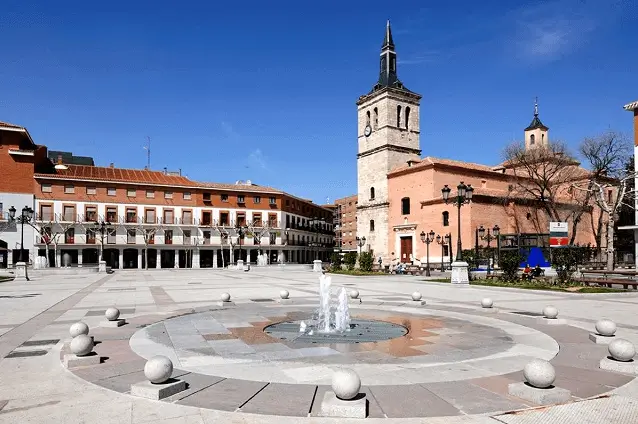
- Population: 143,526 inhabitants, according to INE 2025 data
- Gender split: 51.1% women and 48.9% men, according to the municipal register
- Average age: one of the youngest in the region, with close to 45% of the population under 40
- Purchasing power: average, with an economy based on logistics, industry, defence, retail and services
- Economic activity rate: around 64%, with a strong presence in logistics, transport, aeronautics and distribution
- Relevance for advertising: a young, energetic town next to the airport with constant traffic on the A-2, which multiplies the impact of billboards
Torrejón de Ardoz has 143,526 inhabitants according to Spain's National Statistics Institute (INE) in 2025 and is the eighth most populous town in the region and the 48th in Spain, with a young profile (close to 45% under 40, based on municipal data) and an economy closely tied to the Henares corridor and to industrial and logistics activity linked to the air base and Adolfo Suárez Madrid-Barajas airport. It has retail hubs including Centro Comercial Parque Corredor and Oasiz Madrid, as well as notable urban amenities such as Parque Europa. The town has been named European City of Sport 2026.
In Torrejón the inventory is dominated by billboards on the A-2 (km 19.58 and 23.38, level with the Casablanca industrial estate) and on Ronda Norte towards Avenida Madrid and Avenida Virgen de Loreto, with a very strong presence on the approaches via Carretera de la Base. Bus shelters are spread across Avenida de la Constitución, Avenida de Circunvalación, Carretera de Loeches and Plaza de la Habana, while MUPI panels are concentrated on Avenida Jorge Oteiza, Avenida de Madrid (around Plaza del Progreso and where Cristóbal Colón meets Hermanos Pinzón) and Avenida de la Constitución opposite Centro Comercial El Círculo.
Billboards in Torrejón de Ardoz
Billboards are the format with the largest inventory in Torrejón and stand mainly on the big traffic corridors. They work very well for automotive, logistics, businesses with a presence in the Henares corridor and campaigns aimed at professionals who commute to the airport every day.
The principal locations are concentrated on the A-2 (km 19.58 and 23.38, level with the Casablanca industrial estate), Ronda Norte at the roundabout with Avenida Virgen de Loreto, Carretera de la Base at the roundabout with Avenida Madrid, Avenida Madrid itself and the junctions with Avenida Virgen de Loreto.
Bus shelters in Torrejón de Ardoz
Bus shelters in Torrejón cover the everyday city and intercity bus routes and the main hubs for shopping and local government. They are the right format for reaching residents at the times they leave for or return from work, and people who use municipal services.
The most effective locations include Avenida de Circunvalación 20, Avenida de la Constitución (on several stretches at corners with side streets and near the La Cocinera food factory), Carretera de Loeches 49 and the areas around the town centre and the large health and education facilities.
MUPI panels in Torrejón de Ardoz
MUPI panels in Torrejón are particularly well placed for local retail, training, health and financial services campaigns. The combination of eye-level placement and backlighting makes them well suited to messages with several elements and to creatives that need legible text.
Available sites include Avenida Jorge Oteiza 3, Avenida de la Constitución opposite number 107 at Centro Comercial El Círculo, Avenida de Madrid on several stretches in the centre, Plaza de la Habana, Plaza del Progreso and the area where Cristóbal Colón meets Hermanos Pinzón.
Outdoor advertising in Alcalá de Henares
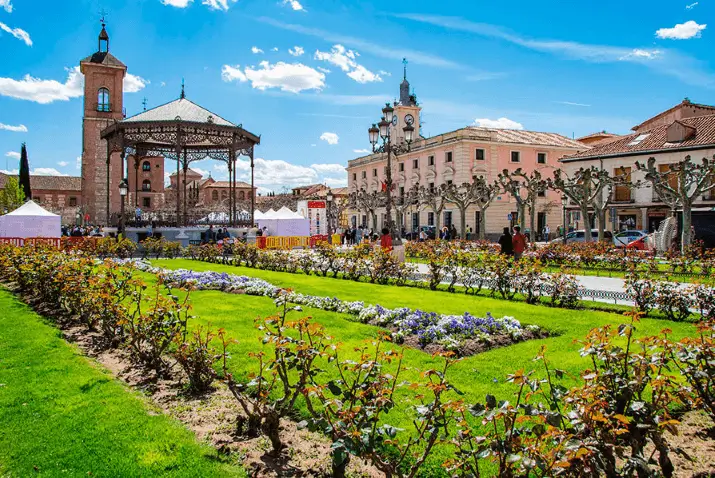
- Population: 203,208 inhabitants, according to INE 2025 data
- Gender split: roughly 51% women and 49% men
- Average age: around 41 years, with a sizeable young population thanks to the university
- Purchasing power: average, with an economy based on the pharmaceutical industry, logistics, university education and cultural tourism
- Economic activity rate: around 62%, with jobs in pharmaceuticals, chemicals, distribution and administration
- Relevance for advertising: a UNESCO World Heritage city with a mixed audience of residents, students and tourists, especially busy in October during the Semana Cervantina
Alcalá de Henares is the third most populous city in the Community of Madrid, with 203,208 inhabitants in the 2025 count from Spain's National Statistics Institute (INE), and combines a historic centre declared a UNESCO World Heritage Site in 1998 with very active industrial estates along the A-2 corridor. It is the birthplace of Cervantes and every October holds the Semana Cervantina festival, as well as the Premio Cervantes literary prize ceremony in April, two peak periods of heavy tourist and domestic footfall. Universidad de Alcalá, one of the oldest universities in Europe, brings a student population of around 30,000, with campuses in the centre and at Anillo Alcalá.
The inventory is split between bus shelters on avenues such as Reyes Católicos (opposite number 56 and on the corner with Avenida de la Estación), Vía Complutense next to the school, Plaza de los Mártires, Camino del Juncal at Avenida de Nuestra Señora de Belén, Avenida del Ejército and Paseo de los Curas; MUPI panels in hospitals and, above all, in faculties of Universidad de Alcalá (architecture, economics, law, pharmacy, medicine, polytechnic); billboards on the A-2 approaches at km 27, 28, 33 and 35, and on the ring road where Avenida Daganzo meets the M-100; and monopole billboards on the A-2 at km 27, 28 and 33.
Bus shelters in Alcalá de Henares
Bus shelters are the format with the largest inventory in Alcalá. They cover the everyday city bus routes to the campuses, the industrial estates of the Henares corridor and the links with commuter rail, which ensures daily repeat exposure among residents and students.
The principal locations include Avenida de Reyes Católicos level with number 43 and opposite number 56, Vía Complutense next to the school, Plaza de los Mártires, Camino del Juncal at Avenida de Nuestra Señora de Belén, Avenida del Ejército at the intercity bus terminal and Paseo de los Curas near the El Val neighbourhood.
MUPI panels in Alcalá de Henares
MUPI panels in Alcalá have one very particular feature: a large share of the inventory sits in faculties of Universidad de Alcalá, so campaigns can be finely targeted at jobs, civil-service exam preparation, banking for young people, postgraduate courses and student services.
The university sites include the School of Architecture, the Faculty of Economics and Business, the Faculty of Law, the Faculty of Pharmacy, the Faculty of Medicine and the Polytechnic School, plus MUPI panels on Carretera de Alcobendas a Barajas at km 4 for campaigns that combine the campus with the airport area.
Billboards in Alcalá de Henares
Billboards in Alcalá mainly target A-2 traffic heading into and out of Madrid. They are recommended for regional advertisers and for companies with warehouses or head offices in the Henares corridor, where business commuting is very heavy.
Available sites include Avenida Daganzo at the roundabout giving access to the M-100, the M-300 (Avenida de Madrid) at km 29.300 towards Alcalá, and the A-2 at km 27 and 35, both inbound towards Madrid and outbound towards Guadalajara.
Monopole billboards in Alcalá de Henares
Monopole billboards in Alcalá are the format of choice for long-distance road traffic and for drivers travelling along the A-2 at motorway speed. They work particularly well with very clean creatives, short messages and recognisable brands.
The locations are spread along the A-2 at km 27.300, 28.300 and 33.600, all visible to traffic leaving Alcalá or heading towards Madrid depending on the direction, plus Avenida Daganzo at the roundabout giving access to the M-100.
Outdoor advertising in Rivas-Vaciamadrid
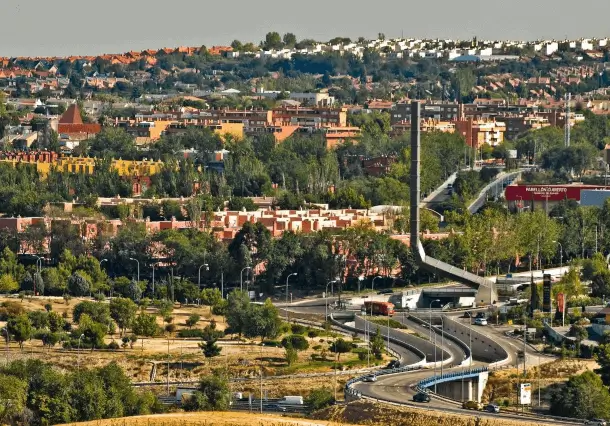
- Population: 103,148 inhabitants, according to INE 2025 data
- Gender split: a slight female majority, with close to 51% women and 49% men
- Average age: around 38 years, one of the lowest in Spain
- Purchasing power: above average, with an economy based on services, retail and professionals who work in Madrid
- Economic activity rate: around 67%, one of the highest rates in the country, according to INE indicators
- Relevance for advertising: a young, family-oriented and fast-growing town, a natural fit for FMCG, children's, education and leisure brands
Rivas-Vaciamadrid is one of the youngest towns in Spain, with an average age of around 38, and has 103,148 inhabitants according to the 2025 register of Spain's National Statistics Institute (INE). It sits next to the A-3 and has grown into a residential hub for families with young children and professionals working in Madrid. Retail activity revolves around Centro Comercial H2O Ocio and the Rivas Futura business park, with brands such as Mercadona, Leroy Merlin, MediaMarkt, Conforama, IKEA, Decathlon and JYSK. The Covibar neighbourhood and the Pablo Iglesias area form the most established part of town.
The inventory is dominated by bus shelters on avenues such as Pablo Iglesias, Levante, Francia and José Hierro (including the area around the nursery school), and in the Rivas Pueblo neighbourhood on Avenida del Campillo de San Isidro. There are MUPI panels at Hospital de Rivas, on Avenida de la Técnica 3 and in the old town. Billboards are concentrated on the A-3 (km 17.900 next to Centro Comercial Rivas Futura) and around the car park of Centro Comercial H2O Ocio opposite Mercadona and MediaMarkt. There are also digital sites at H2O Ocio in the Rivas Futura business park.
Bus shelters in Rivas-Vaciamadrid
Bus shelters in Rivas cover practically every main corridor in the town. The density of stops on avenues such as Pablo Iglesias, Levante, Francia and José Hierro generates repeated daily impacts along families' everyday routes.
Available locations include Rivas Pueblo metro station at the entrance facing the old town, Avenida de Francia on the corner with Avenida de Levante, Avenida del Campillo de San Isidro in Rivas Pueblo, Avenida Francisco de Quevedo on the corner with Avenida José Hierro, Avenida José Hierro level with the nursery school and where it meets Calle Clara Sánchez, plus the Miralrío corridor and the historic centre.
MUPI panels in Rivas-Vaciamadrid
MUPI panels in Rivas are concentrated in areas with a well-defined pedestrian audience: Hospital de Rivas, the business park and Avenida de la Técnica. They work particularly well for health services, education, banking and family-focused brands.
Available sites include Hospital de Rivas in postcode 28521, Avenida de la Técnica 3 in the Rivas Futura business park, and locations in the town centre and near the main primary and secondary schools in the municipality.
Billboards in Rivas-Vaciamadrid
Billboards in Rivas stand on the road approaches and, above all, around the big shopping centres. They are the recommended format for campaigns in FMCG, homeware, family leisure, automotive and businesses focused on young families with children.
Sites on offer include the A-3 at km 17.900 next to Centro Comercial Rivas Futura, the approaches to the Centro Comercial H2O Ocio car park opposite Mercadona and MediaMarkt, the exit towards Leroy Merlin, the entrances and exits near JYSK and McDonald's, and the approaches via the internal streets of the business park.
Bus advertising in Rivas-Vaciamadrid
In Rivas-Vaciamadrid we wrap intercity buses: those taking residents into Madrid every day and those crossing the north of the municipality. Their own page shows six sample routes, each with its itinerary on the map and prices for 4 weeks.
Outdoor advertising in Getafe
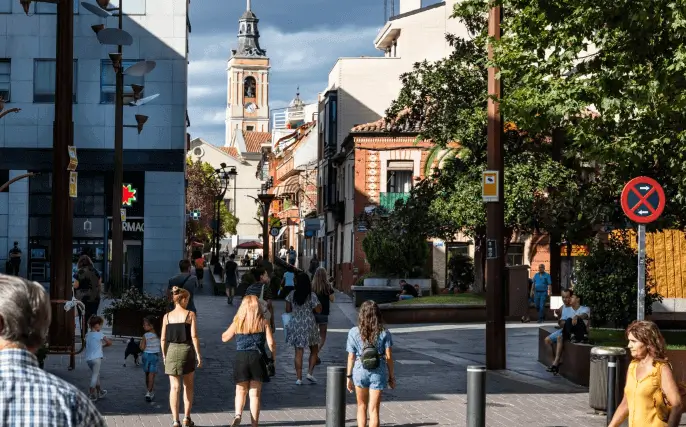
- Population: 193,238 inhabitants, according to INE 2025 data
- Gender split: roughly 51% women and 49% men
- Average age: around 41 years
- Purchasing power: average, with an economy based on the aeronautics industry, logistics, distribution, services and university education
- Economic activity rate: around 62%, weighted towards Airbus, the southern industrial estates and Universidad Carlos III
- Relevance for advertising: a strong option for mixing resident, student, industrial and B2B audiences in a single plan
Getafe, one of the major industrial towns south of Madrid, has 193,238 inhabitants according to the 2025 figures from Spain's National Statistics Institute (INE). Its economy is shaped by the presence of Airbus, an air base, the Getafe campus of Universidad Carlos III and a cluster of industrial estates such as Los Olivos, El Lomo and La Carpetania. The Cobo Calleja industrial estate, on the border with Fuenlabrada, is one of the largest wholesale distribution hubs in southern Europe. The urban layout is organised around neighbourhoods such as Sector III, El Bercial, Las Margaritas, Buenavista and La Alhóndiga.
The inventory is notable for its bus shelters on avenues such as Juan Carlos I (with a stretch opposite the local police station and the turn-off for Avenida de la Libertad), Avenida de España, Avenida de las Ciudades, Avenida del Casar and Avenida Juan de Borbón at the entrance to Centro Comercial Getafe 3. MUPI panels are spread between residential areas such as Sector III and industrial estates such as Los Olivos, which makes them particularly useful for B2B, automotive, industrial, recruitment and vocational training campaigns. Billboards are concentrated on the A-42, the M-406 opposite Airbus, Paseo John Lennon and the approaches to Cobo Calleja via the N-401.
Bus shelters in Getafe
Across Getafe, bus shelters cover the main internal transport corridors of the town. Density is particularly high on Avenida Juan Carlos I, Avenida de las Ciudades and Avenida Juan de Borbón, where the flows of city and intercity buses make for very high repeat impacts among residents and workers.
Standout locations include Avenida de Juan de la Cierva on the corner with San Sebastián, Avenida del Ferrocarril 2 at Getafe-Centro station, Avenida Juan de Borbón opposite Centro Comercial Getafe 3, Avenida de las Ciudades on the corner with Avenida de Bada, and areas such as Sector III, El Bercial and Las Margaritas, as well as the Universidad Carlos III campus area.
MUPI panels in Getafe
In Getafe, MUPI panels are distributed between residential areas and industrial estates, which gives them a mixed profile that is hard to match with other formats. They are particularly effective for B2B, automotive, industry, jobs and vocational training campaigns aimed at the southern metropolitan area.
Sites include Avenida Juan Carlos I near the local police station, Avenida de España heading towards Avenida de las Ciudades, Calle del Ferrocarril at Glorieta de Isidro Parejo Risco, Calle Greco heading towards Alonso de Mendoza, Avenida del Casar where it connects with Avenida Martín Gato, and Avenida de las Ciudades level with Calle Jazmín.
Billboards in Getafe
In Getafe, billboards are concentrated on the major long-distance roads. They are the recommended format when you need to reach, all at once, local residents, workers on the industrial estate and the hauliers who drive in and out of Cobo Calleja every day.
Available locations include the N-401 (A-42) at km 15.100 with an exit towards Madrid, heading for the Cobo Calleja industrial estate, Paseo John Lennon at the M-406 roundabout at km 15.600 opposite Airbus, the A-IV at km 15.100 opposite Bricodepot, both inbound to Madrid and outbound, and Avenida de Andalucía level with km 18.100.
Outdoor advertising in Parla
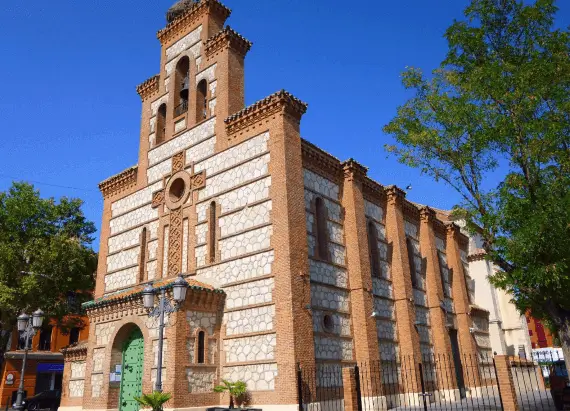
- Population: 137,471 inhabitants, according to INE 2025 data
- Gender split: approximately 50% women and 50% men
- Average age: around 39 years, one of the lowest in the southern metropolitan belt
- Purchasing power: below average to average, with an economy based on services, light industry, food and retail
- Economic activity rate: around 60%, weighted towards small businesses, manufacturing and services
- Relevance for advertising: a young town with its own tram and an unusual mix of sites, thanks to its advertising kiosks in shopping areas
Parla is home to 137,471 people, as counted by Spain's National Statistics Institute (INE) in 2025, and lies 20 kilometres south of Madrid, next to the A-42. The town grew above all in the seventies and remains strongly residential, with young families and a population pyramid younger than the regional average. The Parla tram, on light-rail line 4, links the urban areas with the commuter rail station and makes it easier to get around town. Its business park brings together light industry, food and manufacturing.
The inventory combines billboards, bus shelters, MUPI panels and, most notably, advertising kiosks, which is relatively unusual in the region. Billboards stand on the A-42 (km 23.200 towards Madrid), on Avenida de las Lagunas at a roundabout, on Paseo República Dominicana opposite Avenida de América towards Centro Comercial Parla Natura, and on the approaches to Parque Parla Este. Bus shelters dominate on Avenida de las Lagunas (the park and the surrounding side streets), on Calle Valladolid at the corner with Ávila in Plaza de Pablo Iglesias, and along the light-rail routes. Kiosks are concentrated along the Calle Real axis, Avenida de las Lagunas and Plaza de la Libertad.
Billboards in Parla
In Parla, billboards cover both the road approaches from the A-42 and the main urban corridors in the east of town. They are the right format for reaching residents who commute to Madrid every day and potential customers of the nearby shopping centres.
Available sites include the A-42 at km 23.200 towards Madrid; Calle Atenas where it meets Calle Berlín, both on the approach to Parque Parla Este and heading for the M-408 towards Pinto; Avenida de las Lagunas at a roundabout; Paseo República Dominicana opposite Avenida de América, heading for Centro Comercial Parla Natura; and various stretches of Avenida de América.
Bus shelters in Parla
Bus shelters in Parla make the most of the city and intercity bus network and the line 4 light-rail routes. They work best for neighbourhood shops, vocational training, language schools and private health services.
Locations are concentrated on Avenida de las Lagunas, with its inner park and its corners with side streets, on Calle Valladolid at the corner with Ávila in Plaza de Pablo Iglesias, and around the old town and the commuter rail station.
Advertising kiosks in Parla
Advertising kiosks are a less common format in the southern metropolitan belt, but they have a notable presence in Parla. They stand in pedestrian areas and squares with shopping footfall, which makes them particularly useful for local shop promotions, municipal events and neighbourhood services.
Sites on offer include Calle Real next to bank branches, various corners of Avenida de las Lagunas, Plaza de la Libertad opposite number 23 where a side street joins it, and the shopping areas along the historic centre axis.
Outdoor advertising in Pinto
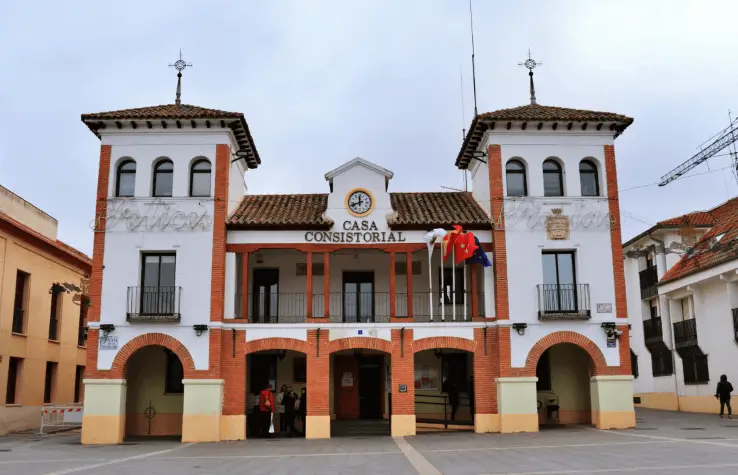
- Population: 56,651 inhabitants, according to INE 2025 data
- Gender split: roughly 51% women and 49% men
- Average age: around 39 years
- Purchasing power: average, with an economy based on logistics, distribution, food and drink
- Economic activity rate: around 62%, weighted towards light manufacturing, distribution and services
- Relevance for advertising: a growing municipality next to the A-4, well suited to B2B and retail campaigns and to services aimed at young households
Pinto has 56,651 inhabitants according to the 2025 count by Spain's National Statistics Institute (INE) and lies south of Madrid next to the A-4. It combines residential neighbourhoods with a strong industrial base: the Área Empresarial Andalucía business area and the Las Arenas industrial estate are home to logistics, distribution, food and drink companies. It has a station on commuter rail line C-3 and a study centre of UNED (Spain's public distance-learning university) inside Centro Madrid Sur, which brings student footfall. Local tradition adds a point of interest: the legend of the geographical centre of the Iberian Peninsula, marked by a monolith in Parque del Egido de la Fuente.
The inventory is defined by bus shelters in Sector I of the Área Empresarial Andalucía (with stretches next to Inter Beverage Service and Socova), at Paseo de las Artes 15 near Francisco Barbieri, and on the approaches to the town centre. Billboards are concentrated on the A-4 (km 19.800 towards Madrid), on Avenida de las Artes at the Avenida Las Naciones roundabout, on Paseo de las Artes at a roundabout, and on Calle Sierra Nevada at the roundabout with Calle Marismas, at the entrance from the A-4 to the Las Arenas industrial estate. There are also digital sites at Avenida del Río Guadalquivir 13 and a monopole billboard on the A-4 at km 19.800, outbound.
Bus shelters in Pinto
In Pinto, bus shelters are split between the town centre and the Área Empresarial Andalucía. The combination is attractive because it reaches both the local resident leaving work and the professional travelling to the industrial estate, which gives continuous exposure throughout the day.
Available sites include Sector I of the Área Empresarial Andalucía next to Inter Beverage Service and Socova, Paseo de las Artes 15 near Francisco Barbieri, various stops in the town centre close to municipal facilities, and the approaches to the commuter rail station.
Billboards in Pinto
In Pinto, billboards cover the major road approaches, especially the A-4. They are the right choice for broad brand-awareness campaigns and for advertisers focused on distribution, automotive, FMCG and businesses with a presence along the southern corridor.
Sites on offer include the A-4 at km 19.800 towards Madrid, Avenida de las Artes at the Avenida Las Naciones roundabout, Paseo de las Artes at a roundabout, Calle Sierra Nevada at the roundabout with Calle Marismas at the entrance to the Las Arenas industrial estate, and the M-408 where it passes Paseo de las Artes.
Outdoor advertising in Coslada
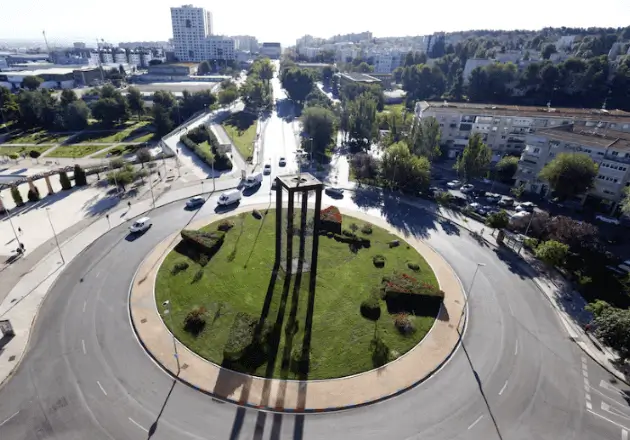
- Population: 80,512 inhabitants, according to INE 2025 data
- Gender split: roughly 51% women and 49% men
- Average age: around 42 years
- Purchasing power: average, with an economy based on logistics, air transport, distribution and services
- Economic activity rate: around 63%, weighted towards logistics, the airport and the industrial estates of the Henares corridor
- Relevance for advertising: a logistics hub next to the airport, well suited to B2B, trades training, commercial vehicles and financial services for SMEs
Coslada sits on the Henares corridor, very close to Adolfo Suárez Madrid-Barajas airport. Spain's National Statistics Institute (INE) put its population at 80,512 in 2025. It is one of the region's main logistics hubs, with industrial estates such as Coslada Centro and areas close to the M-21, the M-40 and the A-2. It provides healthcare for health area 2 from Hospital del Henares, which opened in the Jarama neighbourhood. Metro line 7 and commuter rail lines C-2 and C-7 make daily travel easier between Coslada, San Fernando de Henares and the capital.
Bus shelters dominate the inventory and are spread across avenues such as España, Berlín, Argentina, Venezuela, Suiza (opposite Ochoa), Europa and Avenida de la Constitución itself, as well as around Barrio del Puerto and Coslada Central metro station. Billboards are concentrated on the M-824 (Coslada-Vicálvaro in both directions), Avenida Miguel Peña 14 at the M-21 roundabout with Avenida Aragón, Avenida de la Constitución, Avenida José del Hierro towards Hospital del Henares and Avenida del Jarama 19 opposite the GALP petrol station. It is a market particularly well suited to B2B campaigns in logistics, transport, commercial vehicle hire and trades training.
Bus shelters in Coslada
In Coslada, bus shelters cover residents' everyday routes between neighbourhoods, the commute to jobs at the airport and the connections with the metro and commuter rail. They work best for local shops, restaurants, tuition centres, clinics and financial services aimed at working households.
The most effective locations include Avenida de Europa opposite side streets, Avenida de España on the corner with Travesía de la Constitución, Avenida de Suiza opposite Ochoa, Avenida de la Constitución in the town-centre stretch, Glorieta Plaza de la Rosa de los Vientos both before and next to the hotel, and the area around Barrio del Puerto metro station.
Billboards in Coslada
In Coslada, billboards stand on the busiest road approaches, especially the M-824 and the M-21. They are recommended for campaigns aimed at professionals along the corridor, light-vehicle brands, transport and businesses that need a constant presence in the airport area.
Available sites include the M-824 from Coslada to Vicálvaro and from Vicálvaro to Coslada, in both directions; Avenida Miguel Peña 14 at the M-21 roundabout with Avenida Aragón; Avenida de la Constitución on corners with main streets; Avenida José del Hierro at the roundabout towards Avenida Isabel Torres, at the Coslada exit next to Hospital del Henares; and Avenida del Jarama 19 opposite the GALP petrol station.
Outdoor advertising in Alcobendas
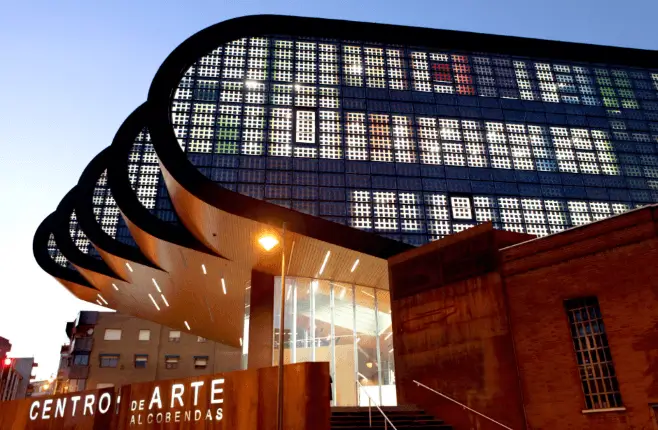
- Population: 123,342 inhabitants, according to INE 2025 data
- Gender split: roughly 51% women and 49% men
- Average age: around 42 years
- Purchasing power: high, with an economy based on business parks (Arroyo de la Vega, La Moraleja), technology, consulting and financial services
- Economic activity rate: around 65%, weighted towards skilled professionals working at corporate headquarters
- Relevance for advertising: a premium setting on the northern corridor, well suited to B2B, high-end automotive, private banking, private healthcare and premium education
Alcobendas, with 123,342 inhabitants in the 2025 register kept by Spain's National Statistics Institute (INE), has one of the most highly qualified populations on the northern corridor. It is home to two major business parks (Arroyo de la Vega and La Moraleja) that bring together the headquarters of large companies, especially in technology, consulting and professional services. Adolfo Suárez Madrid-Barajas airport is 10 minutes away and Madrid's main exhibition centre 15. There are four stops on metro line 10 and two commuter rail stations, as well as shopping centres such as Diversia, La Vega, Río-Norte, El Encinar and Moraleja Green.
The inventory is dominated by billboards on the A-1 and its junctions with the M-616 and the M-603, especially on Avenida del Monte de Valdelatas and Avenida de Valdelaparra, as well as on Carretera de Fuencarral a Alcobendas and Paseo de la Chopera. There are prominent digital sites at Avenida de Bruselas 21, in Parque de Ocio Diversia. There is one MUPI panel on Carretera de Alcobendas a Barajas (km 4), which connects the municipality with the airport, and a monopole billboard on Carretera de Burgos level with km 12. It is a town suited to B2B, premium automotive, banking and professional services campaigns aimed at high-income households.
Billboards in Alcobendas
Billboards are the main format in Alcobendas and are concentrated on the approaches via the A-1 and the internal junctions. They are the right choice for reaching a high-income professional audience travelling every day between the business parks and the capital.
Available locations include the approach from the M-603 to Avenida del Monte de Valdelatas, Carretera de Fuencarral-Alcobendas, Avenida de Valdelaparra towards Avenida del Doctor Severo Ochoa, Avenida del Monte de Valdelatas 36 in both directions, the M-616 road at km 3.7 towards Avenida de la Ilusión, and Paseo de la Chopera 46 at a roundabout.
Outdoor advertising in Valdemoro
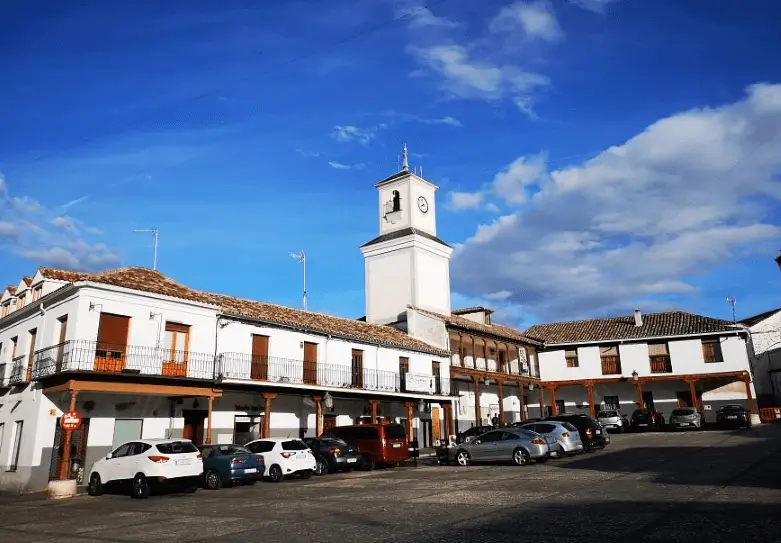
- Population: 85,972 inhabitants, according to INE 2025 data
- Gender split: roughly 51% women and 49% men
- Average age: around 39 years
- Purchasing power: average, with an economy based on services, retail, public-security training and residential growth
- Economic activity rate: around 62%, with public-sector employees, retail and services all represented
- Relevance for advertising: a growing municipality with a young, family audience, well suited to brands focused on the home, retail and mid-range automotive
Valdemoro has 85,972 inhabitants in the 2025 register of Spain's National Statistics Institute (INE) and lies in the south of the region next to the A-4 motorway. It is one of the municipalities with the fastest population growth of recent decades, with residential neighbourhoods built up by waves of newcomers, its own station on commuter rail line C-3 and a profile of young households with children. It is home to the Colegio de Guardias Jóvenes Duque de Ahumada, a training centre for the Guardia Civil (Spain's gendarmerie). The town is also the seat of the judicial district. Hospital Infanta Elena provides healthcare for the local population and neighbouring municipalities.
The inventory is dominated by bus shelters on avenues such as Reyes Católicos next to Hospital Infanta Elena, Paseo Tierno Galván opposite the school and the park, Avenida del Mar Mediterráneo and the approaches close to Valdemoro hospital. Billboards are concentrated on Avenida de Andalucía and Avenida de Madrid (around the GALP petrol station at number 6). There are also two monopole billboards on the A-4 level with km 24.350, both outbound and towards Madrid, well suited to reinforcing brand image in the daily flow towards the capital.
Bus shelters in Valdemoro
In Valdemoro, bus shelters cover the municipality's internal corridors and the areas around the hospital, the schools and the new housing developments. They are the right format for neighbourhood shops, health, education and local financial services.
Available locations include Avenida Reyes Católicos next to Hospital Infanta Elena, outside Hospital de Valdemoro, Paseo Tierno Galván opposite the school and the park, various corners of Avenida del Mar Mediterráneo, the area around Calle Estrella Polar, and the new neighbourhoods close to the M-404.
Billboards in Valdemoro
In Valdemoro, billboards stand on the main road approaches and, above all, on the A-4. They are the right choice for reinforcing a brand in the daily flow towards Madrid and for campaigns in retail, automotive and businesses focused on young households.
Sites on offer include Avenida de Andalucía where side streets join it and Avenida de Madrid 6 level with the GALP petrol station, as well as the two monopole billboards on the A-4 at km 24.350, visible in both directions.
Outdoor advertising in Pozuelo de Alarcón
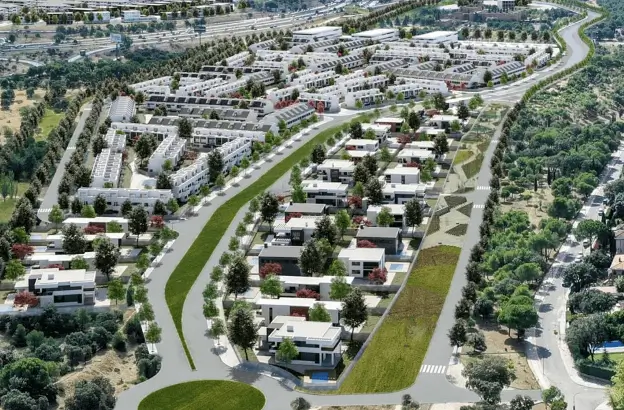
- Population: 89,770 inhabitants, according to INE 2025 data
- Gender split: a slight female majority, with close to 52% women and 48% men
- Average age: around 42 years, with life expectancy above the national average
- Purchasing power: high, the highest average net household income in the country according to INE's urban indicators
- Economic activity rate: around 65%, very heavily weighted towards the service sector and skilled professionals
- Relevance for advertising: a premium setting well suited to private banking, high-end automotive, private healthcare, international education and luxury
Pozuelo de Alarcón has 89,770 inhabitants, as recorded in 2025 by Spain's National Statistics Institute (INE), and has the highest average net household income of any town in Spain, according to INE's Urban Indicators. It lies north-west of Madrid, next to the M-503 and the M-40, and connects with the capital via Avenida de Europa, running almost without a break into Madrid's Aravaca neighbourhood. It is home to hubs such as Ciudad de la Imagen (Kinépolis and audiovisual centres), Centro Comercial Kinépolis and the university area around the Social Work faculty. Its residential profile is clearly premium in areas such as La Finca, Somosaguas and Monteclaro.
The inventory is relatively small in number but very high in quality: billboards on the M-502 Carretera de Carabanchel a Aravaca level with km 2.500, Glorieta de TVE opposite Paseo de la Casa de Campo towards Centro Comercial Ciudad de la Imagen, Avenida Juan Pablo II 73 and 97 (next to Colegio San Luis de los Franceses, the sports centre and Centro Comercial El Torreón Plaza), Avenida Pablo VI at a roundabout, the M-503 towards Pozuelo and Majadahonda, and Avenida de Navacerrada 6 at a roundabout. Digital sites are concentrated at universities and along the Edgar Neville corridor. There are also MUPI panels at the Social Work faculty in postcode 28223.
Billboards in Pozuelo de Alarcón
Billboards in Pozuelo cover the main approach corridors into town, especially the M-503 and the M-502, as well as the area around Ciudad de la Imagen. They are the right format for reaching an audience with high purchasing power, easy to identify from its travel and spending habits.
Available locations include the M-502 Carretera de Carabanchel a Aravaca at km 2.500 next to a petrol station; Glorieta de TVE opposite Paseo de la Casa de Campo towards Centro Comercial Ciudad de la Imagen; Avenida Juan Pablo II 73 and 97 next to Colegio San Luis de los Franceses and Centro Comercial El Torreón Plaza; Avenida Pablo VI at a roundabout; the M-503 towards Pozuelo and Majadahonda; and Avenida de Navacerrada 6 at a roundabout.
Digital screens in Pozuelo de Alarcón
Digital screens in Pozuelo lend themselves to campaigns with dynamic creative and message rotation in an area with extremely high purchasing power. They are recommended for private banking, high-end automotive brands, private healthcare and professional services.
Sites on offer include the Edgar Neville corridor in Ciudad de la Imagen and digital sites at faculties such as psychology, political science, economics and business studies, as well as UNED in postcode 28223 on the Somosaguas campus.
Outdoor advertising in Navalcarnero
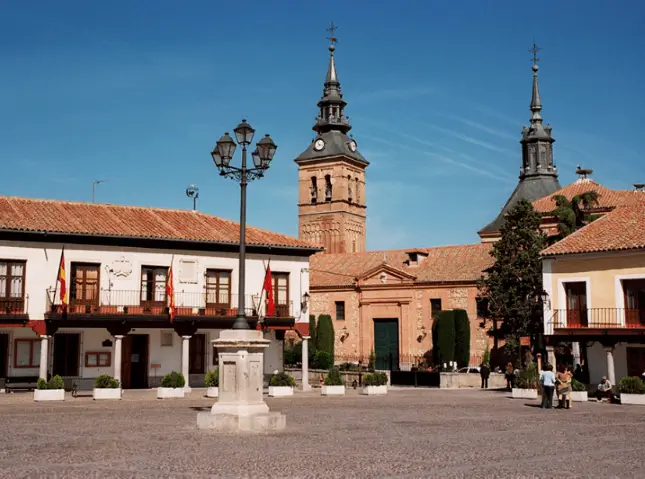
- Population: 33,331 inhabitants, according to INE 2025 data
- Gender split: approximately 50% women and 50% men
- Average age: around 40 years
- Purchasing power: average, with an economy based on services, retail, Vinos de Madrid DO wines and expanding residential areas
- Economic activity rate: around 60%, weighted towards local retail, hospitality, services and small-scale industry
- Relevance for advertising: the main town in the south-west of the region, with a listed historic ensemble, well suited to neighbourhood retail, mid-range automotive and local services
Navalcarnero has 33,331 inhabitants, the figure Spain's National Statistics Institute (INE) gives for 2025, and lies in the south-west of the region, where the A-5 crosses the M-404 and the M-507. Its Plaza de Segovia and the church of Nuestra Señora de la Asunción are listed as a Conjunto Histórico (protected historic ensemble), which adds an element of local tourism and weekend trips. The local economy combines services, retail, wines under the Vinos de Madrid DO (Denominación de Origen, Suroeste sub-zone) and housing that keeps expanding thanks to residential estates such as Los Manzanos.
The inventory is concentrated in bus shelters on the M-504 towards Sevilla la Nueva, the old N-V around the Los Manzanos residential estate, the slip road to the N-V junction, Avenida de la Constitución, Cuesta del Águila and Ronda de San Juan next to Bar La Oficina. There is also a monopole billboard on the A-5 at km 28, outbound, recommended for brand-recognition campaigns aimed at the traffic connecting Madrid with the west of the region and the province of Toledo.
Bus shelters in Navalcarnero
In Navalcarnero, bus shelters are split between the historic centre, the residential estates and the road approaches. They are the right format for local shops, hospitality, training and private healthcare services that also cover nearby municipalities.
Sites include the M-504 towards Sevilla la Nueva where side streets join it, the old N-V around the Los Manzanos residential estate, the slip road to the N-V junction, the M-504 at Carretera Aldea del Fresno, the first entrance to Navalcarnero from the N-V via the A-5, Ronda de San Juan next to Bar La Oficina, Avenida de la Constitución and Cuesta del Águila.
Outdoor advertising in San Fernando de Henares

- Population: 39,059 inhabitants, according to INE 2025 data
- Gender split: approximately 51% women and 49% men
- Average age: around 43 years, somewhat above the regional average
- Purchasing power: average, with an economy based on logistics, industry, distribution and services along the Henares corridor
- Economic activity rate: high, with a strong presence in industry, transport and wholesale trade
- Relevance for advertising: the approaches to the industrial estates and Avenida de Madrid carry a very steady flow of professional traffic, Monday to Friday
San Fernando de Henares has 39,059 inhabitants, according to figures for 2025 from Spain's National Statistics Institute (INE). It lies right on the Henares corridor, about 15 kilometres east of Madrid, between Coslada and Torrejón de Ardoz. It retains a historic centre with an eighteenth-century Baroque layout, the Real Sitio (royal estate) founded by Ferdinand VI, alongside one of the densest concentrations of industry and logistics in the eastern metropolitan area. The San Fernando and Las Fronteras industrial estates and the business park are home to the headquarters of technology and distribution companies such as IBM and Scania. Metro line 7 and commuter rail lines C-2 and C-7 connect the municipality every day with the capital and with Adolfo Suárez Madrid-Barajas airport.
The inventory splits into bus shelters and billboards. Bus shelters are spread across Avenida de Madrid (on the corner with Calle Salamanca and with José Alix), Avenida de Zarauz at Paseo Azpeitia, Avenida San Sebastián, Avenida Algorta next to Instituto Tierno Galván, Plaza de Fernando VI, Plaza de Ondarreta at Avenida de Eibar, Avenida de Castilla opposite Scania and the road to Mejorada del Campo (M-216). Billboards are concentrated on the approaches to the San Fernando industrial estate: Avenida de Castilla at the estate exit next to the GALP petrol station, Calle Mar Adriático opposite IBM towards Avenida Castilla and Torrejón, Calle Sierra Aitana next to the business park and Avenida Tenerife towards Avenida Portugal. It is a market well suited to B2B campaigns in logistics, transport, industry and trades training.
Bus shelters in San Fernando de Henares
Bus shelters work well in San Fernando de Henares for residents and for the daily footfall from the neighbourhoods to the town centre and the commuter rail and metro stations. They deliver repeated impacts at street level, which suits local shops, neighbourhood services, health and training.
Standout sites include Avenida de Madrid (on the corner with Calle Salamanca and with José Alix), Avenida de Zarauz at Paseo Azpeitia, Avenida San Sebastián opposite Avenida de Zarauz, Avenida Algorta next to Instituto Tierno Galván, Plaza de Fernando VI, Plaza de Ondarreta at Avenida de Eibar, Calle Rafael Sánchez Ferlosio and Avenida de Montserrat.
Billboards in San Fernando de Henares
Billboards dominate the industrial approaches and capture the road traffic entering and leaving the industrial estates and the A-2 corridor. They are the right format for large-format brand-awareness campaigns aimed at a professional audience on the move.
The principal locations are on Avenida de Castilla, at the exit from the San Fernando industrial estate next to the GALP petrol station and opposite Scania at number 31; Calle Mar Adriático opposite IBM, towards Avenida de Castilla and towards Torrejón; Calle Sierra Aitana next to the San Fernando business park; and Avenida Tenerife at number 18 towards Avenida Portugal.
How booking outdoor advertising with Marco Visual works
Tell us what you’re looking for
If you’d rather choose yourself, our campaign planner (in Spanish) lets you pick the weeks and then browse the map or the list of sites, with filters by type of site, city, postcode or distance to a shop or point of interest. Bear in mind the booking cycles: many sites are sold by the week, but most 8x3 m billboards are booked in two-week periods or for 26 weeks, so they’re greyed out if you pick a single week. Click ‘Siguiente’ (Next) and you’ll see a campaign summary with the total price, printing and posting included: we take care of everything. You just enter your contact details and create the campaign.
Either way, you get a unique link to your campaign page, which you can share with your team: the sites you picked, the weeks, the price and the guides for preparing your artwork. You can check it whenever you like.
We confirm availability so you can book online
When everything is cleared, you can enter your billing details on that same page, pay by bank transfer and upload your artwork. Once you’ve paid, upload the transfer receipt so we can confirm the booking sooner.
Remember to send your artwork, following the guides, before the deadline shown on the proposal (usually 7 days before the start). We’ll email you at every step: artwork received and approved, payment received, sites confirmed.
Printing, posting and launch
These photos are usually ready 24 to 48 hours after the start; we’ll email you when they are.
When the campaign ends, you’ll see a notice on the campaign page and receive a satisfaction survey, with the option of leaving us a Google review. It helps us do better.
Frequently asked questions about outdoor advertising in the Community of Madrid
How much does an outdoor advertising campaign cost in the Community of Madrid?
The price depends on the format, the number of advertising sites and the duration. A campaign on MUPI panels or bus shelters in a town in the metropolitan belt can start from a few hundred euros per network for a two-week period, while billboard campaigns on the approaches to the M-30 or building wraps in central Madrid sit in clearly higher price bands. At Marco Visual we put together a made-to-measure proposal with several investment scenarios. For billboards in the Community of Madrid the reference price is €92 to €105 per face per week (that is, €184 to €210 per two-week period), excluding VAT and excluding poster printing, which is quoted separately; some positions come as a two-week booking (2 weeks, 14 days), while others are only available for 6 months (26 weeks).
Which formats work best for an SME with a shop in Madrid?
For local retailers, bus shelters and MUPI panels are usually the best combination: they deliver repeated impacts at neighbourhood level and give people time to read messages with several elements (name, offer, address, website). If the shop is near a major road approach or a shopping centre, a billboard or a monopole boosts awareness. Digital screens are useful when you want to rotate several creatives over the course of the day.
How many advertising sites does Marco Visual have in the Community of Madrid?
We manage around 3,000 advertising sites across the region, split between bus shelters, billboards, digital sites, MUPI panels, building wraps, advertising kiosks, monopole billboards and JET metro panels. The figure changes constantly as sites are added and withdrawn. If you want to know what is available for your campaign in a particular town, the quickest way is to request a proposal, and we will put it together with actual availability for your target date.
What is the minimum campaign length?
For MUPI panels, bus shelters, billboards and building wraps, the usual minimum duration is a two-week period (2 weeks, 14 days). Digital screens can work with shorter windows, because they are sold as slots in a rotating loop, which opens the door to campaigns of just a few days. Either way, the Marco Visual sales team will help you set the best duration for your objectives. For billboards, some positions are only available in 6-month periods (26 weeks).
Which areas of Madrid have the most footfall and road traffic?
The highest footfall is in Sol, Gran Vía, Fuencarral, Princesa, Goya and in the Salamanca neighbourhood. The heaviest road traffic is carried by the A-1 to A-6 approaches, the M-30, M-40 and M-45 ring roads, and the junctions with the M-21 and the M-50. In the metropolitan belt, the A-2 (Henares), the A-4 (Pinto-Valdemoro), the A-5 (Móstoles) and the A-1 (Alcobendas-San Sebastián de los Reyes) are key corridors.
Do you have digital sites or only static ones?
We have both. In the city of Madrid the digital (DOOH) offering is very extensive, especially in indoor retail and office settings, plus outdoor screens at Ciudad de la Imagen. In the metropolitan belt there are digital screens in shopping centres such as Tres Aguas, H2O Ocio and Diversia. We combine static and digital sites when the creative or the schedule calls for it.
What happens after I ask for a proposal?
We take your brief, budget and objectives. We send you a proposal with specific locations, a map, photos and prices. Once it is approved, we help you adapt the creative to each format and oversee production and posting, then send you a final report with proof-of-posting photos of all the sites, laid out in a grid. Usual lead time from brief to campaign start: one to two weeks, depending on production.
What are the best times of year to advertise in the Community of Madrid?
The busiest commercial windows are January (the new-year rush for adult courses, FITUR), February–March (ARCO, Mercedes-Benz Fashion Week), April–May (the Premio Cervantes literary prize in Alcalá, Dos de Mayo, San Isidro), June–July (Madrid Pride, the summer sales), September (back to school), October (Semana Cervantina in Alcalá) and November–December (Black Friday, Almudena, Christmas). Summer (July–August) slows down in the centre but stays active in tourist areas.
Can you help with the creative design?
Yes, we help with the design and with adapting the creative to each format. Every advertising site has different dimensions and proportions (a vertical MUPI panel is not the same as a horizontal billboard or a large-format building wrap), so we adapt your artwork to the exact dimensions of each location and check legibility, contrast and reading distance. If you already have brand guidelines, we work from them; if not, we advise you so the message works at the real speed and distance of each site.
Does outdoor advertising make sense compared with a digital-only campaign?
Outdoor and digital advertising complement each other more than they compete. Outdoor brings mass coverage, a physical presence that cannot be skipped and brand awareness in the consumer's real environment, something online does not cover. In the Community of Madrid, with millions of journeys every day on the M-30, the M-40 and the radial motorways, a campaign on billboards, bus shelters and MUPI panels generates repeated impacts at a very competitive cost per contact and reinforces recall of your digital activity. The usual approach is to combine both channels.
Give your brand more visibility with outdoor advertising
See our advertising sites for yourself, with their prices, locations and photos, and use the campaign planner
Still have questions, or would you like us to advise you and send you a proposal? Get in touch and we’ll send you a personalised quote for your outdoor advertising campaign.




What our clients say in the Community of Madrid
Verified Google reviews from businesses that have already worked with Marco Visual.

Hemos quedado satisfechos con la campaña de publicidad que contratamos con Marco Visual para el Conservatorio Superior de Danza de Alicante (CSDA) durante las Hogueras. La campaña contó con cuatro mupis diferentes, cada uno dedicado a un estilo de danza, una iniciativa para dar visibilidad a nuestro conservatorio y acercar la riqueza y diversidad de la danza a la ciudadanía. Destacamos la profesionalidad, la atención recibida y la buena gestión de todo el proceso. Porque la danza también merece ocupar las calles y formar parte de la ciudad. ¡Gracias a Marco Visual por ayudarnos a llevar nuestro arte más allá de las aulas!
Original review in SpanishSee on Google 1 / 4

Hemos trabajamos con Marco Visual para la campaña de apertura de nuestra nueva clínica en Molina de Segura, y la experiencia ha sido positiva. Negociamos directamente con ellos, sin intermediarios: el trato es cercano y las respuestas, rápidas. Necesitábamos resolver ubicaciones, formatos y plazos con poco margen de tiempo, y flexibilidad para adaptar la propuesta a lo que necesitábamos. Recomendado
Original review in SpanishSee on Google

Ha sido nuestra primera experiencia en implementar un MUPI, pensábamos que sería algo engorroso en cuanto al proceso y verdaderamente nos hemos confundido. La atención de Alejandro desde el primer momento ha sido rápida, precisa en las indicaciones y nos ha facilitado todo. Ademas agregar que el sistema que tienen implementado online para el seguimiento ha sido muy práctico, sabes el status de la campaña en todo momento, repetiremos!
Original review in SpanishSee on Google

Nuestra experiencia ha sido muy positiva. Queremos destacar especialmente la profesionalidad, rapidez y atención recibida durante todo el proceso. El equipo ha demostrado en todo momento una excelente disposición y un trato cercano y profesional. Mención especial para Alejandro M., por su amabilidad, eficacia y atención constante. Ha sido un placer contar con su ayuda y profesionalidad. Sin duda, recomendamos sus servicios y agradecemos el trato recibido.
Original review in SpanishSee on Google

Hemos quedado muy satisfechos con la campaña de publicidad exterior realizada con Marco Visual. Desde el primer momento, el trato ha sido cercano y profesional, facilitando todo el proceso y resolviendo nuestras dudas con rapidez. La gestión de la campaña ha sido ágil y eficiente, y el seguimiento durante toda la ejecución nos ha transmitido confianza. La instalación y el mantenimiento de los soportes se han realizado correctamente, cumpliendo con lo acordado. Agradecemos especialmente la atención recibida y la buena comunicación del equipo. Ha sido una experiencia muy positiva y no dudaríamos en contar con Marco Visual para futuras campañas.
Original review in SpanishSee on Google 1 / 2

La campaña que hemos hecho de publicidad exterior ha sido un éxito. La comunicación con Alejandro ha sido lo mejor, muy profesional y atento en todo momento con todos los detalles de la campaña. Repetiremos sin duda en unos meses.
Original review in Spanish See on Google
Explore other advertising formats at Marco Visual


