Outdoor advertising in the Region of Murcia: MUPIs, billboards and bus shelters with online booking

Prices in the Region of Murcia · per face per week
- 8x3 m billboardsfrom €66
- 6-sheet MUPIsfrom €92
- Bus sheltersfrom €95
Prices exclude VAT · printing and posting from €35 per face
Outdoor advertising sites in the Region of Murcia
The Region of Murcia has close to 1.6 million inhabitants, according to the 2025 municipal register of Spain's National Statistics Institute (INE), and half of them live in the municipalities of Murcia, Cartagena and Lorca. It is a single-province region with a prime logistics position in south-east mainland Spain: the A-30 and the A-7 form the Madrid-Cartagena corridor and the coastal link with Alicante and Almería, and the Port of Cartagena handles more than 35 million tonnes a year, most notably the fuel shipped out of the Escombreras refinery. That twin profile (intensive agri-food production and petrochemicals) generates a volume of daily commuting that makes avenues, roundabouts and industrial estate access roads very valuable sites for outdoor advertising. Add to that one of the youngest age pyramids in the country, with only 17% of the population over 65, which means active consumers who travel every day and spend plenty of time out and about.
At Marco Visual we have more than 1,500 advertising sites across the region, with the greatest density in the city of Murcia, where we run full networks of MUPI street panels, bus shelters, billboards, digital screens and advertising kiosks, plus a presence on the tram. Cartagena is our second big market, where we cover the city centre and industrial estates such as Cabezo Beaza and La Palma. The coast is thoroughly covered: MUPIs, bus shelters and billboards in La Manga, Los Alcázares, Mazarrón and Águilas, ideal for seasonal campaigns in tourism, property and local retail. We also reach inland areas and the Altiplano plateau in the north-east, with established sites in towns such as Molina de Segura, Alcantarilla, Jumilla and Caravaca de la Cruz, covering comarca (district) capitals with reliable through traffic. That mix of dense urban coverage, a coastal corridor and a presence in comarca capitals is probably the most complete in the region for a multi-format campaign.
Planning changes a lot with the time of year, and local fiestas carry more weight in Murcia than an advertiser from elsewhere might expect. During Holy Week (Semana Santa) and around the Bando de la Huerta and the Entierro de la Sardina, both part of the spring festivities, footfall in the city of Murcia soars on Gran Vía Salzillo, Alfonso X el Sabio and the streets around the Cathedral; in September, Cartagena stages its Carthagineses y Romanos (Carthaginians and Romans) festival for ten days, with a very strong impact on the old town and Paseo de Alfonso XIII; and Águilas draws hundreds of thousands of visitors to its Carnival, officially listed as of International Tourist Interest. Caravaca's Jubilee Year, held every seven years (the next one will be in 2031), adds another very powerful commercial window for the north-west of the region. These windows are particularly attractive for advertisers in retail, hospitality, education, the motor trade and events who want to tie their brand to a specific moment of high demand.
In our campaign planner you can check the price of MUPIs and every other advertising site, real photos, the exact location, Google Street View, descriptions and nearby points of interest, dimensions, print format… Best of all, you can filter the sites and pick the ones you want, then plan and book the outdoor advertising campaign
Some links open pages in Spanish
Looking for another area?
Explore the different outdoor advertising formats in the Region of Murcia
Marco Visual is an online platform for managing and booking campaigns on outdoor advertising sites. Our website gives you all the information you need to plan and book an outdoor campaign. Get to know each site and its features: price, real photos, format, minimum booking period and other terms.
Outdoor sites are ideal for promoting events, with room on the ad for the venue, who is taking part and every other detail that matters. They are also widely used for branding, so that people start seeing a brand away from the screen and remember it better. Other common uses are launching offers (Black Friday, the sales, Christmas…) and opening new shops.
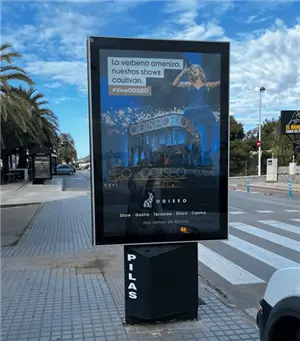
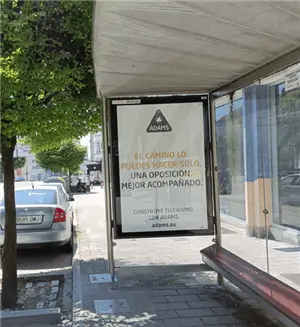
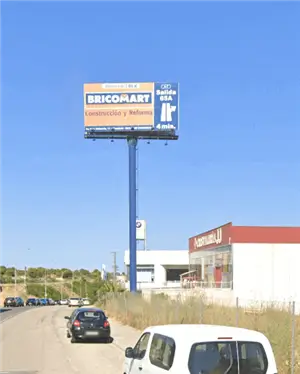
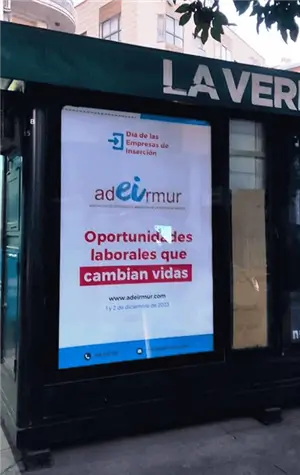
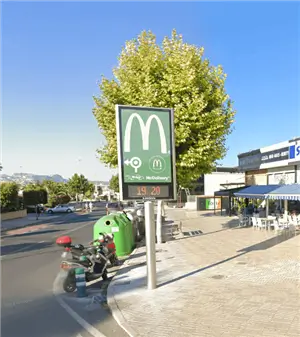
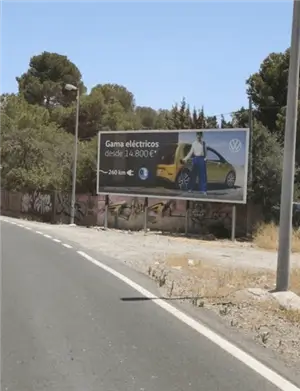
Here are some of our campaigns on different outdoor advertising sites:


The benefits of outdoor advertising in the Region of Murcia
The Region of Murcia has a very particular profile for anyone planning outdoor advertising: a comparatively young population (only 17% are over 65, against a Spanish average of 20.7% according to CaixaBank Research), a large foreign community (mainly British, Moroccan, Ecuadorian and Colombian) and a business base dominated by SMEs in farming, retail and services. For a dentist, a driving school, an aesthetic clinic, a car dealership or a local supermarket, that translates into customers who are out and about, who drive every day because the outlying districts are so spread out, and who naturally see MUPIs, bus shelters and billboards on their journeys. Outdoor advertising works very well in Murcia precisely because it does not compete with the mobile phone for the same attention: it fills the dead time of the journey. Unlike in more compact cities, here the car is still the dominant way of getting around outside the capital, which adds value to sites on ring roads, avenues and the roundabouts on the way into town.
Seasonality is something to plan with a calendar in hand, and it is probably what most sets the region apart from the rest of mainland Spain. The coast (the Mar Menor lagoon, Mazarrón, Águilas, La Manga) sees its population triple or quadruple between June and September, with summer visitors from Madrid, Albacete, northern Spain and, in the second-home areas, even the United Kingdom. In those months, the roundabouts at town entrances, the main avenues of the resorts and the bus shelters on local bus routes are a very powerful shop window for campaigns in hospitality, leisure, property or holiday services. In winter, the focus shifts to the Murcia-Molina de Segura-Alcantarilla axis and the Campo de Cartagena plain, where commuter traffic to industrial estates such as Oeste, Cabezo Beaza and La Palma keeps the billboards on the approach roads in demand all year round. For businesses in coastal areas, concentrating the budget between April and September usually brings a better return than a flat, year-round campaign.
Compared with other channels, outdoor advertising in Murcia has a clear competitive edge over local radio and print: it reaches a mass audience without depending on anyone's media habits. It pairs very well with geotargeted digital campaigns (people remember the message better when they connect what they see on their phone with what they see in the street) and with a presence on the Murcia tram, which runs along the Guadalupe-Universidad-Juan Carlos I-Nueva Condomina corridor and is a particularly valuable channel for universities, retailers and brands aimed at young people. For a local SME, the usual combination that works best is a small MUPI network in the target area, backed by one or two billboards on the approach roads and a digital campaign using the same creative to close the loop. In very local sectors such as private education, language schools or aesthetic clinics, we have seen that combining MUPIs on nearby avenues with a social media presence in the same neighbourhood produces considerably better acquisition rates than either channel on its own.
In your marketing and communications strategy, outdoor advertising sites are essential for reaching your audience. They are an excellent way to catch the eye of people out and about in town, thanks to well-chosen locations and high visibility.
- Eye-catching visual advertising with 24/7 visibility in high-traffic areas.
- Strategic locations on the city’s main streets and avenues.
- Wide coverage: a presence in Spain’s main cities and regions.
- High visibility in carefully chosen spots for the greatest impact.
- Geographic targeting: choose the areas and neighbourhoods where your target audience is.
- Greater brand awareness and trust.
- Flexibility for short and long campaigns.
- A non-intrusive medium that helps the message stick when combined with social media campaigns.
Some of the links in the areas below open pages in Spanish.
Outdoor advertising in Murcia
- Population: 479,405 inhabitants (INE municipal register, 2025), the seventh most populous municipality in Spain
- Gender split: balanced, with roughly 51% women and 49% men
- Average age: around 41, one of the youngest among Spain's provincial capitals
- Purchasing power: average, with a highly diversified economy spanning services, retail, administration, the university, city tourism and agri-food
- Economic activity rate: around 60%, with services, retail, hospitality, education and healthcare carrying more and more weight
- Relevance for advertising: the capital brings together residents, students from the University of Murcia (UMU) and UCAM, workers commuting in from across the metropolitan area and visitors from nearby comarcas, which makes Murcia the largest and most varied advertising market in the region
The city of Murcia has close to 479,000 inhabitants, according to the 2025 municipal register of Spain's National Statistics Institute (INE), spread between the central district and its 54 outlying districts. It is the seventh most populous city in Spain and the region's economic engine, with a very diverse mix of services, retail, public administration, the university sector and agri-food. Its urban layout is unusual (a fairly compact capital surrounded by a dense belt of outlying districts such as Espinardo, El Palmar, Puente Tocinos, Cabezo de Torres and Beniaján), so road traffic between the centre and the outskirts is constant throughout the day, not just at rush hour. The University of Murcia, at La Merced and Espinardo, and UCAM, a private university at Los Jerónimos, add more than 40,000 students to the mix, all using the same shopping streets as the rest of the city every day, which raises the value of advertising sites in those areas.
Our coverage in Murcia is the widest in the region. We have full MUPI networks on the main shopping streets and avenues, bus shelters at stops across the whole city bus network, large-format billboards on approach roads and ring roads, digital screens at high-visibility locations and advertising on the tram, which links the centre with the University, Juan Carlos I and Nueva Condomina. It is the only municipality in the region where we cover every single format in our catalogue. For an advertiser who wants to work the centre, the outlying districts and the ring roads at the same time, Murcia makes it possible to build multi-format networks with a level of granularity that inventory limits rule out in the region's other towns.
MUPIs in Murcia
MUPIs in the city of Murcia are the most densely distributed format in our catalogue for the region. They are located in areas with heavy foot and vehicle traffic, in the heart of the centre, along the main shopping streets and at the entrances to the outlying districts. They are especially effective advertising sites for shops, tuition centres, clinics, driving schools and events that want citywide awareness at a very competitive cost per impact.
Some of the main MUPI locations in Murcia are: Gran Vía Escultor Salzillo, Avenida Alfonso X el Sabio, Avenida de la Constitución, Plaza Circular, Plaza de Santo Domingo, Plaza Cetina, Avenida Víctor Villegas, Avenida Teniente Flomesta, Avenida de Juan Carlos I, Avenida Juan de Borbón, Plaza de la Cruz Roja, Ronda Sur and the approaches to the El Tiro shopping centre.
Bus shelters in Murcia
Bus shelters in Murcia are installed at the busiest bus stops in the metropolitan area, combining coverage of the city centre with a strong presence in the most populous outlying districts. They come into their own in campaigns that need repeat exposure among people commuting to work or college every day.
We have bus shelters on Calle Mayor de Puente Tocinos, Barrio del Progreso, Avenida José Alegría, Carretera de Churra, Calle de los Claveles, Avenida Marqués de los Vélez, Avenida Tierno Galván, Avenida Teniente Montesinos and Calle Mayor de Espinardo, plus many more sites in outlying districts such as El Palmar, Cabezo de Torres, Beniaján and Aljucer.
Billboards in Murcia
Billboards in Murcia stand in highly visible locations facing road traffic, mainly on the ring roads around the city and on the dual-carriageway approaches. They are the go-to format for large-format campaigns that need mass reach: car dealerships, superstores, product launches or public-sector campaigns.
The most prominent billboard locations in Murcia include Avenida Primero de Mayo, Avenida Miguel Induráin, Avenida Nueva de Beniaján, Ronda Sur, Avenida Reino de Murcia, Juan de Borbón, Juan Carlos I, Carretera de Alcantarilla, Avenida de los Jerónimos, Avenida de Alicante, Avenida Príncipe de Asturias and Senda de Granada.
Digital screens in Murcia
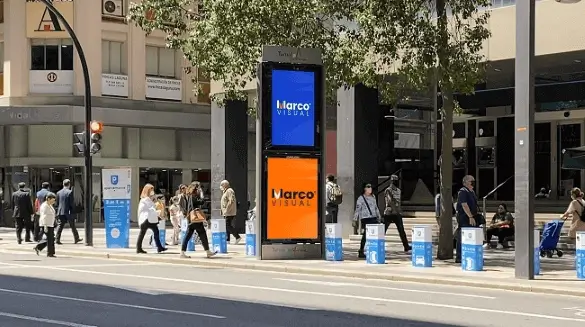
Digital screens in Murcia are located at the busiest hubs in the centre and on high-footfall approaches to shopping areas. They let you rotate several creatives on the same site, adapt messages by time of day and launch activity at very short notice, something that is impossible with static formats.
The main digital screen locations in Murcia are the El Tiro shopping centre, Gran Vía, Plaza de la Cruz Roja, Avenida Primero de Mayo, Ronda Sur, Plaza Circular and the university areas of Espinardo and La Merced.
Advertising on the Murcia tram
The Murcia tram runs along a major axis linking Plaza Circular with the University of Murcia at Espinardo, passing Nueva Condomina and running on to the Joven Futura neighbourhood. It is an advertising medium on the move with thousands of passengers a day, many of them students and workers from the university and retail corridor.
Tram advertising is especially recommended for brands aimed at young people, education advertisers, retailers in the Nueva Condomina shopping centre and campaigns that want to link the brand to an everyday journey over several weeks.
Advertising kiosks in Murcia
Advertising kiosks in Murcia combine a service role on the street with that of a communication medium, which makes them highly visible without the intrusive tone of other formats. They are designed for long-running campaigns that want to be part of people's daily routine.
Our kiosks are in central locations with heavy footfall, close to shopping and office areas, where daily exposure is constant and the chance of being read closely is greater than with any roadside format.
Outdoor advertising in Cartagena
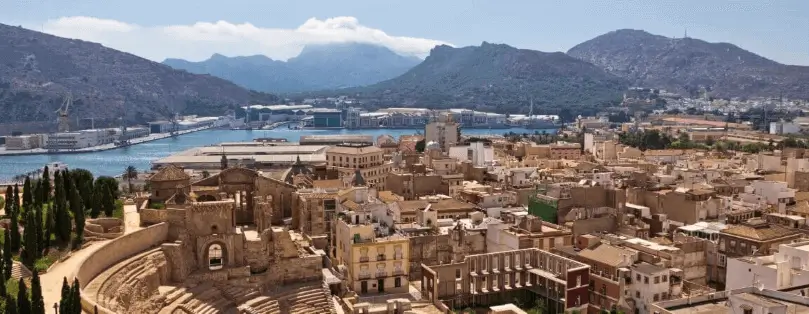
- Population: 220,704 inhabitants (INE municipal register, 2025), the second-largest municipality in the Region of Murcia and 23rd nationally
- Gender split: around 51% women and 49% men, with a slight imbalance due to the male military presence
- Average age: around 42, with an age profile slightly older than the regional average
- Purchasing power: above average, shaped by the petrochemical sector, the port, defence, tourism and a public university with strong local roots
- Economic activity rate: around 63%, with a strong presence of the energy, naval, tourism, services and military sectors
- Relevance for advertising: Cartagena combines steady residential traffic, a tourist population that grows in summer, thousands of workers commuting to industrial estates and sharp peaks during Carthagineses y Romanos or Holy Week, so campaigns of many different kinds can be planned throughout the year
According to 2025 figures from Spain's National Statistics Institute (INE), Cartagena has 220,704 inhabitants, which makes it the second-largest city in the region and 23rd in the national ranking. Its economic profile is unique in Murcia: it combines a commercial port that handles more than 35 million tonnes a year, the Escombreras refinery as a major petrochemical hub, a very active naval base, the Universidad Politécnica (the city's technical university) and a tourism sector growing steadily thanks to cruise ships and its archaeological heritage. This mix creates several audiences at once (industrial workers, military personnel, students, tourists and residents), each with different routines and points of exposure, so highly targeted campaigns can be built by choosing the right areas and formats within the same municipality.
Our coverage in Cartagena is concentrated in the city centre, on Paseo Alfonso XIII and around the port, extending to industrial estates such as Cabezo Beaza and La Palma, where thousands of people work every day. We offer MUPIs, bus shelters, large-format billboards and advertising kiosks, with stable inventory all year round. During the Carthagineses y Romanos festival week in September, the city centre sees one of the region's biggest footfall peaks of the year, with thousands of visitors packed along the route from the Parque Arqueológico del Teatro Romano to Plaza del Ayuntamiento. Other busy times are Holy Week (officially listed as of International Tourist Interest) and the peak cruise months at the port.
MUPIs in Cartagena
MUPI street panels in Cartagena are spread across the old town, the main shopping streets and the principal residential neighbourhoods. Placed on busy pavements, they are highly effective for shops, restaurants, private clinics, professional services and public-sector campaigns by the City Council or organisations linked to the port.
The main MUPI locations in Cartagena are on Paseo Alfonso XIII, Ronda de la Unión, Avenida Trovero Marín, Calle Jorge Juan, Calle Carmen Conde, Calle Ramón y Cajal, Plaza Infanta María Cristina, Alameda de San Antón, Avenida Reina Victoria, Plaza de España, Calle Pío XII, Avenida Venecia, Calle Trafalgar, Calle Juan Fernández, Avenida de Colón, Plaza de la Vaguada and Paseo de las Delicias.
Bus shelters in Cartagena
Bus shelters in Cartagena sit at heavily used bus stops, with a steady flow of people at all hours of the day. They are particularly well suited to high-frequency campaigns and to local advertisers who want to strengthen brand recall along their customers' everyday routes.
You'll find bus shelters in Cartagena in areas including Calle Real, Plaza Ramón y Cajal, Calle Mayor, Avenida Marqués de Ordoñez, Calle del Carmen, various points in the Ensanche district and neighbourhoods such as La Concepción, Los Dolores and Pozo Estrecho, as well as the entrances to La Unión, La Palma and other outlying districts close to the city centre.
Billboards in Cartagena
Billboards in Cartagena are well placed to catch drivers' attention on the approach roads into the city and around the industrial areas. They reach both people driving in to work on the industrial estate and tourists coming in on the motorway for the cruise port and the beaches, reinforcing the message along the whole journey.
Large-format billboard sites in Cartagena are on Carretera de La Palma, Torreciega, Avenida Tito Didio, Paseo del Muelle, Ronda Transversal, Avenida Juan Carlos I, the La Palma industrial estate, Carretera de Mazarrón, Calle Fortaleza, Calle Suspiros, Avenida Nueva Cartagena and Avenida de América.
Advertising kiosks in Cartagena
Advertising kiosks in Cartagena offer a friendlier, longer-lasting presence than billboards, blending into the street furniture of the city centre. They are especially useful for brand-image campaigns that put recall ahead of an immediate call to action, with a tone that feels closer to local people.
The kiosk sites are concentrated in high-footfall parts of Cartagena city centre, along tourist routes and at entrances to public services used by residents from across the Campo de Cartagena comarca.
Outdoor advertising in Lorca
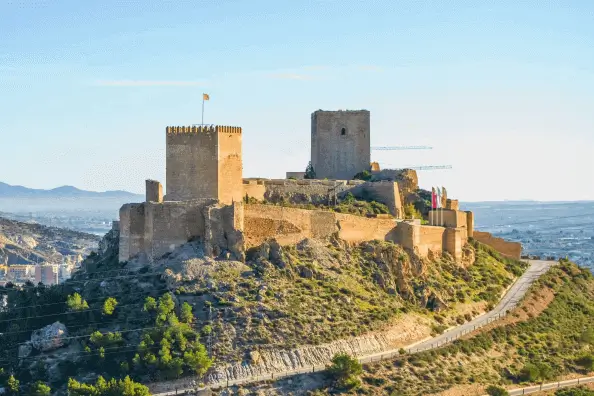
- Population: 98,969 inhabitants (INE municipal register, 2025), the third-largest municipality in the Region of Murcia
- Gender split: approximately 50.5% women and 49.5% men
- Average age: around 38-39, with one of the youngest population pyramids in the region owing to the large share of economic migrants
- Purchasing power: below average, with an economy centred on intensive farming, the agri-food industry, tanning and a service sector linked to cultural tourism
- Economic activity rate: around 55%, with a very marked presence of farm jobs, the canning industry and fruit and vegetable processing
- Relevance for advertising: Lorca has a large local market with constant traffic to the outlying districts, industrial access roads and the corridor towards Águilas and Almería, which makes its main avenues a very powerful shop window for retailers, car dealerships and service businesses
Lorca has 98,969 inhabitants according to the 2025 municipal register of Spain's National Statistics Institute (INE) and is the third most populous municipality in the Region of Murcia, as well as the comarca capital of the Alto Guadalentín. It has the second-largest municipal area in Spain, behind only Cáceres, with a very particular layout: a well-established city centre and dozens of outlying districts spread across its 1,676 km². The city rebuilt much of its urban fabric after the 2011 earthquakes, renewing many central avenues and shopping areas, and this has had a direct impact on how legible and visible advertising sites are. Its Holy Week, with the biblical and passion-play parades staged by the Blanco and Azul brotherhoods, is officially listed as of International Tourist Interest and makes Lorca a major tourist destination over those days.
Its economy rests on intensive farming (artichokes, broccoli, lettuce, peppers), the agri-food and leather-tanning industries, and growing cultural tourism thanks to its heritage and medieval castle. In Lorca we have MUPIs, bus shelters and billboards spread across the centre, the upper neighbourhoods, the approach roads from the A-7 motorway and the routes towards the outlying districts and the Águilas coast. The scattered layout of the municipality, with sizeable populations in outlying districts such as La Hoya, Purias, Almendricos and Zarzadilla de Totana, boosts the effectiveness of billboards on local roads and of MUPIs in the busiest shopping neighbourhoods of the city centre, especially along the Alameda de Cervantes-Avenida Europa axis.
MUPIs in Lorca
MUPIs in Lorca are located in the central and shopping areas with the highest footfall, covering both the Alameda axis and the densest residential neighbourhoods. They are the most versatile format for neighbourhood shops, tuition centres, clinics and service-sector campaigns that want to be part of local people's daily routine.
The main MUPI locations in Lorca include Avenida de Europa, Calle Jerónimo Santa Fe, Avenida de Portugal, Alameda de Cervantes, Calle Puente de Torta, Huerto de la Rueda, Calle del Horno, Calle Juan Antonio Dimas, Calle Juan Carlos I and Calle Galicia.
Bus shelters in Lorca
Bus shelters in Lorca are located at stops heavily used by passengers on the urban and intercity services that link the city centre with the outlying districts. They work very well for campaigns aimed at working people, students and occasional visitors to government offices and health services.
The bus shelters available in Lorca are on Avenida de las Fuerzas Armadas, Calle del Oro, outside the Palacio de Congresos conference centre, on Calle Asturias, Calle Santo Domingo, Calle Ortega Melgares, Carretera de Granada, Calle Infante Juan Manuel, Calle Isidro Salvatierra and Calle Asilo San Diego.
Billboards in Lorca
Billboards in Lorca stand on the main approach roads into the city centre and at well-chosen points along the corridor towards Águilas and Granada. They are the most suitable sites for regional messages, car dealership promotions, commercial launches and campaigns seeking visual impact on passing traffic.
Billboard sites in Lorca are concentrated on Carretera de Lorca, on Carretera de Granada at the entrances to and exits from the municipality, and around Venta Cristóbal, all points with very heavy road traffic throughout the year.
Outdoor advertising in Molina de Segura
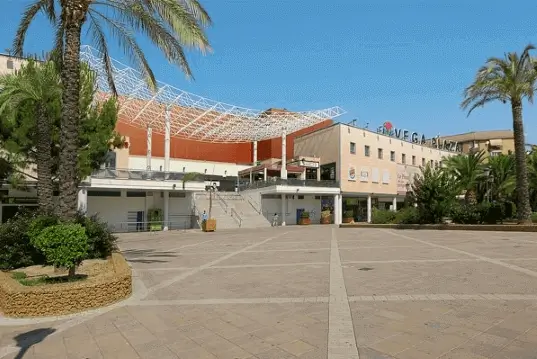
- Population: 78,458 inhabitants (INE municipal register, 2025), the fourth-largest municipality in the Region of Murcia
- Gender split: practically even, with 50.2% women and 49.8% men
- Average age: around 39, with a young population pyramid and a large working-age population
- Purchasing power: above average by regional standards, as one of the municipalities with the highest average gross income in the Region of Murcia
- Economic activity rate: around 61%, concentrated in the food industry, biotechnology, logistics, retail and services
- Relevance for advertising: the proximity to the city of Murcia, the upper-middle-income residential estates and the density of industry make Molina a very attractive market for trade marketing, automotive, professional services and premium retail campaigns
Molina de Segura has 78,458 inhabitants according to 2025 data from Spain's National Statistics Institute (INE) and is the fourth most populous municipality in the region, just 10 kilometres from the city of Murcia. It is part of the metropolitan area and is going through a housing boom on residential estates such as Altorreal, La Alcayna and El Chorrico, alongside the traditional town centre. Industry carries enormous weight in its economy (it accounts for around 12% of regional industry, with a strong base in canning, packaging, food and biotechnology), which generates a very marked daily flow of workers between the residential estates, the industrial estates and the main shopping corridor. The municipality also has an average declared gross income above the regional average, according to the latest figures published by Spain's finance ministry, which makes it an attractive audience for mid- to upper-market brands.
In Molina we work with MUPIs, bus shelters and billboards. The advertising sites are concentrated on Calle Mayor, Plaza de la Constitución, Avenida de Granada, the approaches to the Vega Plaza shopping centre, the entrances from the A-30 motorway and the roundabouts linking up with the residential estates. It is a particularly attractive market for advertisers whose catchment does not go beyond the metropolitan area (car dealerships, clinics, tuition centres, supermarkets, restaurants), as it lets them reach high-income residents without paying the prices of the regional capital. On top of that, being close to Nueva Condomina and to UCAM (a private university) in Los Jerónimos brings cross-traffic with the city of Murcia, which can be tapped into with combined networks covering both municipalities at the same time.
MUPIs in Molina de Segura
MUPIs in Molina de Segura are spread across the town centre, the shopping areas and the entrances to the main residential estates. They are the format of choice for businesses that want to reach both long-standing residents of the centre and high-income households in Altorreal or La Alcayna on their usual journeys.
The main MUPI locations in Molina de Segura include the area around the shopping centre next to the El Tapiado industrial estate, Calle Picasso, Calle Baleares, Calle Mayor, Parque de la Compañía, Calle Estación, Paseo Rosales, Calle San Juan and Calle Serrerías, as well as the entrances to and exits from the Altorreal and La Alcayna residential estates.
Bus shelters in Molina de Segura
Bus shelters in Molina de Segura occupy very busy stops on both the town's urban services and the intercity routes to the city of Murcia. They deliver exceptionally high frequency, because the same people pass them again and again on their daily journeys.
You'll find bus shelters on Calle Mayor, Plaza de la Constitución, Plaza de la Libertad, Avenida de Granada, around the Vega Plaza shopping centre, on Calle Campoamor, Calle Baleares, Calle Reyes Católicos, Calle Manuel Arnaldos and Carretera de Molina, in the outlying district of El Chorrico, on Avenida de los Castaños and in the Altorreal and La Alcayna residential estates.
Billboards in Molina de Segura
Billboards in Molina de Segura are located on high-traffic roads, especially on the approach roads from the A-30 motorway and at the roundabouts linking to the residential estates. They are the most suitable sites for large-format campaigns that need to reach both local residents and through traffic heading for the city of Murcia.
Molina's billboards are on Carretera de Altorreal, Carretera del Chorrico, the approach to Nueva Condomina, the N-301, the entrance to Molina, Costera Norte, the exit towards La Alcayna, the way in and out of El Mosca, Calle García Lorca and Carretera de Cabezo de Torres.
Outdoor advertising in San Javier
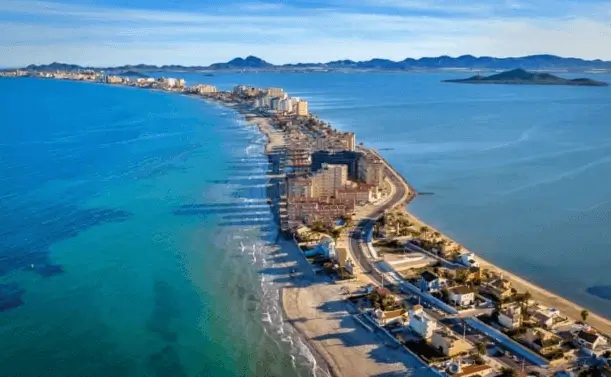
- Population: 35,504 inhabitants (INE municipal register, 2025), with a large floating population in summer and over Holy Week driven by Mar Menor tourism
- Gender split: Balanced, with very similar shares of men and women among residents
- Average age: Around 43, with a mix of resident families, working people linked to the air base and a growing share of European retirees
- Purchasing power: Average, underpinned by Mar Menor tourism, hospitality, retail, farming in the Campo de Cartagena and services linked to the air base
- Economic activity rate: Around 58%, with jobs concentrated in services, tourism, defence, intensive farming and retail
- Relevance for advertising: San Javier brings together residents, military personnel and second-home families, flows of domestic and international tourists and a younger demographic linked to the Academia General del Aire, which boosts the impact of advertising sites on main avenues and seafront promenades
San Javier has 35,504 inhabitants according to 2025 data from Spain's National Statistics Institute (INE) and is one of the liveliest municipalities on the Mar Menor, with its population spread across the town centre, La Ribera, Santiago de la Ribera and outlying districts such as El Mirador and Roda. It is home to the air base and the Academia General del Aire (the air force academy) and, a few kilometres away, just over the municipal boundary in Corvera and Torre Pacheco, the Region of Murcia's international airport, which channels flights and passengers to the entire coast. The San Javier International Jazz Festival and the Mar Menor theatre, music and dance festival draw peak crowds every summer.
In San Javier our inventory centres on a large network of MUPIs on the main avenues (Aviación Española, Balsicas, Pinatar, Mar Menor, Unión and Neptuno) and on the seafront promenade in El Mirador, with high-impact points next to shopping centres such as Dos Mares and Pitín. Alongside these come bus shelters in Santiago de la Ribera, Calderón de la Barca and Avenida Virgen de Loreto, and billboards on the approach roads along the old N-332, at the roundabouts linking with San Pedro del Pinatar and at the entrance from the motorway. This coverage is well suited to retail, restaurants, second-home property and tourism promotion.
MUPIs in San Javier
MUPIs in San Javier cover the busiest shopping streets in the town centre and along the coast, with prime locations at the entrances to La Ribera, Santiago de la Ribera and the Dos Mares retail park. They are effective sites for retail, restaurants, coastal property and seasonal campaigns.
The main locations include Calle del Mercado next to Bastida Muebles and CaixaBank, Calle Neptuno, Carretera de Pinatar opposite Café Bar Teo, Carretera de Sucina at Calle Extramuros, Avenida Pinatar, Avenida del Mirador in La Ribera next to the Dos Mares shopping centre, Avenida Academia del Aire, Carretera de Pinatar opposite Decathlon on the El Pino industrial estate, Avenida Mar Menor opposite Mercadona, Avenida del Recuerdo next to the Ruiz de Alda school, Avenida de la Unión next to the Ramón y Cajal gardens and Parque Almansa on Calle Calderón de la Barca…
Bus shelters in San Javier
Bus shelters in San Javier stand at the busiest bus stops between the town centre, La Ribera and Santiago de la Ribera, with well-placed sites at the Dos Mares shopping centre, on the seafront promenade and along the main roads linking with neighbouring municipalities.
Typical sites include La Ribera next to the Dos Mares shopping centre on Avenida del Mirador, San Javier on Avenida de Balsicas at the corner with Calle Orense (Ourense), Calle Monasterio de Sigena, Avenida Pinatar, Avenida Aviación Española next to Calle Cabo Roig, the outlying district of Los Pinos on Avenida Pinos at Calle Pino Canario, Roda on the old N-332 next to the Euro-Roda residential estate, La Ribera at the Cuatro Picos junction with Calle Guadalete, Plaza Castillicos, Avenida Virgen de Loreto and Avenida de Balsicas at Calle Sierra de las Moreras…
Billboards in San Javier
Billboards in San Javier are spread across the approach roads from the motorway, the N-332 and the roundabouts linking the municipality with San Pedro del Pinatar and La Manga. They suit regional campaigns that need broad reach among tourist and through traffic.
Notable locations include the exit from San Javier towards San Pedro next to the Pitín stadium, Los Arcos at the entrance to and exit from San Javier hospital, Avenida Aviación Española towards Cabo Cope, the La Manga roundabout on the approach to the Puerto Tomás Maestre marina, Gran Vía de La Manga at the petrol station on the way in, and the N-332 opposite the Pitín stadium and level with the Dos Mares shopping centre…
Outdoor advertising in Mazarrón
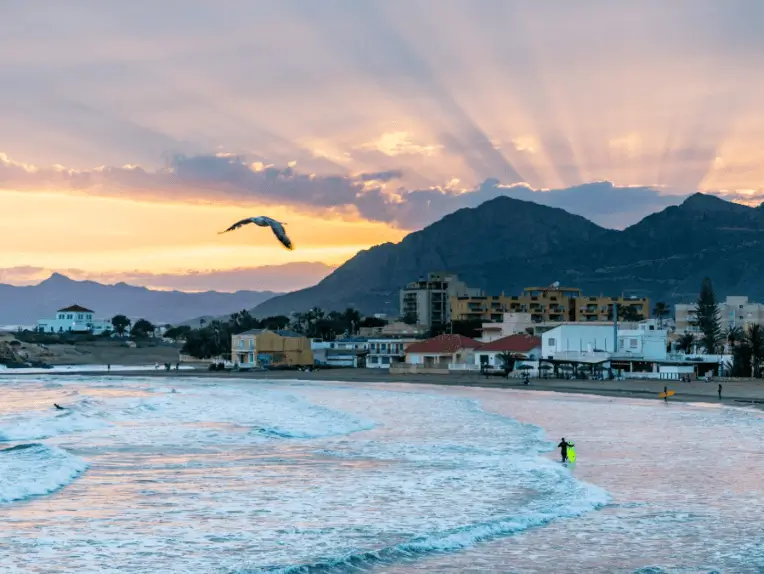
- Population: 35,449 inhabitants (INE municipal register, 2025), with estimates of over 130,000 in high season
- Gender split: fairly balanced, with a slight female majority
- Average age: around 42, with a growing share of European retirees drawn by the climate
- Purchasing power: average, with an economy based on intensive farming, fishing, beach tourism and second homes
- Economic activity rate: around 57%, concentrated in services, hospitality, retail, construction and tourism-related activities
- Relevance for advertising: the contrast between steady local traffic and a huge influx of tourists in summer makes Mazarrón a very versatile location for seasonal campaigns and long-term brand building
Mazarrón has 35,449 registered inhabitants according to 2025 data from Spain's National Statistics Institute (INE), but it is one of the clearest examples of a floating population on the Murcian coast: in summer it is estimated to comfortably exceed 130,000 people thanks to tourism and second homes. The municipality is organised around three main centres: Mazarrón town centre, Puerto de Mazarrón and Bolnuevo, each with its own commercial and residential character. Its links via the RM-3 and the RM-332 make it the southern gateway to the Costa Cálida and channel very significant through traffic towards Cartagena and Águilas. There is also a large community of residents from the UK and central Europe who spend long periods or live all year round on the coastal residential estates, which adds a very specific consumer profile for certain sectors.
Our coverage in Mazarrón is especially broad: MUPIs, bus shelters, billboards, large-format building wraps and advertising kiosks. The advertising sites are spread across the entrances to the municipality, the main shopping avenues (Constitución, Tierno Galván, Doctor Meca), the coastal stretch towards Bolnuevo and the roundabouts linking up with the holiday-home estates. It is a market that works very well for hospitality, tourism services, estate agents specialising in second homes, local retail and regional campaigns that want to be associated with sun and sea. For highly seasonal advertisers, concentrating spend between June and September is usually the most cost-effective approach, although certain sectors such as estate agents and residential services still get a very good return in winter too.
MUPIs in Mazarrón
MUPIs in Mazarrón cover both the road approaches and the busiest shopping and beach areas. They work well for direct-response campaigns, for seasonal promotions and for brand building in urban and tourist settings that sit side by side within just a few kilometres.
The main MUPI locations in Mazarrón include the approaches to the Mazarrón Park retail park and the BP petrol station on Camino del Cementerio, Calle Félix García Muñoz next to supermarkets such as Aldi and Mercadona, several prime points along Avenida Doctor Meca, Avenida Tierno Galván, Avenida de la Constitución, the area around Paseo del Rihuete, Puerto de Mazarrón and the roundabouts at the entrances to the coastal residential estates.
Bus shelters in Mazarrón
Mazarrón's bus shelters occupy stops heavily used by people travelling between the town centre and the beach areas, with good visibility from the road and from nearby pedestrian crossings. They are a strong option for campaigns that want to reach both residents and holidaymakers on their everyday journeys.
We have bus shelters on Vía Axial level with the Bahía cinema, on Avenida Constitución and side streets such as Calle Paloma, on Avenida Tierno Galván and Avenida Costa Cálida, on the RM-332 towards Mazarrón and Puerto de Mazarrón, and on main roads such as Avenida José Alarcón Palacios and Avenida Castellar, linking residential estates and housing areas with the seafront.
Billboards in Mazarrón
Billboards in Mazarrón are concentrated on the main road approaches, where vehicle traffic is very heavy, especially at weekends and during holiday periods. They are well suited to product launches, public-sector campaigns and large-format messages that need mass reach among passing traffic.
Billboard sites in Mazarrón are on the RM-332 Mazarrón-Puerto road at several points between the 33 and 34 km markers, on the approach roads into the municipality from Cartagena and the motorway, on Avenida Castellar and Plaza Bucaneros in Puerto de Mazarrón, and on the RM-D4 next to retail outlets such as Hiper Cash and around Avenida de las Moreras.
Building wraps in Mazarrón
Large-format building wraps on carefully chosen façades in Mazarrón create highly visual campaigns at the busiest points for road and foot traffic. They are an excellent option for brands seeking awareness and a dominant presence on the streetscape for weeks at a time.
Some of the building wrap locations in Mazarrón are on Avenida de la Constitución, both in the town centre and at junctions with shopping streets, and on very busy roads such as Avenida Tierno Galván and Avenida Doctor Meca, along the route linking the centre of Mazarrón with Puerto de Mazarrón and the main beaches.
Advertising kiosks in Mazarrón
Advertising kiosks combine information, service and brand communication at highly visible, high-footfall locations. In Mazarrón they are particularly well suited to campaigns for tourism, leisure, restaurants and local services, as they are part of residents' and visitors' daily routine.
Our kiosk in the Isla Plana area, on Carretera de Cartagena, stands on a major through-route for people travelling between Cartagena, Mazarrón and the coastal residential estates, which guarantees continuous exposure to residents and visitors alike throughout the year.
Outdoor advertising in San Pedro del Pinatar
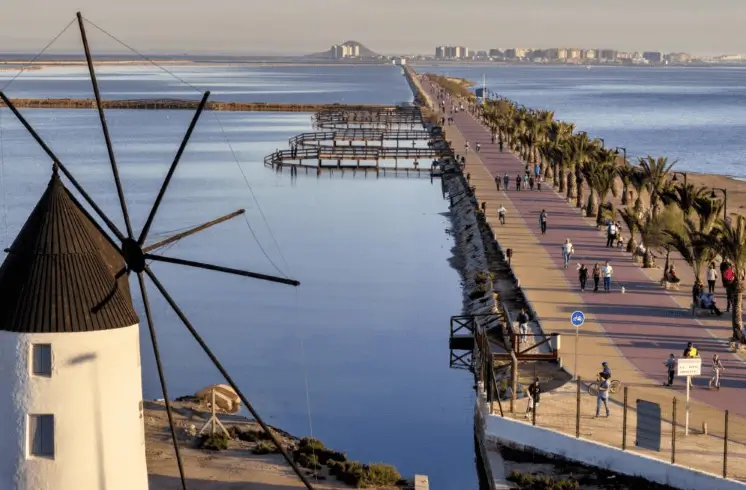
- Population: 27,567 inhabitants (INE municipal register, 2025), with a sharp rise in the floating population in summer and a sizeable number of European residents all year round
- Gender split: Very balanced, with similar shares of men and women
- Average age: Around 44, with a mix of retired residents, working families and frequent weekend visitors
- Purchasing power: Average, sustained by tourism, hospitality, fishing, retail, salt production and a retail park with strong pulling power
- Economic activity rate: Around 56%, with jobs closely tied to restaurants, retail, salt production, fishing, tourism and small service businesses
- Relevance for advertising: The municipality combines local traffic, seasonal tourism and a retail park that draws shoppers from across the comarca and the Bajo Segura, which makes campaigns aimed at retail, restaurants, property and tourism promotion more effective
San Pedro del Pinatar has 27,567 inhabitants according to 2025 data from Spain's National Statistics Institute (INE) and is the northernmost municipality on the Mar Menor, with the unusual combination of town beaches, the Salinas y Arenales de San Pedro regional park and a natural border with Pilar de la Horadada, just over the provincial boundary in Alicante. Lo Pagán, next to the lagoon, is well known for its mud baths and for the Villananitos seafront promenade. The town centre revolves around Avenida Doctor Artero Guirao and Avenida Emilio Castelar, and the Pinatar Park retail park (with Leroy Merlin, Burger King and superstores such as Ozone and Kiabi) draws traffic from both the Region of Murcia and the Bajo Segura area of Alicante.
In San Pedro del Pinatar we place MUPIs on the main approaches to the municipality and in the shopping areas: Avenida Doctor Artero Guirao, Avenida Emilio Castelar, the entrance to Pinatar Park, Avenida Virgen del Carmen in Lo Pagán and the area around Villananitos beach. We add high-visibility double MUPIs at Pinatar Park opposite Leroy Merlin and Burger King, and billboards on the N-332 level with the Burger King roundabout, on the road to San Javier and at the Barco roundabout. These sites suit local shops, tourism promotions, large retailers and coastal property.
MUPIs in San Pedro del Pinatar
MUPIs in San Pedro del Pinatar are spread across the shopping streets of the town centre and the Lo Pagán area, with prime locations at the Pinatar Park retail park and on the approaches to the beaches. They work well for shops, hospitality, tourism promotion and joint activity with the big names in the retail park.
The main locations include the fairground esplanade next to Avenida Virgen del Carmen in Lo Pagán, several points along Avenida Doctor Artero Guirao in the town centre, Avenida Emilio Castelar at Calle Alcalde Mariano Sáez, Avenida Virgen del Carmen next to the petrol station and CaixaBank, Villananitos beach opposite the Molino hotel, Calle Santa Sofía next to Maxi Día, Avenida Doctor Artero Guirao at number 155 opposite the SEAT dealership, Avenida Artero Guirao next to the Opel dealership and the roundabout where Avenida del Puerto meets Avenida de las Salinas…
Double MUPIs at Pinatar Park
The double MUPIs at Pinatar Park deliver impacts on both faces, in direct view of the shoppers entering the retail park from the N-332. They are a natural fit for retail, leisure and restaurant brands that want to tap into the retail park's heavy footfall.
The sites are concentrated within Pinatar Park itself, opposite Leroy Merlin, opposite Burger King and opposite Oksi Multihogar, high-traffic positions with a constant flow of vehicles and pedestrians…
Billboards in San Pedro del Pinatar
Billboards in San Pedro del Pinatar stand on the road approaches and at important junctions linking with San Javier and the Bajo Segura area of Alicante. They offer broad reach among everyday and tourist traffic.
The principal sites are on Avenida del Pinatar on the N-332 at the corner of Avenida del Mirador next to Burger King and Pinatar Park, on Avenida Doctor Artero Guirao at the Burger King roundabout and the petrol station at the entrance to the retail park, on the San Pedro-San Javier road towards the Dos Mares shopping centre, at the Barco roundabout and at the former Lidl on Calle Las Esperanzas…
Outdoor advertising in Águilas
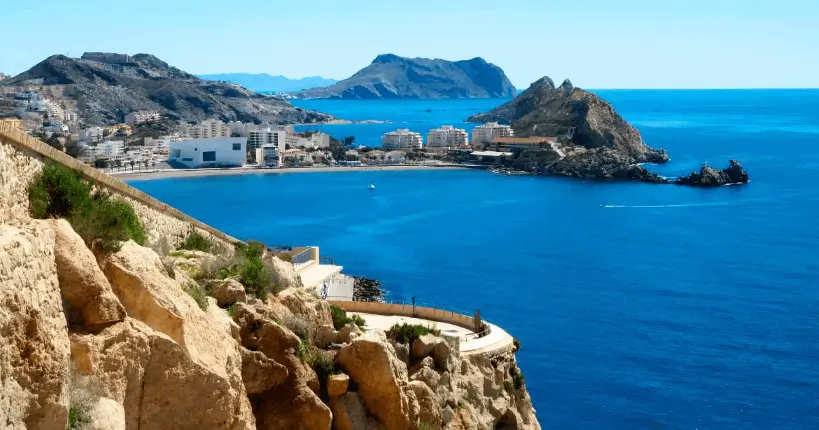
- Population: 37,811 inhabitants (INE municipal register, 2025), with a large floating population in summer and during Carnival
- Gender split: balanced, with very similar shares of men and women across the municipality
- Average age: around 42, with a strong presence of families, working-age people and retired European residents
- Purchasing power: average, driven largely by services, tourism, retail, fishing and intensive farming in the surrounding countryside
- Economic activity rate: around 58%, concentrated in hospitality, retail, tourist services, farming and port activities
- Relevance for advertising: Águilas draws visitors from all over the region and from neighbouring provinces such as Almería and Albacete, which multiplies the impact of outdoor advertising on a varied audience along main roads and seafront promenades
Águilas has 37,811 inhabitants according to 2025 data from Spain's National Statistics Institute (INE) and lies at the far south-western tip of the region, between the Mediterranean coast and the Alto Guadalentín comarca. It has more than 28 kilometres of coastline and a very wide choice of beaches and coves, which makes it one of the major tourist destinations in south-east mainland Spain. Its Carnival has been officially listed as a festival of International Tourist Interest since 2015, and every year it draws tens of thousands of visitors over ten days of pre-Lenten celebrations, with a direct impact on traffic in the town centre and along the seafront promenade. The two main parades, known as Musas and Cocas, fill the centre of town and turn the main avenues into the municipality's most valuable advertising window of the whole year.
The local economy combines beach tourism, fishing, intensive greenhouse growing of fruit and vegetables (tomatoes, lettuce, aubergines, courgettes) and a deep-rooted retail trade. In Águilas we have MUPIs, billboards and large-format building wraps spread across the town centre, the seafront promenades, the entrances to the municipality along Carretera de Lorca and industrial estates such as Los Arejos. It is a particularly attractive market for tourism campaigns, hospitality promotions and local launches, as well as for brands that want to be associated with the Carnival or with tourism on the Costa Cálida. For regional advertisers planning a multi-city campaign, Águilas is usually included alongside Mazarrón and Lorca to cover the whole of south-west Murcia with a coherent network.
MUPIs in Águilas
MUPIs in Águilas are spread along the main approach avenues, the town centre and the seafront promenade, in full view of both pedestrians and road traffic. They are very effective for local shop and restaurant campaigns, tourism promotions and cultural events such as the Carnival and the town's annual fiestas.
Notable MUPI locations in Águilas include Plaza Alfonso Escámez opposite the tourist office, several positions on Avenida Juan Carlos I, Carretera de Lorca at the entrance to the municipality, Paseo de la Constitución and Paseo de los Rosales next to supermarkets, the area around Plaza de España and Calle Rey Carlos III, Calle Iberia with its squares, the approaches to shopping centres and prime areas such as the seafront promenade and the harbour, as well as outlying districts such as Calabardina and Marina de Cope.
Billboards in Águilas
Billboards in Águilas put large-format messages in front of people arriving in the municipality by road or travelling out to the industrial estates. They suit regional campaigns, product launches and directional advertising for superstores and car dealerships.
The main billboards stand on Carretera de Lorca and at the Los Arejos industrial estate, at the entrance to Águilas from the La Florida area, and on roads linking with the town centre and the coast. From these positions they reach residents, workers commuting into town and tourists driving in on the A-7.
Building wraps in Águilas
Large-format building wraps in Águilas give a very powerful presence on façades that are clearly visible from the main avenues. They work very well for reinforcing long-running campaigns, for event sponsorships and for branding activity that aims to stand out against the urban backdrop for several months.
We have building wraps on façades along Avenida José Jiménez Ruano and at other well-chosen points in the town centre, close to roundabouts, growing residential areas and the approaches to the centre. Combined with MUPIs and billboards, they let you design very effective outdoor networks across the whole municipality.
Outdoor advertising in Los Alcázares
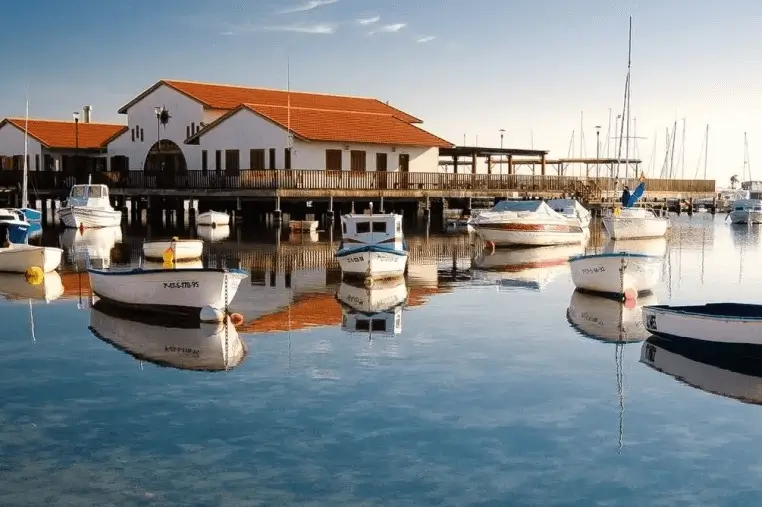
- Population: 20,408 inhabitants (INE municipal register, 2025), with notable, sustained growth in recent years
- Gender split: very balanced, with similar shares of men and women on the municipal register
- Average age: around 41, combining young families, working people and older residents who have chosen to live on the Mar Menor all year round
- Purchasing power: average, based mainly on tourism, hospitality, retail and services linked to the Mar Menor and to second homes
- Economic activity rate: around 59%, with a strong presence of jobs in restaurants, retail, tourist accommodation, municipal services and local SMEs
- Relevance for advertising: Los Alcázares combines a heavy flow of visitors in summer with a growing residential base, which turns its main avenues and approach roads into a first-class shop window for campaigns aimed at tourism, food and drink, estate agents, retail and services
Los Alcázares has 20,408 inhabitants according to 2025 data from Spain's National Statistics Institute (INE) and is one of the most important municipalities on the Mar Menor, with more than seven kilometres of coastline between Los Narejos and Punta Brava. In just a few decades it has gone from a summer resort to an established year-round community, with sustained population growth that places it among the region's most dynamic municipalities. Its activity revolves around services, hospitality, retail and tourism linked to the Mar Menor, with very high occupancy peaks in summer, over Holy Week and on bank-holiday weekends. The municipality is also home to the Museo Aeronáutico and a historic military base linked to the Academia General del Aire, which adds a specific audience of military personnel and their families who live there permanently.
We have MUPIs, bus shelters and billboards on the busiest roads in the municipality. Avenida de la Libertad, Avenida Trece de Octubre, Carretera de San Javier and the route between Los Narejos and the town centre have the highest density of advertising sites, because they carry both everyday local traffic and traffic heading for the shopping centres, supermarkets and petrol stations. For tourism businesses, estate agents, local retailers, restaurants and service providers, Los Alcázares is a shop window that is hard to beat, thanks to its mix of permanent residents and discerning tourists. Recent years have seen notable growth in long-stay tourism and in remote working from second homes, which has extended the selling season beyond the summer months.
MUPIs in Los Alcázares
MUPIs in Los Alcázares give broad coverage of the main entrances to the municipality, the roundabouts and the shopping streets. They are very well suited to tactical campaigns and shop promotions, and to building brand image in a highly competitive tourist setting during the high-season months.
The MUPI sites are concentrated on Avenida de la Libertad (next to the town hall, the Puente de la Feria and supermarkets such as Día and Lidl), on Carretera de San Javier at important roundabouts and at the entrances to Mercadona and other superstores, on Avenida Narejos near the Costa Narejos hotel, on Avenida de la Constitución and around the Las Velas shopping centre and the Los Narejos area.
Bus shelters in Los Alcázares
Bus shelters in Los Alcázares are located at bus stops used heavily by residents and tourists, especially for journeys between the town centre, Los Narejos and the beach areas. Their presence on wide avenues and central squares delivers repeat exposure throughout the day without the message going stale.
Our bus shelters are on Avenida Trece de Octubre, at junctions such as Calle del Ciprés, and at many points in Los Narejos: Avenida Justo Quesada by the restaurants, the Las Velas shopping centre, Plaza Minería, Plaza Miguel de Cervantes and Avenida Narejos. There are also bus shelters on Avenida de la Libertad heading towards Cartagena or San Javier, covering traffic into and out of the municipality.
Billboards in Los Alcázares
Billboards in Los Alcázares are concentrated at the entrances to and exits from the municipality, where vehicle traffic is constant all year. The format works particularly well for regional campaigns seeking high awareness around the Mar Menor and for brands that want to be present on the route to the coast.
The main billboard locations include the entrance from Los Urrutias next to the fire station, several points along Avenida de la Libertad opposite clinics and shops, and the approaches via Venta El Puerto at the entrances to and exits from Los Alcázares. We also have sites on the road to Torre Pacheco and the business park, which reach the workers and suppliers who travel along it every day.
Outdoor advertising in Torre Pacheco
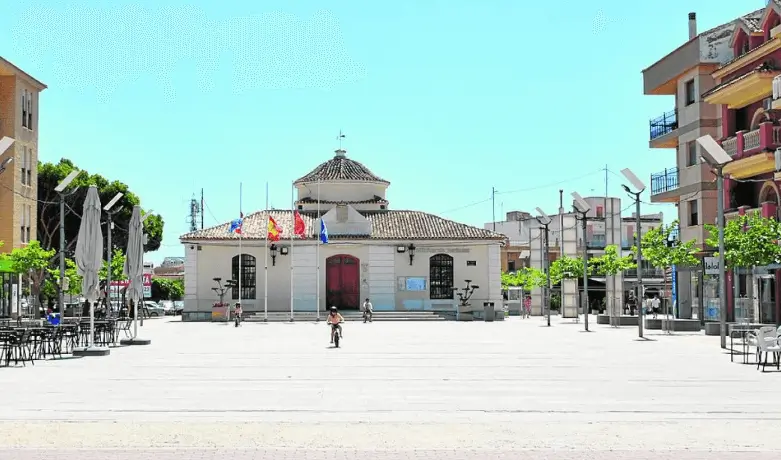
- Population: 41,479 inhabitants (INE municipal register, 2025), the sixth-largest municipality in the Region of Murcia
- Gender split: relatively balanced, with a slight male majority linked to farm and industrial jobs
- Average age: around 39, with a very large working-age population
- Purchasing power: above average for the region, with a strong presence of leading agri-food companies, logistics and local retail
- Economic activity rate: close to 60%, concentrated in farms, cooperatives, fruit and vegetable processing companies, transport, retail and hospitality
- Relevance for advertising: Torre Pacheco is a strategic location for campaigns aimed at working people, farming businesses and people travelling between inland areas and the Mar Menor, and delivers very high frequency and impact all year round
Torre Pacheco has 41,479 inhabitants according to 2025 data from Spain's National Statistics Institute (INE), making it the sixth-largest municipality in the region. It is one of the major hubs of technologically advanced intensive farming in the Campo de Cartagena, home to leading food companies such as Florette and the multinational Syngenta. Its per capita income is among the four highest in the region, behind only Murcia, Cartagena and San Javier. The municipality is organised around the main town and very active outlying districts such as Roldán, Balsicas, Dolores de Pacheco, San Cayetano, Lo Ferro and El Jimenado, each with its own commercial and residential fabric, which means advertising coverage has to be planned around a spread-out population rather than one concentrated in the town centre.
The town is also home to IFEPA, the Region of Murcia's trade fair and exhibition centre, which hosts agricultural and industry fairs that attract thousands of professionals from south-east mainland Spain every year. We have MUPIs and billboards on the approach roads from the A-30 and the N-301, as well as on main avenues such as Juan Carlos I, Europa (Europe), Estación and Gerardo Molina. Outdoor advertising works especially well here for agricultural trade marketing, the agri-food industry, machinery, the motor trade and professional services aimed at the business community of the Campo de Cartagena. Trade fair periods at IFEPA, particularly the spring and autumn agricultural fairs, are prime windows for B2B campaigns that want to reach the professionals who travel in for the event.
MUPIs in Torre Pacheco
MUPIs in Torre Pacheco cover both the town itself and the main population centres across the municipality. Placed on avenues, roundabouts and busy through routes, they reach workers, students, families and visitors who travel every day for work and leisure between the outlying districts and the town centre.
MUPI sites are spread along Avenida Europa next to the health centre, Avenida Estación at the entrances and exits, Calle Mayor around Plaza de la Iglesia, Avenida Fontes and Avenida Gerardo Molina opposite IFEPA. We also have sites in outlying districts such as Roldán, Balsicas, Dolores de Pacheco, San Cayetano, Lo Ferro and El Jimenado, as well as at roundabouts and gardens, such as the Juan Portas gardens and the Baltasar Garzón roundabout.
Billboards in Torre Pacheco
Billboards in Torre Pacheco stand on the approach roads into the town centre from the motorway and the main local roads. Their high visibility to passing traffic makes them a strong choice for regional campaigns, car dealership promotions, superstores or brands that want to be associated with the area's farming community.
The most notable locations include the entrances to and exits from Torre Pacheco off the Murcia motorway and the roundabouts on the way into the municipality, as well as other well-chosen points where traffic heading for the Mar Menor and the Campo de Cartagena is very heavy. These billboards let you run broad-reach messages and complement MUPI networks spread throughout the municipality.
Outdoor advertising in Alcantarilla
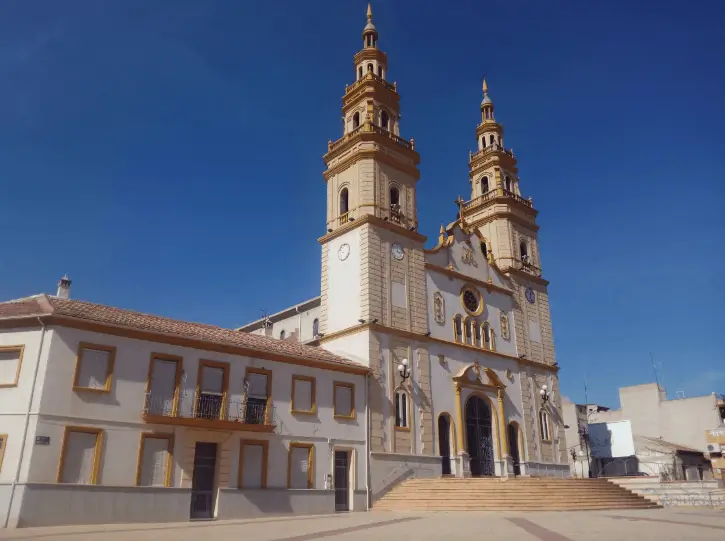
- Population: 43,876 inhabitants (INE municipal register, 2025), forming a single conurbation with the city of Murcia, and the second most populous municipality in the metropolitan area
- Gender split: Very balanced, with similar shares of men and women
- Average age: Around 41, with a strong presence of working-age families
- Purchasing power: Average, backed by the agri-food industry, logistics, out-of-town retail, the air base and jobs on the Oeste industrial estate
- Economic activity rate: Around 60%, with employment heavily concentrated in industry, logistics, retail and business services
- Relevance for advertising: The combination of the Oeste industrial estate and a town centre very close to Murcia makes Alcantarilla a natural choice for campaigns that want to reach professionals, workers and families heading to the big retail parks at the same time
Alcantarilla is the second most populous municipality in the Murcia metropolitan area, with 43,876 inhabitants according to 2025 data from Spain's National Statistics Institute (INE), and an important logistics hub thanks to its position between the A-7 motorway and the fast route to Corvera airport. The Alcantarilla air base and the Hero factory shape part of its economic identity, while the Museo Etnológico de la Huerta, with its historic fifteenth-century waterwheel, is a very recognisable cultural landmark. The town centre is laid out around Avenida de Murcia, Avenida Miguel Muñoz Hidalgo and Avenida Francisco Salcillo, which connect with the Oeste industrial estate, one of the largest in south-east mainland Spain, with Leclerc, Decathlon, Media Markt and Leroy Merlin.
Our network in Alcantarilla is focused on billboards along the main entry routes and on the Oeste industrial estate, with a direct impact on traffic coming in from Murcia and on shoppers at the superstores. The main locations cover Avenida de Murcia, Avenida Francisco Salcillo, Avenida Miguel Muñoz Hidalgo next to Mercadona, Avenida de los Dolores opposite Media Markt and the Ronda Sur retail park, Avenida de las Américas inside the Oeste industrial estate and the new bypass towards Sangonera. Added to that is a building wrap on Avenida del Príncipe, designed to reinforce longer-running campaigns.
Billboards in Alcantarilla
Billboards in Alcantarilla are concentrated on the approach roads into the town centre and on the Oeste industrial estate, where traffic is very heavy all day. They are a very effective format for superstores, car dealerships, consumer brands and B2B campaigns aimed at the businesses on the estate.
The main locations include Avenida de Murcia, Avenida Miguel Muñoz Hidalgo at Calle Francisco Carrasco Torres next to Mercadona, the entrance to the Oeste industrial estate from Alcantarilla, Avenida de las Américas where it exits towards the estate (opposite Decathlon and Leclerc), Avenida de los Dolores next to Mapfre and Media Markt heading towards the Ronda Sur ring road, Avenida Francisco Salcillo at the entrance to the estate and the new Sangonera la Verde bypass…
Building wraps in Alcantarilla
Building wraps in Alcantarilla complement the billboard network with a very large format on building façades, well suited to long-running campaigns and to brands that want to dominate a particular stretch of the town visually.
The sites are concentrated on Avenida del Príncipe, on a stretch that is highly visible to road and foot traffic in the town centre…
Outdoor advertising in La Manga del Mar Menor
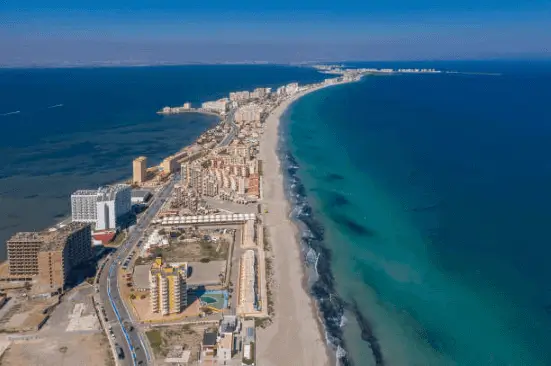
- Population: between 8,000 residents in winter and more than 30,000 in summer, with a strong presence of domestic and UK tourists
- Gender split: balanced, with similar shares of men and women among both permanent residents and tourists
- Average age: around 45 among the resident population, with a very broad mix of generations in summer
- Purchasing power: above average in high season, thanks to beach tourism, holiday apartments and second homes
- Economic activity rate: around 58%, almost entirely linked to services, tourism and hospitality
- Relevance for advertising: its appeal to tourists makes it a natural location for outdoor advertising campaigns in summer, when visibility and impact are several times higher than in the low season
La Manga del Mar Menor is a 24-kilometre strip of sand between the Mar Menor and the Mediterranean, divided administratively between the municipalities of Cartagena and San Javier. Its registered population is around 8,000 inhabitants in winter, but it can exceed 30,000 in the summer months thanks to domestic and international tourism. The Gran Vía de La Manga is the backbone of the whole tourist strip: hotels, apartments, restaurants, shops and tourist services line it and generate very heavy foot and road traffic in high season. The busiest areas are usually near Plaza Bohemia, around the Doblemar hotel and at the approaches to the Mar Menor beaches, whose warm, shallow waters are especially popular with families with young children.
Our MUPIs in La Manga are carefully positioned along the seafront promenade and the main shopping areas. They are the most suitable format for such a linear, seasonal area: they reach visitors repeatedly on their daily trips from the beach to the hotel and on to bars and restaurants. The format works especially well for hospitality, nightlife, tourist services, holiday lets and brands that want to link their image to a summer destination. For local advertisers, a short campaign concentrated between June and September usually works much better than a flat year-round plan, given how dramatically the area empties out in winter.
MUPIs in La Manga del Mar Menor
MUPIs in La Manga are placed at the highest-footfall points along the tourist strip: Gran Vía, the area around Plaza Bohemia, the entrances to the residential estates and the busiest hotel areas. Being right on the promenade gives them the greatest exposure during the short trips between beach, restaurants and shops that are typical of summer visitors.
In La Manga del Mar Menor you'll find MUPIs on Carretera de La Manga, Carretera al Faro, Calle Contramaestre Casado, Calle Mayor, Gran Vía, Plaza Bohemia, next to the Doblemar hotel, and around the Las Pirámides, La Dorada, Nueva Hacienda Dos Mares and Ágata III residential estates.
Billboards in La Manga del Mar Menor
As well as the MUPIs, La Manga has sixteen large-format billboards placed where visitors get around by car rather than on foot: four at the motorway exit level with the Playa Honda residential estate, five at the entrance to Cabo de Palos next to the supermarket and the cinema, two around the Zoco and the petrol station on Gran Vía, one at the entrance to Gran Vía and four at the Puerto Tomás Maestre roundabout.
They are the natural complement to the MUPI network: they reach visitors before they enter the resort and again as they leave for Cartagena and Murcia. Rates range from €46 to €158 per face per week depending on the position, and most are booked in long six-month cycles, so they suit a campaign of continuous presence better than a fortnight in August.
Outdoor advertising in Jumilla
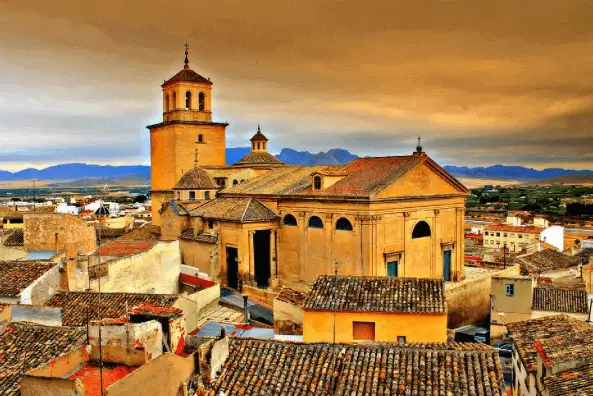
- Population: 27,574 inhabitants (INE municipal register, 2025), capital of the Altiplano comarca
- Gender split: close to even, with a slight female majority
- Average age: around 42, with an age profile somewhat older than the regional average
- Purchasing power: below average, with an economy based on DO wine production, farming and local retail
- Economic activity rate: around 55%, weighted heavily towards farming, winemaking, the canning industry and services
- Relevance for advertising: known for its wines, Jumilla draws visitors from across the region and neighbouring areas during the festival season and the grape harvest, which adds to the advertising appeal of its avenues at certain times of the year
Jumilla has 27,574 inhabitants according to 2025 data from Spain's National Statistics Institute (INE) and is the capital of the Murcian Altiplano, 600 metres above sea level in the north of the region. Its identity is shaped by wine: the Jumilla DO (Denominación de Origen) is internationally recognised and brings together wineries present in markets across Europe and Asia. It is also famous for its pears, which have their own DO. The Wine Fair and the Grape Harvest Festival (Fiestas de la Vendimia) in August are high points in the local calendar, drawing visitors from all over the region and from nearby provinces such as Alicante and Albacete. The medieval castle, the church of Santiago and the Iberian site of Coimbra del Barranco Ancho add heritage appeal that sustains modest but steady cultural tourism in the months outside the high season.
Our MUPIs in Jumilla cover the main avenues of the town centre, concentrating impact on the locations with the highest footfall and commercial activity. They are especially useful for local shops, restaurants, wineries with a shop open to the public, professional services and seasonal campaigns linked to wine tourism. Jumilla's position on the border with the Valencian Community (part of the municipality belongs to the bilingual Carche area) adds a useful flow of through traffic for brands with ambitions beyond the region. In a market of this size, a small network of well-spaced MUPIs achieves practically full coverage of the town centre with a spend that fits an SME's budget.
MUPIs in Jumilla
MUPIs in Jumilla are located in the most central parts of town, giving them high visibility among residents and among visitors who come for wine tourism, fairs or shopping. They are the most cost-effective format for local shops, clinics, driving schools and tuition centres in a mid-sized market where full coverage can be achieved with just a few sites.
The MUPIs available in Jumilla are concentrated on Plaza Camionero, Avenida de la Libertad, Avenida de los Reyes Católicos, Avenida de Levante, Calle Colón, Calle Cánovas del Castillo, Calle Juan XXIII and Avenida de la Asunción.
Outdoor advertising in Caravaca de la Cruz
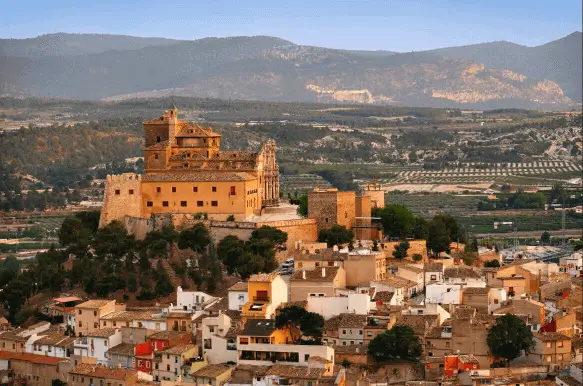
- Population: 26,126 inhabitants (INE municipal register, 2025), capital of the Noroeste comarca
- Gender split: balanced, with a slight female majority
- Average age: around 43, with an age profile slightly older than the regional average
- Purchasing power: average, with an economy based on religious and cultural tourism, farming and services for the surrounding comarca
- Economic activity rate: around 56%, concentrated in farming, services, retail and tourism-related hospitality
- Relevance for advertising: as one of the holy cities of Catholicism, Caravaca receives a constant flow of visitors and pilgrims throughout the year, with very marked peaks in Jubilee Years, which amplifies the impact of outdoor advertising along its main roads
Caravaca de la Cruz has 26,126 inhabitants according to 2025 data from Spain's National Statistics Institute (INE) and is the administrative capital of the Noroeste comarca, 625 metres above sea level. It is considered one of the holy cities of Catholicism and celebrates a Jubilee Year in perpetuity every seven years, the next one being in 2031. This status and its monumental heritage (the Basílica-Santuario de la Vera Cruz, the castle, the old town) attract a steady flow of religious and cultural tourism all year round, with notable peaks during Holy Week and the Caballos del Vino (wine horses) festival in May, inscribed on UNESCO's list of the intangible cultural heritage of humanity. The latter is probably one of the most spectacular traditions in the Murcian festive calendar, drawing thousands of visitors in the space of a few hours every 2 May.
We have MUPIs on the avenues and streets with the highest footfall in Caravaca, reaching both local residents and the visitors drawn to the town by its religious heritage. They are very well suited to shops, hospitality businesses, professional services, clinics and public-sector campaigns that want to make the most of a stable local customer base combined with cultural tourism. Improvements to the RM-15 motorway have cut journey times from the city of Murcia considerably, strengthening the town's commercial appeal and making Caravaca a regular destination for day-trippers from the metropolitan area. For local businesses, MUPIs next to hotels and pilgrimage routes perform especially well in the months leading up to and during Jubilee Years.
MUPIs in Caravaca de la Cruz
MUPIs in Caravaca de la Cruz are located in central and shopping areas of the municipality, giving the greatest possible visibility to a mixed audience of residents and tourists. They are the most efficient advertising format in a town of this size, where a few well-chosen sites cover practically every daily journey in the urban area.
You'll find MUPIs in Caravaca de la Cruz on Calle Maruja Garrido, Carretera de Moratalla, Avenida de los Andenes, Gran Vía, Plaza Elíptica, Carretera de Granada and Calle Ascensión Rosell.
How booking outdoor advertising with Marco Visual works
Tell us what you’re looking for
If you’d rather choose yourself, our campaign planner (in Spanish) lets you pick the weeks and then browse the map or the list of sites, with filters by type of site, city, postcode or distance to a shop or point of interest. Bear in mind the booking cycles: many sites are sold by the week, but most 8x3 m billboards are booked in two-week periods or for 26 weeks, so they’re greyed out if you pick a single week. Click ‘Siguiente’ (Next) and you’ll see a campaign summary with the total price, printing and posting included: we take care of everything. You just enter your contact details and create the campaign.
Either way, you get a unique link to your campaign page, which you can share with your team: the sites you picked, the weeks, the price and the guides for preparing your artwork. You can check it whenever you like.
We confirm availability so you can book online
When everything is cleared, you can enter your billing details on that same page, pay by bank transfer and upload your artwork. Once you’ve paid, upload the transfer receipt so we can confirm the booking sooner.
Remember to send your artwork, following the guides, before the deadline shown on the proposal (usually 10 days before the start). We’ll email you at every step: artwork received and approved, payment received, sites confirmed.
Printing, posting and launch
These photos are usually ready 24 to 48 hours after the start; we’ll email you when they are.
When the campaign ends, you’ll see a notice on the campaign page and receive a satisfaction survey, with the option of leaving us a Google review. It helps us do better.
Frequently asked questions about outdoor advertising in the Region of Murcia
How much does an outdoor advertising campaign cost in the Region of Murcia?
A simple local campaign, with a handful of MUPIs or bus shelters for a two-week period in a town such as Molina de Segura, Mazarrón or Los Alcázares, starts, as a rough guide, at a few hundred euros. The final budget depends on the format, the number of sites and the duration. A wider network in the city of Murcia or Cartagena, with MUPIs, billboards and the odd digital screen, usually runs from several thousand to several tens of thousands of euros, depending on reach and the number of months. At Marco Visual we prepare tailored proposals with firm prices and no hidden commission. For billboards in the Region of Murcia, the guide price is €66 to €240 per face per week (that is, €132 to €480 per two-week period), excluding VAT and poster printing, which is quoted separately; most are booked for 6-month periods (26 weeks).
Which formats work best for a local business in Murcia?
For a local business in Murcia, MUPIs on the avenues near your premises and bus shelters on the city bus routes are the most efficient combination: they deliver high frequency at a reasonable cost. They work especially well for a neighbourhood shop, a clinic or a tuition centre. For car dealerships, superstores or events, billboards on the approach roads and advertising on the tram offer mass reach. If you want to dominate one particular location, large-format building wraps and the digital screens on Gran Vía are hard to beat.
How many advertising sites does Marco Visual have in the Region of Murcia?
Our network runs to more than 1,500 sites spread across the whole region. The biggest concentration is in the city of Murcia and in Cartagena, but we also have established coverage in Lorca, Molina de Segura, Alcantarilla, Mazarrón, Águilas, Los Alcázares, Torre Pacheco, La Manga, Jumilla and Caravaca de la Cruz. Once we know your objective, we send you the exact catalogue available for your campaign, filtered by area and site type.
What is the minimum campaign length?
Our standard minimum booking for static formats such as MUPIs, bus shelters or billboards is a two-week period. On digital screens and the tram the minimum is usually shorter (they are sold by the day or by the week) because the sales model is different. If you need a one-off activation, for an event or an opening, for instance, we will suggest options that fit your dates without tying you into months of commitment. For billboards, most sites in the Region of Murcia are booked for 6-month periods (26 weeks).
Which areas get the most foot and road traffic?
In the city of Murcia, the Gran Vía Escultor Salzillo-Avenida Alfonso X el Sabio-Plaza Circular axis has the heaviest footfall, while Ronda Sur, Juan de Borbón, Juan Carlos I and Avenida Primero de Mayo carry most of the road traffic. In Cartagena, Alfonso XIII, Alameda de San Antón and the port area are the most visible locations. On the coast, the key sites are Carretera de La Manga, Avenida Doctor Meca in Mazarrón and the roundabouts at the entrances to Los Alcázares and Puerto de Mazarrón.
Do you have digital sites or only static ones?
We have both. Static formats (MUPIs, bus shelters, billboards, building wraps, kiosks and monopole billboards) are the majority and cover the whole region. In the city of Murcia we also have digital screens at high-traffic locations such as Gran Vía, Plaza de la Cruz Roja, Primero de Mayo, Ronda Sur and the area around the University, plus advertising on the tram. Digital lets you rotate several creatives on the same site and suits messages with an expiry date or activity tightly targeted by time of day.
How does the booking process work once I ask you for a proposal?
You tell us what your business is, who you want to reach and, if you can, a rough budget and dates. With that, we send you a proposal within 24-48 hours, with a map of the sites, reference photos, estimated impacts and a fixed price. If anything needs changing, we keep adjusting it until it fits. Once the proposal is accepted, we collect the final artwork, print it if you need us to and move on to posting. We send you a report with proof-of-posting photos of every installed site.
Do you also help with the creative design?
Yes. We don't do it by default, because many clients already work with their own agency or designer, but if you don't have final artwork we'll help. We know the exact dimensions of every format and the real dwell time in front of a MUPI or a billboard, which changes the way you design a great deal: less text, a clear hierarchy and very high contrast. It is an extra service, quoted separately.
Does outdoor advertising make sense compared with a digital-only campaign?
They are complementary channels, not mutually exclusive. Outdoor brings mass physical reach in a specific area and an emotional link between brand and place that no social network can match: your poster on the avenue your customer passes every day builds local trust. Digital brings precise targeting and measurement. A campaign that uses both at once (billboards and MUPIs reinforcing a message that people then see again on Instagram or Google) usually gets better results than either on its own.
When is the best time of year to advertise in the Region of Murcia?
There are three especially strong windows. The first is Holy Week, the Bando de la Huerta and the Entierro de la Sardina, between March and April, when the city of Murcia hits its peak of street activity. The second is July and August on the coast, when the population of Mazarrón, Águilas, La Manga and Los Alcázares multiplies. The third is back-to-school and the run-up to Black Friday and the festive season, between September and December, good for retail, education services and the motor trade. The rest of the year works well for steady sectors such as healthcare, home renovations or professional services.
Give your brand more visibility with outdoor advertising
See our advertising sites for yourself, with their prices, locations and photos, and use the campaign planner
Still have questions, or would you like us to advise you and send you a proposal? Get in touch and we’ll send you a personalised quote for your outdoor advertising campaign.
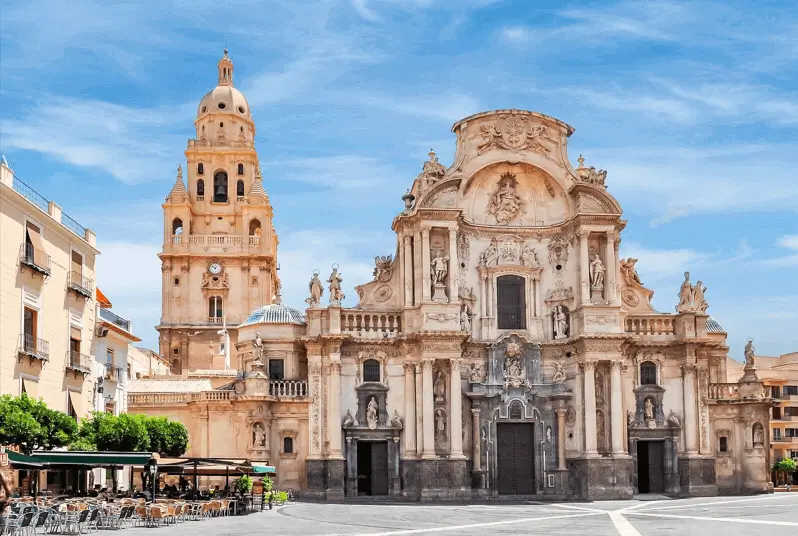
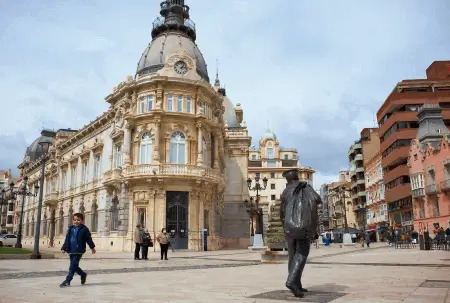

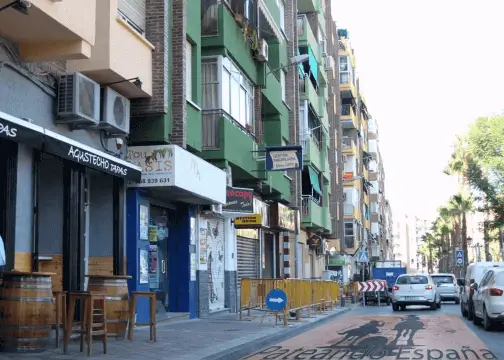

What our clients say in the Region of Murcia
Verified Google reviews from businesses that have already worked with Marco Visual.

Hemos quedado satisfechos con la campaña de publicidad que contratamos con Marco Visual para el Conservatorio Superior de Danza de Alicante (CSDA) durante las Hogueras. La campaña contó con cuatro mupis diferentes, cada uno dedicado a un estilo de danza, una iniciativa para dar visibilidad a nuestro conservatorio y acercar la riqueza y diversidad de la danza a la ciudadanía. Destacamos la profesionalidad, la atención recibida y la buena gestión de todo el proceso. Porque la danza también merece ocupar las calles y formar parte de la ciudad. ¡Gracias a Marco Visual por ayudarnos a llevar nuestro arte más allá de las aulas!
Original review in SpanishSee on Google 1 / 4

Hemos trabajamos con Marco Visual para la campaña de apertura de nuestra nueva clínica en Molina de Segura, y la experiencia ha sido positiva. Negociamos directamente con ellos, sin intermediarios: el trato es cercano y las respuestas, rápidas. Necesitábamos resolver ubicaciones, formatos y plazos con poco margen de tiempo, y flexibilidad para adaptar la propuesta a lo que necesitábamos. Recomendado
Original review in SpanishSee on Google

Ha sido nuestra primera experiencia en implementar un MUPI, pensábamos que sería algo engorroso en cuanto al proceso y verdaderamente nos hemos confundido. La atención de Alejandro desde el primer momento ha sido rápida, precisa en las indicaciones y nos ha facilitado todo. Ademas agregar que el sistema que tienen implementado online para el seguimiento ha sido muy práctico, sabes el status de la campaña en todo momento, repetiremos!
Original review in SpanishSee on Google

Nuestra experiencia ha sido muy positiva. Queremos destacar especialmente la profesionalidad, rapidez y atención recibida durante todo el proceso. El equipo ha demostrado en todo momento una excelente disposición y un trato cercano y profesional. Mención especial para Alejandro M., por su amabilidad, eficacia y atención constante. Ha sido un placer contar con su ayuda y profesionalidad. Sin duda, recomendamos sus servicios y agradecemos el trato recibido.
Original review in SpanishSee on Google

Hemos quedado muy satisfechos con la campaña de publicidad exterior realizada con Marco Visual. Desde el primer momento, el trato ha sido cercano y profesional, facilitando todo el proceso y resolviendo nuestras dudas con rapidez. La gestión de la campaña ha sido ágil y eficiente, y el seguimiento durante toda la ejecución nos ha transmitido confianza. La instalación y el mantenimiento de los soportes se han realizado correctamente, cumpliendo con lo acordado. Agradecemos especialmente la atención recibida y la buena comunicación del equipo. Ha sido una experiencia muy positiva y no dudaríamos en contar con Marco Visual para futuras campañas.
Original review in SpanishSee on Google 1 / 2

La campaña que hemos hecho de publicidad exterior ha sido un éxito. La comunicación con Alejandro ha sido lo mejor, muy profesional y atento en todo momento con todos los detalles de la campaña. Repetiremos sin duda en unos meses.
Original review in Spanish See on Google
Explore other advertising formats at Marco Visual


