Outdoor advertising in the Basque Country: bus shelters, MUPI street panels and billboards for your business

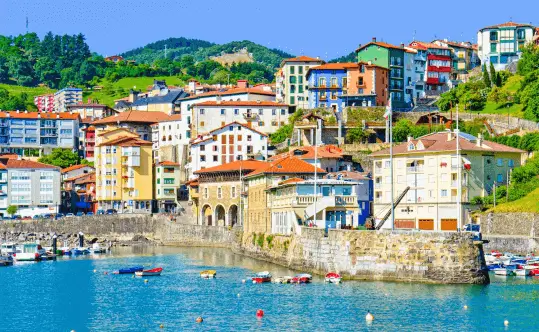
Prices in the Basque Country · per face per week
- 8x3 m billboardsfrom €78
- 6-sheet MUPIsfrom €132
- Bus sheltersfrom €132
Prices exclude VAT · printing and posting from €35 per face
Outdoor advertising sites in the Basque Country
The Basque Country has 2,240,113 inhabitants according to Spain's National Statistics Institute (INE) as of 1 January 2025, and its urban density is far above the Spanish average. Biscay is the main metropolitan hub, with Gipuzkoa and Álava completing a compact economic corridor. Across the Basque Country we have more than a thousand outdoor advertising sites, with the bus shelter as the main format, plus billboards, MUPI street panels and digital screens. That base covers everything from neighbourhood campaigns at interurban bus stops in Biscay or city bus stops in San Sebastián to awareness networks on industrial approach roads. The AP-8, A-8 and N-634, the links to Bilbao airport (Loiu), the port of Bilbao, the BEC! exhibition centre in Barakaldo and the Donostialdea corridors (around San Sebastián) carry heavy daily traffic for work, study, healthcare and shopping.
Coverage is concentrated in Greater Bilbao and Donostialdea, with a large inventory in San Sebastián, Barakaldo, Basauri, Getxo, Derio, Bilbao, Sestao and Galdakao, plus further sites in Zabaloetxe-Loiu and Portugalete. In Álava we cover Vitoria-Gasteiz with billboards on industrial approach roads and on the way in from the airport. The network is rounded out by mid-sized towns along the industrial belt (Somorrostro, Gallarta, Ortuella, Mallavia, Lemona, Munguía, Amorebieta-Etxano, Durango, Erandio and Santurtzi) and B2B locations such as the technology park at Zamudio (Parque Tecnológico de Bizkaia). Marco Visual can combine all these formats in a single proposal, distinguishing between local campaigns, metropolitan coverage and presence on busy approach roads.
Planning the year in the Basque Country means reading its footfall peaks correctly. San Sebastián (Donostia) concentrates high-value impacts around the Tamborrada drum festival on 20 January, the Semana Grande festival in the first fortnight of August, the Jazzaldia jazz festival in July and the International Film Festival in September, officially listed as of International Tourist Interest. Bilbao adds the Aste Nagusia festival in late August (nine days officially declared a treasure of intangible cultural heritage), Athletic Bilbao matches at San Mamés, conferences at the Euskalduna centre and trade fairs at the BEC! in Barakaldo. Vitoria-Gasteiz contributes the Virgen Blanca festivities in August and a major industrial corridor in Júndiz and Gamarra. On top of those peaks come campaigns for the sales, education, motoring, insurance, health, gyms and local openings. Bus shelters give them daily repetition, MUPI street panels a polished urban image, digital screens adaptable creative and billboards roadside impact.
In our campaign planner you can check the price of MUPIs and every other advertising site, real photos, the exact location, Google Street View, descriptions and nearby points of interest, dimensions, print format… Best of all, you can filter the sites and pick the ones you want, then plan and book the outdoor advertising campaign
Some links open pages in Spanish
Looking for another area?
Explore the different outdoor advertising formats in the Basque Country
Marco Visual is an online platform for managing and booking campaigns on outdoor advertising sites. Our website gives you all the information you need to plan and book an outdoor campaign. Get to know each site and its features: price, real photos, format, minimum booking period and other terms.
Outdoor sites are ideal for promoting events, with room on the ad for the venue, who is taking part and every other detail that matters. They are also widely used for branding, so that people start seeing a brand away from the screen and remember it better. Other common uses are launching offers (Black Friday, the sales, Christmas…) and opening new shops.
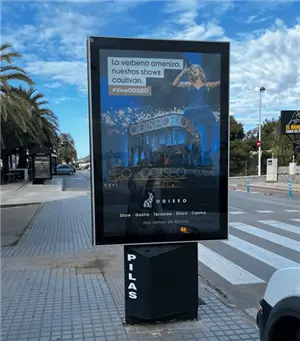
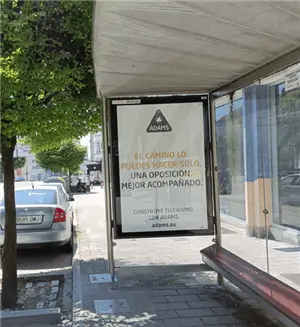
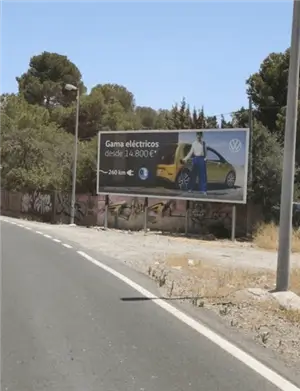
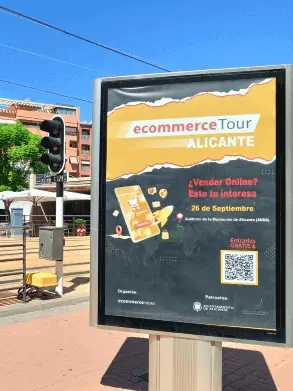
Here are some of our campaigns on different outdoor advertising sites:
The benefits of outdoor advertising in the Basque Country
There is a solid, evidence-based case for an outdoor advertising campaign in the Basque Country: it is the region with the second-highest GDP per capita in Spain (€41,010 according to CaixaBank Research, 25.7% above the national average). That spending power translates into consumers who use local shops, well-established shopping centres (Artea, Megapark, Max Center, Garbera, Urbil) and restaurants with a high average spend. An average age of 46.1 (two years above the Spanish average) points to an adult, mature profile that responds well to messages about professional services, health, mobility, continuing education, property and cultural leisure. A well-planned campaign across Greater Bilbao and Donostialdea reaches the 31.8% of the region's population concentrated in Bilbao, San Sebastián, Barakaldo and Getxo, with daily coverage that no digital channel achieves without CPMs spiralling.
The second argument is mobility. The Basque Country has one of the best-used public transport networks in Spain: the Bilbao metro passed 100 million journeys in 2024. On top of that come the regional trains, the tram, Biscay's interurban buses, the city buses of San Sebastián and Bilbao, and a road network heavily used for commuting. For an SME, that combination offers a choice between metropolitan awareness and neighbourhood-level pressure. A tuition centre can concentrate on stops near primary and secondary schools, and a clinic can prioritise residential areas with an adult population. A car dealership can go for billboards on approach roads and industrial estates, while a retail brand can rely on bus shelter networks near shopping centres. The bus shelter gives real dwell time (passengers wait right in front of the message), and MUPI street panels next to metro stations add high frequency.
The third factor is the seasonal pull of tourism and trade fairs. San Sebastián draws international visitors in summer and during the film festival in September; Bilbao drives the calendar with the Aste Nagusia, Athletic Bilbao matches and a steady run of conferences at the Euskalduna and trade fairs at the BEC!; Vitoria-Gasteiz adds the Júndiz industrial corridor and the public-sector activity of the regional capital. For advertisers in hospitality, retail, telecoms, consumer goods and motoring, planning MUPI street panels and bus shelters two weeks ahead of these peaks multiplies the recall effect. For businesses that depend on trust (clinics, schools, care homes, estate agents, food retail), a physical presence reduces friction and signals local roots. And for brands with a year-round strategy, combining digital with a static MUPI street panel or bus shelter gives a very efficient hybrid of awareness and coverage.
In your marketing and communications strategy, outdoor advertising sites are essential for reaching your audience. They are an excellent way to catch the eye of people out and about in town, thanks to well-chosen locations and high visibility.
- Eye-catching visual advertising with 24/7 visibility in high-traffic areas.
- Strategic locations on the city’s main streets and avenues.
- Wide coverage: a presence in Spain’s main cities and regions.
- High visibility in carefully chosen spots for the greatest impact.
- Geographic targeting: choose the areas and neighbourhoods where your target audience is.
- Greater brand awareness and trust.
- Flexibility for short and long campaigns.
- A non-intrusive medium that helps the message stick when combined with social media campaigns.
Some of the links in the areas below open pages in Spanish.
Outdoor advertising in San Sebastián
- Population: 189,866 inhabitants in the municipality itself, according to INE 2025 data
- Gender split: approximately 53% women and 47% men
- Average age: around 47, with an established professional profile
- Purchasing power: high, driven by premium tourism, top-tier restaurants and professional services
- Economic activity rate: close to 63%, weighted towards services, retail, healthcare, higher education and research
- Relevance for advertising: international visitors all year round and four festival peaks that draw high attention (Tamborrada, Jazzaldia, Semana Grande and the Film Festival)
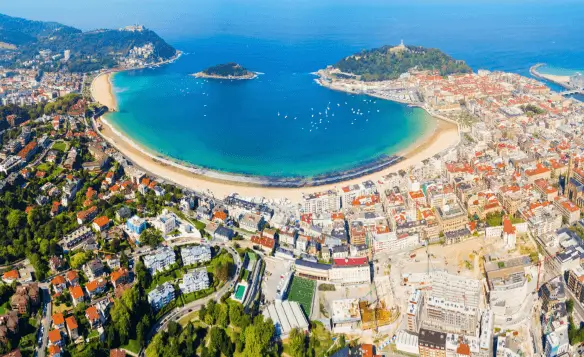
San Sebastián (Donostia), the capital of Gipuzkoa, has 189,866 inhabitants according to 2025 data from Spain's National Statistics Institute (INE). It heads a cross-border eurocity that stretches to Bayonne and a metropolitan area of more than 430,000 people. Its economy rests on services, premium tourism, Michelin star gastronomy, an education sector anchored by the University of the Basque Country and a research base visible at the Donostia International Physics Center and the research centres at Miramón. The Tamborrada on 20 January, the Semana Grande in the first fortnight of August, Jazzaldia and the International Film Festival in September (officially listed as of International Tourist Interest) mark four annual footfall peaks that multiply the value of outdoor campaigns.
San Sebastián's inventory combines bus shelters (the main format), MUPI street panels and digital screens. There are sites on Boulevard Zumardia, Avenida de La Libertad, Avenida de Madrid, Katalina Eleizegui, Paseo de Pío Baroja, Calle Iruña, Paseo de Aiete, Baratzategui, Duque de Mandas, Ategorrieta, Avenida de Tolosa (the philosophy faculty, the teacher-training college, Hotel Hesperia), Aldapeta, Añorga, Zumalakarregi, Errondo, Aintzeta, Mikelategi and Lugaritz. It reaches residents and visitors alike as they move between La Concha, the city centre, Gros, Amara, Antiguo and the university campuses.
Bus shelters in San Sebastián
Bus shelters work in San Sebastián because the city buses link residential neighbourhoods, universities, beaches, healthcare centres and shopping areas on short journeys. They suit health, education, retail, telecoms, fashion, hospitality and public-sector campaigns that want daily repetition without losing presence in high-value areas.
Highlights include Boulevard Zumardia, Avenida de La Libertad (next to the Banco Santander branch), Avenida de Madrid, Katalina Eleizegui, Paseo de Pío Baroja, Calle Iruña, Paseo de Aiete, Baratzategui, Duque de Mandas, Ategorrieta, Avenida de Tolosa near the philosophy faculty, Aldapeta, Añorga, Zumalakarregi, Errondo, Aintzeta, Mikelategi and Lugaritz. The network covers the centre, Gros, Amara, Antiguo and the university neighbourhoods.
MUPI street panels in San Sebastián
MUPI street panels give a polished presence in San Sebastián, a city where urban image carries a lot of weight. They fit campaigns for fashion, motoring, gastronomy, culture, education and premium services, especially near universities, pedestrian streets and areas where residents and visitors mix.
The available locations include the streets around the University of the Basque Country, the vice-rectorate, the economics and business faculty, Lugaritz, Oriamendi and places near Amara, Gros, Antiguo and the La Concha seafront. They are useful advertising sites for high-quality creative and messages meant to be read at close range.
Digital screens in San Sebastián
Digital screens let you rotate creatives and keep campaigns visually fresh at the busiest times. In San Sebastián they make sense for events, restaurants, culture, tourism, launches and brands that want to make the most of peaks such as Jazzaldia, the Semana Grande and the Film Festival.
The digital inventory includes sites near Paseo de La Concha, the university vice-rectorate and the economics and business faculty, with a presence in university and tourist areas. Combined with MUPI street panels and bus shelters, it helps cover the routes of students, visitors and local professionals with the same creative.
Outdoor advertising in Barakaldo
- Population: 102,986 inhabitants, according to INE 2025 data
- Gender split: approximately 52% women and 48% men
- Average age: around 46
- Purchasing power: average, with an economy spread across services, retail, metalworking and healthcare
- Economic activity rate: close to 62%, with a strong presence in retail, healthcare (Cruces hospital) and ancillary industry
- Relevance for advertising: a gateway between Bilbao and the Margen Izquierda, with the BEC! as a trade-fair magnet and metropolitan retail led by Megapark
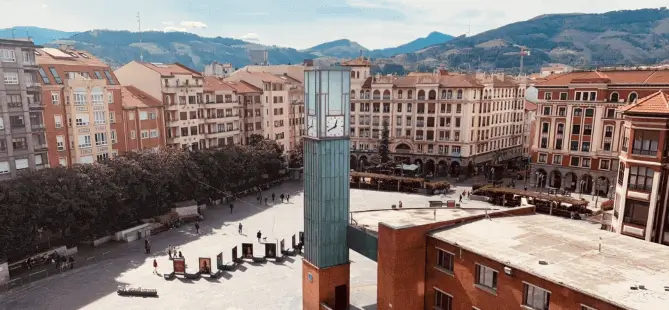
Barakaldo is the fourth-largest Basque municipality by population, with 102,986 inhabitants according to 2025 data from Spain's National Statistics Institute (INE). It is effectively the capital of the Margen Izquierda, the left bank of the Nervión. After decades shaped by the Altos Hornos de Vizcaya steelworks, the city has completed a second transformation around the BEC! (Bilbao Exhibition Centre), the Cruces university hospital and the Megapark shopping centre, which draws shoppers from across Biscay. It has gained close to 3,000 residents over the last decade and leads population growth in the Basque Country, with a significant share of young immigrants in the Desierto, Lutxana and San Vicente neighbourhoods.
The inventory relies mainly on bus shelters, backed by digital screens and the odd MUPI street panel. The network covers the city from east to west at very busy stops such as Desierto Plaza, Buen Pastor, Obispo Olaetxea, Lutxana, Murrieta, Arrandi, Calle Beurko, San Eloy, San Vicente, Burtzeña, San Ignacio, Retuerto, Kareaga, Andicollano and Gernikako Arbola. It is a market much used by dental clinics, car dealerships, vocational training centres, restaurant chains and regional brands looking to reach a local audience and the shoppers who travel in from Trapagaran, Sestao and Portugalete.
Bus shelters in Barakaldo
In Barakaldo, bus shelters are the dominant format and the best suited to the city's layout: a string of neighbourhoods linked by Biscay's interurban buses, with very busy stops. The audience mixes staff at Cruces hospital, BEC! visitors on fair days and Megapark shoppers, which gives coverage to local campaigns and regional advertisers alike.
Available locations include bus shelters on Plaza del Desierto, Buen Pastor, Obispo Olaetxea, Lutxana, Murrieta, Arrandi, Calle Beurko, San Eloy, San Vicente, Burtzeña, San Ignacio, Retuerto, Kareaga, Andicollano, Larrea, Erreketa, Cirilo Sagastagoitia, Zuloko and Gernikako Arbola. These stops cover the residential neighbourhoods and the central shopping streets, with peaks in traffic during working hours, at school drop-off and pick-up times and on event days at the BEC!.
MUPI street panels in Barakaldo
MUPI street panels in Barakaldo strengthen the bus shelter network at the points with the heaviest footfall, such as the Aldapa corridor, Herriko Plaza and the streets around the city centre. They offer cleaner artwork and better visual resolution, suited to fashion, telecoms, financial services and motoring brands.
As it isn't the main format in Barakaldo, the MUPI street panel works best combined with bus shelters to build frequency across the campaign as a whole. That way the advertiser gets high-quality visual impact on the pedestrian streets and broad coverage at the stops in the other neighbourhoods.
Digital screens in Barakaldo
Digital in Barakaldo is useful when the campaign needs rotation, creative updates or seasonal messages. It fits retail, trade fairs, hospitality, motoring and short promotions linked to the BEC!, Megapark or the retail calendar.
The screens work best as an add-on to the bus shelter network in Lutxana, Retuerto, Desierto, Cruces and the through routes to the shopping centre and the exhibition grounds. They bring a dynamic layer to campaigns that already have solid urban coverage.
Outdoor advertising in Basauri
- Population: 40,274 inhabitants, according to INE 2025 data
- Gender split: approximately 52% women and 48% men
- Average age: around 48, a slightly older profile than the Basque average
- Purchasing power: average, with an economy based on services, local retail and a legacy of metalworking and automotive industry
- Economic activity rate: close to 60%, with a strong presence in ancillary industry, logistics (Mercabilbao) and local shops
- Relevance for advertising: a junction town linking Bilbao, Galdakao and Arrigorriaga, with a high density of neighbourhood shops and road traffic on the A-8 and the N-634
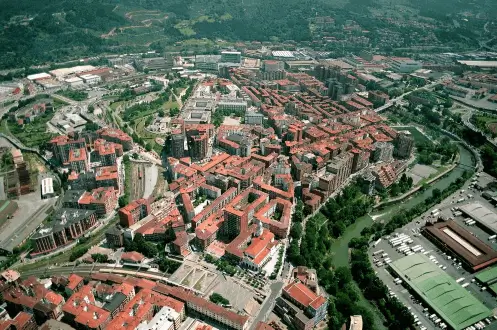
Basauri has 40,274 inhabitants according to 2025 data from Spain's National Statistics Institute (INE). It lies a kilometre from Bilbao, where the Nervión meets the Ibaizabal. A rail and road hub, it is linked to Bilbao by the A-8, the N-634 and the Bilbao-Orduña road. It has a long industrial history (the Basconia works) and a dense network of neighbourhood shops spread across Bidebieta-Dos Caminos, Arizgoiti, Pozokoetxe and Urbi. Mercabilbao, the wholesale food market, is within the municipality, which adds daily logistics traffic. The town is a very active market for motoring, education and restaurants, with workers moving between Bilbao, Galdakao and Arrigorriaga.
Basauri's inventory is among the most balanced in the Basque Country, with bus shelters, MUPI street panels, digital screens and billboards in similar proportions. The MUPI street panels cover streets such as Kareaga Goikoa, Avenida Agirre Lehendakari, Nagusia, Menéndez y Pelayo, Cataluña, Uribarri, Matxitxako and Cervantes. The bus shelters are concentrated at interurban bus stops such as Artunduaga, Gernika, Mercabilbao, Urbi, Zubialdea, Etxerre, Instituto, Basozelai, Karmelo Torre and Axular. The billboards occupy high-traffic points such as the area around the Basauri Lidl, the Lutxana-Asua road and the Matxitxako roundabout at the N-634 junction. The digital screens reinforce the network on Cervantes, Agirre Lehendakari, Nagusia, Gernika Kalea, Kareaga Goikoa, Karmelo Torre, Axular, Plaza Arizgoiti, Artunduaga, Kantabria and Matxitxako.
Bus shelters in Basauri
Bus shelters in Basauri rely on the Biscay interurban bus network and the links to Bilbao and Galdakao, which carry a large number of daily passengers. They are a format much used by local advertisers: dental clinics, tuition centres, gyms, restaurants and car dealerships.
Available locations include bus shelters at Artunduaga (sports centre), Gernika (numbers 5, 8 and 53), Mercabilbao, Urbi, Zubialdea, Etxerre, Instituto, Basozelai, Karmelo Torre, Axular, Calle Kebrantabarri, Matxitxako and Nafarroa. They cover the town centre, the residential neighbourhoods and the routes out of the municipality towards the A-8.
MUPI street panels in Basauri
Basauri has MUPI street panels on shopping streets and through routes with heavy footfall, suited to campaigns for local shops, healthcare, education and mobility. They deliver repeated impacts on residents as they go about their daily routine between home, the shops and public transport.
The key locations are on Eleuterio Villaverde, Elizondo Kalea, Gernika Auzoa (Parque San Miguel), Gernika Kalea, Azganeta Kalea, Kareaga Goikoa, Avenida Agirre Lehendakari, Nagusia, Menéndez y Pelayo, Cataluña, Uribarri, Matxitxako and Cervantes. They are spread across the Arizgoiti and Bidebieta-Dos Caminos neighbourhoods and the area around Urbi.
Billboards in Basauri
Billboards occupy points with heavy road traffic in Basauri, especially on the routes between Bilbao and Galdakao and on the approaches to food superstores. They are an effective option for national brands, motoring campaigns and large retailers.
Some standout locations are the area around the Basauri Lidl and its car park, the Lutxana-Asua road, the roundabout on Calle Matxitxako with its exit onto the N-634 and Carretera de La Avanzada heading towards Bilbao. These points see a continuous flow of vehicles at rush hour.
Digital screens in Basauri
The digital screens in Basauri run dynamic ads with rotation and remote updates, well suited to promotional campaigns with set dates, launches and opening announcements. It is one of the densest digital networks in Greater Bilbao outside the city itself.
Digital screen locations in Basauri are spread across Calle Cervantes, Avenida Agirre Lehendakari (at the junction with Nagusia), Calle Nagusia, Gernika Kalea, Kareaga Goikoa, Karmelo Torre (junction with Axular), Plaza Arizgoiti, Calle Artunduaga, Kantabria, Matxitxako (next to IMQ), Baskonia Zubia and the area around Koreaga Goikoa.
Outdoor advertising in Getxo
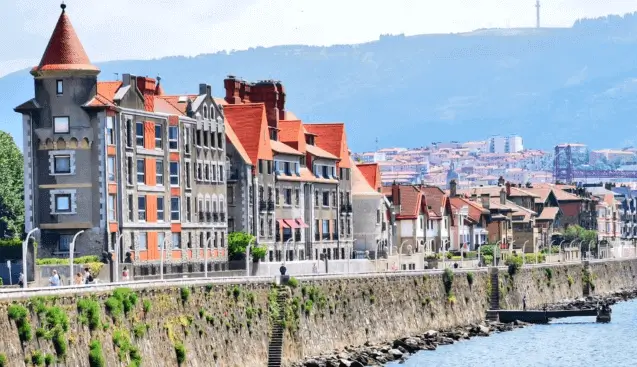
- Population: 75,981 inhabitants, according to INE 2024 data, the fifth-largest town in the Basque Country
- Gender split: approximately 53% women and 47% men
- Average age: around 47, with an older profile than the Basque average
- Purchasing power: high, the highest in the Bilbao area, with a concentration of family businesses and professional services
- Economic activity rate: close to 60%, predominantly in services, retail, finance, private healthcare and professional activities
- Relevance for advertising: a prime market for premium brands and image campaigns, with a very busy seafront promenade and high-value residential neighbourhoods
Getxo has the highest purchasing power on the Margen Derecha, the right bank of the Nervión, with 75,981 inhabitants according to 2024 data from Spain's National Statistics Institute (INE), plus an upmarket residential profile in neighbourhoods such as Neguri, Zugazarte, Las Arenas, Algorta and Andra Mari. It is linked to Bilbao by metro line 1 (Areeta, Gobela, Neguri, Aiboa, Algorta, Bidezabal and Ibarbengoa) and by the A-8, and its seafront promenade draws residents from around the Abra bay, cruise passengers from the port terminal and visitors to the Vizcaya Bridge, a transporter bridge declared a UNESCO world heritage site in 2006.
Getxo's inventory is almost entirely bus shelters, with a few billboards on the approach roads. The bus shelters are organised around the corridors of Avenida de Los Chopos (numbers 22, 40, 45, 46, 51, 75 and 93), Ollaretxe (8, 10 and 33), Salsidu, Maidagan, Azkorri, Zientoetxe (9 and 19), Avenida del Ángel, Algortako Etorbidea (12, 13, 17, 31, 47 and 74), Zugazarte (2, 35, 38 and 54), La Avanzada (11 and 28), Eduardo Coste, Amaia, Bidezabal, Andra Mari, Gorbeia Mendia, Las Mercedes, Telletxe, Plaza de Santa Ana and Areeta. The billboards are on the Euskal Herria roundabout (towards Artea and Bilbao), on Calle Sarrikobaso (at the entrance to Algorta, next to the petrol station) and on Avenida Salsidu (towards Berango). This coverage is well suited to premium brand campaigns, new openings and services at a mid-to-high price point.
Bus shelters in Getxo
Bus shelters in Getxo follow a linear street layout running parallel to the coast, with stops used heavily by residents and by visitors to the marina, the Vizcaya Bridge and Algorta's Puerto Viejo (the old harbour). The audience mixes families from Neguri and Zugazarte, students from the Lejona-Erandio campus and passengers coming in by metro from Bilbao.
Available locations include bus shelters on Avenida Los Chopos (numbers 22, 40, 45, 46, 51, 75 and 93), Ollaretxe (8, 10 and 33), Salsidu, Maidagan, Azkorri, Zientoetxe (9 and 19), Avenida del Ángel, Algortako Etorbidea (12, 13, 17, 31, 47 and 74), Zugazarte (2, 35, 38 and 54), La Avanzada (11 and 28), Eduardo Coste, Amaia, Bidezabal, Andra Mari, Gorbeia Mendia, Las Mercedes, Telletxe, Plaza de Santa Ana, Puente Bizkaia and Areeta. It is a dense network that covers the whole town with little fragmentation.
Billboards in Getxo
In Getxo, billboards sit on the main approach roads, in full view of drivers coming in from Bilbao or along the coast and of shoppers heading for the shopping centres.
The standout among the available locations is the billboard on the Euskal Herria roundabout at Calle Arene, facing traffic heading for the Artea shopping centre and the road out towards Bilbao. There are also sites on Calle Sarrikobaso (the petrol station at the entrance to Algorta) and on Avenida Salsidu (towards Berango). These locations see continuous traffic seven days a week, heaviest at weekends with shopping trips.
Outdoor advertising in Derio
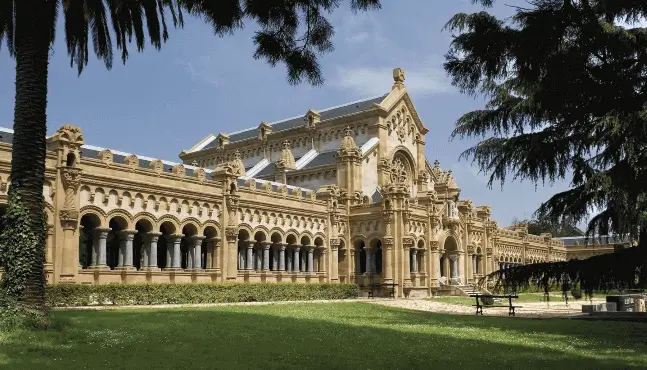
- Population: 7,294 inhabitants, according to INE 2025 data
- Gender split: approximately 51% women and 49% men
- Average age: around 43, younger than the Basque average because of the technology park's workforce
- Purchasing power: above average, driven by the companies at the Parque Tecnológico de Bizkaia and airport-related services
- Economic activity rate: close to 67%, with a strong presence in technology, R&D, logistics and professional services
- Relevance for advertising: a daytime population far larger than the resident one, thanks to the technology park, the airport and the flow of Biscay's interurban buses between Bilbao and the Txorierri
Derio has 7,294 inhabitants according to 2025 data from Spain's National Statistics Institute (INE). It lies in the Txorierri valley, a stone's throw from Bilbao-Loiu airport and the Parque Tecnológico de Bizkaia. Despite its size, it is a municipality with enormous daytime economic activity: thousands of workers from R&D, advanced services and logistics companies pass through its industrial estates and the technology park every day. Being close to the airport adds a flow of travellers and professionals arriving by hire car or on Biscay's interurban buses. The daytime population far exceeds the resident one, which makes Derio a very attractive B2B market.
In Derio the inventory is mostly bus shelters, with a handful of MUPI street panels in the town centre. The panels are concentrated on Calle Larrauri, the main street through the town centre. The bus shelters form a very extensive network that includes the town hall (Udaletxea), Aldekone, Santa Clara (convent), Mungialde Etorbidea (1 and 4), Islabe, Abeletxea (farm), Apaiztegia (seminary), Geldo, the agricultural college (Nekazaritza Eskola), Ganbe, Sakoni, Mezo (35, 48, 63, 68-70, 77-79), Altzaga (Ikastola and Pasaia), Lutxana, Axpeko Erribera, Enekuri, Faoeta, Etxegorri (metro), Asua (La Avanzada 9 and 12), Erandiogoikoa, Libao, Magdalenabidea, Larrondo (Elotxelerri), Larrabarri (Olarra) and Elotxelerri (Nafrisa). It is the largest bus shelter network in the Txorierri valley.
Bus shelters in Derio
Bus shelters in Derio make sense because of commuting, not just because of the resident population. The municipality links the airport, the technology park, Txorierri businesses and residential neighbourhoods, so the format works for B2B, training, motoring, restaurants and services.
Available locations include bus shelters at the town hall, Aldekone, Santa Clara (convent), Mungialde Etorbidea (numbers 1 and 4), Islabe, Abeletxea, Apaiztegia (seminary), Geldo, the agricultural college, Ganbe, Sakoni, Mezo (35, 48, 63, 68-70 and 77-79), Altzaga, Lutxana, Axpeko Erribera, Enekuri, Faoeta, Etxegorri (metro), Asua, Erandiogoikoa, Libao, Magdalenabidea, Larrondo, Larrabarri and Elotxelerri. The repetition comes from commuting and traffic across the district.
MUPI street panels in Derio
MUPI street panels in Derio add visual weight at the most visible points in town. They suit campaigns that want a smart presence alongside the bus shelter network, especially those aimed at workers, residents and visitors around the airport.
The main location is on Calle Larrauri, the spine of the town centre, with continuous traffic from technology park workers and local residents. Inventory for this format is small, so it is best used to support the bus shelter network.
Outdoor advertising in Bilbao
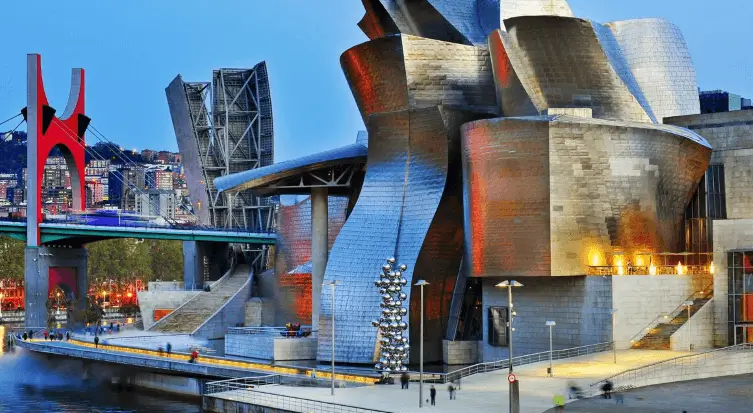
- Population: 351,124 inhabitants, according to INE 2025 data, with a metropolitan area of more than 1 million
- Gender split: approximately 53% women and 47% men
- Average age: around 46, in line with the Basque average
- Purchasing power: above average, with an economy built on financial services, public administration, healthcare, cultural tourism and corporate headquarters
- Economic activity rate: around 60%, concentrated in services, retail, healthcare, advanced manufacturing and port logistics
- Relevance for advertising: an economic capital with heavy footfall, a high-volume metro, university and business clusters and very busy approach roads
Capital of Biscay and the economic powerhouse of northern Spain, Bilbao has 351,124 inhabitants according to 2025 data from Spain's National Statistics Institute (INE), plus a metropolitan area of more than a million. The urban regeneration that began with the Guggenheim in 1997 has continued with Abandoibarra, Zorrotzaurre and the new Avenida de Euskadi, strengthening its profile as a city of services, business and cultural tourism. Moving through the city every day are students from the University of the Basque Country and the University of Deusto, office workers in Uribitarte and Mazarredo, travellers using Bilbao airport at Loiu and a metro that carries more than 100 million passengers a year, alongside the tram, Biscay's interurban buses and the city buses.
Bilbao's inventory has a very particular mix, weighted towards MUPI street panels, billboards and digital screens. The MUPI street panels cover metro stations and pedestrian streets (Sabino Arana, San Mamés, Basurto-Ospitalea, Abandoibarra, Paseo de Pío Baroja, Matiko, Zurbaranbarri, Txurdinaga, Otxarkoaga, Bolueta and the area around the Escuela de Minas y Obras Públicas, the mining and civil engineering school). The billboards occupy approach roads and roundabouts (Calle Severo Unzúe towards Gordóniz, Camino Peñascal, the Miraflores roundabout next to BBK Bolueta, Arañaburu Kalea opposite Amazon, Avenida Urbi beside the railway tracks, Camillo Villabaso and the N-634 at the entrance to Las Carreras). The digital screens are in the financial district (Uribitarte, Mazarredo, Telesforo Aranzadi) and on the Santana industrial estate in Bolueta.
MUPI street panels in Bilbao
Across Bilbao, MUPI street panels follow the heavy flows of students and office workers, as well as the metro passengers who cross the city every day. They are particularly effective for product launches, awareness campaigns and geotargeted promotions for restaurants, education, telecoms and leisure linked to San Mamés, Abandoibarra and the university campuses.
Among the available locations, the highlights are the areas around Sabino Arana, San Mamés, Basurto-Ospitalea and Abandoibarra (both platforms), Paseo de Pío Baroja, the line 3 metro stations (Matiko, Zurbaranbarri, Txurdinaga and Otxarkoaga), Bolueta and the site near the Escuela de Minas y Obras Públicas campus, very close to San Mamés stadium. These are quick-read, high-frequency sites, with extra peaks in term time and on match days.
Billboards in Bilbao
Billboards in and around Bilbao offer large-format sites designed for drivers coming and going every day between the city, the Margen Izquierda and the industrial estates of the metropolitan area. They are the natural choice for campaigns for motoring, superstores, property and national brands looking for impact through frequency on high-traffic stretches of road.
Available locations include billboards on Calle Severo Unzúe (towards Calle de Gordóniz), Camino Peñascal (next to the bus stop for Gordóniz), the Miraflores roundabout next to BBK Bolueta, Arañaburu Kalea opposite the Amazon logistics centre, Avenida Urbi beside the railway tracks, the ADIF railway station, Camillo Villabaso (opposite Plaza Alfredo Kraus) and the N-634 at the entrance to Las Carreras. These sites see steady traffic on weekdays.
Digital screens in Bilbao
Digital in Bilbao adds creative flexibility in a city with strong office, university, tourism and retail activity. It lets you rotate messages, run seasonal promotions and tie campaigns to events such as matches, conferences or retail promotion weeks.
Leading locations include Calle Telesforo Aranzadi (Bluesville), Calle Uribitarte (BackRoom and Stage Live), Calle Mazarredo (El Galeón) and the Santana industrial estate in Bolueta (Sala Fever and Santana 27). Combined with MUPI street panels and billboards, they cover the centre, office areas and approach roads with the same creative.
Outdoor advertising in Sestao
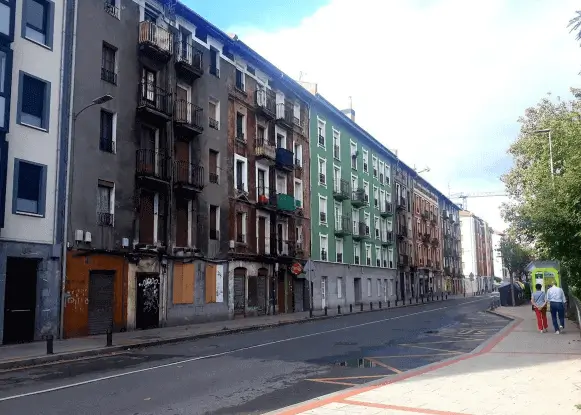
- Population: 28,512 inhabitants, according to INE 2025 data, and growing steadily
- Gender split: approximately 51% women and 49% men
- Average age: around 47
- Purchasing power: below average, with an economy based on industry, services and local shops
- Economic activity rate: close to 58%, with two-thirds of jobs linked to the industrial sector and to Bilbao's ancillary industry
- Relevance for advertising: very high urban density, heavy road traffic between Bilbao, Barakaldo and Portugalete, and industrial estates with a daily flow of workers and hauliers
Sestao has 28,512 inhabitants according to 2025 data from Spain's National Statistics Institute (INE), with a density of more than 8,000 inhabitants per km², one of the highest in Biscay. Its economy continues to rest on industry (the municipality is home to the Acería Compacta de Sestao steel mill, the former Altos Hornos de Vizcaya steelworks site and the Galindo wastewater treatment plant), which still employs two-thirds of the local workforce. The town has regained population over the last year, and neighbourhood shops have a strong presence in the centre and along Rivas, Chavarri and Gran Vía. Carrefour Sestao and Megapark generate shopping traffic from across the metropolitan area.
Sestao's inventory combines bus shelters and billboards. The bus shelters are at stops such as Iberia, Chavarri (34, 111 and the petrol station), Rivas (next to Gran Vía), Urbinaga (La Naval shipyard and the metro station), Gran Vía 55 (Zahar-Egoitza), Kueto (Gran Vía and Vicente Blasco Ibáñez), Las Llanas, Vía Galindo 12 (INEM job centre) and Carrefour. The billboards are on Avenida Altos Hornos de Vizcaya opposite the Guardia Civil barracks (towards Megapark), Calle del Maestro José 107 (towards Avenida Altos Hornos and Barakaldo), Calle Rivas at the Marismas de Galindo roundabout (towards Carrefour Sestao), Vega Nueva Kalea next to the Altos Hornos industrial estate and Calle Mezo 69 (the Astrabudua exit towards Getxo).
Bus shelters in Sestao
Sestao's bus shelters combine town-centre stops with sites near Carrefour and the industrial estates, which lets you separate consumer campaigns from B2B activity aimed at local businesses. The town's density makes for repeated impacts on short routes.
Available locations include bus shelters at Iberia, Chavarri (numbers 34, 111 and the petrol station), Rivas (next to Gran Vía), Urbinaga (La Naval and the metro), Gran Vía 55 (Zahar-Egoitza), Kueto, Las Llanas, Vicente Blasco Ibáñez, Vía Galindo 12 and Carrefour. These stops see a continuous flow between the town centre and the links to Portugalete and Barakaldo.
Billboards in Sestao
Billboard coverage in Sestao is concentrated on approach roads and industrial estates, with a regular driving audience: motorists coming and going between the estuary, the logistics centres and the retail parks of the Margen Izquierda. Billboards are the right format for motoring, superstore retail and industrial services.
Locations available include billboards on Avenida Altos Hornos de Vizcaya (opposite the Guardia Civil barracks, towards Megapark), Calle del Maestro José 107 (towards Avenida Altos Hornos and Barakaldo), Calle Rivas at the Marismas de Galindo roundabout (towards Carrefour Sestao), Vega Nueva Kalea next to the Altos Hornos industrial estate and Calle Mezo 69 (the Astrabudua exit towards Getxo). They see steady traffic from Monday to Saturday.
Outdoor advertising in Galdakao
- Population: close to 24,800 inhabitants, according to INE 2025 data
- Gender split: approximately 51% women and 49% men
- Average age: around 46
- Purchasing power: average, with local retail, services, a district hospital, residential activity and nearby industry
- Economic activity rate: close to 58%, weighted towards services, retail, healthcare and industry in the district
- Relevance for advertising: the district hospital, the N-634 and residential neighbourhoods generate local frequency and draw people in from neighbouring municipalities
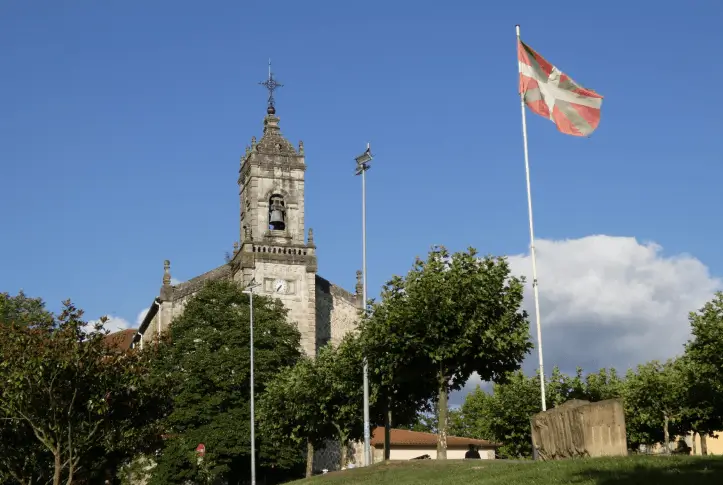
Galdakao has close to 24,800 inhabitants according to 2025 data from Spain's National Statistics Institute (INE). It holds a strong position on the eastern corridor of Greater Bilbao. Its appeal for outdoor advertising lies in the mix of housing, the hospital, shops and road links via the N-634 and the approaches to Bilbao, Basauri, Amorebieta and Durango. Galdakao-Usansolo hospital adds traffic from across the district that the registered population alone does not explain: patients, the people accompanying them and healthcare staff make the same journeys day after day. It is a useful market for clinics, healthcare services, training, food retail, motoring and public-sector campaigns.
Galdakao's inventory is entirely bus shelters. The locations are spread across Etxerre, Bengoetxe, Ibaizabal, Abusu, Olabarri, Juan Bautista Uriarte 7 (Plazakoetxe), Zuazo, Olabarrieta (Poblado Firestone), Zabalgane, Txomin Egileor (street market), Sixta Barrenetxea, Ospitalea-Hospital, Ambulatorio, Urreta, El Bentorro (Arenao), La Olla, Las Balsas, Llano and Arkotxa. Having no billboards or MUPI street panels is not a problem if the aim is local reach: bus shelters cover neighbourhoods and stops with good frequency for services and local retail campaigns.
Bus shelters in Galdakao
Bus shelters in Galdakao focus the campaign on everyday travel: residents, workers, patients and those accompanying them, and bus users moving between neighbourhoods, the hospital and the links to Bilbao. They work for health, retail, training, grocery, local services and public-sector communication.
Available locations include bus shelters at Etxerre, Bengoetxe, Ibaizabal, Abusu, Olabarri, Juan Bautista Uriarte 7 (Plazakoetxe), Zuazo, Olabarrieta (Poblado Firestone), Zabalgane, Txomin Egileor, Sixta Barrenetxea, Ospitalea-Hospital, Ambulatorio, Urreta, El Bentorro, La Olla, Las Balsas, Llano and Arkotxa. The format's strength lies in daily repetition.
Outdoor advertising in Portugalete
- Population: 44,843 inhabitants, according to INE 2025 data, with a density of more than 14,000 inhabitants per km²
- Gender split: approximately 52% women and 48% men
- Average age: around 47
- Purchasing power: average, based on local retail, services and skilled work in the metropolitan area
- Economic activity rate: close to 58%, with a strong presence in services and retail and employment links with Bilbao and Barakaldo
- Relevance for advertising: a crossing point between the two banks of the Nervión, with highly concentrated footfall and road access along shopping streets used every day
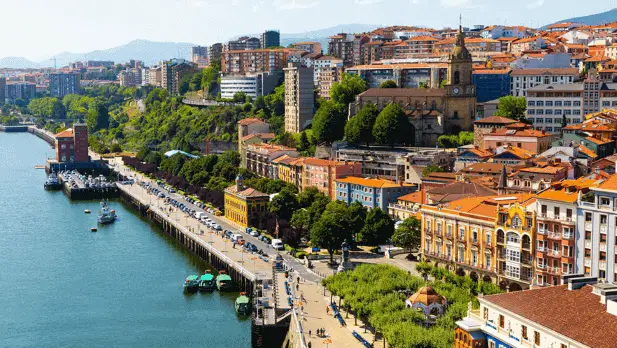
Portugalete has 44,843 inhabitants according to 2025 data from Spain's National Statistics Institute (INE). It is one of the most densely populated municipalities in Spain, with a municipal area of just 3.21 km². Its old town, a protected heritage site, and the Vizcaya Bridge (the transporter bridge, a UNESCO world heritage site) make the town an essential crossing point between the left and right banks of the estuary. The local economy combines neighbourhood shops, healthcare and services, with many residents working in Bilbao, Barakaldo and around the El Juncal industrial estate.
Portugalete's inventory combines bus shelters and billboards. The bus shelters are at Bizkaia Zubia (Puente Bizkaia), Begiratokia-Mirador, General Castaños 2, Azeta, Errepelega-Repelega, Miguel de Unamuno (funeral parlour), Aspaldiko (care home), Campanzar, San Juan de Dios (hospital), Ballonti, Buenavista and Hilerria-Cementerio. The billboards are at the Doctor José Zaldúa roundabout (towards Avenida de Carlos VII and C.F. Portugalete's La Florida stadium), Avenida de los Llanos (towards Calle Doctor José Zaldúa), Calle Doctor José Zaldúa opposite the Grumete Diego (towards Santurtzi) and the El Juncal industrial estate on the BI-3746, on the corner with Aparcabisa opposite the ITV vehicle inspection centre (towards Megapark and Bricomart).
Bus shelters in Portugalete
Bus shelters in Portugalete work very well because the town is so densely populated: residents make short journeys on foot or by bus, and the stops deliver repeated impacts on the same audience throughout the day. They are a good fit for local shops, private healthcare, tuition centres and public-sector campaigns.
Portugalete's bus shelters are at Bizkaia Zubia (Puente Bizkaia), Begiratokia-Mirador, General Castaños 2, Azeta, Errepelega-Repelega, Miguel de Unamuno (funeral parlour), Aspaldiko (care home), Campanzar, San Juan de Dios (hospital), Ballonti, Buenavista and Hilerria-Cementerio. They cover the old town as well as the newer districts and the links to Sestao and Santurtzi.
Billboards in Portugalete
Billboards in Portugalete are concentrated on the metropolitan approach roads and around the large retail parks of the Margen Izquierda. They are the natural format for motoring, superstore retail and national brands that want to reach shoppers on their weekend trips.
Available locations include billboards at the Doctor José Zaldúa roundabout (towards Avenida de Carlos VII and La Florida stadium), Avenida de los Llanos (towards Calle Doctor José Zaldúa), Calle Doctor José Zaldúa opposite the Grumete Diego (towards Santurtzi) and the El Juncal industrial estate on the BI-3746, on the corner with the Aparcabisa estate opposite the ITV centre (towards Megapark and Bricomart). Traffic is steady through the week, with very high peaks on Saturday mornings.
Outdoor advertising in Vitoria-Gasteiz
- Population: 260,402 inhabitants, according to INE 2025 data
- Gender split: approximately 51% women and 49% men
- Average age: around 45
- Purchasing power: above average, with an economy based on the car industry, aerospace, logistics and services
- Economic activity rate: high, in a city where close to 62% of the population is of working age, with a strong presence in industry, logistics on the Júndiz industrial estate and services
- Relevance for advertising: as the Basque capital and the main town of the Llanada Alavesa, it concentrates the province's largest flows and a highly mobile audience on foot and by public transport
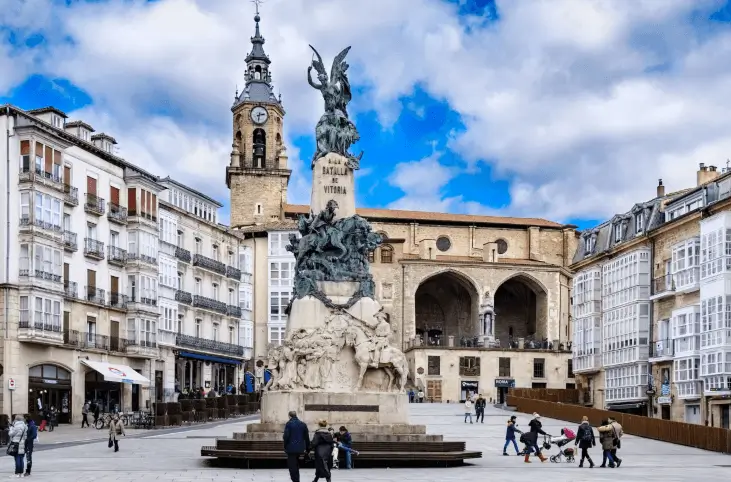
As capital of the Basque Country and of the province of Álava, Vitoria-Gasteiz has close to 260,000 inhabitants according to Spain's National Statistics Institute (INE). Set in the middle of the Llanada Alavesa (the plain of Álava), 525 metres above sea level, it is home to the Basque government and parliament, which makes it the region's main administrative centre. Its economy combines a strong car and aerospace industry with a major logistics hub on the Júndiz industrial estate and a dense network of services. It was European Green Capital in 2012, a distinction that reflects its commitment to sustainable mobility: a pedestrian green belt, an extensive cycle network and heavily used public transport. The fiestas of the Virgen Blanca (the city's patron-saint festival), from 4 to 9 August, and the city's jazz festival bring the biggest footfall peaks of the year to the centre.
Vitoria-Gasteiz has close to 400 of our sites, mostly bus shelters and MUPI street panels, along with large-format billboards and digital street thermometers. Coverage takes in Avenida de Gasteiz, the main shopping artery; Portal de Foronda and Avenida de los Huetos in Lakua; Bulevar de Salburua and Paseo de la Ilíada in the east; and Avenida de las Naciones Unidas in Zabalgana, the most populous neighbourhood. The network also reaches Portal de Castilla, the area around the Hospital Universitario de Álava in Txagorritxu and the surroundings of the El Boulevard shopping centre in Zaramaga, one of the largest in the Basque Country. The bus shelters sit on the city bus routes and along the two tram lines, which stitch the centre to the new districts in the north and west.
Bus shelters in Vitoria-Gasteiz
No format is more widespread in Vitoria-Gasteiz than the bus shelter, thanks to the weight of public transport and a population that gets around a lot on foot, by bike and by bus. Located at city bus stops and along the tram lines, shelters deliver strong repeat impacts on residents who see them every day on the way to work, to class or to the shops. They work especially well for local shops, services and urban awareness campaigns.
Highlights include Avenida de Gasteiz, Portal de Foronda and Avenida de los Huetos in Lakua, Bulevar de Salburua and Paseo de la Ilíada in Salburua, Avenida de las Naciones Unidas in Zabalgana, Portal de Castilla in the south-west and Calle Zaramaga, next to the El Boulevard shopping centre. The bus shelters around the Hospital Universitario de Álava, on Avenida de Gasteiz and Calle Beato Tomás de Zumárraga, are among those delivering the most impacts in the city.
MUPI street panels in Vitoria-Gasteiz
MUPI street panels suit the areas of Vitoria-Gasteiz with the heaviest footfall, above all the Ensanche district and the shopping area around it. Their vertical format, at eye level, catches the attention of people walking along the shopping streets and carries more detailed messages than a billboard. They are a good option for fashion, restaurants, financial services and campaigns aimed at an audience with spending power in the heart of the city.
The principal locations cluster in the Ensanche, around Calle La Paz, Calle Jesús Guridi and Calle Olaguíbel, very close to El Corte Inglés (the Spanish department store) and the Dendaraba shopping centre. There are also panels on Avenida de Gasteiz, on the boulevards of Zabalgana and Salburua and around the University of the Basque Country campus, on Paseo de la Universidad, next to Mendizorrotza stadium.
Billboards in Vitoria-Gasteiz
Large-format billboards cover the approach roads and main traffic corridors of Vitoria-Gasteiz, where the message has to be taken in at a glance and at driving speed. They work for wide-coverage campaigns, launches and brands seeking awareness among drivers who enter and leave the city every day. They perform best for motoring, superstores, leisure and promotions that reach the whole province of Álava.
The key sites are on the A-1 approaches, around the Júndiz industrial estate to the south-west and on the Gamarra-Betoño industrial estate to the north, next to the El Boulevard shopping centre. Billboards close to the main entry roads and the industrial areas deliver a high volume of daily impacts on through traffic from across the Llanada Alavesa.
Street thermometers in Vitoria-Gasteiz
Digital street thermometers give the brand a useful service for passers-by, showing the time and the temperature, which holds people's attention on the site for longer. In Vitoria-Gasteiz they stand at junctions and on avenues with heavy passing traffic, where they provide continuous visibility all day. They are a distinctive format for shops, organisations and services wanting a constant presence on the street.
Standout locations are the major avenues and busiest junctions in the centre and the newer districts, such as Avenida de Gasteiz and the approaches to the Lakua, Salburua and Zabalgana neighbourhoods. By combining service information with the brand message, street thermometers keep the brand in front of pedestrians and drivers for longer at the city's busiest points.
Bus advertising in Vitoria-Gasteiz
In Vitoria-Gasteiz we also wrap city buses: the rear, the large side panel or the entire bus, in blocks of 4 weeks. The bus page (in Spanish) shows six sample routes, with each route on the map and prices for rigid and articulated buses.
Outdoor advertising in Loiu and Zabaloetxe
- Population: around 2,500 inhabitants in Loiu, according to INE 2025 data
- Gender split: approximately 51% women and 49% men
- Average age: around 44, younger than the Basque average
- Purchasing power: above average, driven by airport activity and services in the Txorierri
- Economic activity rate: close to 65%, with a strong weighting towards the airport sector, logistics and services
- Relevance for advertising: Bilbao airport, the Txorierri industrial estates and a continuous flow of Biscay's interurban buses towards Mungia and Bilbao
Loiu is the municipality that hosts Bilbao airport, run by Spain's national airport operator and handling close to eight million passengers a year, a figure that makes the terminal the main air gateway on the Bay of Biscay. The Zabaloetxe area holds most of the municipality's population, which is around 2,500, and links the Txorierri corridor with the airport, the Lejona-Erandio university campus and the nearby industrial estates. It is used every day by airport staff, logistics company employees, travellers and passengers on Biscay's interurban buses, which run between Bilbao and Mungia.
In Loiu and Zabaloetxe the inventory is made up entirely of bus shelters. Locations are spread across the town hall (Udaletxea), Landatxueta, Loiu, Azoka-Ferial, Goskoetxe Jatetxea, Lauroeta (Munabe and Urdaneta), Asua, La Merced (school), Iberre, Elorritxu and San Juan. It is a useful network for B2B campaigns, training, airport mobility, set-lunch restaurants, pharmacy products and district retail that wants to follow workers on their daily journeys between Bilbao and the valley.
Bus shelters in Loiu
Bus shelters in Loiu and Zabaloetxe have a very specific audience: airport passengers, staff of companies around the airport and Txorierri residents. They suit campaigns for mobility, car hire, hospitality for travellers, financial services, executive education and district retail.
Available locations include bus shelters at Loiu town hall, Landatxueta, central Loiu, Azoka-Ferial, Goskoetxe Jatetxea, Lauroeta (Munabe and Urdaneta), Asua, La Merced (school), Iberre, Elorritxu and San Juan. The network follows daily users on their journeys between Bilbao, Mungia and the airport.
Outdoor advertising at the Parque Tecnológico de Bizkaia (Zamudio)
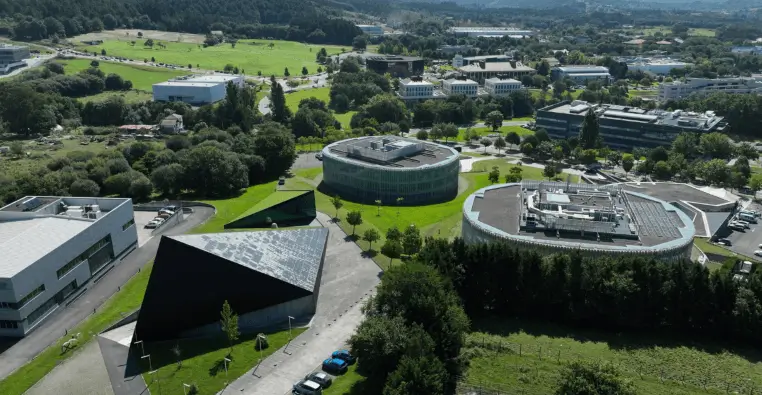
- Population: around 3,500 registered residents in Zamudio, according to INE 2025 data
- Gender split: approximately 50% women and 50% men
- Average age: around 44, younger than the Basque average because of the weight of the park's workforce
- Purchasing power: high, with a business base in R&D, engineering, aerospace and energy, and well-paid skilled jobs
- Economic activity rate: far higher than the resident figure, thanks to the 9,000 professionals at the technology park
- Relevance for advertising: a qualified B2B audience, a daily flow of professionals and the presence of anchor companies from the Basque technology cluster
Zamudio is the municipality in the Txorierri valley that is home to the Parque Tecnológico de Bizkaia, one of the largest innovation hubs in northern Spain. It has around 3,500 registered residents, but the daytime population multiplies thanks to the concentration of more than 250 companies and research centres employing some 9,000 professionals. Tenants include ITP Aero, Euskaltel, Innobasque, Tecnalia and companies from the energy and aerospace cluster. Being close to Bilbao airport and linked to the BI-737 and the A-8 makes the park a location with a highly qualified B2B audience.
Around the technology park and the centre of Zamudio-Arteaga, the inventory is bus shelters. Locations include the buildings and stops of the park itself (Innobasque, Euskaltel, Edificio Barco, ITP) and sites in the town such as Arteaga, Domartiena, Lekunbiz, Sandoikalde, Bilbobarri, Vizcaya Ikastetxea (a school) and Bidekurtze. It is a small but highly professional market, well suited to B2B campaigns for financial services, insurance, executive education, business software, corporate mobility or set-lunch restaurants serving the park's workers.
Bus shelters at the Parque Tecnológico de Bizkaia
Bus shelters at the Parque Tecnológico de Bizkaia bring a very specific audience: skilled professionals working for R&D, aerospace, energy, software and advanced services companies. They are the right format for B2B campaigns for financial services, insurance, executive education, corporate mobility, business software or set-lunch restaurants.
Bus shelters are available next to the park's landmark buildings (Innobasque, Euskaltel, Edificio Barco, ITP Aero) and in the centre of Zamudio (Arteaga, Domartiena, Lekunbiz, Sandoikalde, Bilbobarri, Vizcaya Ikastetxea and Bidekurtze). The repetition comes from the daily journey between the airport, Bilbao and the valley's companies.
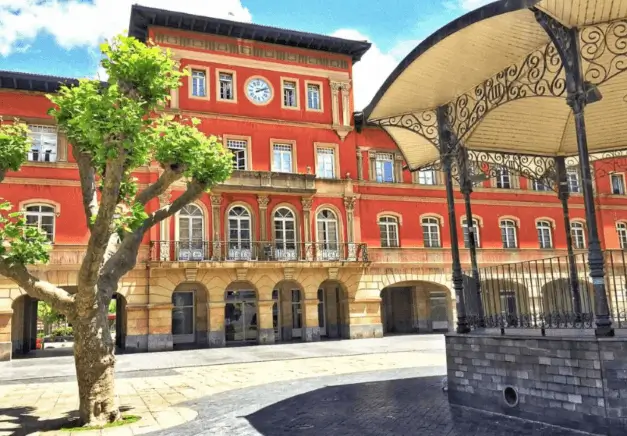
Outdoor advertising in Erandio
- Population: around 24,000 inhabitants, according to INE 2025 data
- Gender split: approximately 51% women and 49% men
- Average age: around 46
- Purchasing power: average, with an economy supported by logistics, ancillary industry, port services and wholesale trade
- Economic activity rate: close to 60%, with a strong presence of workers from the port of Bilbao, Makro and companies in the Txorierri
- Relevance for advertising: a logistics corridor with heavy road traffic on La Avanzada, and a university campus and the airport close by
Erandio lies on the right bank of the Nervión, with close to 24,000 inhabitants, and is a logistics hub for Greater Bilbao. The BI-737 (Carretera de La Avanzada) runs through the municipality, a corridor between Bilbao, Getxo, Sondika and the airport with heavy traffic from commuters and lorries. It is home to the distribution centre of Makro, one of the leading wholesale names in the north, and the Lejona-Erandio university campus (UPV/EHU, the Basque public university), which brings thousands of students and lecturers through every day. The mix of port, industrial estates, airport and university makes for a varied audience profile.
Erandio's inventory is built on billboards, with the odd MUPI street panel. Billboards are concentrated on Carretera de La Avanzada (towards Asua-Sondika next to Makro, and towards Erandio Goikoa), the Remetal junction next to Northgate (towards the Makro entrance), the Makro Erandio exit (towards Sondika, next to a petrol station), Carretera Goikoa Erandiondo (next to Lutxana Asúa Errepidea, BI-735), Avenida Ribera Ramón de la Sota and the BI-735 at Lutxana Asua Errepidea 36 (junction next to a petrol station, towards the airport and Bilbao). The panels are in Goiherri, at Martartu Errepidea 13.
Billboards in Erandio
Billboards in Erandio cover one of the busiest logistics corridors in Greater Bilbao, with a continuous flow of lorries, port workers, Makro's trade buyers and travellers heading for the airport. They suit motoring, industrial recruitment, B2B services, wholesale food and brands seeking impact on metropolitan road journeys.
Available sites include billboards on Carretera de La Avanzada (towards Asua-Sondika next to Makro, and towards Erandio Goikoa and Getxo), the Remetal junction next to Northgate (the Makro entrance), the Makro Erandio exit (towards Sondika), Carretera Goikoa Erandiondo (BI-735, next to Lutxana Asúa Errepidea), Avenida Ribera Ramón de la Sota and the BI-735 at Lutxana Asua Errepidea 36 (towards the airport and Bilbao).
MUPI street panels in Erandio
In Erandio, MUPI street panels are few but very specific, centred on the area around the Goiherri padel club, with a family and sporting audience. They suit campaigns for local services, clinics, restaurants, training and brands that want to be associated with sport and leisure.
Locations are concentrated in Goiherri, at Martartu Errepidea 13, next to the padel club. It pays to combine them with billboards to gain metropolitan coverage when the campaign has a regional objective.
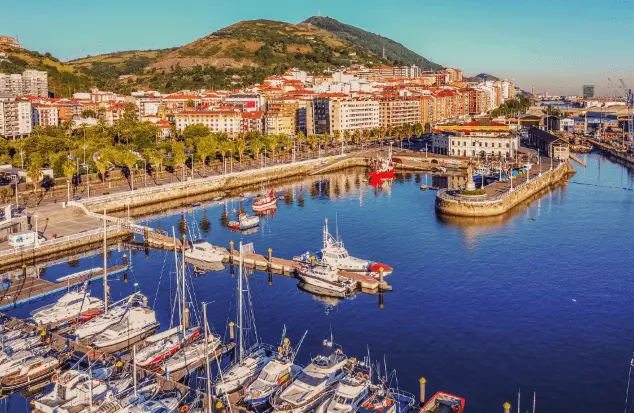
Outdoor advertising in Santurtzi
- Population: around 45,600 inhabitants, according to INE 2025 data
- Gender split: approximately 52% women and 48% men
- Average age: around 47
- Purchasing power: average, with an economy supported by local retail, services, fishing, port logistics and ancillary industry
- Economic activity rate: close to 58%, with workers commuting to Bilbao, Barakaldo and the port
- Relevance for advertising: a dense Margen Izquierda municipality with well-established neighbourhood life and footfall on the seafront promenade and in the town centre
Santurtzi has around 45,600 inhabitants, according to 2025 data from Spain's National Statistics Institute (INE). It is one of the best-known seafaring towns on the Margen Izquierda, with a dense town centre facing the outer harbour of the port of Bilbao. The town combines a fishing tradition, neighbourhood shops and residential life, with plenty of movement towards Bilbao, Portugalete and the Cruces-Barakaldo corridor. Parque de San Juan, the seafront promenade and the area around the fishing port draw regular crowds, while the upper neighbourhoods are where family life and everyday services are concentrated.
Santurtzi mixes bus shelters and MUPI street panels. The shelters are at Parque de Itsasalde 2, Parque Gernika, the health centre, Cabieces, the swimming pools, San Juan (including Landeta and the junction), Las Viñas and San Juan bidegurutzea. The panels are on the El Árbol industrial estate, unit 4, at a padel club. It is a useful market for local campaigns by dental clinics, gyms, local shops, tuition centres, restaurants and services that want a steady presence with local residents.
Bus shelters in Santurtzi
Bus shelters in Santurtzi provide neighbourhood coverage in a compact municipality with many journeys by bus and on foot. They work for clinics, local shops, tuition centres, gyms, restaurants and public-sector campaigns seeking repeated impacts on residents.
Available locations include bus shelters at Parque de Itsasalde 2, Parque Gernika, the health centre, Cabieces, the swimming pools, San Juan (including Landeta and the junction) and Las Viñas. They cover the main corridors of the town centre and the links with Portugalete and Cabieces.
MUPI street panels in Santurtzi
Santurtzi has few MUPI street panels, concentrated on the El Árbol industrial estate, next to a padel club with a family and sporting audience. They are suitable for campaigns for local services, clinics, restaurants, training and brands that want to be associated with sport and leisure.
With so few panels, they are best used to complement the bus shelter network and gain presence around the El Árbol industrial estate.
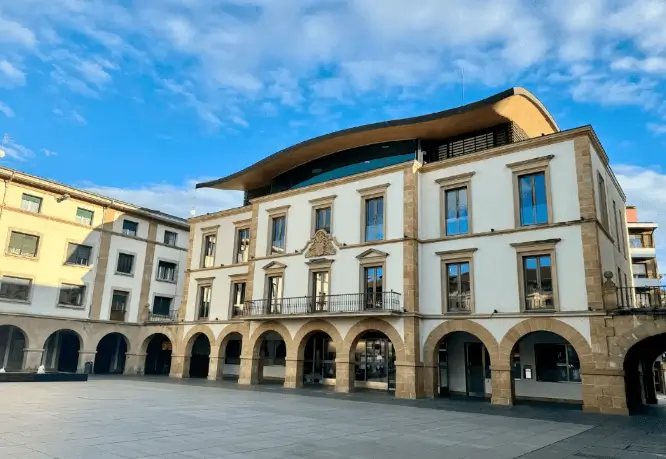
Outdoor advertising in Amorebieta-Etxano
- Population: around 19,500 inhabitants, according to INE 2025 data
- Gender split: approximately 50% women and 50% men
- Average age: around 45
- Purchasing power: average, with an economy supported by industry, services, district retail and logistics
- Economic activity rate: close to 60%, with jobs in industry (Bridgestone, the Boroa estate), services and retail
- Relevance for advertising: the main town of the Duranguesado district on the AP-8, with active industrial estates and a continuous flow between Bilbao and San Sebastián
Amorebieta-Etxano has close to 19,500 inhabitants and is the district capital of the Duranguesado, on the AP-8 corridor between Bilbao and San Sebastián. Its economy combines industry, district retail and services, with anchor companies such as Bridgestone and a very active industrial estate at Boroa. The municipality is also a connection point between the Duranguesado, Biscay and Gipuzkoa, with daily flows of workers towards Bilbao and Durango. The Boroa toll barrier is one of the best-known road landmarks in the province.
Amorebieta's inventory combines bus shelters and billboards. The shelters are at Gane, Astepe, Katia, Boroa (toll barrier), San Miguel, San Antonio Elguezabal, Ategorri and Gernika 46 (San Migel). The billboards stand on Calle San Miguel (opposite the Gane neighbourhood, on the way in from Durango), Calle Nafarroa (on the way into Amorebieta, towards Calle Gudari), Calle San Miguel 5 (next to Gane Auzoa, on the way out towards San Sebastián and Durango) and on roads coming in from Bilbao. It is a useful market for motoring, large retailers, industrial services and district brands that want to cover the Bilbao-Durango corridor.
Bus shelters in Amorebieta-Etxano
Bus shelters in Amorebieta-Etxano cover stops for Biscay's interurban buses in the town centre and on the way into the Boroa industrial estate, with an audience of residents and workers. They work for district retail, health, training, restaurants and local services.
Bus shelters are available at Gane, Astepe, Katia, Boroa (toll barrier), San Miguel, San Antonio Elguezabal, Ategorri and Gernika 46 (San Migel). They reach both local residents and drivers stopping on the approaches to the municipality.
Billboards in Amorebieta-Etxano
In Amorebieta-Etxano, billboards are aimed at drivers on the AP-8 and on the approaches to the town centre from Durango and Bilbao. They suit motoring, large retailers, B2B services, industrial recruitment and brands with district-wide coverage.
Billboards are available on Calle San Miguel (opposite the Gane neighbourhood, on the way in from Durango, towards Calle Karmen), Calle Nafarroa (on the way into Amorebieta, towards Calle Gudari), Calle San Miguel 5 next to Gane Auzoa (on the way out towards San Sebastián and Durango) and the road into Amorebieta from Bilbao (Tantorna neighbourhood).
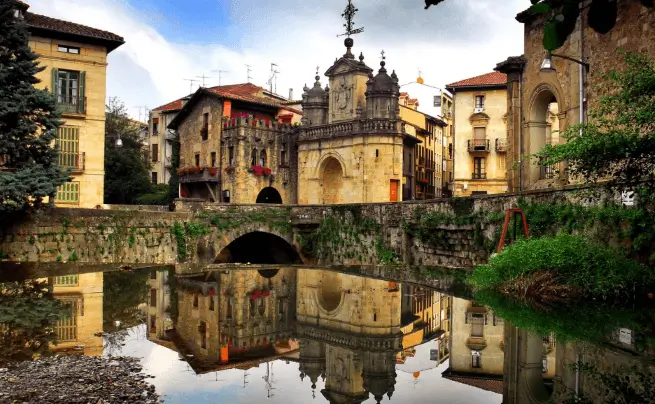
Outdoor advertising in Durango
- Population: around 30,000 inhabitants, according to INE 2025 data
- Gender split: approximately 51% women and 49% men
- Average age: around 45
- Purchasing power: above average, with well-established retail, a machine-tool industry and district services
- Economic activity rate: close to 60%, weighted towards industry, retail, services and the cultural sector
- Relevance for advertising: the main town of the Duranguesado district, with cultural peaks (the December Azoka) and fast connections via the AP-8 and A-8
Durango is the historic capital of the Duranguesado, with close to 30,000 inhabitants and a very well-preserved old town that anchors the comarca (district). The town combines local retail, services, industry (machine tools) and a strong cultural scene shaped by the Azoka-Durangoko Azoka, the Basque book and record fair held every December and one of the Basque Country's leading cultural events. It is connected to Bilbao by the AP-8 and to Gipuzkoa by the A-8, and acts as the services hub for neighbouring municipalities such as Iurreta, Abadiño and Berriz.
Durango's inventory combines bus shelters and billboards. The shelters are at Madalena Plaza (two sites), Faustekalea, Olleria, Landako, Maspe 9 and Bidebarrieta. The billboards stand in the Murueta neighbourhood (towards the Olleria roundabout, on the way into Durango) and in the car park on Calle Maspe opposite number 22 (on the way out towards the Mallaviena industrial estate). It is a useful market for district campaigns in retail, motoring, industrial services, culture and local shops, with footfall peaks during the December Azoka.
Bus shelters in Durango
Bus shelters in Durango reach an audience of residents and people from the district who use public transport for short trips within the town centre and to neighbouring municipalities. They work for retail, local shops, health, training, restaurants and district services.
Available locations include bus shelters at Madalena Plaza (two stops), Faustekalea, Olleria, Landako, Maspe 9 and Bidebarrieta. They cover the main corridors of the town centre and the links to the Mallaviena industrial estate.
Billboards in Durango
In Durango, billboards are concentrated on approach roads and busy junctions, with a profile that suits motoring, industrial services, large retailers and district campaigns.
Billboards are available in the Murueta neighbourhood (towards the Olleria roundabout, on the way into Durango) and in the car park on Calle Maspe opposite number 22 (on the way out towards the Mallaviena industrial estate). These locations see a continuous flow on weekdays.
How booking outdoor advertising with Marco Visual works
Tell us what you’re looking for
If you’d rather choose yourself, our campaign planner (in Spanish) lets you pick the weeks and then browse the map or the list of sites, with filters by type of site, city, postcode or distance to a shop or point of interest. Bear in mind the booking cycles: many sites are sold by the week, but most 8x3 m billboards are booked in two-week periods or for 26 weeks, so they’re greyed out if you pick a single week. Click ‘Siguiente’ (Next) and you’ll see a campaign summary with the total price, printing and posting included: we take care of everything. You just enter your contact details and create the campaign.
Either way, you get a unique link to your campaign page, which you can share with your team: the sites you picked, the weeks, the price and the guides for preparing your artwork. You can check it whenever you like.
We confirm availability so you can book online
When everything is cleared, you can enter your billing details on that same page, pay by bank transfer and upload your artwork. Once you’ve paid, upload the transfer receipt so we can confirm the booking sooner.
Remember to send your artwork, following the guides, before the deadline shown on the proposal (usually 10 days before the start). We’ll email you at every step: artwork received and approved, payment received, sites confirmed.
Printing, posting and launch
These photos are usually ready 24 to 48 hours after the start; we’ll email you when they are.
When the campaign ends, you’ll see a notice on the campaign page and receive a satisfaction survey, with the option of leaving us a Google review. It helps us do better.
Frequently asked questions about outdoor advertising in the Basque Country
How much does an outdoor advertising campaign cost in the Basque Country?
As a guide, a two-week bus shelter or MUPI street panel campaign in Bilbao or Greater Bilbao starts at around €264–640 per local network. A metropolitan campaign combining Bilbao, Barakaldo and Getxo costs between €4,000 and €10,000 per two-week period. Large-format billboards and digital screens have their own price ranges depending on location. At Marco Visual we give you a fixed price based on the brief, the cities and the formats you choose. Billboards in the Basque Country have a reference price of €78 to €88 per face per week, which comes to €156 to €176 per two-week period. Those prices are quoted excluding VAT and poster printing, which is costed separately. Some sites are sold in two-week periods (2 weeks, 14 days); others are only available on 6-month terms (26 weeks).
How many advertising sites does Marco Visual have in the Basque Country?
Across the Basque Country we have more than a thousand outdoor advertising sites, with the bus shelter as the main format and billboards, MUPI street panels and digital screens as well. The biggest concentration is in Greater Bilbao (Bilbao, Barakaldo, Basauri, Getxo, Derio, Sestao) and Donostialdea, with further coverage in Vitoria-Gasteiz and along Biscay's industrial belt. The inventory changes over time, so we send you current availability when you ask for a proposal.
Which formats work best for a local business in Bilbao?
For a neighbourhood business in Bilbao, the most effective mix is usually MUPI street panels at metro stations and in busy pedestrian areas such as Sabino Arana, San Mamés, Abandoibarra and Basurto. If the business depends on customers arriving by car (dealerships, superstores, clinics with a car park), billboards on approach roads such as the Miraflores roundabout in Bolueta, Camino Peñascal and the N-634 towards Las Carreras add extra frequency. The digital screens in the financial district (Uribitarte, Mazarredo) work well for campaigns tied to specific dates or rotating messages.
What is the minimum campaign length?
The minimum is usually one two-week period (2 weeks, 14 days) for bus shelters, MUPI street panels and billboards. Digital screens offer greater flexibility because they are billed by network and rotation. For very short activity tied to one-off events we can look at shorter periods, although the cost per impact goes up because the posting cost isn't spread over a longer window. Some billboard sites are only available for periods of 6 months (26 weeks).
Where are footfall and road traffic heaviest in the Basque Country?
On foot: Abandoibarra and Bilbao's Gran Vía, Avenida de La Libertad and Paseo de La Concha in San Sebastián, central Barakaldo and the Algortako Etorbidea corridor in Getxo. By road: the AP-8 between Bilbao and San Sebastián, the N-634, the approaches to the BEC! in Barakaldo, the Júndiz-Gamarra corridor in Vitoria-Gasteiz, the Rontegi roundabout and the links to Bilbao airport (Loiu). Each corridor has its natural format: MUPI street panels and bus shelters for pedestrians, billboards for drivers.
Do you have digital sites or only static ones?
We offer both. In Bilbao and Basauri we have a sizeable network of digital screens with message rotation, scheduling by time slot and remote updates. San Sebastián and Barakaldo have digital too. The rest of the inventory is static (MUPI street panels, bus shelters, billboards). In many campaigns the most efficient approach is to combine digital on the main corridor with static sites in the neighbourhoods and on the approach roads.
What happens after I ask for a proposal?
First comes the brief (objective, cities, budget, dates). We propose a network, with its formats and locations, and show it on a map. With your go-ahead, we sign the contract, collect the artwork (we can help with the design if you need it), print and coordinate the posting. Once the campaign is live we send geotagged proof-of-posting photos of every advertising site, with the actual start and removal dates.
Can you help with the creative design?
Yes. We have a team that can adapt your brand identity to the specific formats and proportions of each advertising site (MUPI street panel, bus shelter, billboard, digital screen) and, if you're starting from scratch, produce the complete artwork. It's an optional service that we quote separately depending on the scope (number of pieces, adaptations, language versions).
Is outdoor advertising worth it compared with going digital-only?
In the Basque Country, yes, very much so. The urban density of Greater Bilbao and heavy use of public transport (the Bilbao metro passed 100 million journeys in 2024) create real dwell times that digital can't reproduce. Outdoor also builds brand awareness and a halo effect on later digital activity. Industry studies in Spain show a 15–25% increase in the effectiveness of digital campaigns backed by OOH compared with those running on digital alone.
When is the best time of year to advertise in the Basque Country?
There are some strong windows: January, with San Sebastián's Tamborrada on the 20th and the sales; the first fortnight of August, with San Sebastián's Semana Grande and the Virgen Blanca festivities in Vitoria-Gasteiz; late August, with Bilbao's Aste Nagusia; September, with the San Sebastián International Film Festival (officially listed as of International Tourist Interest); then December, with the Durangoko Azoka (Durango's Basque book and record fair). For retail and motoring, September to November and the run-up to the festive season and Reyes (early January, Spain's main gift-giving day) give the best impact-to-spend ratio.
Give your brand more visibility with outdoor advertising
See our advertising sites for yourself, with their prices, locations and photos, and use the campaign planner
Still have questions, or would you like us to advise you and send you a proposal? Get in touch and we’ll send you a personalised quote for your outdoor advertising campaign.


What our clients say in the Basque Country
Verified Google reviews from businesses that have already worked with Marco Visual.

Hemos quedado satisfechos con la campaña de publicidad que contratamos con Marco Visual para el Conservatorio Superior de Danza de Alicante (CSDA) durante las Hogueras. La campaña contó con cuatro mupis diferentes, cada uno dedicado a un estilo de danza, una iniciativa para dar visibilidad a nuestro conservatorio y acercar la riqueza y diversidad de la danza a la ciudadanía. Destacamos la profesionalidad, la atención recibida y la buena gestión de todo el proceso. Porque la danza también merece ocupar las calles y formar parte de la ciudad. ¡Gracias a Marco Visual por ayudarnos a llevar nuestro arte más allá de las aulas!
Original review in SpanishSee on Google 1 / 4

Hemos trabajamos con Marco Visual para la campaña de apertura de nuestra nueva clínica en Molina de Segura, y la experiencia ha sido positiva. Negociamos directamente con ellos, sin intermediarios: el trato es cercano y las respuestas, rápidas. Necesitábamos resolver ubicaciones, formatos y plazos con poco margen de tiempo, y flexibilidad para adaptar la propuesta a lo que necesitábamos. Recomendado
Original review in SpanishSee on Google

Ha sido nuestra primera experiencia en implementar un MUPI, pensábamos que sería algo engorroso en cuanto al proceso y verdaderamente nos hemos confundido. La atención de Alejandro desde el primer momento ha sido rápida, precisa en las indicaciones y nos ha facilitado todo. Ademas agregar que el sistema que tienen implementado online para el seguimiento ha sido muy práctico, sabes el status de la campaña en todo momento, repetiremos!
Original review in SpanishSee on Google

Nuestra experiencia ha sido muy positiva. Queremos destacar especialmente la profesionalidad, rapidez y atención recibida durante todo el proceso. El equipo ha demostrado en todo momento una excelente disposición y un trato cercano y profesional. Mención especial para Alejandro M., por su amabilidad, eficacia y atención constante. Ha sido un placer contar con su ayuda y profesionalidad. Sin duda, recomendamos sus servicios y agradecemos el trato recibido.
Original review in SpanishSee on Google

Hemos quedado muy satisfechos con la campaña de publicidad exterior realizada con Marco Visual. Desde el primer momento, el trato ha sido cercano y profesional, facilitando todo el proceso y resolviendo nuestras dudas con rapidez. La gestión de la campaña ha sido ágil y eficiente, y el seguimiento durante toda la ejecución nos ha transmitido confianza. La instalación y el mantenimiento de los soportes se han realizado correctamente, cumpliendo con lo acordado. Agradecemos especialmente la atención recibida y la buena comunicación del equipo. Ha sido una experiencia muy positiva y no dudaríamos en contar con Marco Visual para futuras campañas.
Original review in SpanishSee on Google 1 / 2

La campaña que hemos hecho de publicidad exterior ha sido un éxito. La comunicación con Alejandro ha sido lo mejor, muy profesional y atento en todo momento con todos los detalles de la campaña. Repetiremos sin duda en unos meses.
Original review in Spanish See on Google
Explore other advertising formats at Marco Visual


