Outdoor advertising in Galicia: billboards, bus shelters and MUPIs with online booking

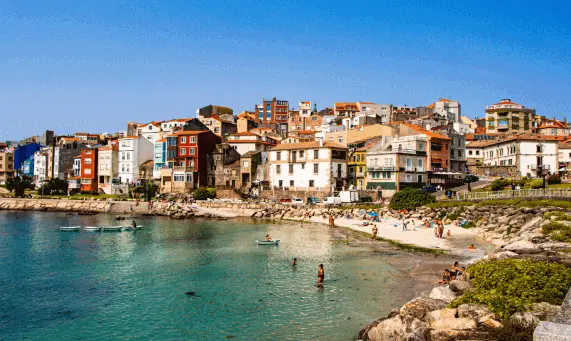
Prices in Galicia · per face per week
- 8x3 m billboardsfrom €78
- 6-sheet MUPIsfrom €112
- Bus sheltersfrom €112
Prices exclude VAT · printing and posting from €35 per face
Outdoor advertising sites in Galicia
We offer more than 650 outdoor advertising sites across Galicia, with a broad mix of large-format billboards, bus shelters, MUPI street panels (roughly six-sheet size), digital screens, street thermometers and building wraps. Spain's National Statistics Institute (INE) puts Galicia's population at 2,714,741 in its 2025 municipal register, and almost all of the region's urban population is strung along the AP-9 motorway, which stitches together Ferrol, A Coruña, Santiago de Compostela, Pontevedra and Vigo from north to south. This concentration of people along the Atlantic axis, together with the weight of the port of Vigo, the airports at Lavacolla, Alvedro and Peinador, and the network of industrial estates in the A Coruña belt and the Val do Salnés, turns the city approach roads and the main ring roads into prime, high-frequency advertising locations.
Marco Visual's coverage is concentrated in the four cities with the most outdoor advertising inventory: Santiago de Compostela, with a large network of bus shelters and MUPIs across the Ensanche (the modern city centre) and the University of Santiago campuses; A Coruña, with large-format billboards on the approaches to the Marineda City shopping centre and the Pocomaco and A Grela industrial estates; Vigo, with billboards on Travesía de Vigo, Avenida de Europa, Avenida del Aeropuerto and the industrial estates of the Zona Franca (Vigo's free-trade zone); and Pontevedra, with a dense spread of MUPIs and bus shelters on Bos Aires, Avenida de Compostela and the N-550. On top of this urban presence there are billboards in Lugo, Ourense, Ferrol, Vilagarcía de Arousa, Teo, Carballo, Padrón, Betanzos and Porriño, so campaigns can cover anything from region-wide brand communication to hyperlocal impacts.
Galicia's calendar offers very clear commercial windows. The imminent opening of the Puerta Santa (the cathedral's Holy Door) on 31 December 2026 begins the 2027 Holy Year in Santiago (Año Santo Compostelano), a year-long season of record pilgrim numbers that turns Santiago into a showcase for the whole of Europe. Add to that the Festas do Apóstolo (the St James festivities), A Coruña's Fogueiras de San Xoán (midsummer bonfires), Lugo's Arde Lucus (a historical re-enactment festival), the Festa do Albariño in Cambados (a wine festival), the Rapa das Bestas in Sabucedo (a wild-horse round-up), Vigo's Reconquista (a liberation festival) and Lugo's San Froilán festivities in October, all officially listed as being of International or National Tourist Interest. For retail, hospitality, automotive and financial services, these dates bring traffic peaks that justify planning outdoor advertising well in advance.
In our campaign planner you can check the price of MUPIs and every other advertising site, real photos, the exact location, Google Street View, descriptions and nearby points of interest, dimensions, print format… Best of all, you can filter the sites and pick the ones you want, then plan and book the outdoor advertising campaign
Some links open pages in Spanish
Looking for another area?
Explore the different outdoor advertising formats in Galicia
Marco Visual is an online platform for managing and booking campaigns on outdoor advertising sites. Our website gives you all the information you need to plan and book an outdoor campaign. Get to know each site and its features: price, real photos, format, minimum booking period and other terms.
Outdoor sites are ideal for promoting events, with room on the ad for the venue, who is taking part and every other detail that matters. They are also widely used for branding, so that people start seeing a brand away from the screen and remember it better. Other common uses are launching offers (Black Friday, the sales, Christmas…) and opening new shops.
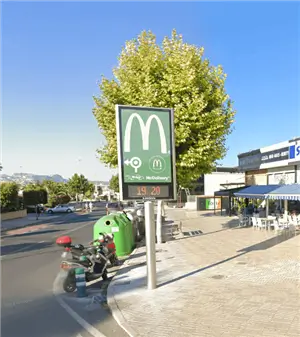
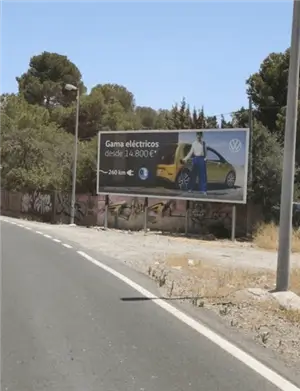
Here are some of our campaigns on different outdoor advertising sites:
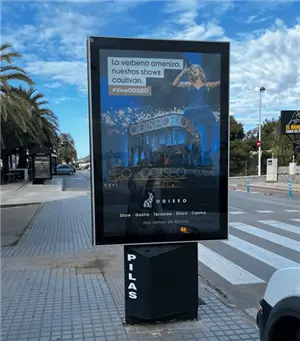
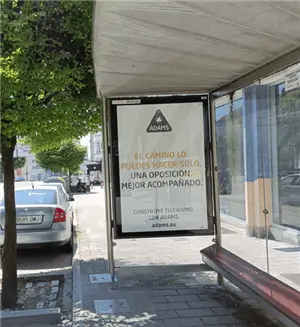
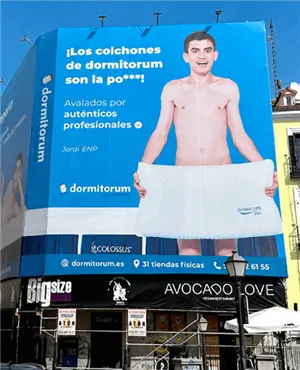

The benefits of outdoor advertising in Galicia
Galicia has a very particular mix of consumer profiles, and it pays to read it before planning an outdoor advertising campaign. The economically active population is over a million people, unemployment stands at around 8% according to the latest CaixaBank Research data, below the Spanish average, and GDP per capita is around €30,000 and gradually catching up with the national average. Industry carries real weight: Stellantis in Vigo, Inditex with its headquarters in Arteixo, the canning industry in O Salnés and the Vigo fishing fleet create a stable economic base that translates into recurring consumer spending. It is a market where brands matter and where repeated impacts on main roads and approach roads work particularly well for building loyalty among residents.
Seasonality is another factor that sets Galicia apart from other regions. Between Holy Week (Semana Santa) and September, visitor numbers multiply with pilgrims on the Camino de Santiago (the Way of St James), tourism on the rías (Galicia's coastal inlets) and festivals: the Festa do Albariño in Cambados, the Festival do Mundo Celta in Ortigueira (a folk music festival), the Festas do Apóstolo in Santiago, the Reconquista in Vigo and the Fogueiras de San Xoán in A Coruña concentrate peaks in footfall in specific areas. The 2027 Holy Year, already under way since the Puerta Santa opened on 31 December 2026, adds an extra layer of visitors all year round. For tourism campaigns, seasonal retail, hospitality and mobility, the bus shelters and MUPIs in central Santiago, the seafront promenades of A Coruña and Vigo, and the billboards on the roads to the beaches are outdoor advertising locations with a measurable return.
The sectors where outdoor performs most clearly in Galicia are automotive and aftersales, fashion and sports retail, consumer goods, financial services, dental and eye clinics, accredited training and civil-service exam preparation, local supermarkets, branded hospitality and property developers. It also complements digital well: the cost per thousand of a physical site on main roads such as Travesía de Vigo, Alfonso Molina in A Coruña or Bos Aires in Pontevedra competes very well with saturated digital channels, especially when the aim is brand awareness with repeated coverage among adult audiences. For SMEs with a mid-sized budget, a fortnight combining city-centre MUPIs and billboards on approach roads usually delivers better recall than a digital campaign for the same spend.
In your marketing and communications strategy, outdoor advertising sites are essential for reaching your audience. They are an excellent way to catch the eye of people out and about in town, thanks to well-chosen locations and high visibility.
- Eye-catching visual advertising with 24/7 visibility in high-traffic areas.
- Strategic locations on the city’s main streets and avenues.
- Wide coverage: a presence in Spain’s main cities and regions.
- High visibility in carefully chosen spots for the greatest impact.
- Geographic targeting: choose the areas and neighbourhoods where your target audience is.
- Greater brand awareness and trust.
- Flexibility for short and long campaigns.
- A non-intrusive medium that helps the message stick when combined with social media campaigns.
Some of the links in the areas below open pages in Spanish.
Outdoor advertising in Santiago de Compostela
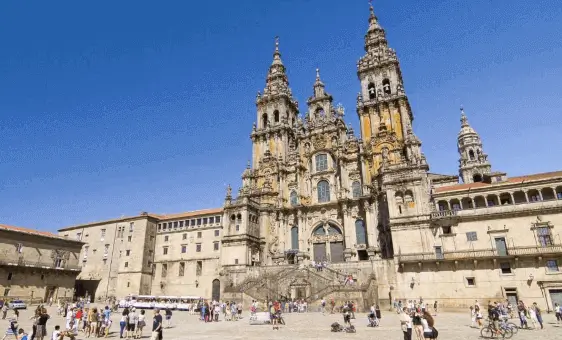
- Population: 100,842 inhabitants, according to INE 2025 data
- Gender split: approximately 53% women and 47% men
- Average age: around 45 years, brought down by the large university population
- Purchasing power: above average, with an economy based on regional public administration, the university, healthcare, religious tourism and retail
- Economic activity rate: around 56%, with a strong presence in services, hospitality, the public sector and education
- Relevance for advertising: the 2027 Holy Year multiplies the number of pilgrims and tourists throughout the year, with a reach that goes far beyond local residents
Santiago de Compostela passed the 100,000-inhabitant mark on the 2025 municipal register compiled by Spain's National Statistics Institute (INE); three audiences rub shoulders there every day: local residents, the more than 25,000 students of the University of Santiago spread across the Campus Sur, the Campus Norte and the Campus Vida, and a very large number of pilgrims and tourists who arrive by air at Lavacolla, by train at the Estación Intermodal or on foot along the various Camino routes. The Galician capital begins its Holy Year in 2027, which will multiply footfall in areas such as Rúa do Hórreo, Praza de Galicia, San Pedro de Mezonzo and the whole Ensanche.
Santiago has our densest outdoor advertising network in Galicia, with close to 170 sites across bus shelters, MUPIs, billboards and digital screens. You will find MUPI networks on Avenida Mestre Mateo and at Campus Sur, bus shelters in Volta do Castro, Choupana, San Lourenzo, Avenida da Liberdade, Restollal, San Roque and throughout the Tambre industrial estate, MUPIs in Ponte Mantible, Pastoriza, Avenida de Castelao and Cruceiro de Sar, and digital sites on Avenida do Camiño Francés, next to the Área Central shopping centre. Coverage takes in both the old town and the Ensanche, as well as the Tambre and Costa Vella industrial estates and the urban parishes of Conxo, Vite and Sar.
MUPIs in Santiago de Compostela
MUPI street panels work especially well in Santiago for outdoor campaigns aimed at Ensanche residents, the university community and pilgrims exploring the old town on foot. Their eye-level position and concentration in the pedestrian areas of the centre mean the artwork gets read in full. They are the preferred format for local retail, campus launches, cultural events and public-sector communication.
Highlights include MUPIs on Avenida Mestre Mateo next to the Gran Hotel Campus Sur, Volta do Castro, Rocha Vella, Avenida de Ferrol, Plaza de Galicia, Plaza de Vigo, Alfredo Brañas, Doutor Teixeiro, Avenida das Ciencias at Campus Sur, Cruceiro de Sar, Pastoriza, Polígono do Tambre, Rúa Andrade, San Pedro de Mezonzo, Rúa do Hórreo at the Estación Intermodal and Avenida de Castelao by the Vite health centre. The network stitches the historic centre to the Ensanche and the southern parishes.
Bus shelters in Santiago de Compostela
Santiago has a dense network of bus shelters serving the daily city bus routes and the flows of people around the university area. They are the ideal format for reaching students, healthcare staff at the Hospital Clínico, civil servants at the Xunta (Galicia's regional government) and pilgrims who combine public transport with stretches on foot. They work very well for enrolment campaigns, private healthcare, hospitality and financial services.
Bus shelters stand on Rodríguez de Viguri next to the municipal car park, Avenida M. V. Míguez at the Hospital Clínico, Rosalía de Castro opposite the Hotel Peregrino, Rúa da Choupana, Avenida da Liberdade, Poza Real, Conxo, Avenida das Ciencias at Campus Sur, Lope Gómez de Marzoa, Amor Ruibal in Pontepedriña, Rúa do Hórreo at the Estación Intermodal, Restollal at the Paxonal shopping centre, Castiñeiriño, Lamas de Abade, Cruceiro de Sar, San Roque and Casas Novas in Monte Pío.
Billboards in Santiago de Compostela
Billboard availability in Santiago's city centre is selective, with sites on the main retail approach roads to reach traffic coming into and leaving the city. They make a natural partner for the bus shelter and MUPI networks when an outdoor campaign needs large format and extended reach among drivers arriving on the AP-9, the A-54 and the AP-53.
Billboards here are concentrated on retail approach roads such as Rúa de Eslovenia next to the LIDL supermarket, a high-traffic area linked to the industrial estates in the north of the city. For extra presence on the approach roads, we also work with the billboards on the Teo-Milladoiro corridor along the N-550 and the AC-841, which cover the southern entrance to Santiago from Pontevedra and A Estrada.
Digital screens in Santiago de Compostela
Santiago's digital screens allow artwork to rotate by time slot, which suits retailers running daily promotions, cinema campaigns, event announcements and urgent messages. Rotation every few seconds multiplies the number of brands that can share each screen and opens the door to smaller budgets.
Our screens are concentrated at Avenida do Camiño Francés 3, one of the Ensanche's busiest roads for vehicle traffic and the exit route towards Lugo and Madrid via the A-54 and the AP-53. Being close to the shopping area and to the pedestrian entry point of the Camino Francés multiplies reach among residents heading home from work and pilgrims arriving in the city.
Outdoor advertising in Vigo
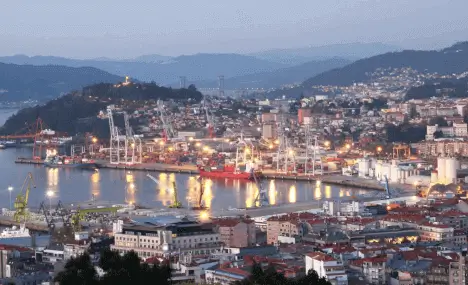
- Population: 295,735 inhabitants, according to INE 2025 data
- Gender split: approximately 52.9% women and 47.1% men
- Average age: around 46 years, in line with Galicia's structural ageing
- Purchasing power: above average, with an economy based on the motor industry, shipbuilding, fishing, the tech sector and services
- Economic activity rate: around 56%, with a very strong presence in industry, logistics and services
- Relevance for advertising: Travesía de Vigo, Avenida de Europa and Avenida del Aeropuerto are corridors with constant traffic of workers, residents and tourists all year round
Vigo, Galicia's most populous municipality and the fourteenth most populous in Spain, had 295,735 inhabitants in the 2025 tally from Spain's National Statistics Institute (INE), rising to more than 480,000 in its metropolitan area, counting Redondela, O Porriño, Mos, Cangas, Moaña and the rest of the ría. It is Galicia's top comarca (district) for economic dynamism according to the Ardán 2025 report, with Stellantis leading car manufacturing in Spain and a supplier cluster that sustains one in ten Galician industrial jobs. Then there is Europe's most important fishing port, the Zona Franca, a tech sector with close to 19,000 jobs and an industrial conurbation that stretches as far as Mos and Porriño.
Our outdoor advertising coverage in Vigo rests on more than a hundred large-format billboards on the city's main roads. You will find sites on Travesía de Vigo by the Cepsa petrol station and the shopping centre, Avenida del Aeropuerto, Avenida de Europa at the corner with San Paio, Marqués de Valterra next to the Zona Portuaria industrial estate, Jenaro de la Fuente at Avenida Ramón Nieto, Rúa Caramuxo opposite Renault, heading towards the Zona Franca industrial estate, Avenida Gran Vía next to Plaza de América, Rúa Numancia, Tomás Alonso, Avenida Beiramar, Avenida Galicia, Avenida Madrid, Rúa Caleira and the approaches to Castrelos and Samil. The network covers the main entry corridors via the AP-9, the A-55 and the Vigo ring road.
Billboards in Vigo
Vigo's billboards stand on roads with constant traffic: the AP-9 exits towards Castrelos and the Portuguese border, the approaches to Peinador airport, the junctions between the ring road and Avenida de Europa, and the Zona Franca and Bouzas industrial estates. Their large format and the average speed of road traffic make them a natural fit for automotive, consumer goods, branded hospitality, banking and outdoor campaigns that need wider coverage.
Our main locations in Vigo are Travesía de Vigo 218, opposite the Cepsa petrol station next to the shopping centre, Avenida del Aeropuerto 545 next to the Carballal school, Avenida de Europa 40 on the corner of San Paio, Marqués de Valterra on the corner of Conde Torrecedeira, Jenaro de la Fuente at Avenida Ramón Nieto, Rúa Caramuxo 13, Avenida Gran Vía 175 next to Plaza de América, Rúa Numancia 14, Tomás Alonso 257, Avenida Beiramar 125, Avenida Gran Vía 147, Rúa Caleira, Avenida Aeropuerto on the corner of Avenida San Cristóbal, Avenida Emilio Martínez Garrido, Avenida Galicia 192, Avenida del Aeropuerto (N-556) and Avenida de la Florida.
MUPIs in Vigo
Vigo's MUPI inventory centres on indoor networks in shopping centres and university buildings. They are the ideal format when a brand wants a qualified audience, high repetition and waiting areas where the artwork is read carefully. They perform strongly for premium retail, education, health and financial institutions.
You will find the main locations in the Centro Comercial del Mar, by the main hall and along the central walkways, and in the main halls of the biology and chemistry faculties on the University of Vigo campus. These are settings with steady footfall from students, teaching staff and visitors.
Outdoor advertising in Pontevedra
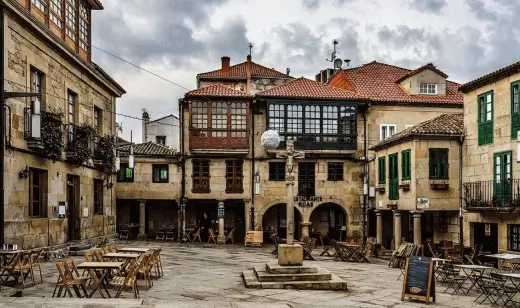
- Population: 83,339 inhabitants, according to INE 2025 data
- Gender split: approximately 52% women and 48% men
- Average age: around 46 years
- Purchasing power: above average, with an economy based on public administration, retail, education and services
- Economic activity rate: around 55%, with a strong presence in the public sector, retail and hospitality
- Relevance for advertising: the pedestrian model of the centre multiplies the dwell time at each site compared with other Galician capitals
Spain's National Statistics Institute (INE) put Pontevedra's population at 83,339 in 2025, and it is the only large Galician city whose historic centre works as one continuous pedestrian space. Its internationally award-winning mobility model concentrates footfall on Avenida de Bos Aires, Calle Michelena, Plaza de la Ferrería, Plaza de la Leña and the whole area around the Pazo da Cultura. That pedestrianisation changes the rules of outdoor advertising compared with other capitals: the slow pace leaves room for longer messages and denser artwork on MUPIs and bus shelters. Economically, it combines the seat of the provincial council (Diputación), offices of the Xunta de Galicia, a strong student community from the University of Vigo's Pontevedra campus and a very active local retail scene. Nearby Marín adds the Escuela Naval Militar (the Spanish navy's officer school) and a major industrial port that extends reach southwards along the ría.
Pontevedra has one of the densest networks in Galicia, with more than 100 sites across MUPIs, bus shelters and billboards. The MUPIs are spread along Avenida de Bos Aires, Avenida de Marín, Avenida de Compostela, Rúa Manuel del Palacio, Reina Vitoria Uxía, Augusto González Besada and Rúa Estación. The bus shelters line the N-541 towards Ourense, the PO-546 towards Marín, Monteporreiro, on Rúa Alemania, Italia, Reino Unido and Portugal, María Victoria Moreno opposite the Xunta de Galicia and the N-550 towards A Coruña. The billboards round off the plan on Rúa San Blas next to Carrefour, Rosalía de Castro and Avenida Salvador Moreno towards Marín.
MUPIs in Pontevedra
MUPIs are the star format in Pontevedra because of the logic of a pedestrian city: people on foot spend more time walking, and at a slower pace, than drivers do, which multiplies the seconds spent reading the artwork. They work very well for hospitality, local retail, private healthcare, cultural events and education, plus public-sector campaigns by the Xunta and the Diputación.
Here you will find MUPIs on Avenida Manuel del Palacio at Rosalía de Castro, Avenida de Marín opposite number 31, Avenida Reina Victoria Uxía at Rúa de la Alameda, Avenida Uruguay next to the Ponte do Burgo, Rúa Alameda at Rúa Echegaray, Avenida de Compostela at Rúa Alexandre Bóveda and Rafael Areses, Avenida de Bos Aires at numbers 6, 12 and 24 and just past the Ponte dos Tirantes, Rúa Xuán Carlos I, Rúa Augusto González Besada at the Hotel Comercio, Rúa Cobián Roffignac at Santa Clara, Rúa Manuel del Palacio 11, Rúa Estación at Otero Pedrayo, Avenida Corbaceiras at Calle Monteleón and Avenida María Victoria Moreno at Avenida de Vigo.
Bus shelters in Pontevedra
Bus shelters across Pontevedra cover the urban routes towards Monteporreiro, Mollavao and Salcedo, plus the approaches along the national roads. They are ideal for catching residents who travel into the centre every day and university students heading to the Pontevedra campus. Spread across urban and suburban areas, they are an all-round format for broad reach and high frequency.
In Pontevedra the main bus shelter locations are Avenida de Compostela opposite the sports hall, Avenida Médico Ballina at the Compostela roundabout, Rúa 12 de novembro opposite Xosé Adrio, the N-550 (Avenida de Marín) 100 metres from the Gafos river, the N-541 towards Ourense at Casas Novas, Avenida María Victoria Moreno opposite number 5 and next to the Xunta de Galicia, Rúa Alemania, Portugal, Italia and Reino Unido in Monteporreiro, Rúa Camposanto next to the cemetery, the PO-546 on Rúa Rosalía de Castro and the N-550 towards A Coruña at Acendona and Alba.
Billboards in Pontevedra
Pontevedra's billboards strengthen the urban outdoor plan with sites on retail approach roads and on the exit towards Marín and Vilagarcía. Their large format is a natural complement when a campaign needs impact on drivers and quick awareness in high-traffic areas.
There are billboards on Calle San Blas 2, next to Avenida de Eduardo Blanco Amor and opposite the Carrefour car park, Rúa Rosalía de Castro 89, facing traffic towards Avenida Fernández Ladreda and towards Marín, Avenida Salvador Moreno 129 at the entrance to Pontevedra and facing traffic towards Marín, Avenida de Bos Aires towards Monteporreiro and the exit roundabout of the AP-9 motorway.
Outdoor advertising in A Coruña
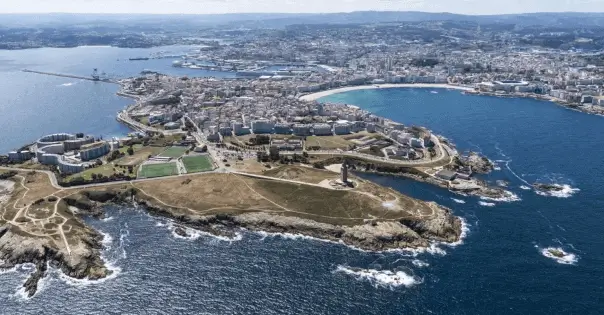
- Population: 251,277 inhabitants, according to INE 2025 data
- Gender split: approximately 53% women and 47% men
- Average age: around 47 years
- Purchasing power: above average, with an economy based on the Inditex headquarters, the port, banking, insurance and a diversified service sector
- Economic activity rate: around 56%, with a strong presence in retail, financial services and public administration
- Relevance for advertising: Marineda City and the A Grela and Pocomaco industrial estates draw road traffic from the whole A Coruña metropolitan area at weekends
With 251,277 inhabitants recorded by Spain's National Statistics Institute (INE) for 2025, A Coruña ranks as Galicia's second city and its most densely populated municipality. Its urban area, which takes in Oleiros, Culleredo, Cambre, Arteixo and Sada, has more than 410,000 residents, which multiplies the real reach of any outdoor advertising campaign. It is home to the Inditex headquarters in Arteixo, the outer port at Punta Langosteira, the A Grela, Pocomaco and Sabón industrial estates and a strong service sector built on banking, insurance and tourism. Marineda City, with close to 240 stores and 17 million visitors a year, is Galicia's largest shopping centre and the second largest in Spain, so its approach roads are among the most sought-after locations in the Galician network.
A Coruña has a very varied inventory, with large-format billboards concentrated on Avenida Alfonso Molina, Alcalde Jaime Hervada, Ronda Outeiro, García Sabell, Avenida Glasgow and the approaches to Marineda City and the A Grela industrial estate, next to Makro and Espacio Coruña. There is also a large network of street thermometers on Avenida Marina, Avenida Finisterre, Juan Flórez and at the Cuatro Caminos fountain, bus shelters on Ronda Outeiro, Alfonso Molina and Calvo Sotelo, MUPIs on the seafront promenade, Plaza de Galicia and the Palacio de Congresos roundabout, large-format building wraps on Orzán beach and Plaza de Pontevedra, and a cluster of digital screens on the A Grela industrial estate.
Billboards in A Coruña
The dominant outdoor advertising format in A Coruña is the billboard, with a very strong presence on the retail approach roads and the industrial estates on the west side of the city. Billboards here work especially well for automotive, superstore retail, branded hospitality and consumer goods campaigns aimed at customers across the metropolitan area, which stretches from Oleiros to Arteixo and Cambre.
In A Coruña the main billboard locations are Avenida Enrique Salgado at the junction with General Rubín and next to the tunnel facing traffic towards Ramón y Cajal, Calle Caballeros opposite Calle Chile next to Ronda Outeiro, Avenida García Sabell next to Alfonso Molina at the entrance to Carrefour and opposite the Espacio Coruña shopping centre, Avenida Glasgow at the Félix Acevedo roundabout, Avenida Nueva York at Calle Lisboa towards the university campus, Alcalde Jaime Hervada at the Peñamaría de Llano roundabout, Calle Gutemberg at Isaac Peral next to Eroski, the exit from the Atlantic motorway towards Avenida Alfonso Molina, Avenida Ramón y Cajal next to El Corte Inglés, Avenida Finisterre at the entrance to the refinery, Calle Severo Ochoa opposite the petrol station on the A Grela-Bens industrial estate next to Makro, the Makro car park opposite the Dolce Vita shopping centre, Avenida del Pasaje, Calle Newton facing traffic towards Carballo, Ronda Outeiro at the Manuel Murguía roundabout facing traffic towards the Los Rosales shopping centre, and Camino Martinete 58, on the access road to Marineda City.
Bus shelters in A Coruña
Bus shelters across A Coruña cover the urban corridors with the heaviest public transport flows, especially along the Alfonso Molina and Ronda Outeiro axis. They are the natural complement to billboards for campaigns that combine impact on drivers with a pedestrian audience at bus stops. They work very well for financial services, private healthcare, education and public-sector campaigns.
In A Coruña you will find bus shelters on Calvo Sotelo next to Compañía María, Plaza de la Palloza, Salgado Torres after the tunnel facing outbound traffic, Avenida de Oza 197, Alfonso Molina next to the petrol station, in Elviña and in Matogrande facing traffic into the city, Puente del Pasaje at Santa Gemma on the way into the city, and Ronda Outeiro on the central reservation opposite San Cristóbal station.
MUPIs in A Coruña
A Coruña's MUPIs cluster along the seafront promenade, the main shopping hubs in the centre and the approaches to the Elviña campus. They are the recommended format for campaigns aimed at pedestrians passing at a slow pace, and they suit retail, hospitality, cultural events and tourism promotions linked to the Atlantic waterfront and the Torre de Hércules (the city's ancient lighthouse).
The main MUPI positions are on the seafront promenade at the Esclavas roundabout and next to Playa Club, Avenida Fernández Latorre at Ramón y Cajal, Gregorio Hernández next to the Sanidad building, Avenida Glasgow in O Birloque, Avenida del Pasaje at San Rafael facing outbound traffic, Plaza de Galicia, the Palacio de Congresos roundabout and the Torre de Hércules at the tram stop.
Street thermometers in A Coruña
Very much a feature of A Coruña, street thermometers stand in the squares and main streets with the heaviest footfall in the centre. They give people useful information and, in return, keep the brand visible all year round, with particular strength in summer and during events such as the Fogueiras de San Xoán.
Street thermometers stand on Avenida Marina next to the gardens, Avenida Finisterre, Juan Flórez at Falperra, the seafront promenade level with the stadium facing traffic towards Plaza Pontevedra, Avenida de Las Conchiñas on the corner of Calle Frente Álamo, and Cuatro Caminos by the fountain.
Building wraps in A Coruña
In A Coruña, large-format building wraps take up landmark gable walls in the centre and along the seafront promenade. They are a spectacular format for brand launches, cinema campaigns, upmarket hospitality venues and automotive, with a visual impact that turns the façade into an urban shop window for the whole run of the campaign.
The available locations are on Orzán-Riazor beach at Avenida Pedro Barrié de la Maza 10, Francisco Mariño 4, on Plaza de Pontevedra next to the market on Plaza de Lugo, and Federico Tapia 43 at the Lonja de A Coruña.
Outdoor advertising in Lugo
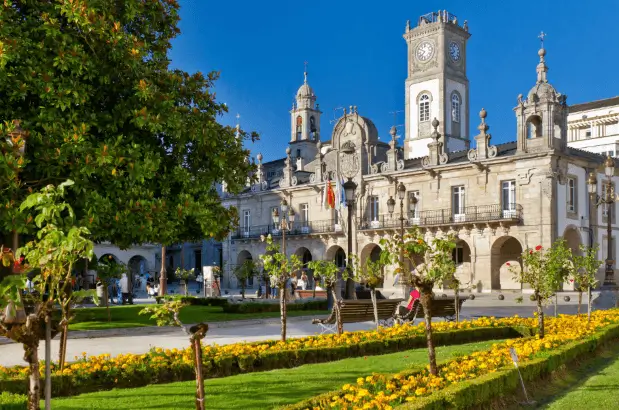
- Population: 100,071 inhabitants, according to INE 2025 data
- Gender split: approximately 53% women and 47% men
- Average age: around 47 years
- Purchasing power: average, with an economy based on the public sector, agri-food, retail and cultural tourism
- Economic activity rate: around 54%, with a presence in public administration, healthcare, retail and services
- Relevance for advertising: Arde Lucus in June and the San Froilán festivities in October bring peaks of visitors to the centre and the N-VI approach roads
Lugo crossed the 100,000-inhabitant threshold for the first time in 2025, when the municipal register held by Spain's National Statistics Institute (INE) counted 100,071 residents; Roman walls as intact as Lugo's survive nowhere else in Europe, and they are a UNESCO World Heritage Site. Its economy combines the provincial seat of the Xunta and the Diputación, a University of Santiago campus with a well-established presence in northern Galicia, public healthcare at the Hospital Lucus Augusti, a very strong agri-food sector in the Terra Chá and the Mariña, and long-standing urban retail around the historic centre and Plaza de Santo Domingo.
In Lugo our outdoor advertising is concentrated in billboards on the N-VI approaches from A Coruña and Madrid, Avenida da Coruña, Avenida de Garabolos and the corridor along Ronda Norte. You will find sites at the entrance to Lugo from Avenida da Coruña facing traffic towards Rúa Hortensia, on Avenida de Garabolos at the exit towards the N-VI, at Carretera de A Coruña 116 next to the bottling plant, on Avenida Breogán on the corner of Rúa Orquídea facing traffic towards Avenida das Américas and the Abella shopping centre, on Avenida Paulo Fabio Máximo next to the As Termas shopping centre facing traffic towards Avenida da Coruña, and on Avenida da Coruña next to the Hotel Olmos at the exit towards the O Ceao industrial estate.
Billboards in Lugo
Lugo's billboards are concentrated on the approach roads from the N-VI and the A-6, which makes them the natural format for automotive, consumer goods, hospitality and retail campaigns aimed at local residents and at through traffic between A Coruña and Castile and León. They work well for reaching drivers on their daily trips in and out of the city, at moderate speeds that leave time to read the whole message.
Our main sites in Lugo are on the slip road into the city from Avenida da Coruña facing traffic towards Rúa Hortensia, Avenida de Garabolos at the exit towards the N-VI, Carretera de A Coruña 116, Carretera de Madrid (N-VI) next to Avenida de Garabolos, Avenida Breogán at the junction with Calle Orquídea facing traffic towards Avenida das Américas and the Abella shopping centre, Avenida Paulo Fabio Máximo next to the As Termas shopping centre, Avenida Infanta Elena next to the Bagaria garage and Avenida da Coruña next to the Hotel Olmos at the exit to the O Ceao industrial estate.
Outdoor advertising in Ourense
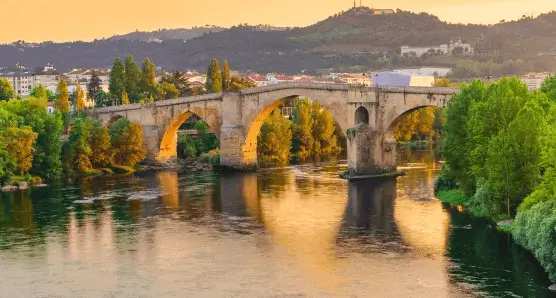
- Population: 105,609 inhabitants, according to INE 2025 data
- Gender split: approximately 53% women and 47% men
- Average age: around 49 years, with one of the oldest population pyramids in Galicia
- Purchasing power: average, with an economy based on public administration, healthcare, retail, hospitality and spa tourism
- Economic activity rate: around 52%, with a presence in the public sector, healthcare and services
- Relevance for advertising: the AVE link with Madrid and the A-52 towards Vigo turn the approach roads into places with a constant flow of long-distance traffic
In 2025 Ourense climbed back above the 105,000-inhabitant mark, with 105,609 residents recorded by Spain's National Statistics Institute (INE), putting the city back in third place in Galicia by population. As the provincial capital of inland Galicia, it is the hub for the A-52 link between Vigo and the Meseta (the central plateau) and, since 2021, for the AVE high-speed train to Madrid, which has made it a strategic location for services. Its economy revolves around public administration, public healthcare at the Complexo Hospitalario Universitario de Ourense, education, city-centre retail and a distinctive spa tradition that draws visitors all year round to the hot springs along the river Miño.
Marco Visual's plan in Ourense is made up of billboards on the city's main approach roads and in retail and hospital areas, which is where outdoor advertising performs best in a mid-sized capital with a very active spa scene and city-centre retail. There are billboards on Avenida Marcelino Macías next to the car wash on the way out of Ourense, Calle Basilio Álvarez at the roundabout with Calle Jesús Pousa Rodríguez next to the police station, the N-525 (Carretera de Madrid) next to Rúa Regueiro at km 238, Calle Ramón Puga 88 next to the Hospital Universitario, Rúa Vilamil at Camino Seara and the bus station roundabout on Carretera de Vigo, a spread that covers both through traffic and city residents.
Billboards in Ourense
Ourense's billboards stand on the main approach roads from the A-52, the N-525 and the N-540, as well as in busy areas with hospitals and shopping facilities. They are the right format for automotive, consumer goods, private healthcare and regional campaigns that need to cover the traffic between Vigo and the Meseta.
There are billboards on Avenida Marcelino Macías next to the car wash on the way out of Ourense, Calle Basilio Álvarez at the roundabout with Calle Jesús Pousa Rodríguez next to the police station, the N-525 (Carretera de Madrid) next to Rúa Regueiro at km 238, Calle Ramón Puga 88 next to the Hospital Universitario facing traffic towards the roundabout on Rúa Carlos Velo, Rúa Vilamil e Castro on the corner of Camino Seara at the university exit facing traffic towards Avenida Rodríguez Castelao, Carretera de Vigo at the bus station roundabout, and Carretera de Vigo in O Pino facing outbound traffic.
Outdoor advertising in Ferrol
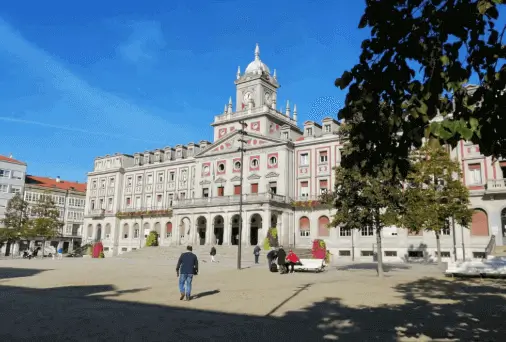
- Population: 64,903 inhabitants, according to INE 2025 data
- Gender split: approximately 52% women and 48% men
- Average age: around 49 years
- Purchasing power: average, with an economy based on shipbuilding, the public sector and retail
- Economic activity rate: around 52%, with Navantia and industrial suppliers accounting for a large share
- Relevance for advertising: the conurbation with Narón and Fene extends the real reach beyond Ferrol's registered population
Ferrol's 2025 population, as counted by Spain's National Statistics Institute (INE), stands at 64,903, and together with Narón, Fene and Neda the city forms a sizeable industrial conurbation around the Ártabro gulf. In the first half of 2025 it was the fastest-growing Galician city in relative terms, according to the IGE (Galicia's statistics office). Its economy revolves around Navantia and military shipbuilding, the ancillary shipyards, the outer port, the A Gándara and Río do Pozo industrial estates, and a service sector supported by the naval base, the University of A Coruña's Ferrol campus and the shops of the Magdalena neighbourhood.
Our presence in Ferrol consists of billboards on the main approach roads and the industrial estates that link Ferrol with Narón, which together form an outdoor advertising network geared to the conurbation's daily industrial and retail traffic. There are sites on Avenida de Compostela next to the car park at the FEVE narrow-gauge railway station, Avenida Nicasio Pérez facing traffic towards Vicente Risco next to the A Gándara industrial estate and Alcampo, Carretera Castilla on the corner of Avenida Malde Vizoso at the entrance to Narón, and Carretera Catabois 519. Ferrol's Holy Week, a celebration officially listed as of International Tourist Interest, brings the year's peak in visitor numbers and sends demand for outdoor advertising soaring in March and April.
Billboards in Ferrol
In Ferrol the billboards cover the corridors linking the centre with the industrial estates and with Narón, where the traffic of Navantia workers and superstore shoppers is concentrated. They suit automotive, vocational training, branded hospitality and consumer goods campaigns aimed at a very stable industrial audience all year round.
The billboards are spread across Avenida de Compostela next to the car park at the FEVE station, Avenida Nicasio Pérez facing traffic towards Vicente Risco next to the A Gándara industrial estate and Alcampo, Carretera Castilla on the corner of Avenida Malde Vizoso at the entrance to Narón, and Carretera Catabois 519. They cover both the approaches to the naval base and the conurbation's retail hubs.
Outdoor advertising in Vilagarcía de Arousa
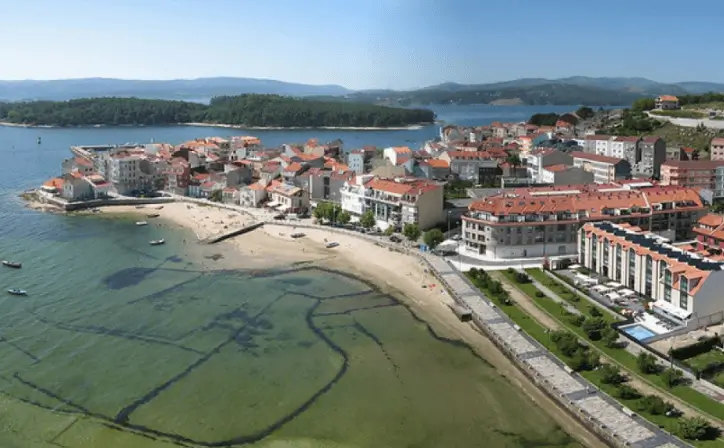
- Population: around 37,000 inhabitants, according to INE 2025 data
- Gender split: approximately 51% women and 49% men
- Average age: around 46 years
- Purchasing power: average, with an economy based on fishing, canning, retail and tourism
- Economic activity rate: around 55%, with a presence in fishing, hospitality, retail and services
- Relevance for advertising: summer and the Festa da Auga bring tourist peaks that multiply the real reach of each site
Vilagarcía de Arousa, capital of the Salnés comarca, has around 37,000 inhabitants and is one of the main urban centres of the Rías Baixas. It combines a significant fishing and commercial port, a military base, town-centre retail and very high tourist density in summer, thanks to the beaches, the salt pans and the nearby Albariño wine country around Cambados. The Festas de San Roque (the town's August festivities), officially listed as of National Tourist Interest, and the Festa da Auga (a mass water fight) on 16 August bring in enough visitors to multiply the town's population, which makes it a very attractive location for seasonal outdoor advertising campaigns aimed at visitors to the rías.
In Vilagarcía, Marco Visual's presence is made up of billboards on the retail approach roads and on the main roads that stitch the town centre to the exits towards Cambados and Vilanova and onto the AP-9. You will find sites on Avenida Rosalía de Castro 110 facing traffic towards Plaza de la Libertad and towards Avenida Mariña, Rúa Valle Inclán opposite the sailing centre next to the Gran Arousa shopping centre, Avenida Rubians facing traffic towards Avenida As Carolinas at the entrance to the Pazo de Rubianes (a historic manor estate), Avenida das Carolinas 38 opposite the IES Castro Alobre secondary school, Avenida Carolinas on the corner of Rúa de Pino next to Alcampo, Lidl and Día, Rúa Camilo José Cela 23 opposite Alfredo Brañas, Avenida Cambados 24 (PO-549) on the corner of Calle Fontecarmoa, and Rúa Pablo Picasso at the roundabout on Rúa Valle Inclán.
Billboards in Vilagarcía de Arousa
Billboards in Vilagarcía line the busiest retail approach roads and the exits towards the rest of the Salnés. They are our recommended format for automotive, consumer goods, branded hospitality, tourist events and summer campaigns aimed at holidaymakers using the PO-549 corridor.
Our main sites in Vilagarcía are Avenida Rosalía de Castro 110, Rúa Valle Inclán next to the Gran Arousa shopping centre, Rúa Adolfo Pedrido Morla at the exit from the Fontecarmoa car park, Avenida Rubians facing traffic towards Avenida As Carolinas, Avenida das Carolinas opposite the IES Castro Alobre, Avenida Carolinas at the junction with Rúa de Pino, Rúa Camilo José Cela, Avenida Rosalía de Castro 100 facing traffic towards Avenida Mariña, Avenida Cambados (PO-549) and Rúa Pablo Picasso at the Valle Inclán roundabout.
Outdoor advertising in Teo
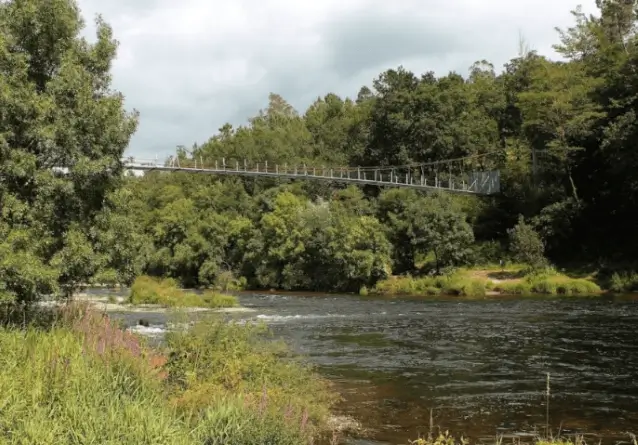
- Population: around 19,000 inhabitants, according to INE 2025 data
- Gender split: approximately 51% women and 49% men
- Average age: around 43 years, younger than the Galician average
- Purchasing power: above average, with a commuter economy tied to the service sector and public-sector jobs in Santiago
- Economic activity rate: around 58%, with daily commuting to Santiago de Compostela
- Relevance for advertising: the N-550 and AC-841 corridor carries the thousands of drivers who go in and out of Santiago every day
Teo, with its main settlements of Cacheiras, Os Tilos and O Milladoiro, has around 19,000 inhabitants and works as a commuter town for Santiago de Compostela. Its corridor along the N-550 and the AC-841 carries a very high volume of traffic, fed by residents who travel into the Santiago area every day and by the constant flow between Pontevedra, Padrón and Santiago. It is one of the fastest-growing municipalities in the comarca, with a younger population pyramid than the Galician average and an expanding retail park in O Milladoiro, which makes it especially attractive for outdoor advertising campaigns aimed at young families with above-average purchasing power.
Our presence here centres on billboards along the road corridors with the heaviest traffic towards Santiago, a spread designed to reach the drivers who pass these points every day. You will find sites in A Ramallosa on the AC-841 facing traffic towards Santiago and towards A Estrada, on the A Estrada-Santiago road (AC-841), in Montouto-Teo on the AC-841 facing traffic towards Santiago, in Montouto by the petrol station, in Milladoiro-Galanas on the N-550 facing traffic towards Santiago, in Milladoiro at the junction with the N-550 dual carriageway, facing traffic in both directions (towards Santiago and towards Padrón), and in Cacheiras facing traffic towards Santiago.
Billboards in Teo
Teo's billboards are the perfect complement to a Santiago plan for campaigns that need extra reach among drivers commuting into the Santiago area every day. They work especially well for automotive, education, consumer goods and branded hospitality, which all benefit from repeated impacts on every journey.
Teo's principal locations are A Ramallosa on the AC-841 in both directions, the A Estrada-Santiago road (AC-841) facing traffic towards Santiago, several points in Montouto on the AC-841 facing traffic towards Santiago and next to the petrol station, Milladoiro-Galanas on the N-550 facing traffic towards Santiago, Milladoiro at the junction with the N-550 dual carriageway facing traffic towards Santiago and towards Padrón, and Cacheiras at the exit towards Santiago.
Outdoor advertising in Carballo
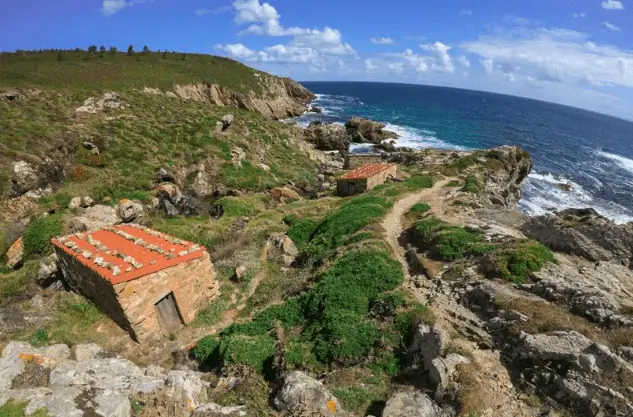
- Population: around 31,000 inhabitants, according to INE 2025 data
- Gender split: approximately 51% women and 49% men
- Average age: around 45 years
- Purchasing power: average, with an economy based on agri-food, retail and services
- Economic activity rate: around 55%, with a presence in industry, retail and hospitality
- Relevance for advertising: Carballo is the main town for Bergantiños, with constant traffic towards A Coruña on the AG-55
Carballo is the capital of the Bergantiños comarca, has around 31,000 inhabitants and works as the retail and services hub for Bergantiños and part of the eastern Costa da Morte. Its economy mixes agri-food, town-centre retail, a significant fish-processing industry and the tourist flow towards Malpica, Caión and Razo, which makes it an ideal location for district-wide outdoor advertising at a competitive cost per thousand. The AG-55 links Carballo with A Coruña in under 30 minutes, which is why the town has become the reference point for residents who work in the A Coruña area but do their everyday shopping in central Carballo.
The billboards stand on the approach roads that link Carballo with A Coruña, Santiago and Malpica. You will find sites on Rúa Compostela 80 on the way out of Carballo, on the AC-552 at km 23 in Berta at the entrance to Carballo, on Rúa San Antonio at the San Martiño car park, at the roundabout on Avenida Glasgow at the exit from the Espacio Coruña shopping centre, facing traffic towards Avenida San Cristóbal, on the Quintáns corridor along the Santiago-Quintáns road facing traffic towards Carballo, on the Ordes road at Avenida Artes facing traffic towards Carballo, on the Malpica road at Avenida Malpica 95, on the Coristanco road at Avenida Revolta 122, and on the Caión road into Carballo.
Billboards in Carballo
Carballo's billboards are the natural format for reaching residents across the comarca and through traffic heading for Malpica, Razo and Caión. They work very well for automotive, consumer goods, branded hospitality, local convenience supermarkets and financial services looking for district-wide coverage at a competitive cost per thousand.
For Carballo, the main billboard sites are Rúa Compostela 80 on the way out of Carballo, the AC-552 at km 23 in Berta on the way into Carballo, Rúa San Antonio at the San Martiño car park, the roundabout on Avenida Glasgow at the exit from the Espacio Coruña shopping centre, the Santiago-Quintáns road facing traffic towards Carballo, the Ordes road at Avenida Artes, the Malpica road at Avenida Malpica 95, the Coristanco road at Avenida Revolta 122 and the Caión road into Carballo.
Outdoor advertising in Padrón
- Population: around 8,000 inhabitants, according to INE 2025 data
- Gender split: approximately 52% women and 48% men
- Average age: around 49 years
- Purchasing power: average, with an economy based on agri-food, retail and cultural tourism
- Economic activity rate: around 52%, with a presence in the primary sector, retail and hospitality
- Relevance for advertising: the Camino Portugués traffic along the N-550 multiplies reach among pilgrims during the 2027 Holy Year
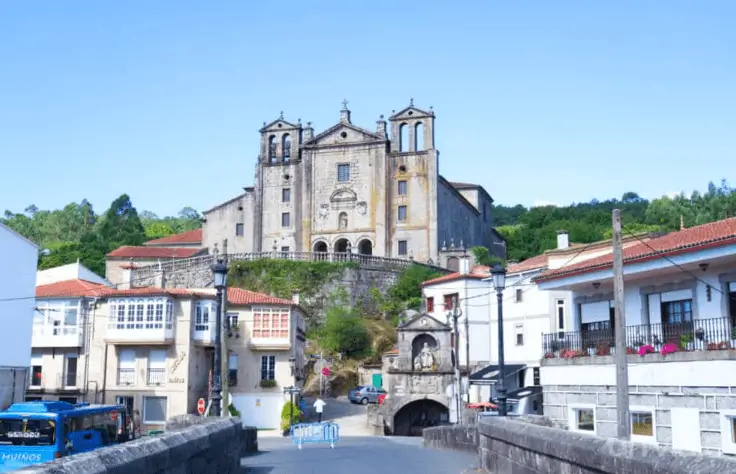
Padrón is one of the most symbolic places on the Camino de Santiago: according to tradition, this is where the remains of the Apostle St James came ashore before being taken to Compostela. It has close to 8,000 inhabitants and is an unavoidable stop for pilgrims on the Camino Portugués (the Portuguese Way) coming up from Tui, which multiplies real traffic well beyond the registered population and makes the town a very appealing location for outdoor advertising linked to the Camino. Its economy combines agri-food production with its own designation of origin (Padrón peppers), retail in the historic centre and a volume of tourism that grows year on year, linked to the poet Rosalía de Castro and the monumental complex of Iria Flavia.
The billboards stand along the N-550 corridor, the backbone of the Camino Portugués between Pontevedra and Santiago. You will find sites at the football ground on the way into Padrón, in Sada at the exit onto the Bergondo road, in Padrón at the football ground on the N-550 in the town centre, in Milladoiro at the entrance to Santiago on the N-550 facing traffic towards Santiago, in A Picaraña on the N-550 facing traffic towards Padrón and towards Santiago, in Esclavitud Cruces on the N-550 facing traffic towards Santiago at km 76, in Casalonga on the N-550 facing traffic towards Santiago, and in Padrón at the entrance to Iria Flavia.
Billboards in Padrón
Padrón's billboards line the N-550 corridor, the main route of the Camino Portugués between Pontevedra and Santiago de Compostela. We recommend them for campaigns linked to the Camino, hospitality, restaurants and tourist services, and they also reach residents from across the comarca on their daily journeys.
Padrón's main locations are the football ground on the way into town, Sada at the exit via the Bergondo road, Padrón town centre on the N-550, Milladoiro at the entrance to Santiago facing traffic towards Santiago, A Picaraña on the N-550 in both directions (towards Padrón and Santiago), Esclavitud Cruces on the N-550 facing traffic towards Santiago at km 76, Casalonga on the N-550 facing traffic towards Santiago, and Padrón at the entrance to Iria Flavia.
Outdoor advertising in Betanzos
- Population: around 12,500 inhabitants, according to INE 2025 data
- Gender split: approximately 52% women and 48% men
- Average age: around 47 years
- Purchasing power: average, with an economy based on retail, hospitality, services and agri-food
- Economic activity rate: around 53%, with a presence in retail, the public sector and services
- Relevance for advertising: the San Roque festivities in August and the proximity to A Coruña via the AP-9 create very clear peaks in visitor numbers
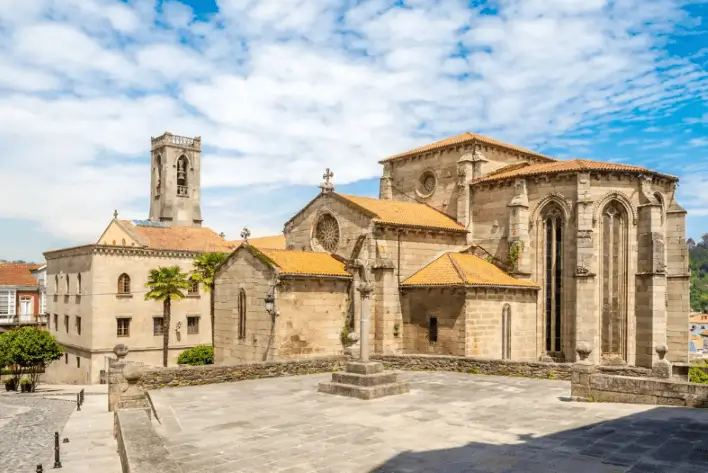
Betanzos, with close to 12,500 inhabitants, is the main town of the Mariñas comarca and has one of the best-preserved medieval old towns in Galicia, listed as a Bien de Interés Cultural (the highest level of heritage protection in Spain). Its San Roque festival on 16 August, officially listed as of National Tourist Interest, draws thousands of people to the launch of the Globo de Betanzos, considered the largest handmade paper balloon in the world. The AP-9 runs through the municipality and puts it fifteen minutes from A Coruña, which multiplies road traffic on its approach roads and opens the door to outdoor advertising campaigns with a double reach: Betanzos residents and drivers passing through between the A Coruña area and Ferrol.
The billboards are in high-traffic areas, near public facilities and on the approach roads from A Coruña and Ferrol. You will find sites in the car park of the vocational training centre, on Avenida Carregal next to Avenida de Fraga Iribarne facing traffic towards Plaza Alfonso IX and the football ground, on Paseo Ramón Beade on the corner of Rúa Mariña facing traffic towards the car dealership next to the entrance to the railway station, on Paseo Ramón Beade on the corner of Calle Argentina facing traffic towards Avenida Coruña, on Rúa Concepción Arenal opposite the El Globo nightclub next to the Betanzos fairground, and on Avenida La Coruña at the junction with Avenida Fraga Iribarne opposite the Bodega Barral facing traffic towards Rúa Valdoncel along the N-651.
Billboards in Betanzos
In Betanzos, billboards cover the main approaches to the old town and the key through-routes between A Coruña and Ferrol. They are a natural choice for automotive, hospitality, local retail across the comarca and seasonal campaigns linked to the San Roque festivities, the romerías (country pilgrimage festivals) of the Mariñas and the summer season on the Ártabro gulf coast.
The available locations are the car park of the vocational training centre, Avenida Carregal next to Avenida de Fraga Iribarne facing traffic towards Plaza Alfonso IX, Paseo Ramón Beade on the corner of Rúa Mariña facing traffic towards the car dealership, Paseo Ramón Beade on the corner of Calle Argentina facing traffic towards Avenida Coruña, Rúa Concepción Arenal opposite the El Globo nightclub, and Avenida La Coruña at the junction with Avenida Fraga Iribarne opposite the Bodega Barral on the N-651.
Outdoor advertising in Porriño
- Population: around 20,000 inhabitants, according to INE 2025 data
- Gender split: approximately 51% women and 49% men
- Average age: around 43 years, younger than the Galician average
- Purchasing power: average, with an economy based on logistics, industry, granite and agri-food
- Economic activity rate: around 58%, with a strong presence in logistics, industry and transport
- Relevance for advertising: the A Granxa industrial estate brings in thousands of workers every day from the Vigo metropolitan area and the Portuguese border area
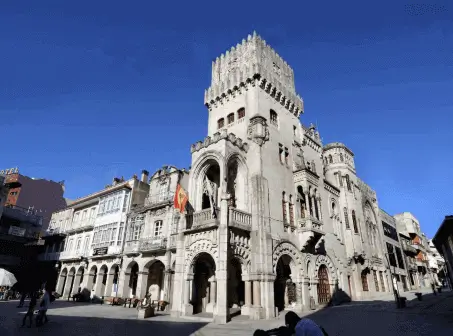
O Porriño has close to 20,000 inhabitants and is one of the major logistics hubs in southern Galicia. Its industrial estate, A Granxa, is one of the largest in north-west Spain and has a very high concentration of logistics, distribution, granite, chemicals and agri-food companies, as well as the Amazon facility. The town is the link between the Vigo metropolitan area, Pontevedra and the Portuguese border via the A-55 and the AP-9, which makes it a strategic location for B2B and consumer goods outdoor advertising campaigns aimed at a very stable working audience all year round.
Porriño's billboards sit on the main roads into town from the A-52 (Vigo-Ourense) and the N-120, as well as on the corridors linking the town centre with the industrial estate. You will find sites on Avenida Antonio Palacios 76 on the N-120 opposite the E.S. Pino Manso secondary school, at the exit facing traffic towards Ourense and Puenteareas, at the entrance to Porriño from the A-52 dual carriageway next to Avenida Antonio Palacios facing traffic towards Avenida Galicia, in Gándaras at the exit towards El Corte, and at the roundabout on Avenida Duquesa Lugo at the entrance to the town centre. The spread covers both local residents and the hauliers who drive between Vigo and the Portuguese border every day.
Billboards in Porriño
In Porriño, billboards are the format we recommend for campaigns aimed at professionals working on the A Granxa industrial estate, hauliers driving between Vigo and the Portuguese border, and residents of the Mos-Salceda-Tui corridor. They work very well for commercial vehicles, spare parts, branded hospitality and B2B services.
In Porriño the main locations are Avenida Antonio Palacios 76 on the N-120 opposite the E.S. Pino Manso secondary school, the entrance to Porriño from the A-52 (Vigo-Ourense) next to Avenida Antonio Palacios facing traffic towards Avenida Galicia, Gándaras at the exit towards El Corte, and the roundabout on Avenida Duquesa Lugo on the way into the town centre.
How booking outdoor advertising with Marco Visual works
Tell us what you’re looking for
If you’d rather choose yourself, our campaign planner (in Spanish) lets you pick the weeks and then browse the map or the list of sites, with filters by type of site, city, postcode or distance to a shop or point of interest. Bear in mind the booking cycles: many sites are sold by the week, but most 8x3 m billboards are booked in two-week periods or for 26 weeks, so they’re greyed out if you pick a single week. Click ‘Siguiente’ (Next) and you’ll see a campaign summary with the total price, printing and posting included: we take care of everything. You just enter your contact details and create the campaign.
Either way, you get a unique link to your campaign page, which you can share with your team: the sites you picked, the weeks, the price and the guides for preparing your artwork. You can check it whenever you like.
We confirm availability so you can book online
When everything is cleared, you can enter your billing details on that same page, pay by bank transfer and upload your artwork. Once you’ve paid, upload the transfer receipt so we can confirm the booking sooner.
Remember to send your artwork, following the guides, before the deadline shown on the proposal (usually 10 days before the start). We’ll email you at every step: artwork received and approved, payment received, sites confirmed.
Printing, posting and launch
These photos are usually ready 24 to 48 hours after the start; we’ll email you when they are.
When the campaign ends, you’ll see a notice on the campaign page and receive a satisfaction survey, with the option of leaving us a Google review. It helps us do better.
Frequently asked questions about outdoor advertising in Galicia
How much does an outdoor advertising campaign in Galicia cost?
Prices for an outdoor advertising campaign in Galicia run, as a rough guide, from €80 to €150 per face for a two-week period on MUPIs or bus shelters in Santiago de Compostela, A Coruña or Vigo. In networks with several sites, the unit price comes down. The best approach is to ask for a specific proposal stating the cities, format and dates. For billboards in Galicia, the reference price is €78 to €88 per face per week, or €156 to €176 for a two-week period, excluding VAT and without poster printing, which we quote separately; some positions are sold per two-week period (2 weeks, 14 days), others only on 6-month contracts (26 weeks).
Which formats work best for a local business in Vigo or A Coruña?
For neighbourhood retail and hospitality, MUPIs and bus shelters in the Ensanche districts build recall at walking pace. For automotive, consumer goods and services with metropolitan coverage, billboards on Travesía de Vigo, Avenida Alfonso Molina or the approaches to Marineda City perform better. If the campaign is promotional, with frequent artwork changes, digital screens are the most flexible option.
How many advertising sites are there in Galicia?
Our current inventory is around 650 sites, spread across billboards, bus shelters, MUPIs, digital screens, street thermometers and building wraps. The cities with the highest concentration are Santiago de Compostela, Vigo, Pontevedra and A Coruña, with further presence in Lugo, Ourense, Ferrol, Vilagarcía de Arousa, Teo, Carballo, Padrón, Betanzos and O Porriño.
What is the minimum campaign length?
The usual minimum for MUPIs, bus shelters and billboards is a two-week period (two full calendar weeks). Digital screens can be booked by the day, or even by time slot within the day. Large-format building wraps and street thermometers are usually booked monthly or for longer periods, as they are more complex to put up. With billboards, there are positions that can only be booked in 6-month periods (26 weeks).
Which parts of Galicia have the most footfall and road traffic?
The main footfall hotspots are Pontevedra's pedestrianised old town, Santiago's Ensanche, Rúa Real in A Coruña and Calle Príncipe in Vigo. For road traffic, the highest volumes are on Travesía de Vigo, Avenida Alfonso Molina in A Coruña, Avenida de Bos Aires in Pontevedra, the N-VI near Lugo and the AP-9 at Betanzos and Padrón.
Do you have digital sites or only static ones?
In Galicia we work with both. There are digital screens in A Coruña, on the A Grela industrial estate next to Calle Copérnico, and in Santiago de Compostela on Avenida do Camiño Francés, plus a few standalone installations in shopping centres and on university campuses. Most of the inventory is still static: billboards, MUPIs, bus shelters, building wraps and street thermometers.
What happens after I ask for a proposal?
Once we receive your request, we prepare a proposal with specific locations, photos of each site, available dates and a fixed price. If it suits you, we move on to a formal offer ready to sign, collect the artwork in the right formats, handle printing and posting, and send you proof-of-posting photos once the campaign is up. For a two-week period, the usual lead time from sign-off to going live is ten working days.
When is the best time of year to advertise in Galicia?
May to September brings most of the tourism to the Rías Baixas, A Coruña and Santiago, with peaks around San Xoán, the Festas do Apóstolo, the Albariño festival and the summer beach season. In October, the highlight is Lugo's San Froilán. The 2027 Holy Year will stretch the high season in Santiago across the whole year. For local retail and financial services, September, January and the festive season work especially well.
Give your brand more visibility with outdoor advertising
See our advertising sites for yourself, with their prices, locations and photos, and use the campaign planner
Still have questions, or would you like us to advise you and send you a proposal? Get in touch and we’ll send you a personalised quote for your outdoor advertising campaign.
What our clients say in Galicia
Verified Google reviews from businesses that have already worked with Marco Visual.

Hemos quedado satisfechos con la campaña de publicidad que contratamos con Marco Visual para el Conservatorio Superior de Danza de Alicante (CSDA) durante las Hogueras. La campaña contó con cuatro mupis diferentes, cada uno dedicado a un estilo de danza, una iniciativa para dar visibilidad a nuestro conservatorio y acercar la riqueza y diversidad de la danza a la ciudadanía. Destacamos la profesionalidad, la atención recibida y la buena gestión de todo el proceso. Porque la danza también merece ocupar las calles y formar parte de la ciudad. ¡Gracias a Marco Visual por ayudarnos a llevar nuestro arte más allá de las aulas!
Original review in SpanishSee on Google 1 / 4

Hemos trabajamos con Marco Visual para la campaña de apertura de nuestra nueva clínica en Molina de Segura, y la experiencia ha sido positiva. Negociamos directamente con ellos, sin intermediarios: el trato es cercano y las respuestas, rápidas. Necesitábamos resolver ubicaciones, formatos y plazos con poco margen de tiempo, y flexibilidad para adaptar la propuesta a lo que necesitábamos. Recomendado
Original review in SpanishSee on Google

Ha sido nuestra primera experiencia en implementar un MUPI, pensábamos que sería algo engorroso en cuanto al proceso y verdaderamente nos hemos confundido. La atención de Alejandro desde el primer momento ha sido rápida, precisa en las indicaciones y nos ha facilitado todo. Ademas agregar que el sistema que tienen implementado online para el seguimiento ha sido muy práctico, sabes el status de la campaña en todo momento, repetiremos!
Original review in SpanishSee on Google

Nuestra experiencia ha sido muy positiva. Queremos destacar especialmente la profesionalidad, rapidez y atención recibida durante todo el proceso. El equipo ha demostrado en todo momento una excelente disposición y un trato cercano y profesional. Mención especial para Alejandro M., por su amabilidad, eficacia y atención constante. Ha sido un placer contar con su ayuda y profesionalidad. Sin duda, recomendamos sus servicios y agradecemos el trato recibido.
Original review in SpanishSee on Google

Hemos quedado muy satisfechos con la campaña de publicidad exterior realizada con Marco Visual. Desde el primer momento, el trato ha sido cercano y profesional, facilitando todo el proceso y resolviendo nuestras dudas con rapidez. La gestión de la campaña ha sido ágil y eficiente, y el seguimiento durante toda la ejecución nos ha transmitido confianza. La instalación y el mantenimiento de los soportes se han realizado correctamente, cumpliendo con lo acordado. Agradecemos especialmente la atención recibida y la buena comunicación del equipo. Ha sido una experiencia muy positiva y no dudaríamos en contar con Marco Visual para futuras campañas.
Original review in SpanishSee on Google 1 / 2

La campaña que hemos hecho de publicidad exterior ha sido un éxito. La comunicación con Alejandro ha sido lo mejor, muy profesional y atento en todo momento con todos los detalles de la campaña. Repetiremos sin duda en unos meses.
Original review in Spanish See on Google
Explore other advertising formats at Marco Visual


